
This week on Growth@Scale, Matt Widdoes sits down with Brendan Bilko, brand-building expert and the creative mind behind product development studio Robin. Brendan shares his journey from co-founding the creative agency Mayday to his time with Beta Work Studios and Elysian Park Ventures. With an extensive background in startup and SaaS branding as well as creative agency work, Brendan and Matt also discuss effective branding strategies and how to create an authentic, sustainable brand that stands out.
Key Takeaways:
- Never Chase Competitors: Focus on your brand’s unique value
- Authenticity is Key: Foster trust and loyalty through genuine messaging
- Consistency Matters: Ensure your audience easily recognizes your brand
- Simplicity Wins: Simple, clear branding leads to better engagement
- Have a Brand Champion: Dedicate someone to maintain and enforce brand standards
Book a complimentary consultation with one of our experts
to learn how MAVAN can help your business grow.
Want more growth insights?
Thank you! form is submitted
[hubspot type=”form” portal=”20951211″ id=”9c538ed2-fb12-45f1-a573-ad7953c058cc”]
Related Content
-
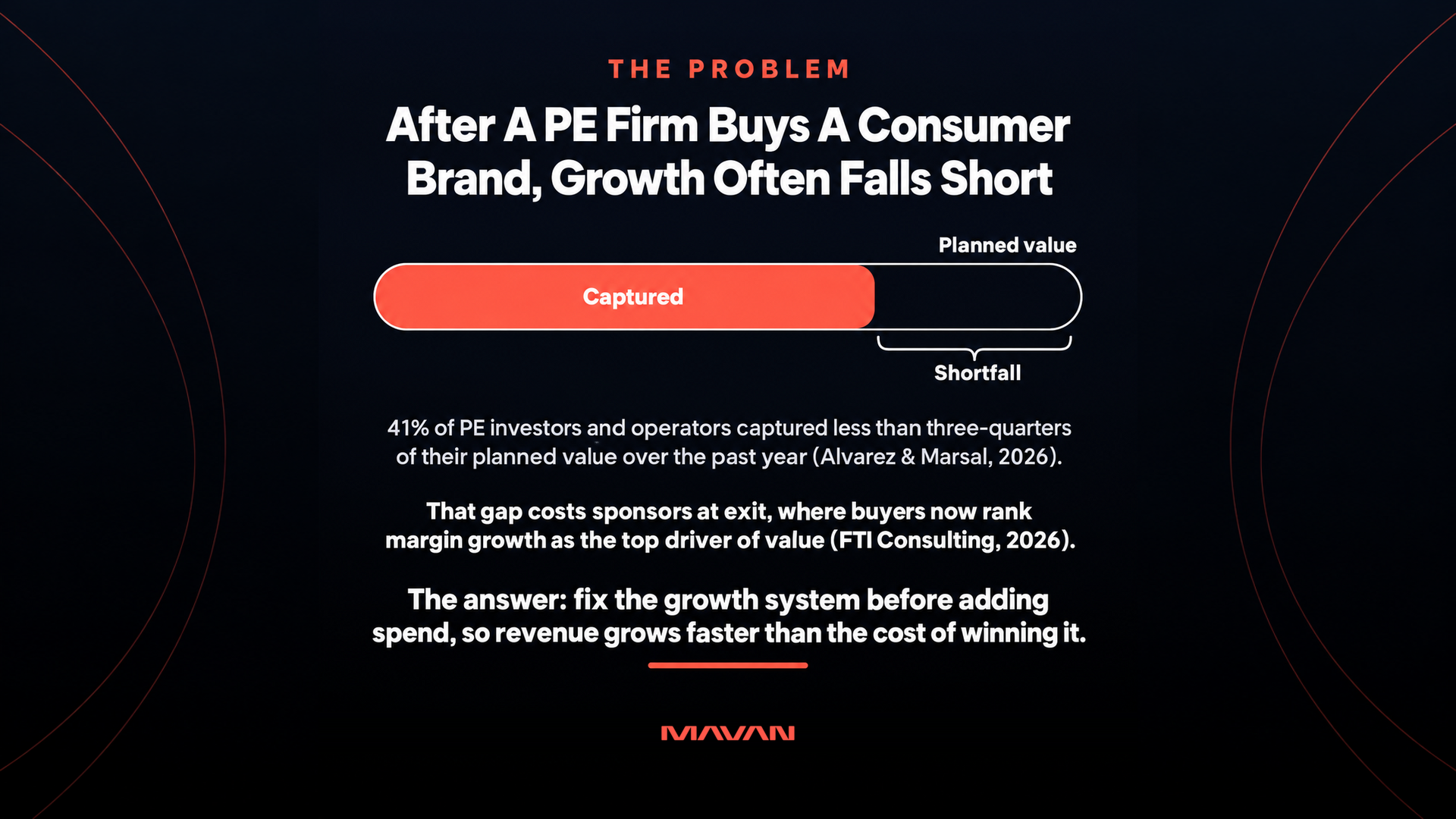
How Do PE Firms Accelerate Revenue And EBITDA Post-Acquisition?
PE firms accelerate revenue and EBITDA at consumer brands by fixing the growth system before adding spend. They reconcile the numbers and cut spend that never pays back. They lift conversion and repeat purchases, and they judge growth by contribution margin. Growth operating partners such as MAVAN diagnose that system in 28 days, then help execute the fix.
-
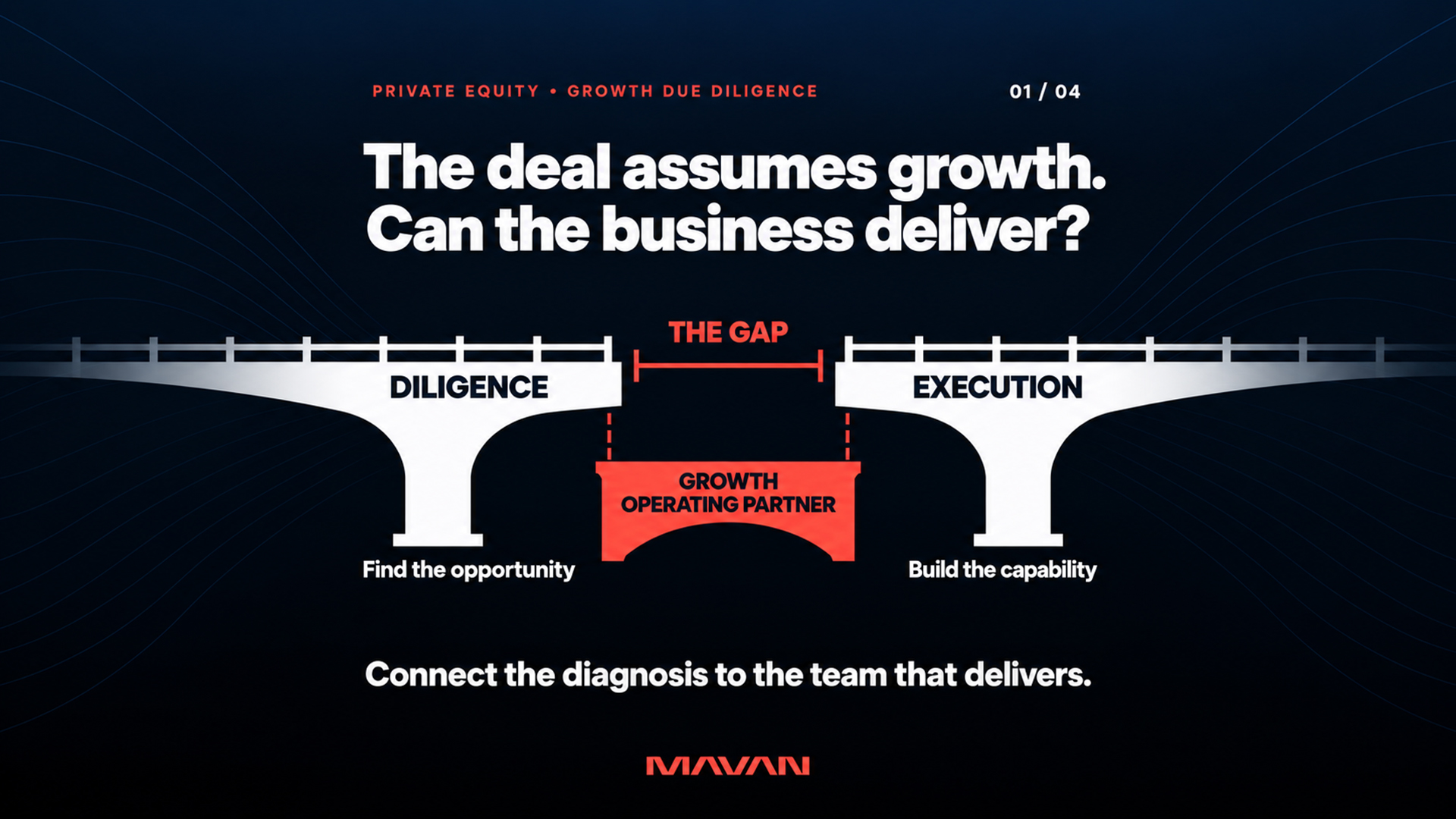
Who Does Growth & GTM Due Diligence for PE Deals?
Four kinds of provider run growth and go-to-market due diligence for private equity deals. Strategy consultancies test the market. Specialist commercial diligence firms audit the pipeline. Go-to-market boutiques rebuild the sales motion. And growth operating partners examine the full revenue engine from inside the business, then stay to operate it after close.
-
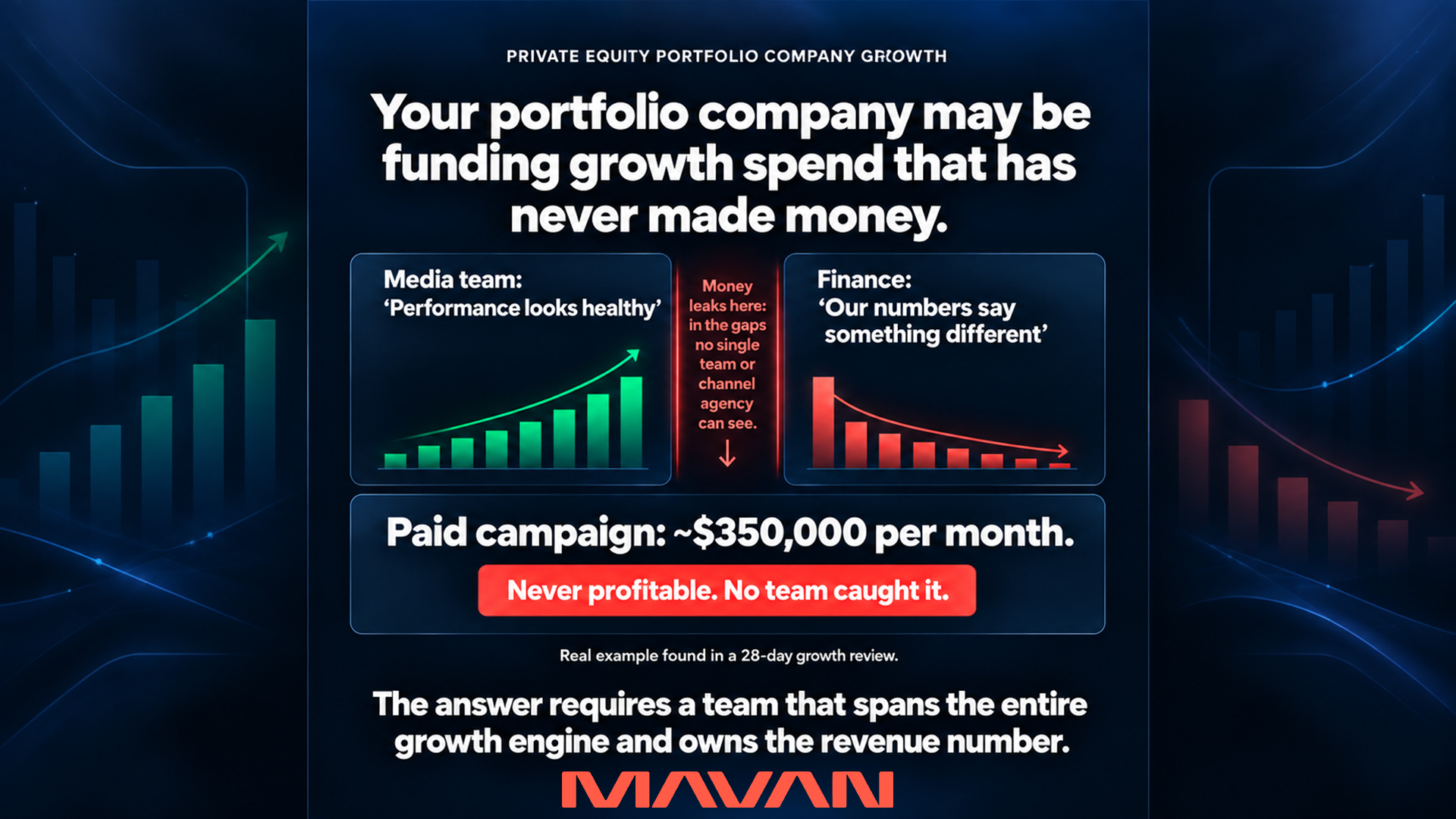
Who Is The Best Growth Partner For PE Portfolio Companies?
The best growth partner for a private equity portfolio company behaves like an operating partner you deploy, not an agency you brief. It reads the whole growth system before it spends, owns a revenue number alongside management, and leaves the capability behind so the sponsor can redeploy it.