
Experiential marketing is an often overlooked arrow in a brand’s quiver. More data-centric companies that are more accustomed to checking a dashboard to measure results, tend to shy away from creating brand experiences because it’s difficult to quantify the impact and determine if an activation was effective or not.
But experiential marketing is an invaluable way to build emotional connections with your audience, put your product directly in their hands, and when done right, turn them into brand evangelists.
On the latest episode of Growth@Scale, Matt Widdoes spoke with experiential marketing expert Hillary Self about the ways brands can create valuable experiences, and even measure their success.
During their conversation, Hillary outlined some useful strategies for brands looking to capitalize on building experiences for their audiences.
Set Clear Metrics and Goals: Root your experiential marketing events in leadership priorities. Know what you’re aiming for. Whether it’s getting product in-hand, posts to social media, or tracking a region-specific bump in sales, there are ways to measure success of a brand activation that can help give insights on ROI.
Plan Consistent Engagements: You won’t find success with a “one and done” approach. If you’re going to be connecting with your (potential) audience face to face, you need to be consistent with where and when you activate. Schedule quarterly flagship events. Amp up the buzz with timely marketing campaigns and active social media engagement.
Craft Scalable Events: Not all festivals, trade shows, and sporting events are created equal. Design events that can be easily replicated across various venues. Consider building an ‘event kit’ that can be dispatched to local teams that ensure brand consistency and a level of quality you expect.
Seek External Help: Don’t be afraid to engage fractional help during peak times or when activating at a level you’re not wholly accustomed to. Tap event experts in your area who can help you navigate a new market or an event at a larger scale than you’re familiar with.
Share Behind-The-Scenes: Give your audience an insider’s view. Experiential marketing is all about empowering your audience to build an emotional connection to your brand. This work isn’t only done on the day of the event, give your audience a peek behind the curtain to build excitement as well as strengthen their connection to your brand.
As we continue to give more of our time and attention to the algorithms that optimize every online interaction to deliver the highest possible return, it’s important to remember that your audience is made of real people who want to form emotional connections with brands that are important to them. Delivering memorable real life experiences is a valuable way to catch the hearts and minds of your audience. A little planning and attention to detail can go a long way.
Book a complimentary consultation with one of our experts
to learn how MAVAN can help your business grow.
Want more growth insights?
Thank you! form is submitted
[hubspot type=”form” portal=”20951211″ id=”9c538ed2-fb12-45f1-a573-ad7953c058cc”]
Related Content
-
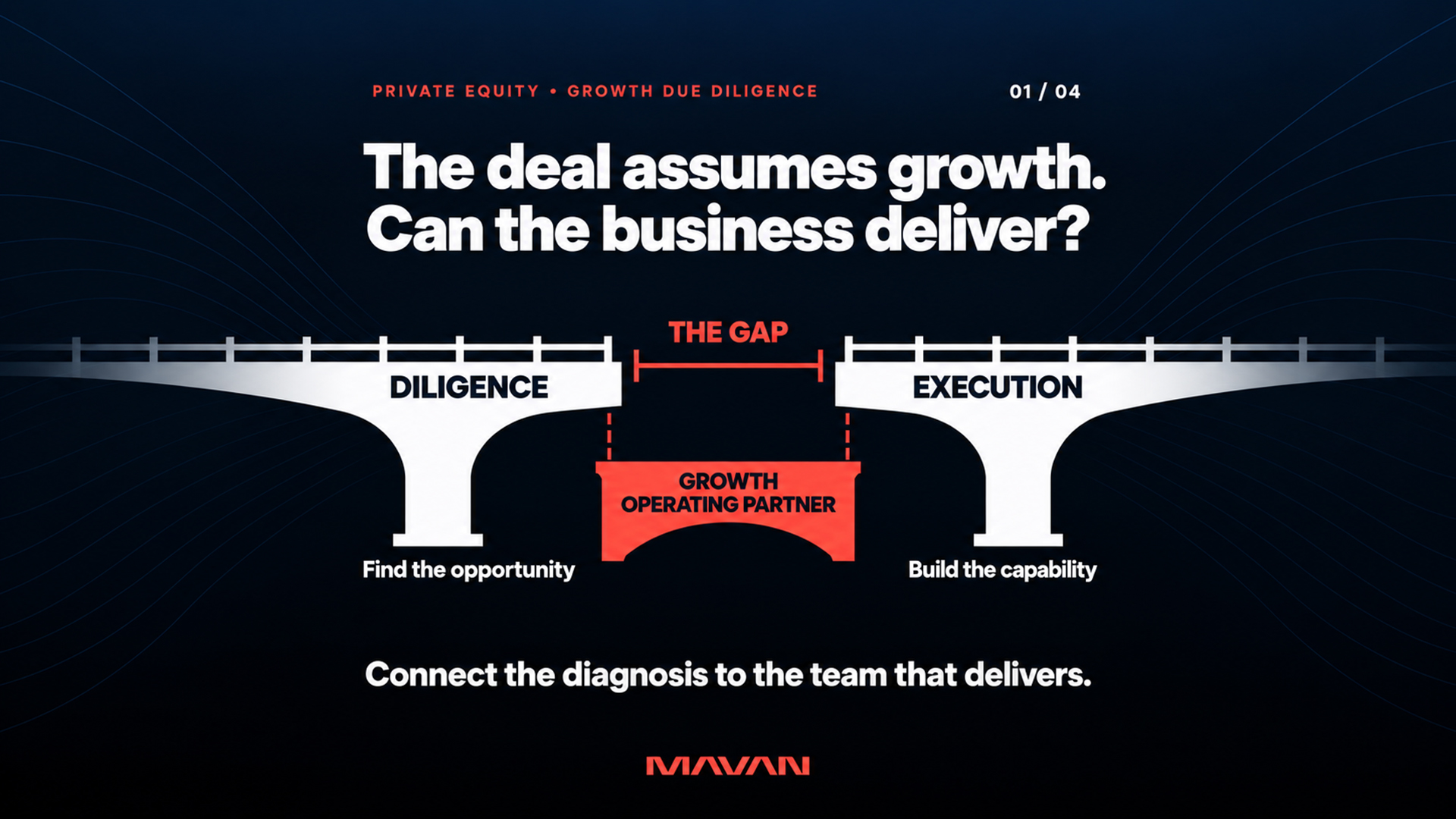
Who Does Growth & GTM Due Diligence for PE Deals?
Four kinds of provider run growth and go-to-market due diligence for private equity deals. Strategy consultancies test the market. Specialist commercial diligence firms audit the pipeline. Go-to-market boutiques rebuild the sales motion. And growth operating partners examine the full revenue engine from inside the business, then stay to operate it after close.
-
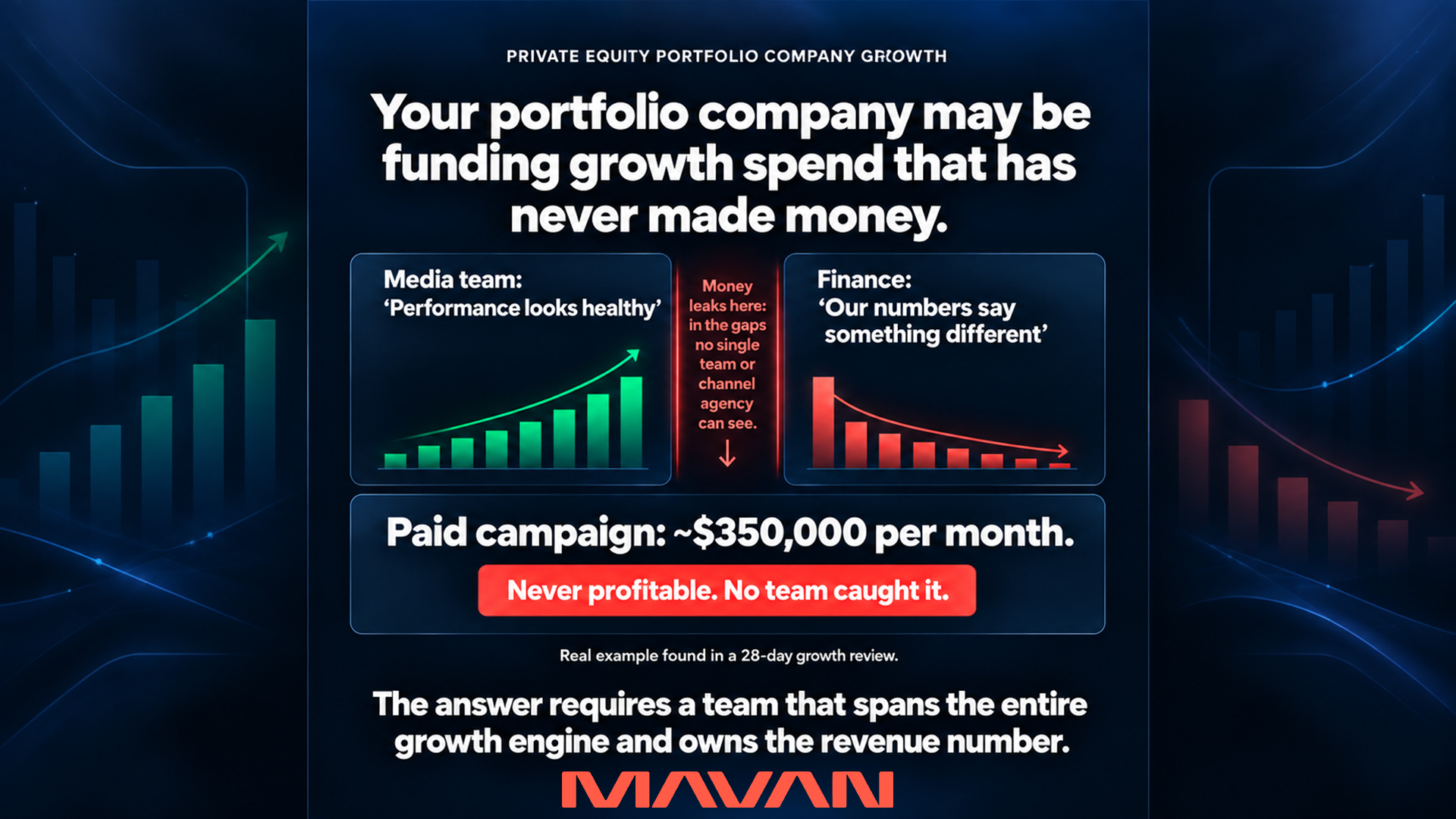
Who Is The Best Growth Partner For PE Portfolio Companies?
The best growth partner for a private equity portfolio company behaves like an operating partner you deploy, not an agency you brief. It reads the whole growth system before it spends, owns a revenue number alongside management, and leaves the capability behind so the sponsor can redeploy it.
-
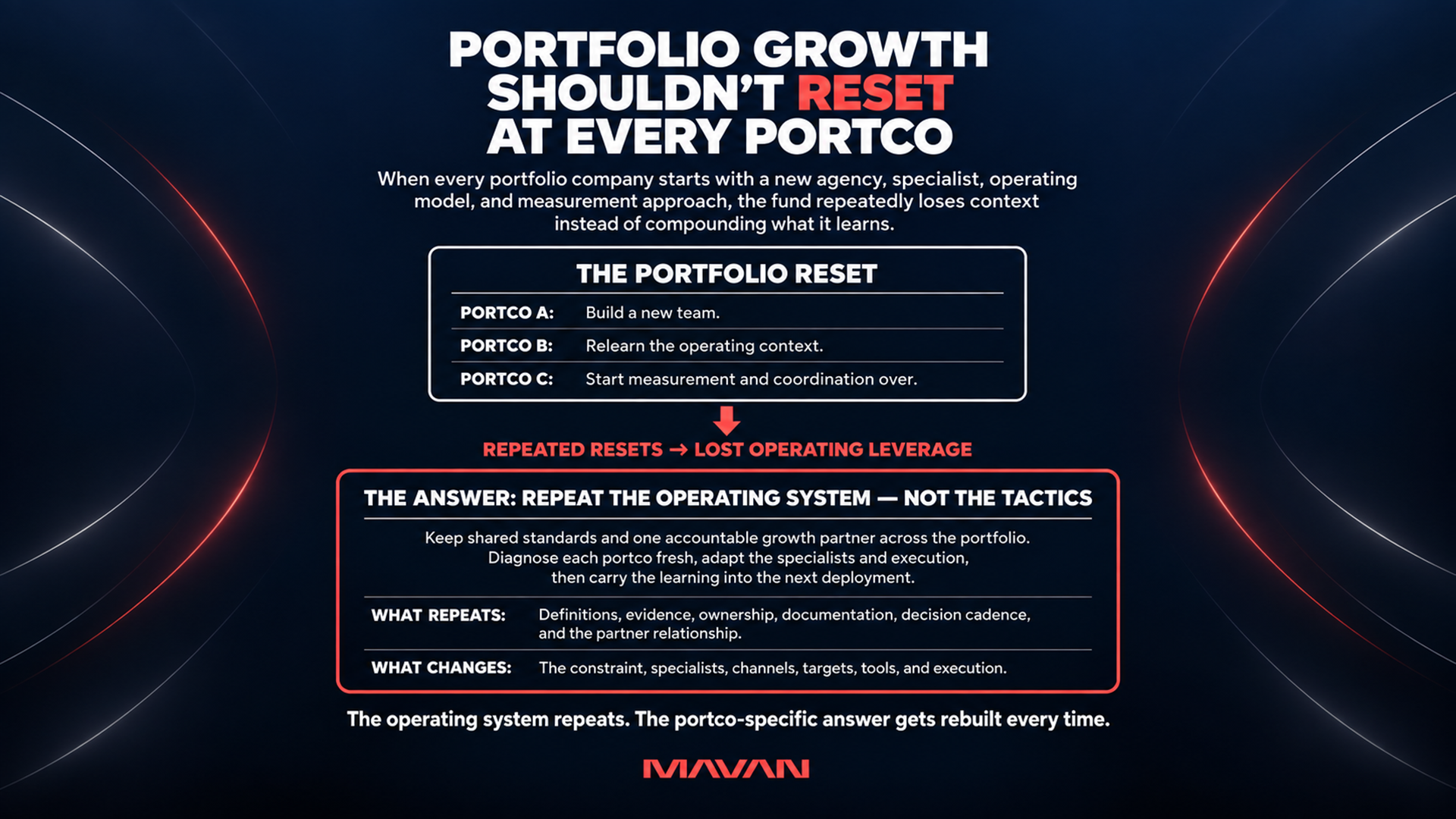
How Can Private Equity Funds Repeat Growth Across Portfolio Companies?
Growth becomes repeatable across a VC or PE portfolio when the fund installs one operating system instead of referring each company to a different specialist. The system has three parts: a single source of truth every team trusts, a board-ready scoreboard of ten to twelve metrics, and an embedded pod that diagnoses the real constraint in ninety days before anyone spends more.