
Zig-Zag is an iconic brand. The 140-year-old rolling paper company’s mascot – Le Zouave – has graced brick walls, billboards, album covers and even makes his home on many a body in tattoo form. There’s no denying Zig-Zag’s culture cache, they’re as indelible as those tattoos, and as indispensable in the world of self-rolled indulgences as ever. But in these days of search-engine optimization, being a world-renowned brand – and a rap-song-name-checked necessity when it comes to cannabis consumption – isn’t always enough to ensure your fans (and would be fans) can find you online.
When Zig-Zag came to MAVAN, they were losing new customers to third-party distributors who were using Zig-Zag’s hard-won reputation to sell other products. Having been outbought or outbid in the SEO marketplace, Zig-Zag were ranking lower than their competitors. It didn’t matter that everybody recognizes Zig-Zag, or that terms long-associated with their brand were being typed into search engines around the world, people weren’t finding their site. At least not easily.
To be blunt, Zig-Zag needed help. They wanted to increase their organic inbound traffic and as a result, increase their revenue. They needed a team who could strategize and execute a plan to rank for both non-branded and branded keywords. That’s where MAVAN comes in.
The Grass Looks Greener on the Other Side
When we set out to help a brand, we make sure we understand the problem intimately before we dive deep into the strategy. For Zig-Zag, the problem was surprising, but clear: they were an ultra-well-known brand, but their name recognition and cultural capital wasn’t paying off online. Competitors were positioning themselves as experts, and robbing the iconic brand of their rightful spot at the top of online searches.
People were being led away from Zig-Zag’s site.
To find a solution, we analyzed Zig-Zag’s sales and marketing engine and found two untapped growth opportunities:
- Conversion Rate Optimization (CRO)
- Search Engine Optimization (SEO) & Content Creation
Once we identified these opportunities, we were able to implement changes that grew Zig-Zag’s organic traffic by 80%, with 30% newsletter signup rates, and raised their revenue by 22%. So, how did we do it?
Roll With a Good Strategy
Whenever we tackle conversion rate optimization we start with the homepage, then product pages, collections pages, and separate side pages. Our goal is to capitalize on existing users first. For Zig-Zag the process came pretty naturally. We started with landing page testing, but since we knew Zig-Zag wasn’t ranking where it should be, we would need to explore their SEO and Content Marketing to address the ranking problem before we’d see major movement from our CRO efforts. But, even if addressing CRO issues wasn’t going to be enough to solve Zig-Zag’s problem, we still needed to make sure the pages were ready for when people did show up.

Strengthening CRO
To optimize Zig-Zag’s pages, we identified conversion levers that we felt would drive users and persuade them to act, such as:
● The brand’s rich 100+ year history
● The benefits of French Orange Rolling Papers
● How different papers burn
We started to roll out our changes on Zig-Zag’s home page and by the end of our process we had touched every product page, collections page, and side page. We worked to optimize conversion flow, running A/B tests on CTA text and button colors, making it as easy as possible for users to find the products they wanted.
From there, it was time to focus on content and SEO.
Purposeful Content Creation
Unsurprisingly, Zig-Zag’s content marketing was already pretty great. We got to help them optimize the content they were already creating so that it would be found in search ahead of the content of competitors and resellers.
We helped the brand to create three to four pieces of long form content every month to build topical authority online (to match their earned, real-world authority). Establishing a Zig-Zag blog, and positioning it as a go-to resource, we were able to integrate Zig-Zag’s core products at every turn, reestablishing the brand’s ownership of those terms, with posts like:
● The Best Rolling Papers and How They Affect Your Smoking Experience
● 5 Zig-Zag Premium Papers to Make Your Smoking Experience Unique
● Your Complete Guide to Rolling Paper Sizes 2022
● 10 Things You Didn’t Know About Rolling Paper
● Pre-Rolled Cones vs. Rolling Papers
Each piece was written with the reader and SEO in mind. We needed content that would actually interest people, but at all points it needed to speak to the search engine, too. So, we started our SEO content strategy with keyword search. We ran a competitive analysis of Zig-Zag’s direct competitors and third-party distributors and combined the findings with our own research.
This analysis led us to start with easy-to-win terms, working our way up to more difficult-to-own terms with high search volume. For example, we started with the term ‘rolling paper,’ and ended up in the top 10 results for ‘rolling machine’ – a term searched 8,100 times a month.
Not Just Blowing Smoke
Once we had finished our traffic behavior research and identified which conversion performed the best, worked with Zig-Zag’s internal design team to develop creative and run through A/B Testing, and created a content strategy that would produce SEO winning blogs and product page descriptions, all that was left was to watch things change.
We were thrilled to see our efforts pay off in a 22% increase in revenue from Zig-Zag’s top performing variant offer, a 30% increase in signups for Zig-Zag’s newsletters, a 47% increase in organic traffic, and 56% overall online sales growth.
Book a complimentary consultation with one of our experts
to learn how MAVAN can help your business grow.
Want more growth insights?
Thank you! form is submitted
[hubspot type=”form” portal=”20951211″ id=”9c538ed2-fb12-45f1-a573-ad7953c058cc”]
Related Content
-
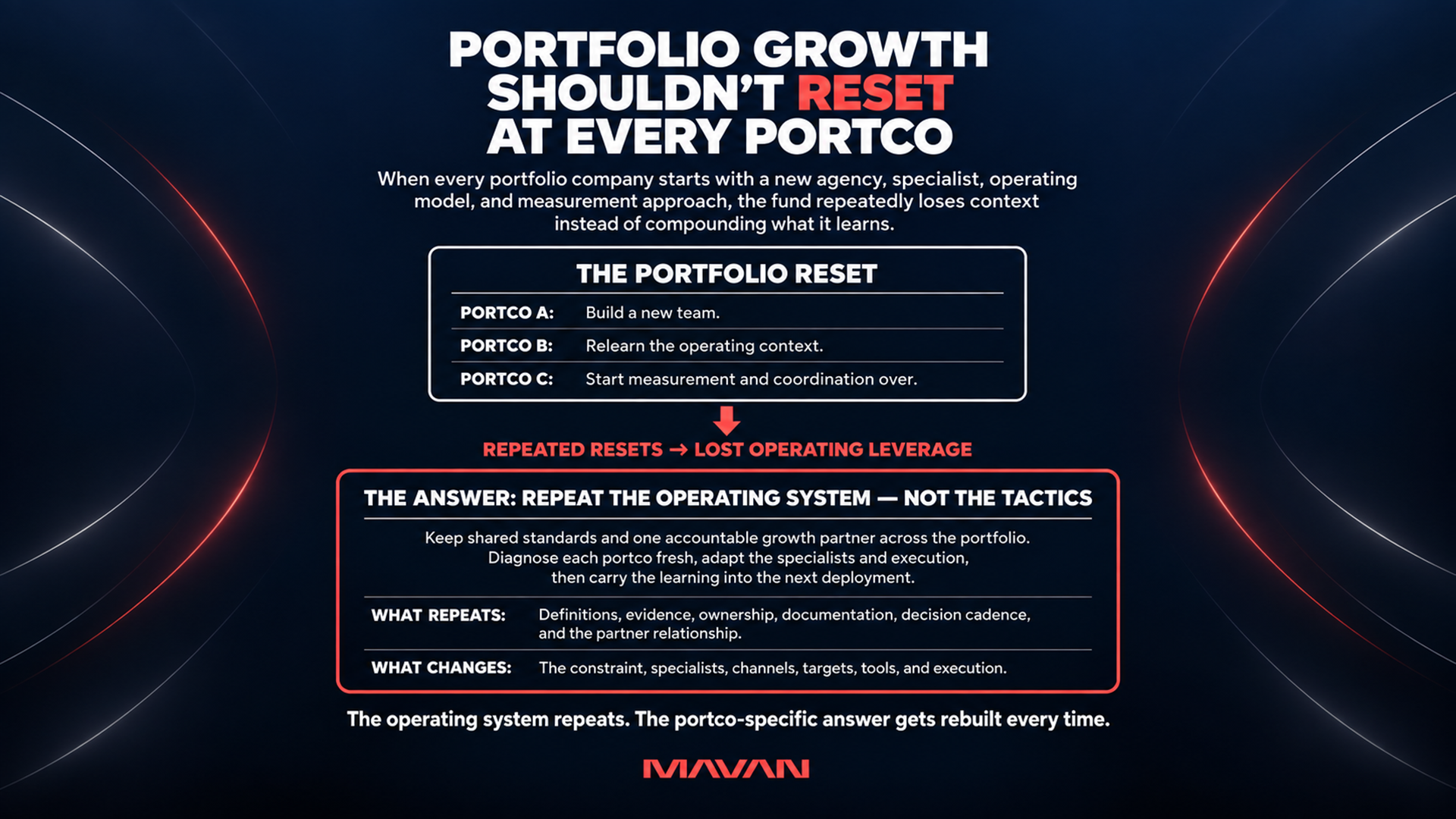
How Can Private Equity Funds Repeat Growth Across Portfolio Companies?
Growth becomes repeatable across a VC or PE portfolio when the fund installs one operating system instead of referring each company to a different specialist. The system has three parts: a single source of truth every team trusts, a board-ready scoreboard of ten to twelve metrics, and an embedded pod that diagnoses the real constraint in ninety days before anyone spends more.
-
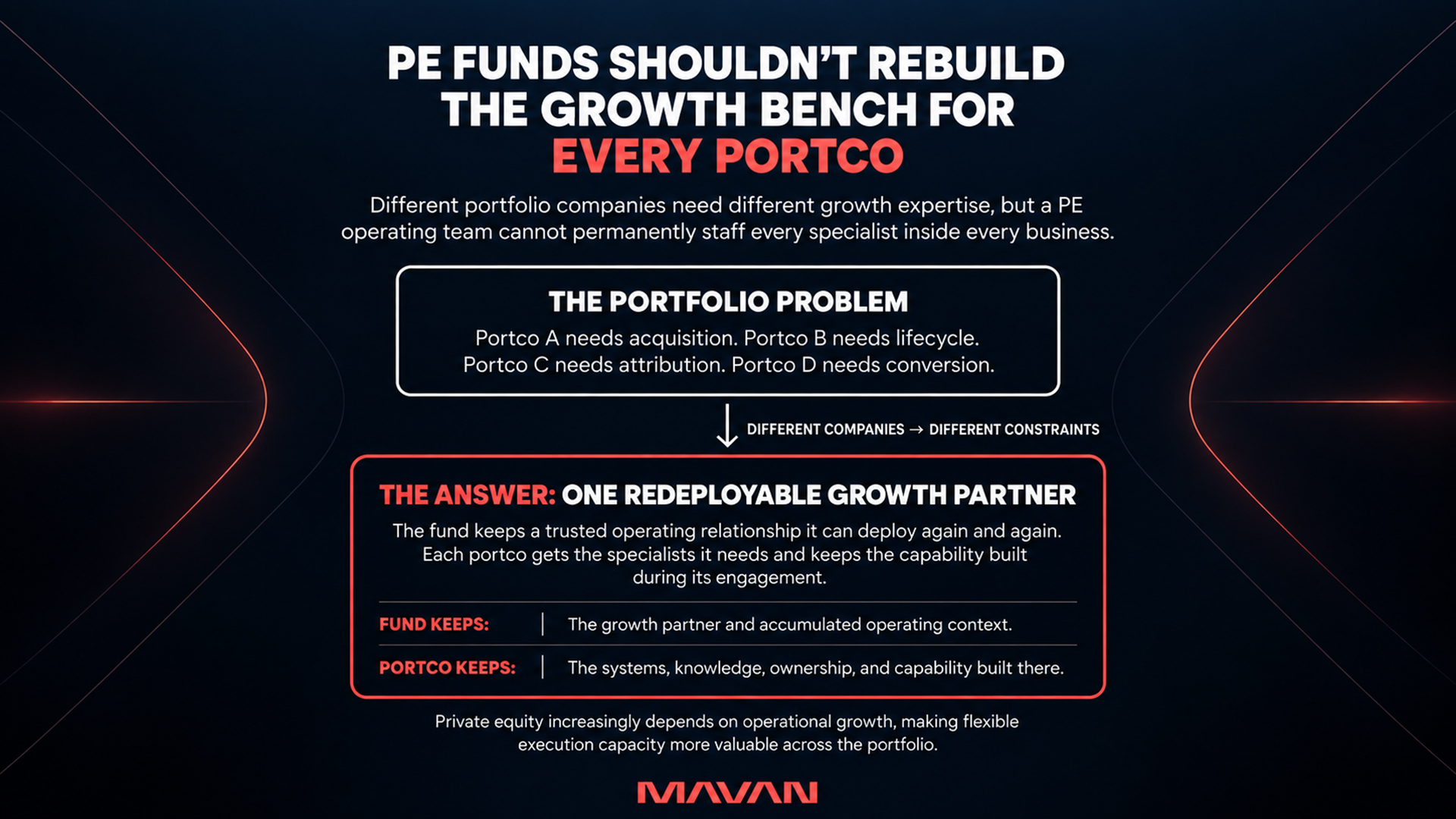
What Do PE Funds Want From a Portfolio Growth Partner? Repeatability!
What funds actually want from a portfolio growth partner is repeatability — a portable growth operating system that produces comparable results across very different portfolio companies. Repeatability shows up as a single source of truth, a board-grade scoreboard, a 90-day sprint, and a clean handoff, so each win compounds across the portfolio instead of staying at one company.
-
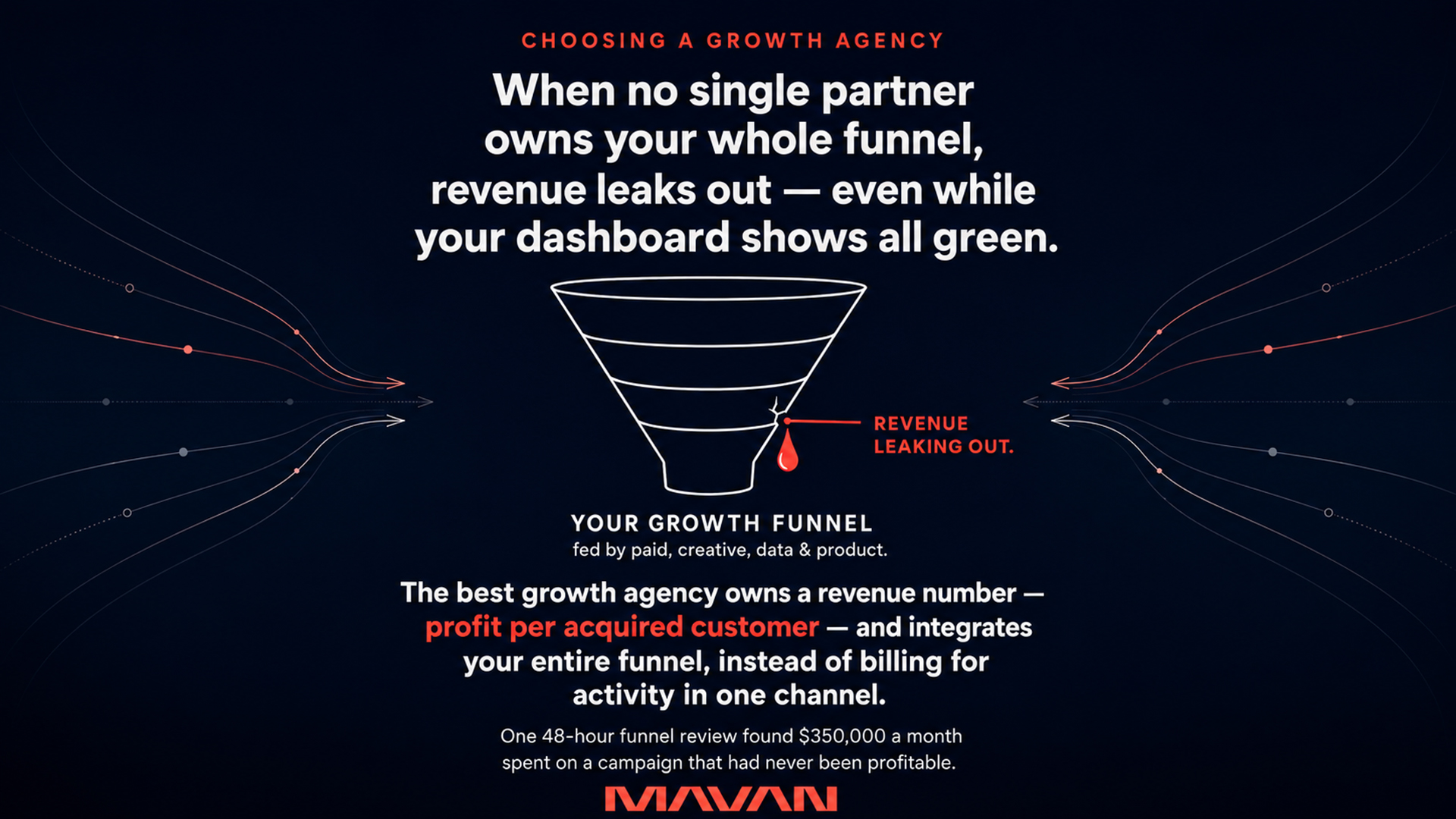
What’s the Best Growth Agency For VC & PE?
The best growth agency for a venture-backed or PE-owned company behaves less like a traditional agency and more like an embedded operating partner. It diagnoses your whole funnel, owns a revenue number such as CAC payback or LTV:CAC, and executes inside your team — rather than billing for activity in one channel.