
“Give me six hours to chop down a tree and I will spend the first four sharpening the ax.”
Abraham Lincoln, growth marketing guru
Summer is unofficially over. For most people, that means shifting attention to the return of football, dusting off fall wardrobes, and savoring all things pumpkin spice. But, for those of us who live and breathe digital marketing, our eyes are focused on something bigger: Black Friday. That’s because if you want to enjoy sustainable success during the busy holiday shopping season, you need to start prepping now.
For many companies, especially those operating in e-comm spaces, Black Friday and the weeks that follow account for a sizable chunk of their annual sales. Q4 is a make-or-break period that you can’t take lightly if you want to keep your customers, and your bottom line, happy. If you want to attract new and returning customers, there are some steps you can take now that will set you up for success.
We asked MAVAN’s team of growth leaders, data scientists, performance marketers, and product experts to give advice on things companies should start doing now to not only survive, but thrive, in the upcoming holiday season.
Here are the top tips from MAVAN leaders and our expert advisor network:

Start planning immediately
Matt Widdoes – CEO, MAVAN
Start working on campaign planning, creative production, and messaging before the leaves start changing colors. The earlier the better. Black Friday and the holiday season are prime time to boost sales and hit (or exceed🤞) revenue targets so it’s worth getting right. Optimizing your funnel through tests leading up to November can have a massive impact on your results once the buying frenzy starts.
Dive into the data and see what worked last year. You can use that information as your starting point. Leave no stone unturned when poring over the data: channels, targeting, landing pages, email, creative. Look at everything. Identify patterns that are consistent across the funnel, and come up with iterative tests that can be rolled out and scaled quickly once a breakout winner presents itself.
Also, don’t forget to look at what your competitors are doing. What do you need to do to stand out and rise above the noise?

Identify opportunities and be ready to scale
Ed Lee – Product & Growth Specialist, Adobe
Your best bet is to get your budget approved early and identify plans for multiple scenarios. Doing this gives you the ability to quickly flex up or down. The holidays are all about finding opportunities early and scaling up budgets to capture wins when costs are low.
You’ll also want to cast a wide net across your channels and audiences. Start by planning a prioritized list of channels where you’ll want to run campaigns and have everything you’ll need ready and waiting to press ‘Go.’ The sooner you have your campaigns, assets, event configurations, and budget, in order, the better.
The best time to scale up your budgets isn’t always immediately before/after Black Friday and Christmas. It can happen at any moment, so plan to look at your data frequently for signals of positive momentum and cost reduction. What was once competitive and cost prohibitive may be feasible for a brief period of time. Don’t let those potential wins pass you by.

Refresh your creative and start testing
Malachi Rose – VP of Growth, MAVAN
Use the time in the lead up to the holiday season to ensure you’ve got a bank of your best creatives ready to go. Without the Black Friday/Christmas offer, develop some fresh creative and test them now so you can identify winners before ad spend goes up and it’s time to scale. Ideally, you can iterate on those during the promotion when time is tight.
Develop a plan to measure incrementality. Figure out the true impact of the campaigns and offers you’re running and measure what the lift is over organic.
Do the grunt work early to maximize returns
Jan Prosek – Performance Marketing, MAVAN
It takes about 50 conversions to get out of the learning phase and you do not want to be spending precious time and money feeding the machine when everyone else is running optimized campaigns. The trick? Launch your campaigns 1-2 weeks ahead of time, enable AI and automate as much as possible. According to META, you can drive up to 50% better ROI if you follow all AI pillars.
You can keep your budget low in the lead-up time, but you want to be able to collect as many learnings as possible before Black Friday hits and costs can spike between 100%-200%.

Get your customers excited ahead of time
Kabir Shukla – Head of Product, MAVAN
With all the planning and work you’re putting in before Black Friday, why not get your customers to do the same? Let your customers create a Black Friday wish list in the weeks leading up to the holiday.
Whether it’s a dedicated, Black Friday-specific list, or simply enabling the ability to ‘watch’ or ‘favorite’ a product, prime your customers to seek you out once it’s time to get shopping. Some items may be discounted, some may not, but now you’ve put what they want in front of them all at once. This reduces time spent searching and browsing and makes buying a lot easier.
Put the right products in front of the right people. One size doesn’t fit all. If you have purchase history or saved items for a user, use that data to your advantage and show them the product they want, or something that goes with something you know they already have.
Get creative and go beyond regular product pages
Rich Skinner – Head of Data, MAVAN
Black Friday shoppers have become quite savvy and now expect their online shopping experience to be an event. Create bespoke landing pages for Black Friday so when a user clicks your ad, they’ll get confirmation that they’re in the right place and ease them into the conversion journey.
As always, data is your best friend. Part of this process should be to review the bounce rate of your key landing pages. If you expect heavier traffic for certain products, it’s worth making sure those product pages are optimized – that means bounce rates should be as low as possible, and conversion rates as high as possible. If a page clearly isn’t working, now is the time to fix it, or redirect to an alternative page.

Whatever changes you decide to make between now and Black Friday, the biggest long term gains will come from learning from the successes and failings of the season. A CTA not working as it should isn’t a complete failure, but an opportunity to learn. Both positive and negative data is helpful from a Conversion Rate Optimization perspective. It highlights what works, what doesn’t and equips you with the evidence you need to avoid making poor decisions in the future.
When you’re on your second helping of pumpkin pie, and are dividing your attention between watching football and avoiding political discussions with extended family, the last thing you want on your mind is how your Black Friday campaigns might perform. If you plan ahead and get the hard work out of the way now, you’ll not only have a more relaxing Thanksgiving, but you’ll be well on your way to a profitable Q4.
If you’d like more advice or even some help putting some of this advice into action, please reach out to [email protected] to set up an exploratory call.
Book a complimentary consultation with one of our experts
to learn how MAVAN can help your business grow.
Want more growth insights?
[hubspot type=”form” portal=”20951211″ id=”9c538ed2-fb12-45f1-a573-ad7953c058cc”]
Related Content
-
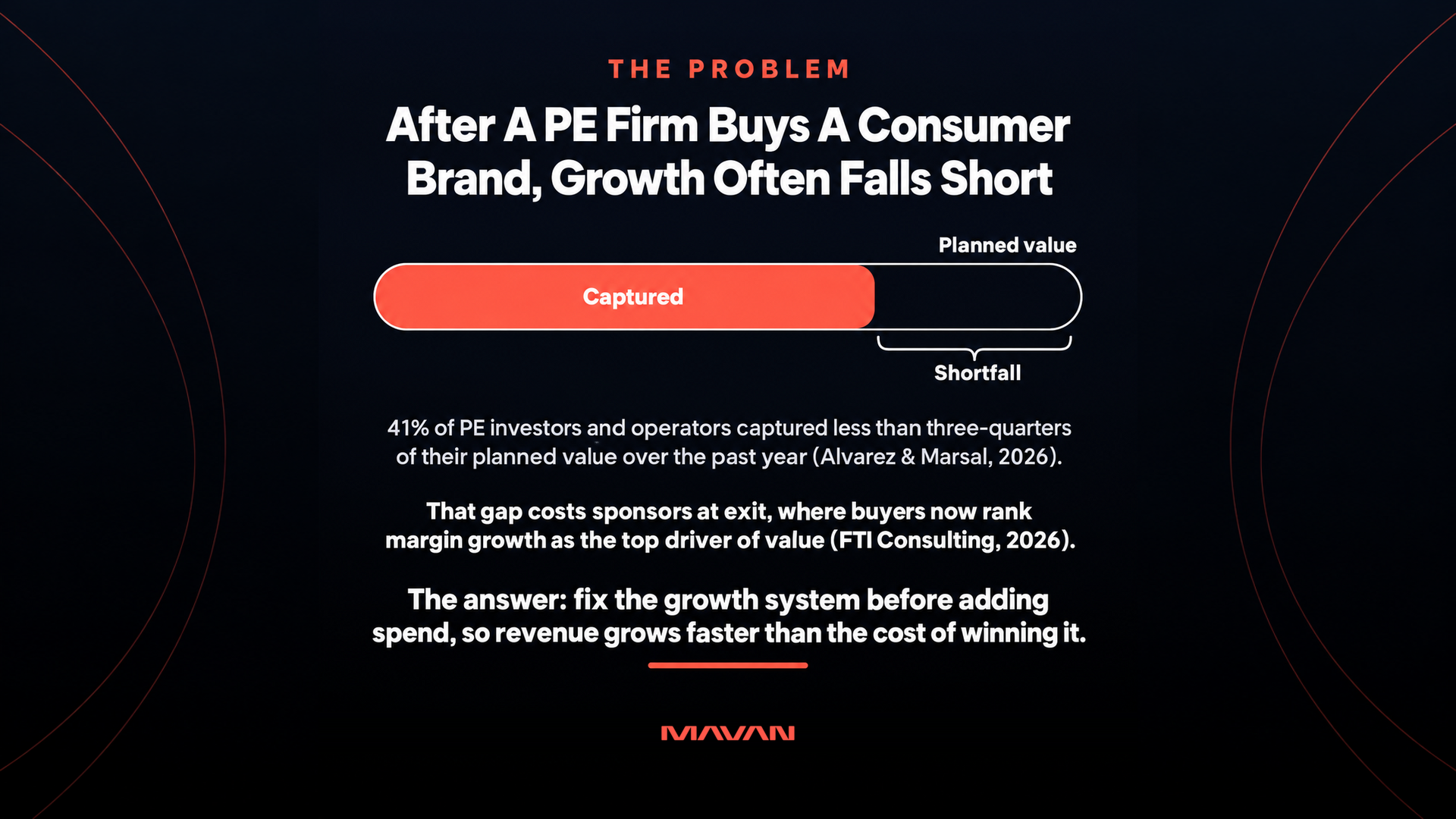
How Do PE Firms Accelerate Revenue And EBITDA Post-Acquisition?
PE firms accelerate revenue and EBITDA at consumer brands by fixing the growth system before adding spend. They reconcile the numbers and cut spend that never pays back. They lift conversion and repeat purchases, and they judge growth by contribution margin. Growth operating partners such as MAVAN diagnose that system in 28 days, then help execute the fix.
-
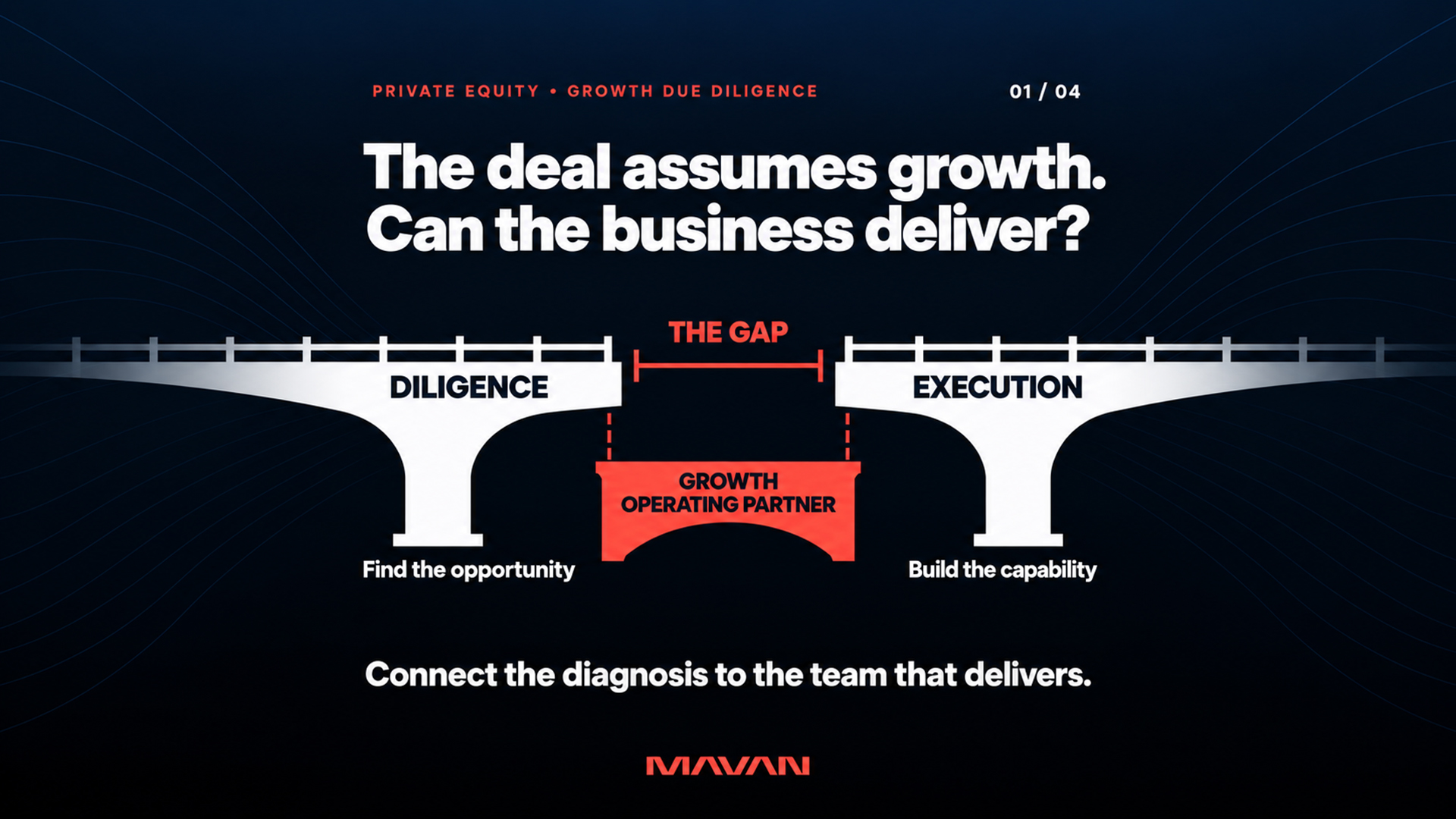
Who Does Growth & GTM Due Diligence for PE Deals?
Four kinds of provider run growth and go-to-market due diligence for private equity deals. Strategy consultancies test the market. Specialist commercial diligence firms audit the pipeline. Go-to-market boutiques rebuild the sales motion. And growth operating partners examine the full revenue engine from inside the business, then stay to operate it after close.
-
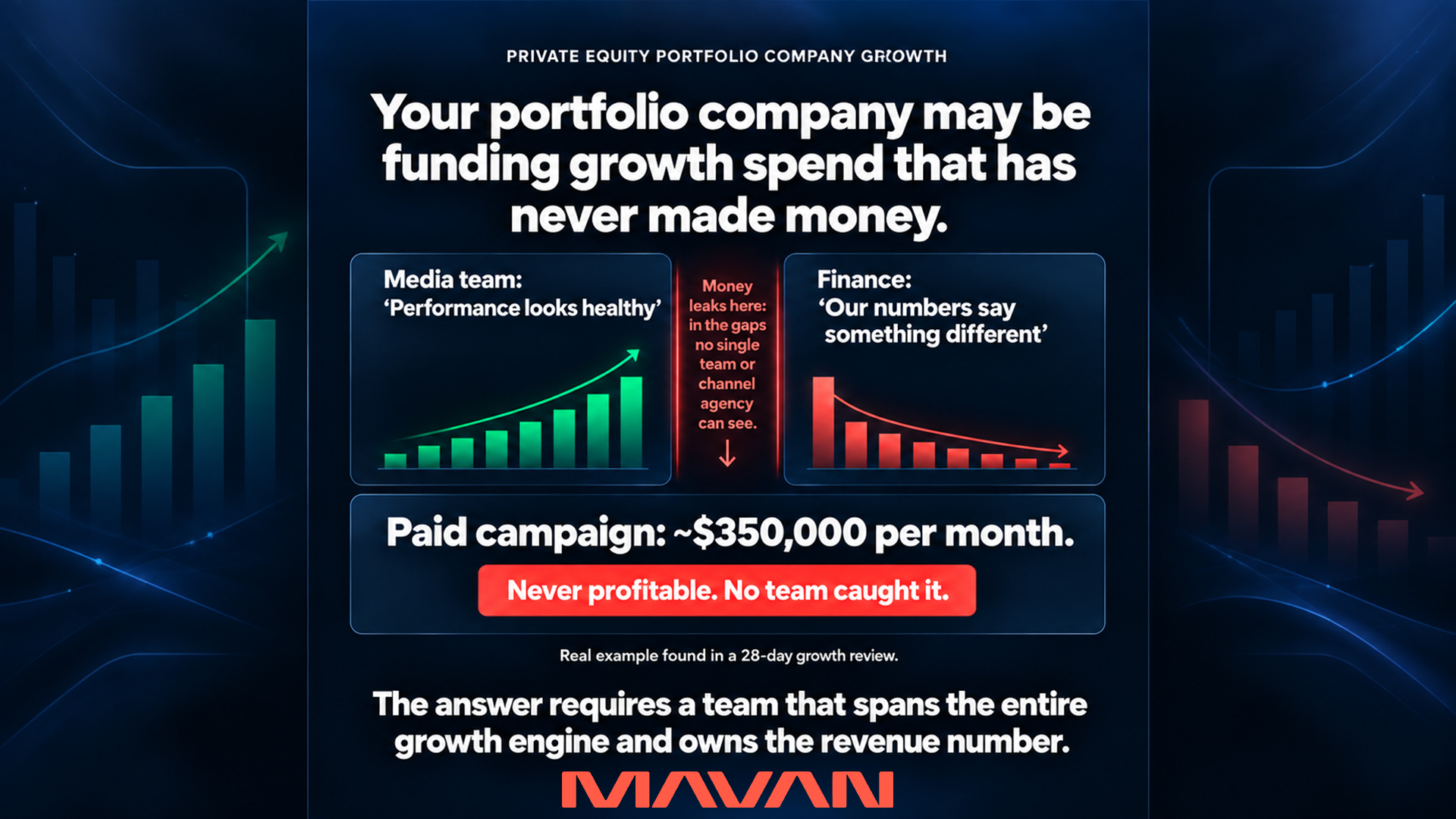
Who Is The Best Growth Partner For PE Portfolio Companies?
The best growth partner for a private equity portfolio company behaves like an operating partner you deploy, not an agency you brief. It reads the whole growth system before it spends, owns a revenue number alongside management, and leaves the capability behind so the sponsor can redeploy it.