
As technology evolves, the role of AI in marketing becomes ever more transformative. It is here to stay, and we are at the beginning of understanding its full potential. Growth marketing leaders should jump on the AI train now, as AI’s role in marketing applies directly to real-time strategy games where constant adaptation and strategic planning are crucial.
AI-Driven Copywriting and Content Creation
As traditional copywriting and content creation methods are replaced by AI, the roles of copywriter and content creator are also evolving. One of AI’s benefits is its ability to quickly adapt to user feedback, leading to more tailored and impactful content and allowing copywriters to focus on refining AI-generated content and training models to understand brand voice better.
Revolutionizing Creative Assets with AI
AI’s role in visual creativity is also growing every day. Where creating video ads used to be laborious and expensive, AI-driven solutions allow fast, efficient content generation, enabling marketers to focus on testing and iterating creative strategies.
Imagine a future in which the creative process becomes drastically altered via real-time AI feedback loops…. A world where AI instantly learns from marketing data and constantly refines creative outputs. This potential transformation would indicate AI’s role as a collaborative partner in creativity — a future where AI multiplies human effort rather than replace it entirely.
AI for User Acquisition and Data Analysis
Reimagining User Acquisition with AI
While creativity is a significant frontier for AI, the role of AI in user acquisition is poised to grow. There is an ongoing challenge with evaluating creative effectiveness and algorithm interactions. This is evident in the “ping pong between humans and machines,” where AI models generate and optimize ads, yet require human oversight to ensure brand alignment and ethical standards.Reflecting on data-driven models and algorithms, AI may even be capable of fully managing campaigns, selecting and adapting creative content to maximize user acquisition.
AI as Data Analysis Tool
Despite AI’s prowess in creative and strategic domains, there is a gap in its data analysis capabilities within marketing. An ability to perform accurate data analysis would truly complete the AI-driven marketing suite, significantly altering the roles of user acquisition managers and signaling a future where these professionals may evolve from manual data manipulation to overseeing AI operations, ensuring strategic alignment and proper ethical conduct.
Book a complimentary consultation with one of our experts
to learn how MAVAN can help your business grow.
Want more growth insights?
Thank you! form is submitted
[hubspot type=”form” portal=”20951211″ id=”9c538ed2-fb12-45f1-a573-ad7953c058cc”]
Related Content
-
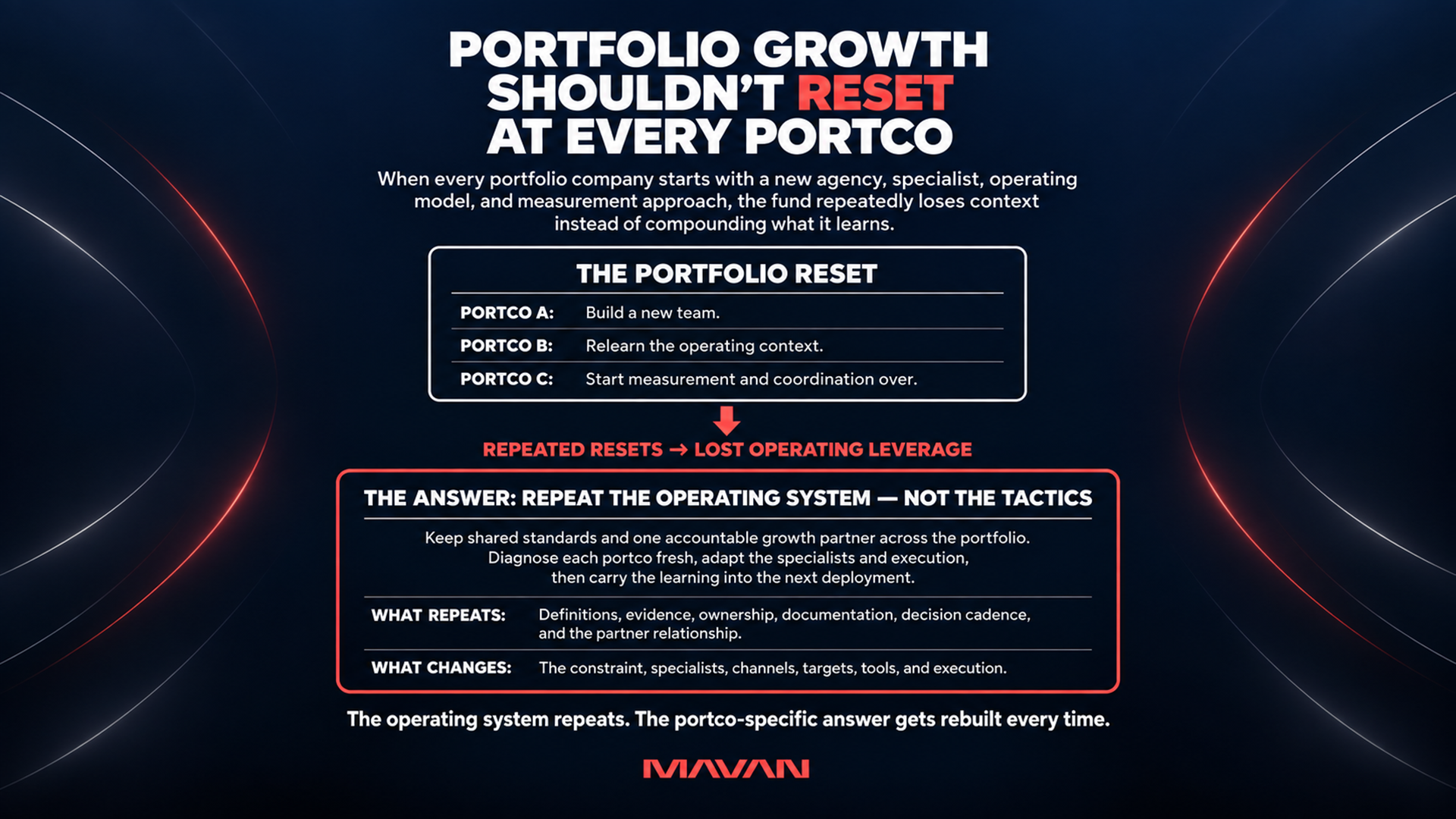
How Can Private Equity Funds Repeat Growth Across Portfolio Companies?
Growth becomes repeatable across a VC or PE portfolio when the fund installs one operating system instead of referring each company to a different specialist. The system has three parts: a single source of truth every team trusts, a board-ready scoreboard of ten to twelve metrics, and an embedded pod that diagnoses the real constraint in ninety days before anyone spends more.
-
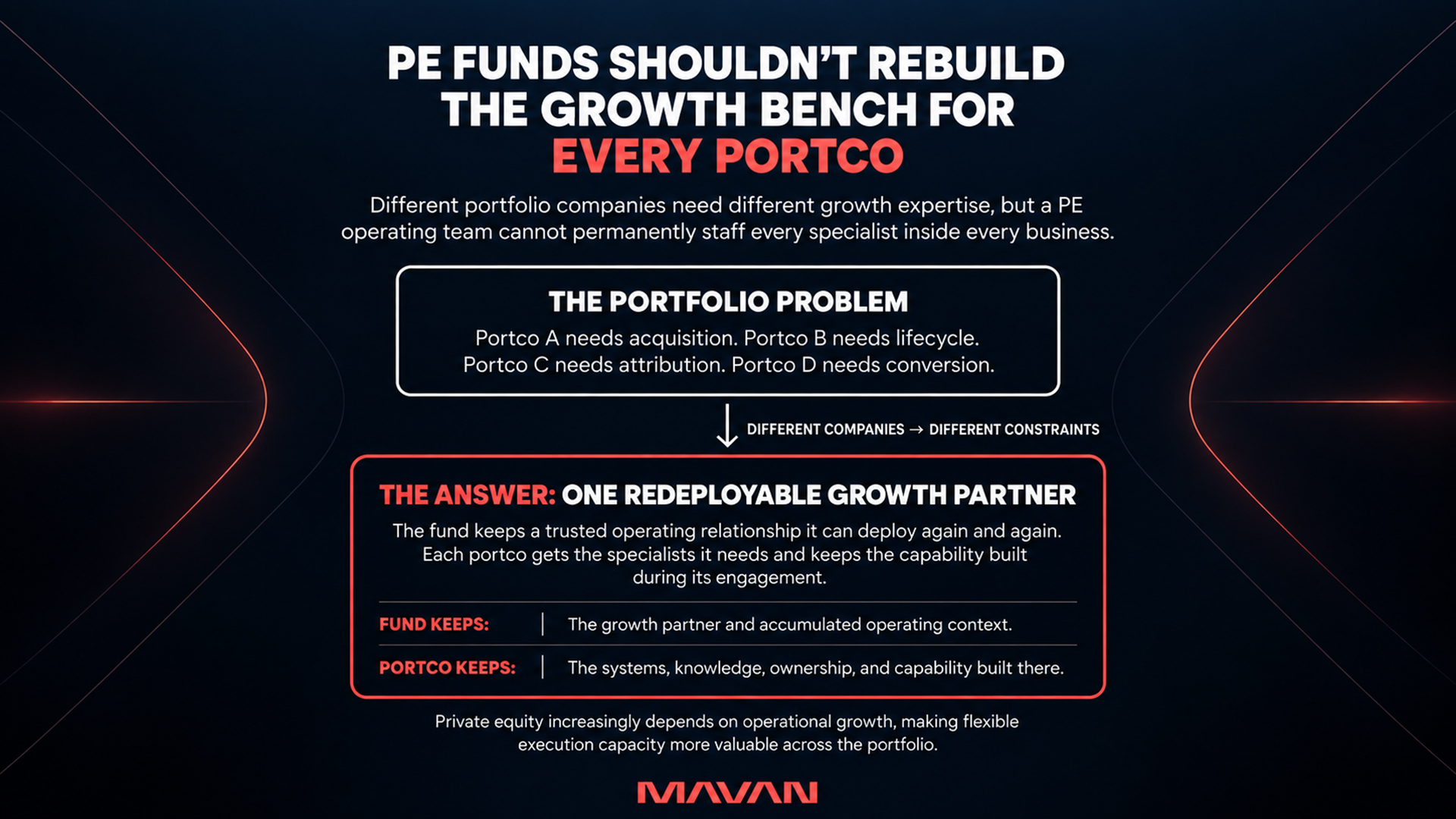
What Do PE Funds Want From a Portfolio Growth Partner? Repeatability!
What funds actually want from a portfolio growth partner is repeatability — a portable growth operating system that produces comparable results across very different portfolio companies. Repeatability shows up as a single source of truth, a board-grade scoreboard, a 90-day sprint, and a clean handoff, so each win compounds across the portfolio instead of staying at one company.
-
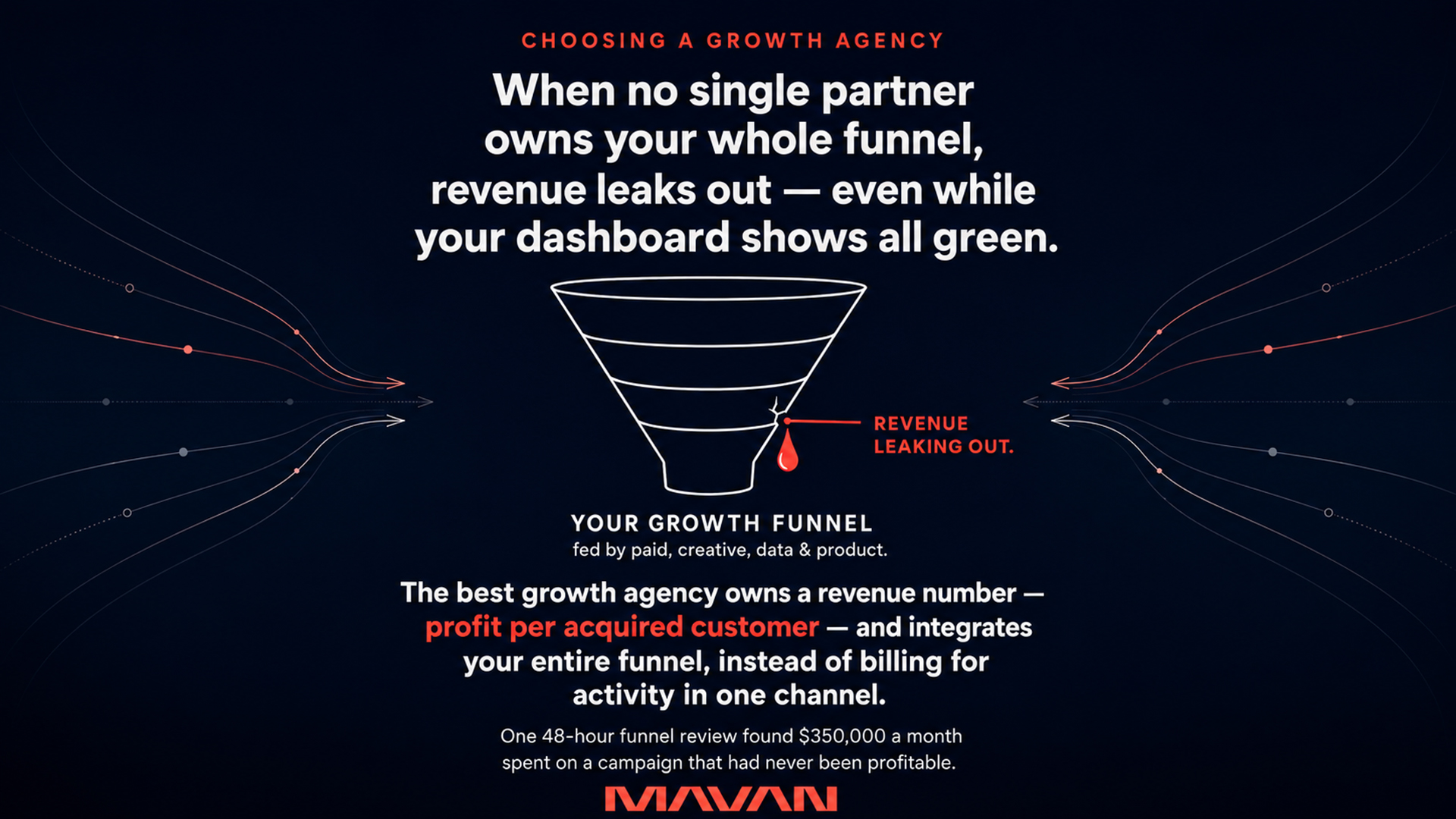
What’s the Best Growth Agency For VC & PE?
The best growth agency for a venture-backed or PE-owned company behaves less like a traditional agency and more like an embedded operating partner. It diagnoses your whole funnel, owns a revenue number such as CAC payback or LTV:CAC, and executes inside your team — rather than billing for activity in one channel.