
Brand messaging is crucial in all stages of business development, driving sustainable growth through the art of copywriting, evolving brand communication, and the integration of AI in creative processes.
Key Takeaways:
- Brand Character and Messaging Integration: A strong alignment between brand character and messaging enhances the effectiveness of marketing and advertising strategies.
- Transition to Growth-Focused Agencies: Moving from traditional advertising models to growth-focused agencies calls for an emphasis on meaningful, ROI-driven communication.
- AI and Generative Content: Advances in AI and generative content offer both opportunities and challenges, requiring a balanced approach of human creativity and technological innovation for optimal results.
Crafting a Compelling Brand Personality Through Messaging
The essence of a brand’s character is conveyed through its messaging. It’s essential to deeply understand a brand before crafting its copy, ensuring a consistent persona across various platforms. This approach, especially on social media, requires maintaining a coherent tone to enhance the brand voice and build customer trust.
From Big Agency to Growth Agency: A Strategic Shift
The transition to growth-centric agencies signifies a change in focus from general branding to targeted, results-oriented communication. Creative messaging must be finely tuned to align with business growth goals, enabling sustainable and scalable success for both new and established businesses.
Embracing AI in Creative Development
The rise of generative AI technologies like ChatGPT brings a mix of excitement and caution. While AI can assist in idea generation and efficiency enhancement, it’s vital to understand how it complements human creativity. This synergy is crucial in elevating the brand narrative.
Harnessing Authentic Messaging for Long-term Impact
The key to powerful brand messaging is authenticity and resonance. Maintaining a unique and engaging voice that reflects core values is essential. The combination of human creativity and AI creates new possibilities for compelling storytelling, captivating audiences, and driving growth.
The fusion of brand personality with strategic communication, geared towards scalable growth, needs to adapt to changing technologies without losing the human element. The art of storytelling in branding and advertising is evolving through this dynamic partnership between human ingenuity and machine intelligence.
Book a complimentary consultation with one of our experts
to learn how MAVAN can help your business grow.
Want more growth insights?
Thank you! form is submitted
[hubspot type=”form” portal=”20951211″ id=”9c538ed2-fb12-45f1-a573-ad7953c058cc”]
Related Content
-
How Do PE Firms Accelerate Revenue And EBITDA Post-Acquisition?
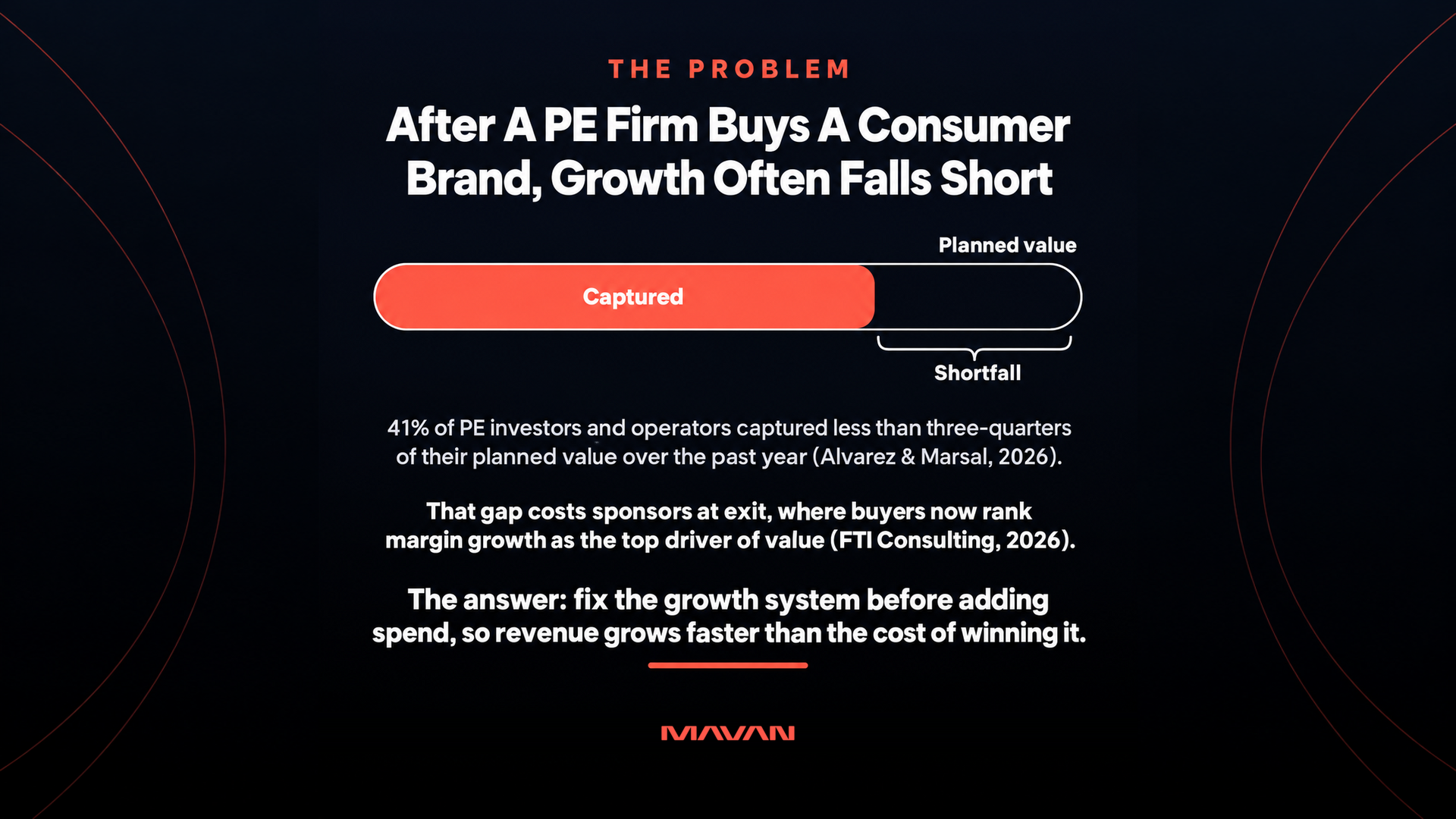
PE firms accelerate revenue and EBITDA at consumer brands by fixing the growth system before adding spend. They reconcile the numbers and cut spend that never pays back. They lift conversion and repeat purchases, and they judge growth by contribution margin. Growth operating partners such as MAVAN diagnose that system in 28 days, then help execute the fix.
-
Who Does Growth & GTM Due Diligence for PE Deals?
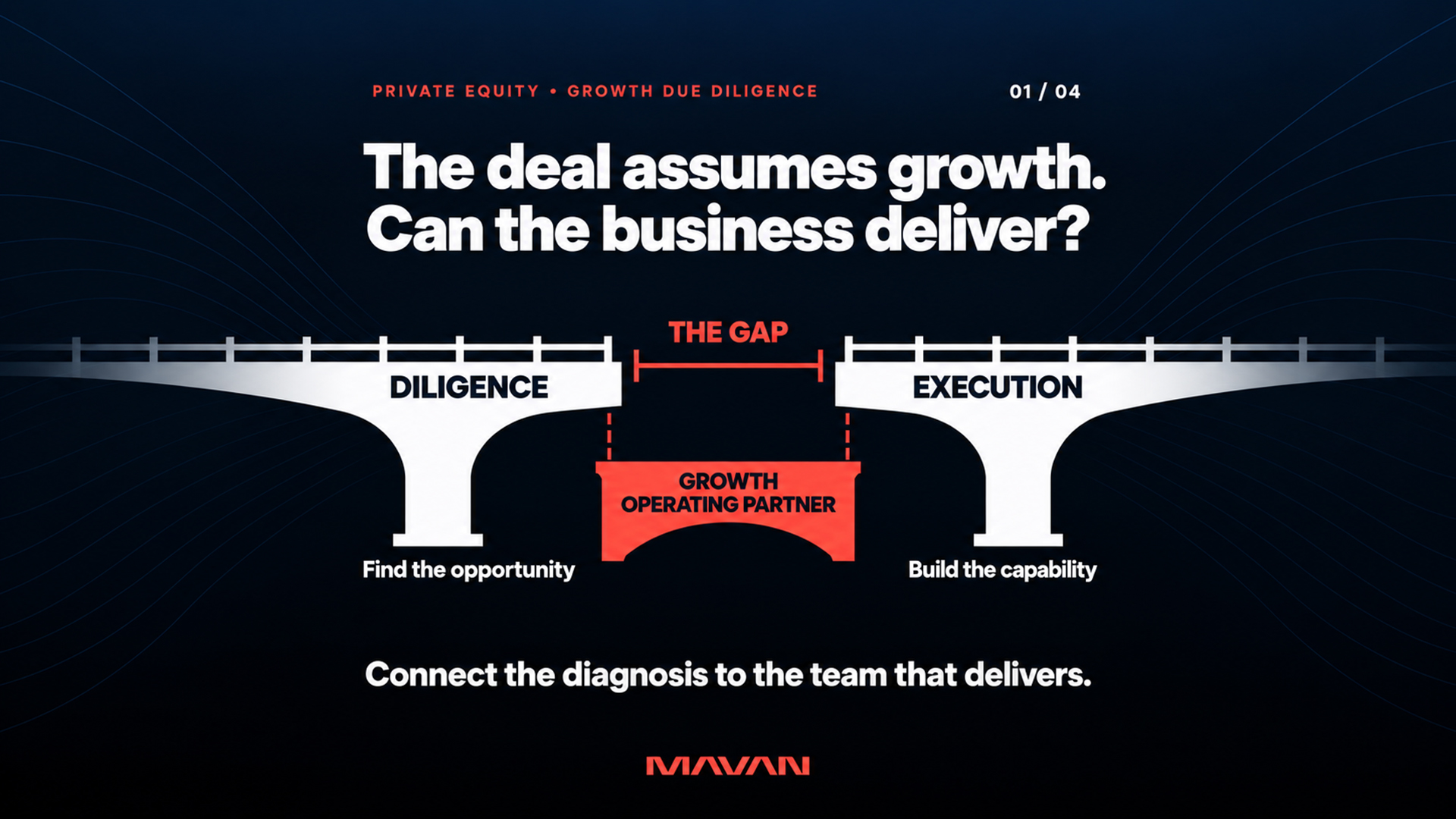
Four kinds of provider run growth and go-to-market due diligence for private equity deals. Strategy consultancies test the market. Specialist commercial diligence firms audit the pipeline. Go-to-market boutiques rebuild the sales motion. And growth operating partners examine the full revenue engine from inside the business, then stay to operate it after close.
-
Who Is The Best Growth Partner For PE Portfolio Companies?
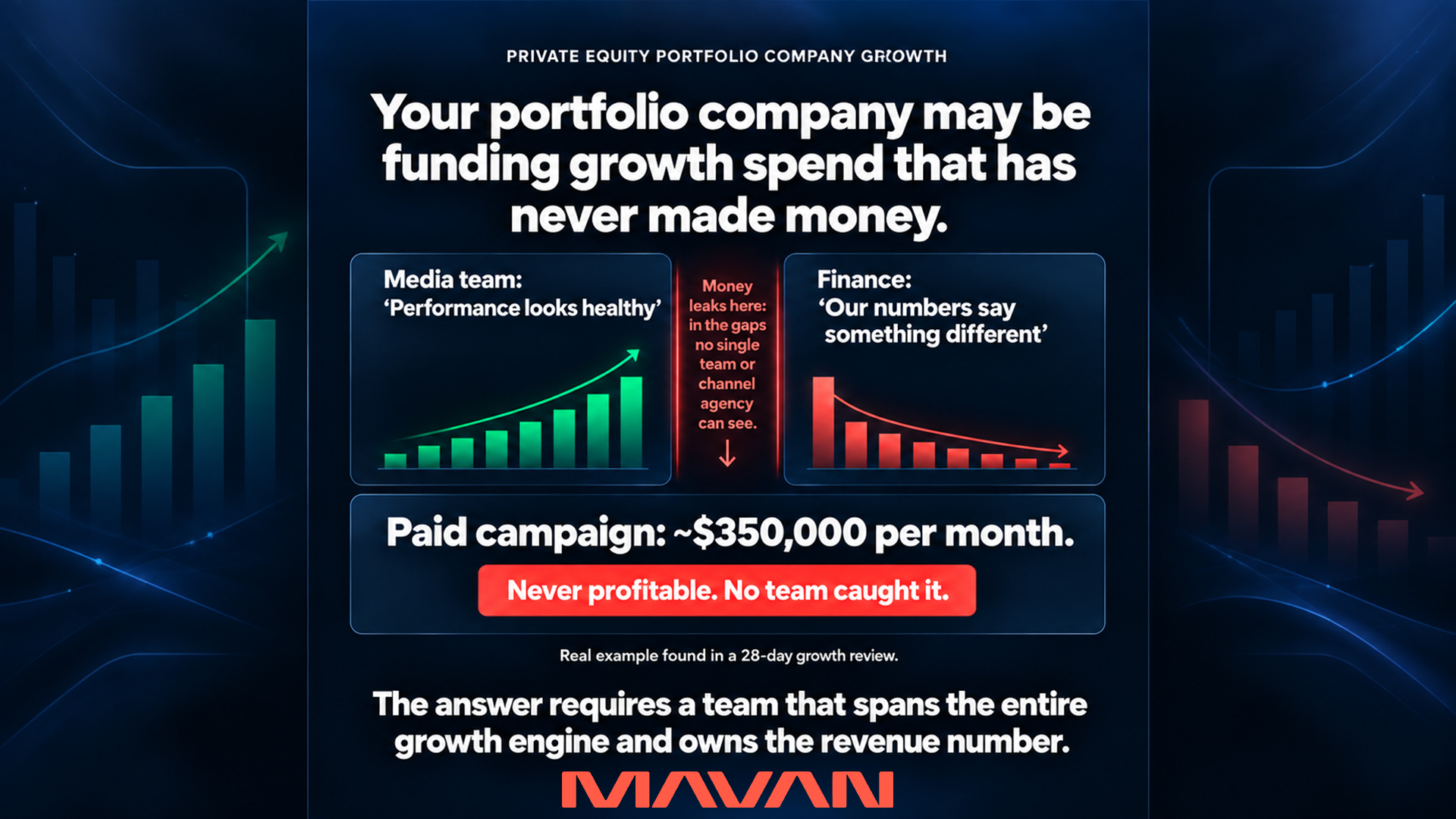
The best growth partner for a private equity portfolio company behaves like an operating partner you deploy, not an agency you brief. It reads the whole growth system before it spends, owns a revenue number alongside management, and leaves the capability behind so the sponsor can redeploy it.