
In this episode of Growth@Scale, Matt sits down with mobile gaming aficionado Moshi Blum. From his experience leading teams at mobile companies like Viber and Adjust to his current position as Chief Marketing Officer at the mobile gaming company Beach Bum, Moshi shares how his team at Beach Bum is integrating AI to enhance user acquisition, streamline creative workflows, and how to extract meaningful, actionable insights from user data.
Key takeaways:
1️⃣ AI-driven creativity at scale:
Learn how to use AI to generate compelling ads and even create Spotify-worthy music tracks to stand out in a competitive market.
2️⃣ Data insights from user feedback:
Discover how AI tools help analyze app reviews to uncover user needs and craft data-informed strategies that drive growth.
3️⃣ The future of marketing with AI:
Find out why adopting AI now is critical for staying competitive by empowering small teams to compete with industry leaders.
Whether you’re a startup founder or a seasoned marketer, listen to the full episode now and discover how you can harness AI for sustained growth.
🎧 Tune in now on Apple Podcasts or Spotify. Or read the transcript here.
Book a complimentary consultation with one of our experts
to learn how MAVAN can help your business grow.
Want more growth insights?
Thank you! form is submitted
[hubspot type=”form” portal=”20951211″ id=”9c538ed2-fb12-45f1-a573-ad7953c058cc”]
Related Content
-
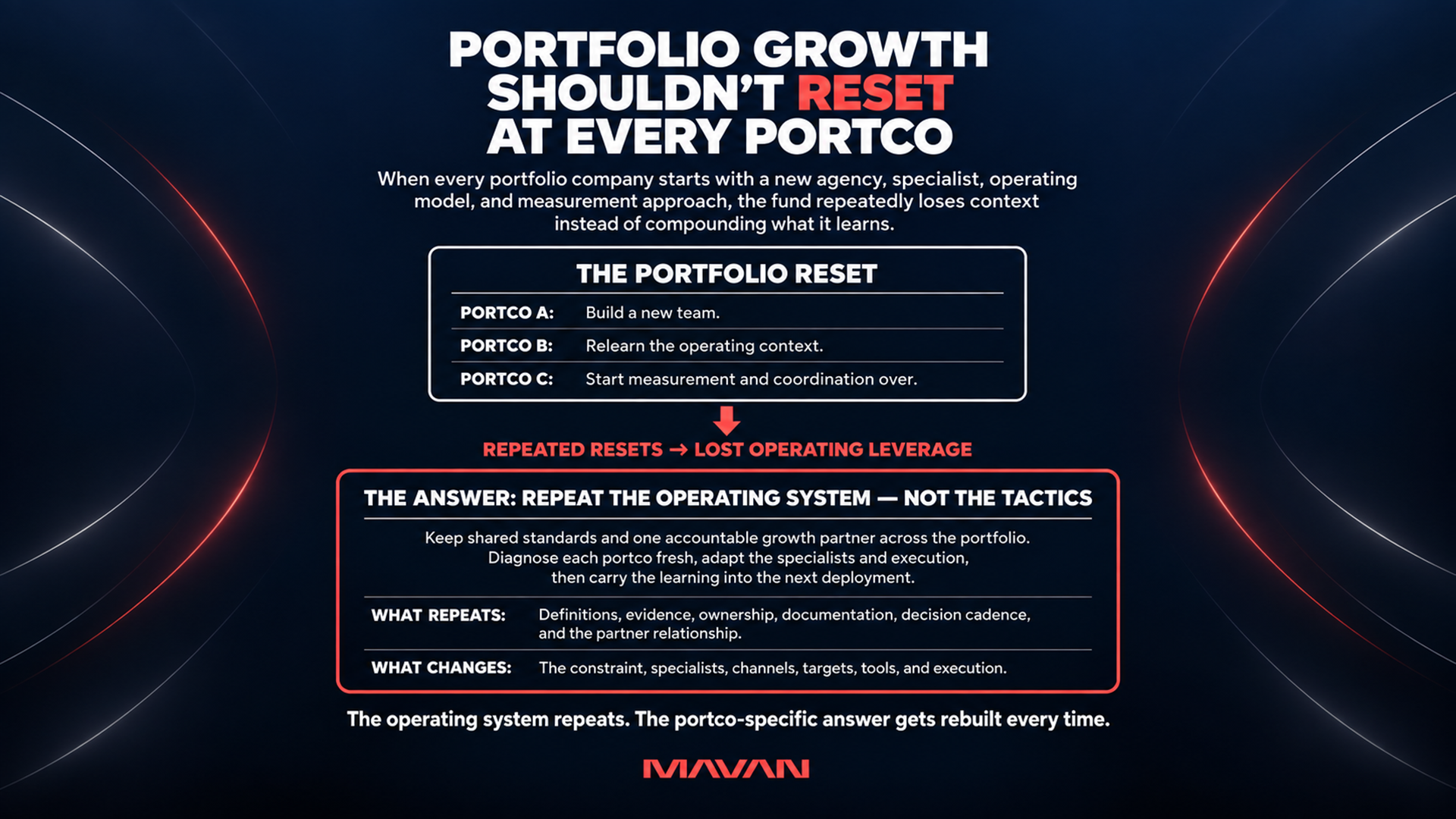
How Can Private Equity Funds Repeat Growth Across Portfolio Companies?
Growth becomes repeatable across a VC or PE portfolio when the fund installs one operating system instead of referring each company to a different specialist. The system has three parts: a single source of truth every team trusts, a board-ready scoreboard of ten to twelve metrics, and an embedded pod that diagnoses the real constraint in ninety days before anyone spends more.
-
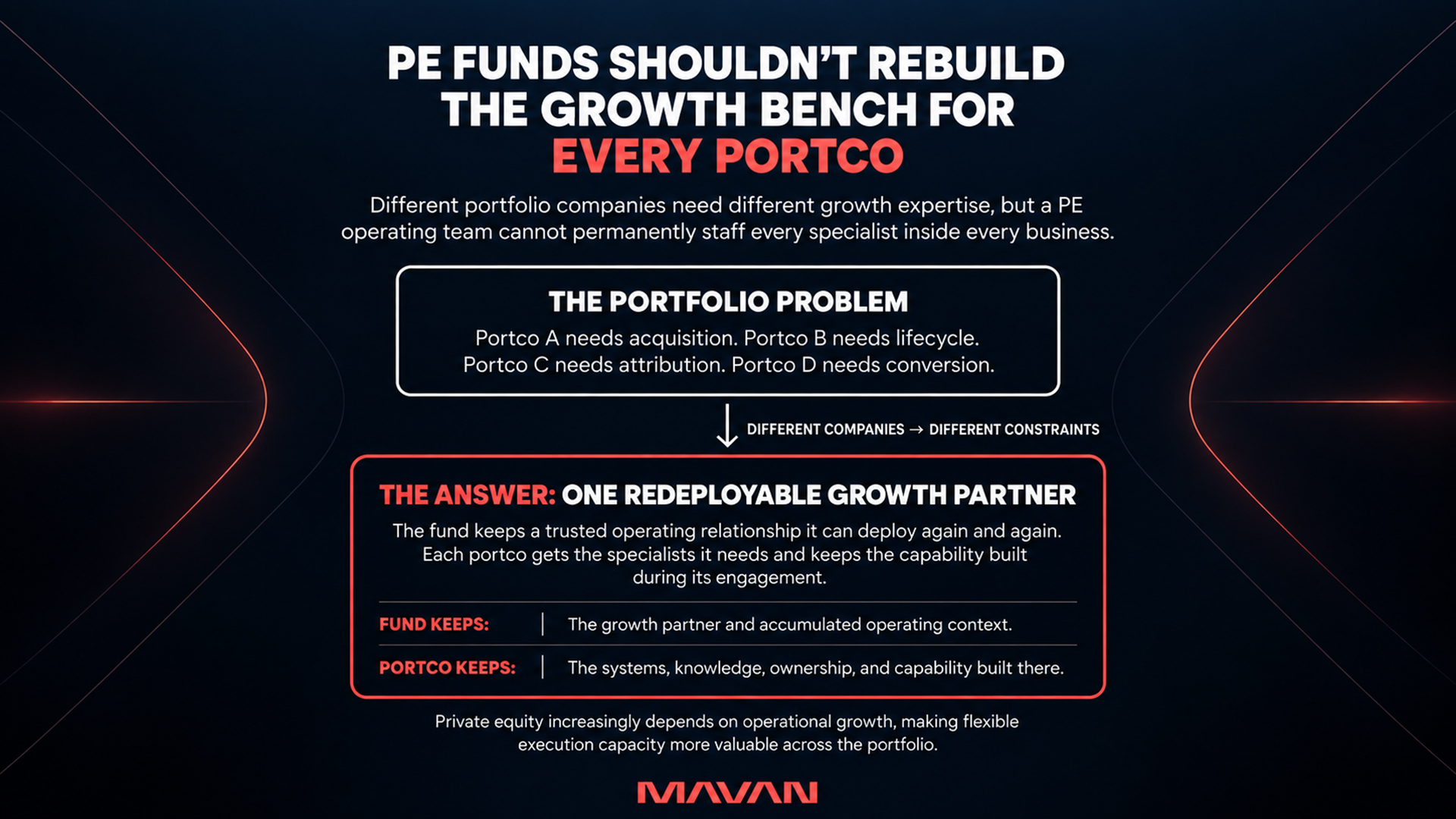
What Do PE Funds Want From a Portfolio Growth Partner? Repeatability!
What funds actually want from a portfolio growth partner is repeatability — a portable growth operating system that produces comparable results across very different portfolio companies. Repeatability shows up as a single source of truth, a board-grade scoreboard, a 90-day sprint, and a clean handoff, so each win compounds across the portfolio instead of staying at one company.
-
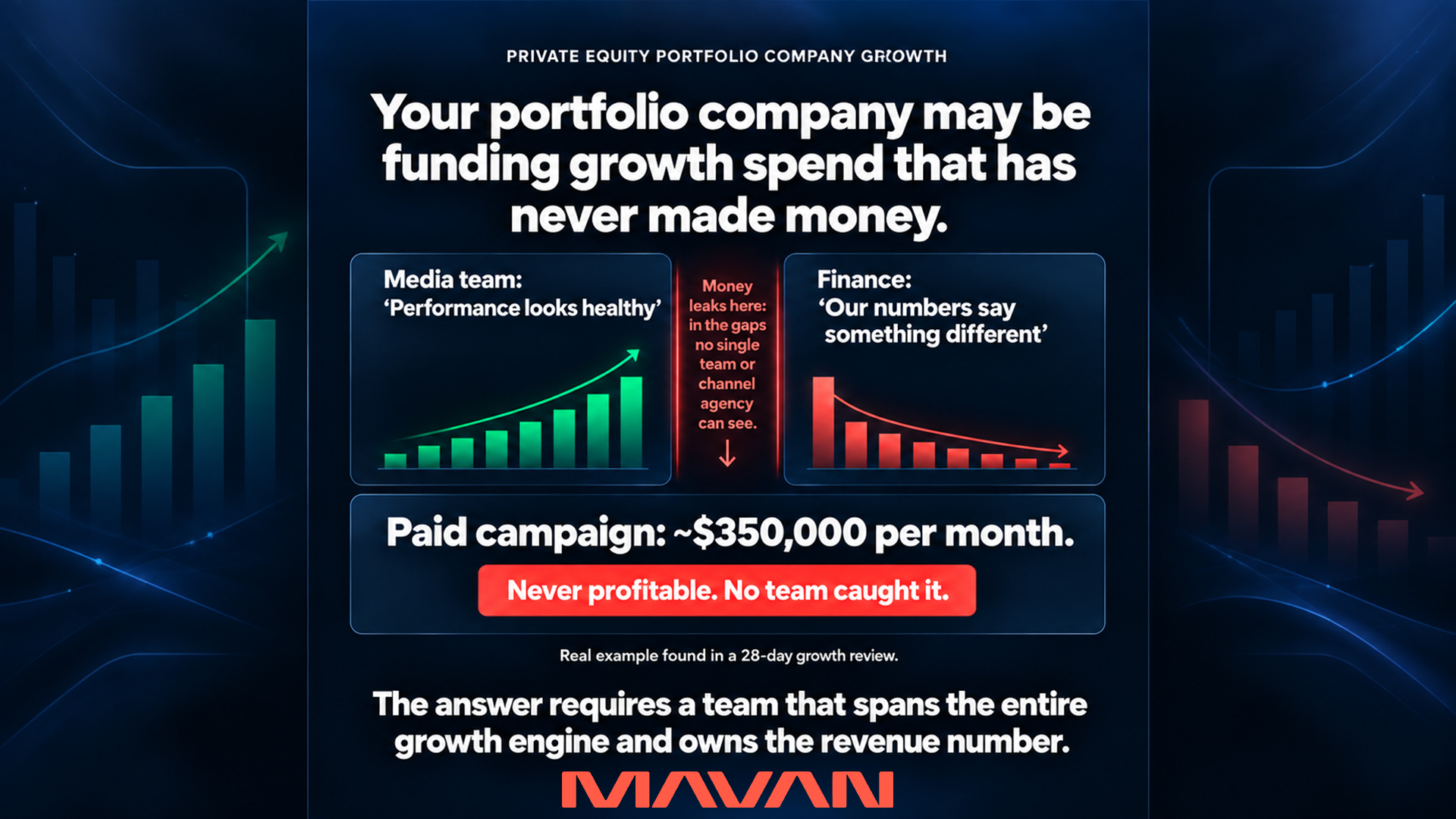
Who Is The Best Growth Partner For PE Portfolio Companies?
The best growth partner for a private equity portfolio company behaves like an operating partner you deploy, not an agency you brief. It reads the whole growth system before it spends, owns a revenue number alongside management, and leaves the capability behind so the sponsor can redeploy it.