
On the latest episode of Growth@Scale, host Matt Widdoes is joined by Yousuf Bhaijee, a growth advisor formerly of Zynga, Disney, and Ease for a discussion about the importance of building a cross-functional growth team. By fostering cross-functional communication, businesses unlock innovative strategies and solutions for growth that might otherwise remain undiscovered.
Cross-Functional Growth Strategies
Don’t confine growth to one department. Growth should be the goal across the whole organization. Successful growth strategies require integration across various departments, ensuring a cohesive approach. At Zynga, for instance, Yousuf managed cross-promotion between games, leveraging the company’s vast network to optimize user retention and engagement, a clear example of cross-functional growth in action.
Leveraging Cross-Promotion and Retention
Cross-promotion, especially in a network as vast as Zynga’s, offers a prime example of maximizing existing resources for growth. By strategically moving users between games, Zynga could maintain engagement and reduce churn, all without the need for external user acquisition efforts. This tactic not only saved costs but also leveraged the existing user base more effectively.
Hiring for Growth Roles
Hiring growth leaders can be an expensive and time consuming process. Yousuf recommends experimenting with a ‘Try Before You Buy’ approach. This strategy involves collaborating with potential hires on real problems before making a hiring decision, ensuring a mutual fit and reducing the high failure rates often associated with growth roles. It’s a practical approach that allows both the company and the candidate to assess compatibility in real-world scenarios.
Building a Growth-Oriented Culture
A growth-oriented culture is fundamental. Yousuf advises founders and executives to deepen their understanding of growth. He suggests working with advisors to develop a growth mindset and align the hiring process with the company’s specific growth needs and culture. This approach ensures that growth is embedded in the organization’s DNA, transcending traditional departmental boundaries.
Growth is everyone’s responsibility. You can’t put the weight of the world on your “growth guy” and let the rest of the organization go about its business. Yousuf Bhaijee’s collaborative, holistic approach to growth aligns every department on shared, common goals and, if applied to your company, can put you on the path to sustainable, scalable growth.
For more growth insights every week, be sure to subscribe to Growth@Scale.
Book a complimentary consultation with one of our experts
to learn how MAVAN can help your business grow.
Want more growth insights?
Thank you! form is submitted
[hubspot type=”form” portal=”20951211″ id=”9c538ed2-fb12-45f1-a573-ad7953c058cc”]
Related Content
-
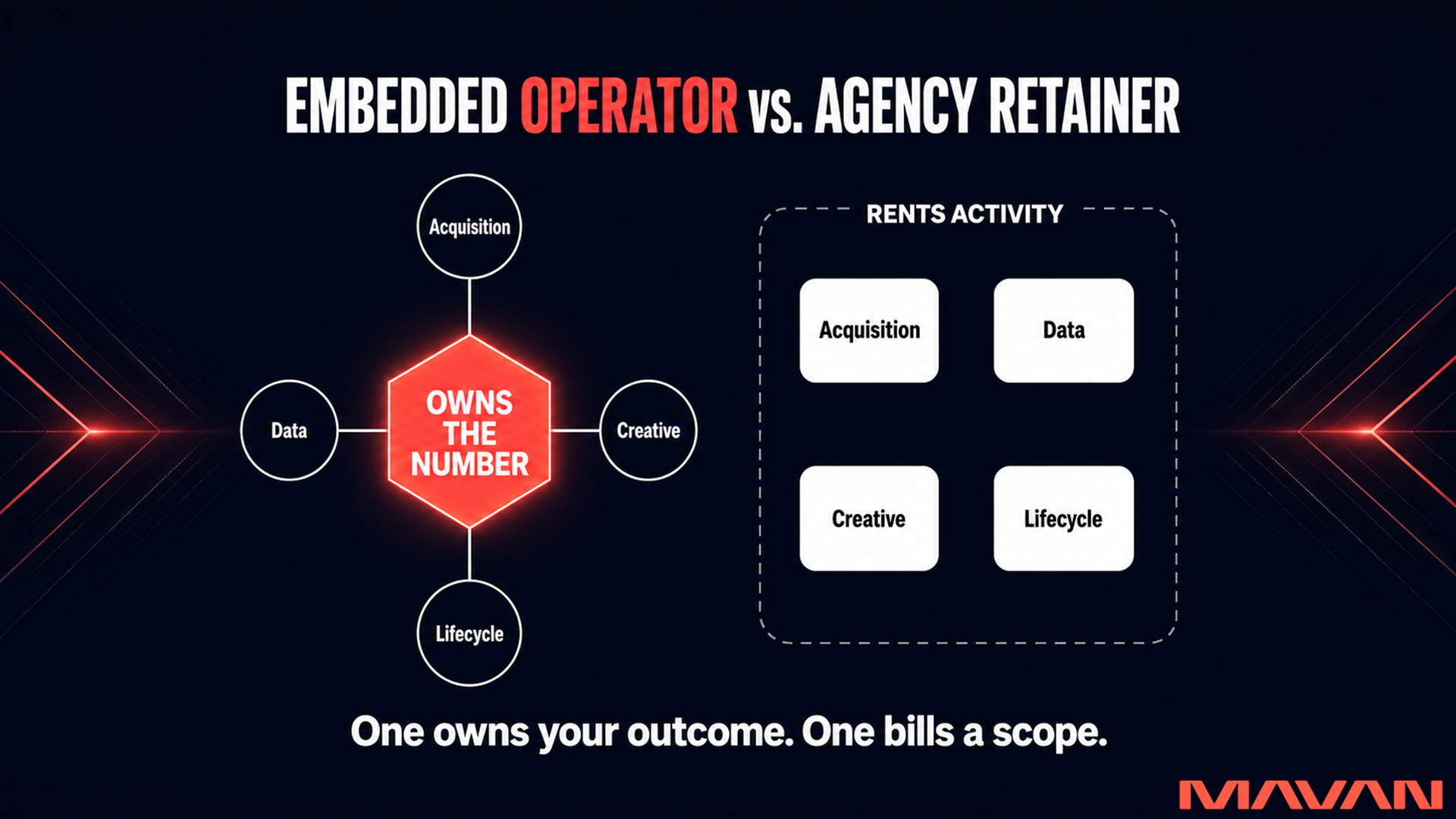
Which Is Best For Growth: Embedded Operators or Agency Retainers?
An embedded growth operator is an outside team that plugs into your company — your Slack, your data, your standups — and owns a business outcome as one accountable unit. A traditional agency retainer rents you activity at arm’s length across separate scopes. The embedded model exists to end the fragmentation that stalls venture-backed growth.
-

What Do Funds Want From a Portfolio Growth Partner? Repeatability!
What funds actually want from a portfolio growth partner is repeatability — a portable growth operating system that produces comparable results across very different portfolio companies. Repeatability shows up as a single source of truth, a board-grade scoreboard, a 90-day sprint, and a clean handoff, so each win compounds across the portfolio instead of staying at one company.
-
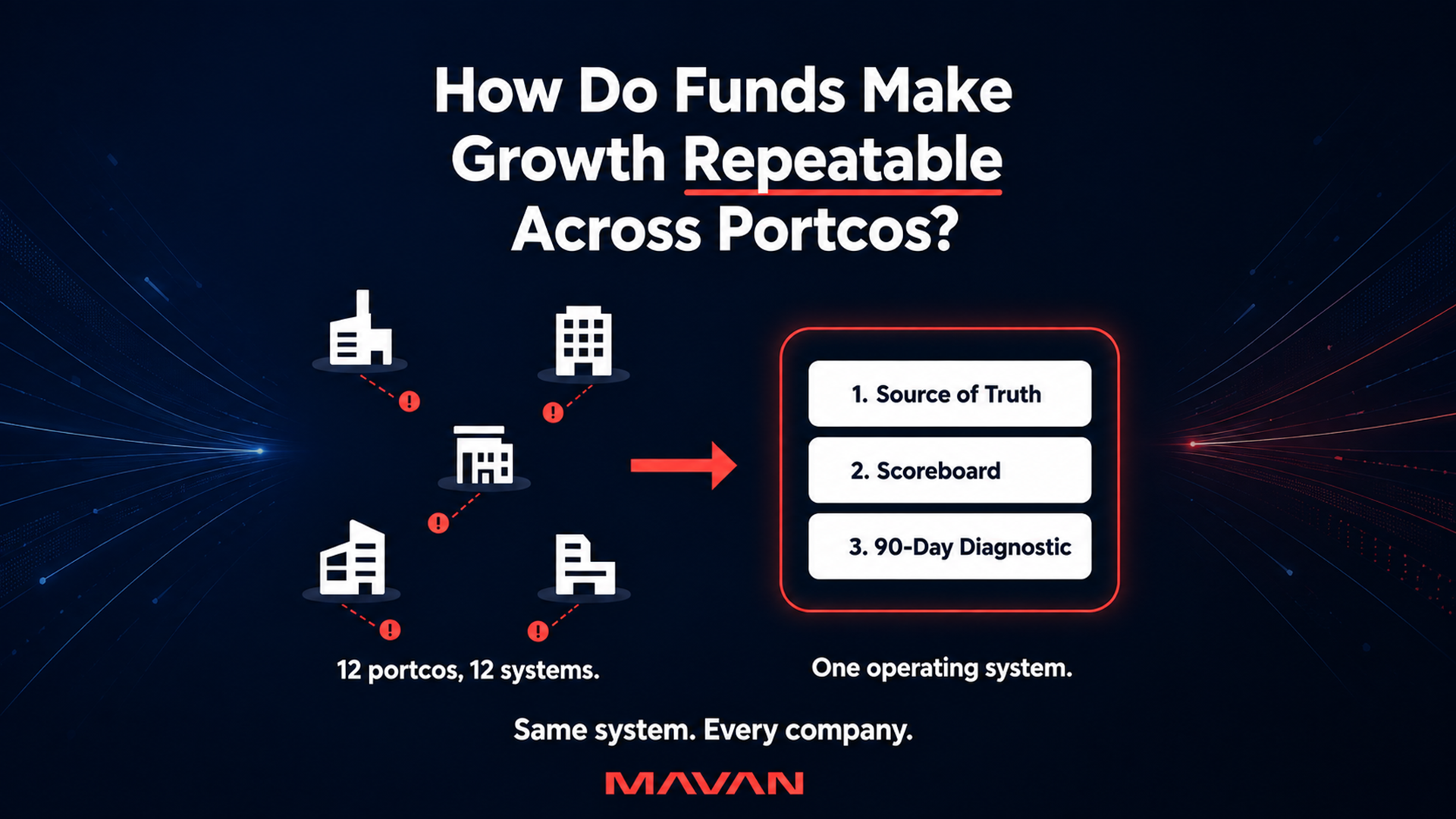
How Can VC And PE Funds Repeat Growth Across Portfolio Companies?
Growth becomes repeatable across a VC or PE portfolio when the fund installs one operating system instead of referring each company to a different specialist. The system has three parts: a single source of truth every team trusts, a board-ready scoreboard of ten to twelve metrics, and an embedded pod that diagnoses the real constraint in ninety days before anyone spends more.