
“A logo doesn’t equal a brand”
This week’s guest on Growth@Scale is MAVAN’s own Kyle Shields, award winning art director, designer, branding expert, and Creative Director. Kyle shares his experiences working on big brand campaigns from the agency world, coming from McCann, Innocean, and Bensimon Byrne and joins Matt Widdoes for an enlightening talk about how to balance creative with performance, the importance of testing, and the unknown frontier of the use of generative AI.
Key Takeaways
- For sustainable growth, your creative approach should balance flashy advertisement with effectiveness and audience alignment
- Your company’s perceived audience may differ from your actual audience, thus insights into audience behavior can lead to unexpected opportunities
- Isolating variables in creative testing is crucial for clean data and actionable insights, which influence effective marketing strategies
- Brand consistency is key for building consumer trust and recognition, and developing an early brand guide is instrumental for scalable businesses
- AI’s rapid advancement in creative fields and how this presents both opportunities and challenges, urging creatives to adapt and harness new tools for continued relevance
Dive into the episode and discover how creativity and AI converge to fuel growth or read the transcript!
🎧 Listen Now!
🌟 Never miss an episode! Subscribe here for a front-row seat to more illuminating discussions on scaling success. Let your growth journey begin!
Book a complimentary consultation with one of our experts
to learn how MAVAN can help your business grow.
Want more growth insights?
Thank you! form is submitted
[hubspot type=”form” portal=”20951211″ id=”9c538ed2-fb12-45f1-a573-ad7953c058cc”]
Related Content
-
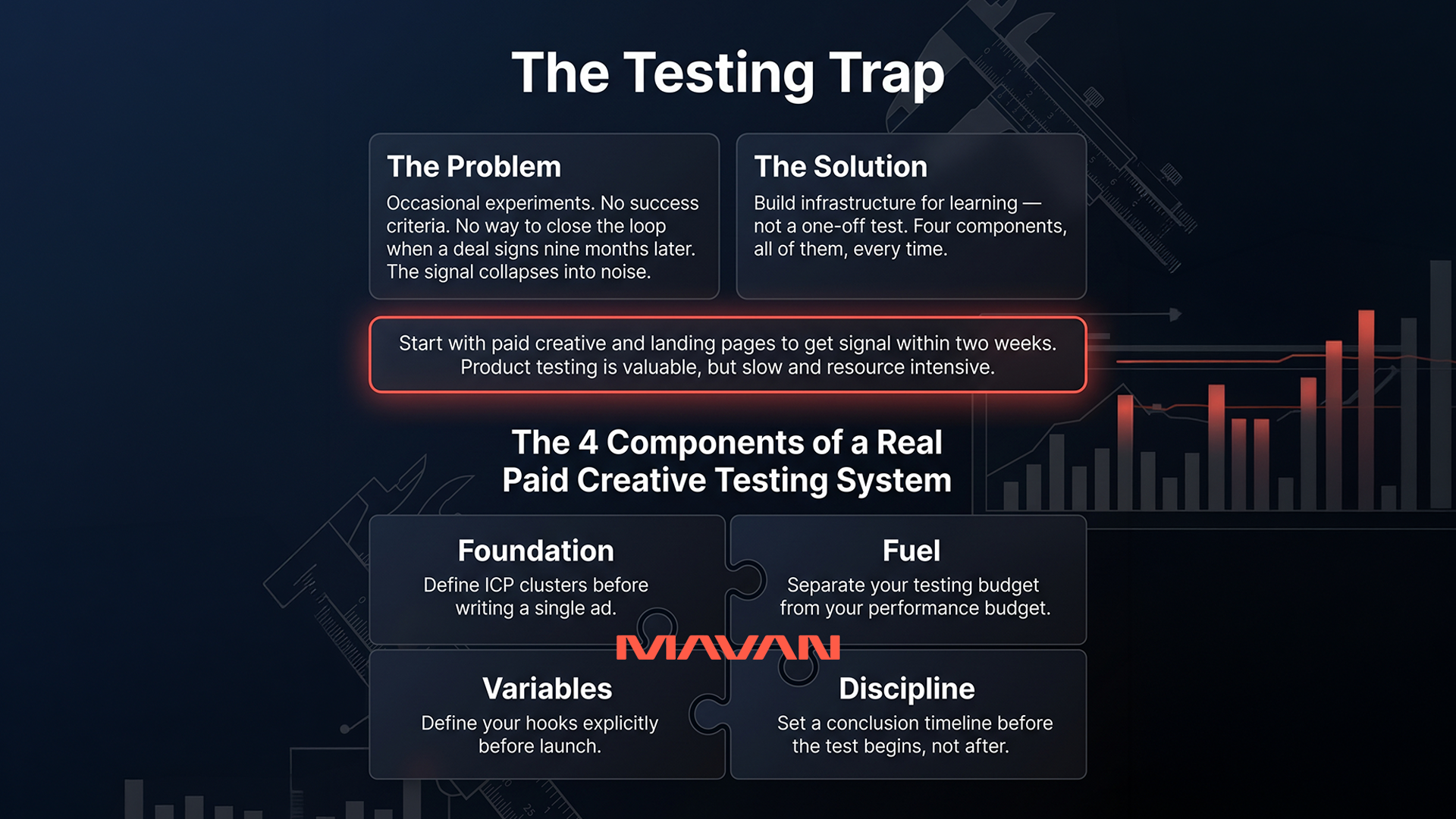
How Do You Build a Real A/B Testing Framework for B2B SaaS?
A functioning B2B SaaS experimentation program is built around paid creative testing and landing page optimization. Even with long sales cycles, you can know if an experiment is heading in the right direction within two weeks — as long as you track from first touch all the way through to closed contract.
-
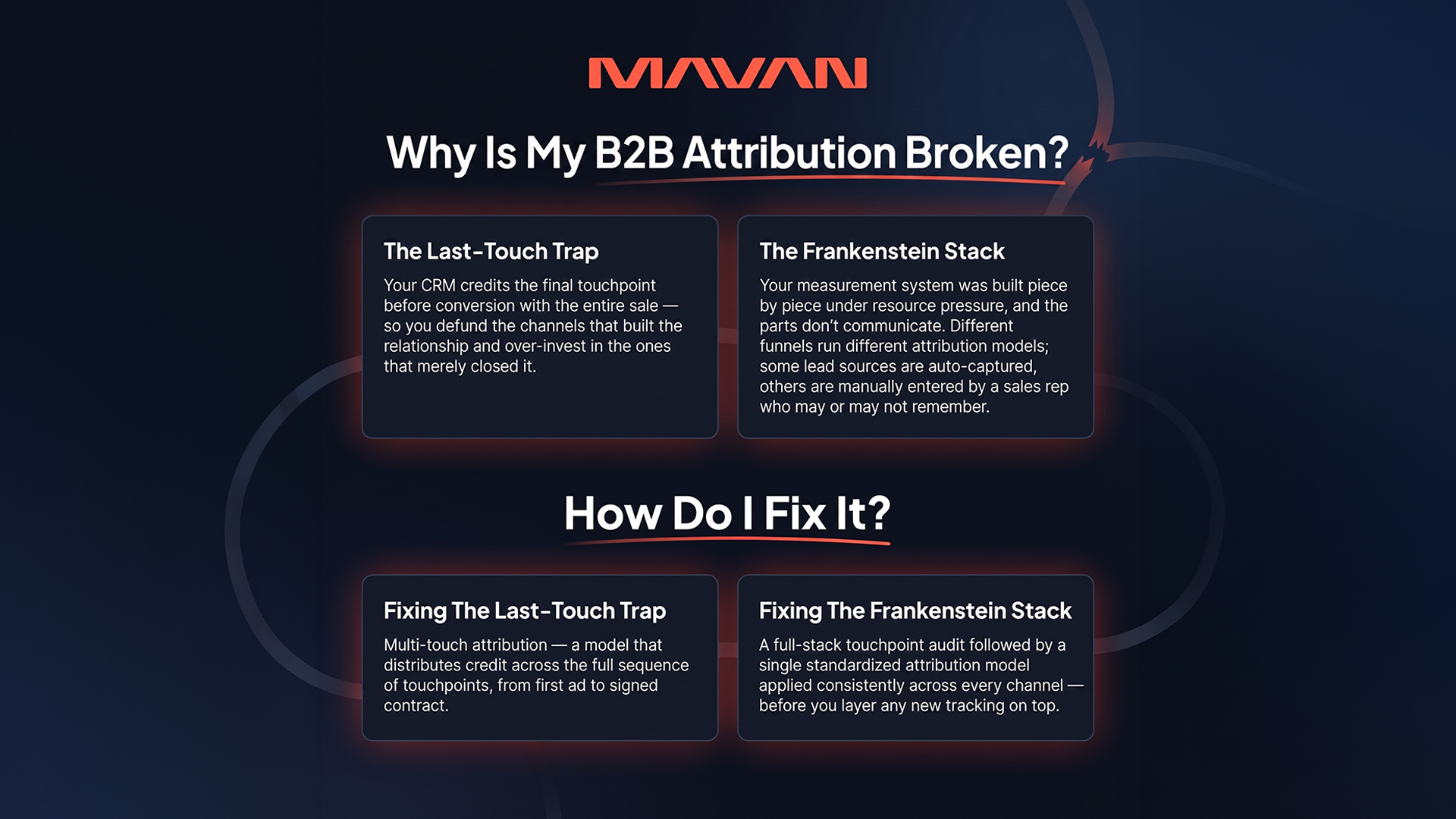
Why Is Your B2B SaaS Attribution Broken — and How Do You Fix It?
Most B2B SaaS attribution stacks fail in one of two predictable patterns: relying solely on last-touch data, or being bolted together piece by piece until the parts no longer communicate. The fix starts with mapping every top- to mid-funnel touchpoint in sequence and tying that complete journey back to the moment a contract closes. TLDR…
-
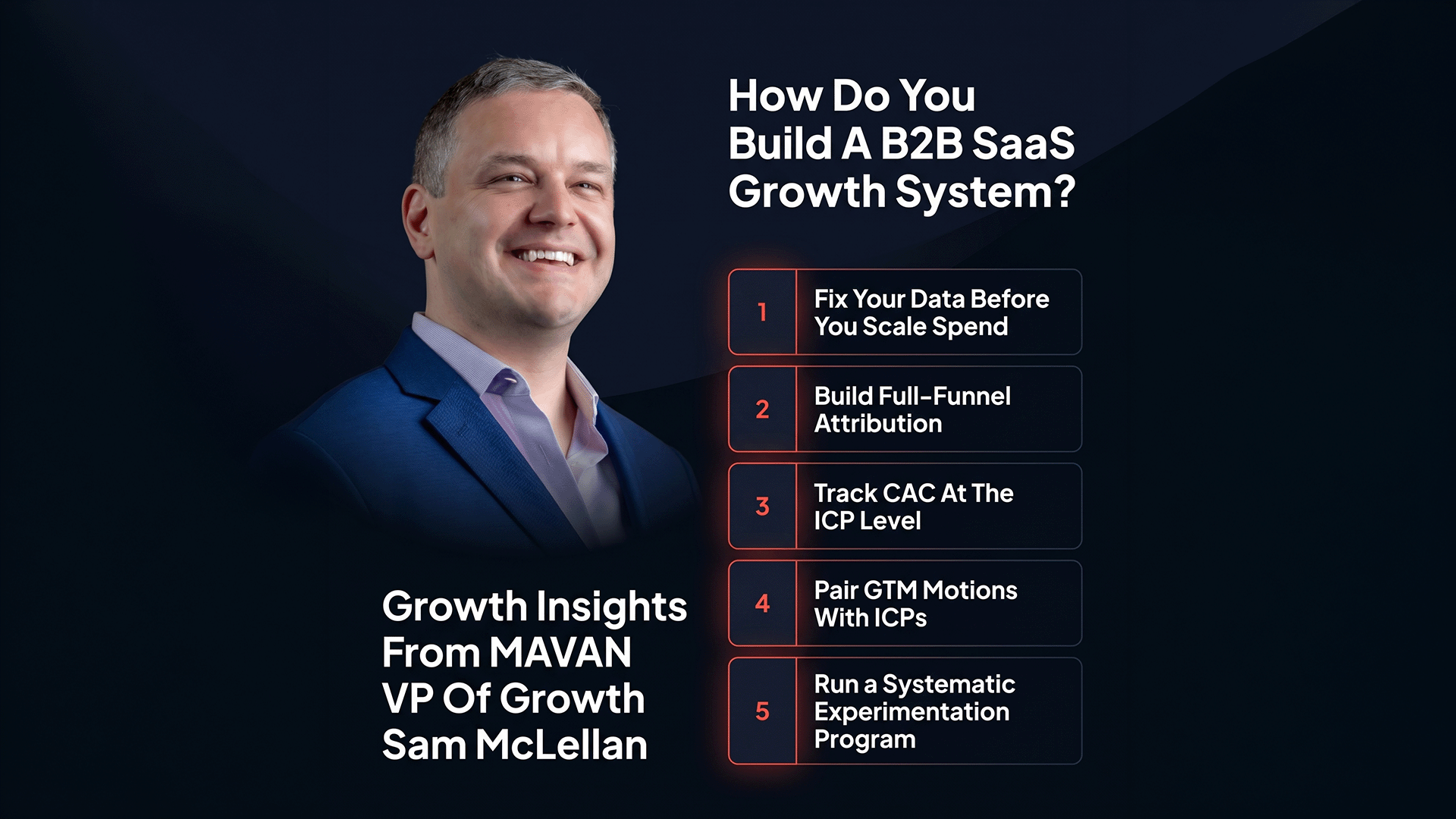
How Do You Build a B2B SaaS Growth System That Scales Beyond Founder-Led?
The fastest-scaling B2B SaaS companies are adopting measurement and experimentation disciplines from mobile gaming — including granular multi-touch attribution, ICP-segmented CAC tracking, and systematic creative testing. Companies that close that gap now are building compounding advantages that won’t be easy to replicate later. TLDR — The 10 Most Important B2B SaaS Growth Lessons Your board…