
In this episode of Growth@Scale, we dive into the importance of data in driving sustainable business growth. MAVAN’s head of Data, Rich Skinner, shares his insights and experiences from his time at Google, Zynga, Zillow, and other leading companies. We explore the common pitfalls that businesses overlook when it comes to data, the key elements of successful data strategies, and the power of experimentation in driving growth.
The Importance of Data in Business Growth
Rich emphasizes the critical role that data plays in driving sustainable business growth. He highlights the two types of people when it comes to data: those who understand its value and those who are averse to using it. He explains that businesses need to embrace a data culture and be open to learning and experimentation. Rich shares his own journey from aerospace engineering to data analytics, highlighting the power of data in solving critical problems and helping businesses make informed decisions.
Overlooked Elements in Data Strategies
When it comes to data strategies, Rich points out that many businesses overlook the importance of measuring conversion rates and understanding the levers of growth and churn. He gives the example of companies with convoluted funnels and complex processes that make it difficult to measure conversion and tie it back to specific actions. Rich stresses the need for simplicity and a focus on the key metrics that drive business success. He advises businesses to start with the most fundamental aspects and iterate from there, rather than trying to tackle complex infrastructure from the beginning.
The Power of Experimentation
Experimentation is a key component of data-driven growth strategies. Rich explains that experimentation allows businesses to determine causality and understand the impact of specific interventions. He highlights the importance of A/B testing and the scientific method in measuring the effectiveness of different strategies. Rich cautions against making drastic changes or redesigns without proper testing, as they can introduce biases and lead to inaccurate results. He advises businesses to start with small, focused tests and gradually build up their experimentation muscle.
Best Practices for Experimentation
Rich shares best practices for running effective experiments. He emphasizes the need for proper controls and randomization to ensure accurate results. He cautions against biases and the importance of running tests for an appropriate duration to account for factors like seasonality. Rich also highlights the concept of sample ratio mismatch and the need to ensure equal distribution of users across different tests. He advises businesses to set up holdout groups to measure the overall impact of their tests and avoid false positives or negatives.
Building a Culture of Testing
It can’t be overemphasized the importance of building a culture of testing and learning within organizations. Rich highlights the need to be open to being wrong and to embrace the iterative process of experimentation. Rich compares the process of A/B testing to going to the gym, where consistency and building the habit of testing are key to achieving long-term success. He encourages businesses to adopt best practices, learn from failures, and continuously improve their data strategies to drive sustainable growth.
Businesses that leverage data effectively have a competitive advantage. By embracing a data culture, focusing on key metrics, and conducting rigorous experimentation, businesses can drive sustainable, predictable, and scalable growth. The journey may be challenging, but the rewards are well worth the effort. Make your New Year’s Resolution to hit the data gym and start building your data muscle to unlock the full potential of your business.
Book a complimentary consultation with one of our experts
to learn how MAVAN can help your business grow.
Want more growth insights?
Thank you! form is submitted
[hubspot type=”form” portal=”20951211″ id=”9c538ed2-fb12-45f1-a573-ad7953c058cc”]
Related Content
-
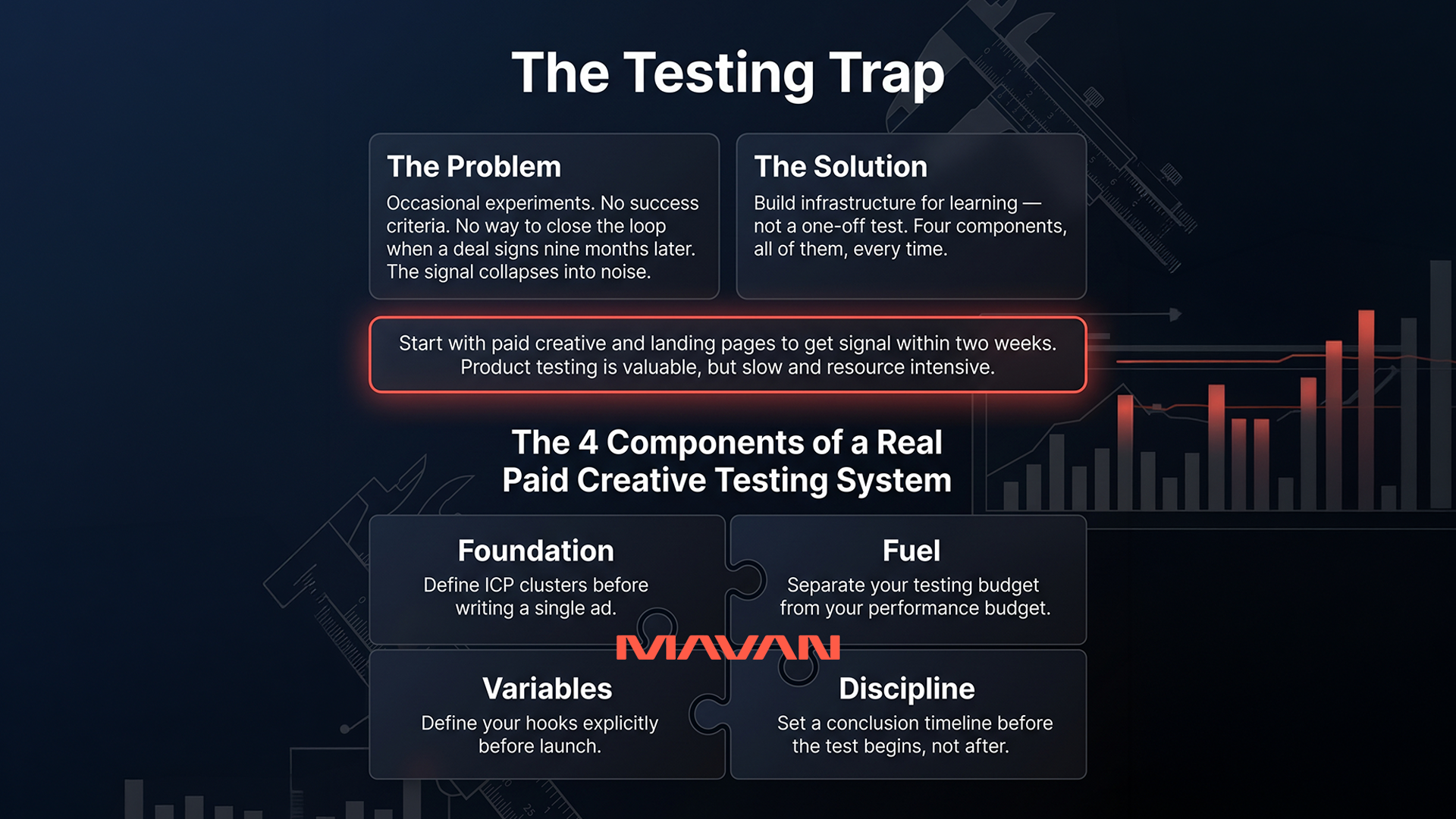
How Do You Build a Real A/B Testing Framework for B2B SaaS?
A functioning B2B SaaS experimentation program is built around paid creative testing and landing page optimization. Even with long sales cycles, you can know if an experiment is heading in the right direction within two weeks — as long as you track from first touch all the way through to closed contract.
-
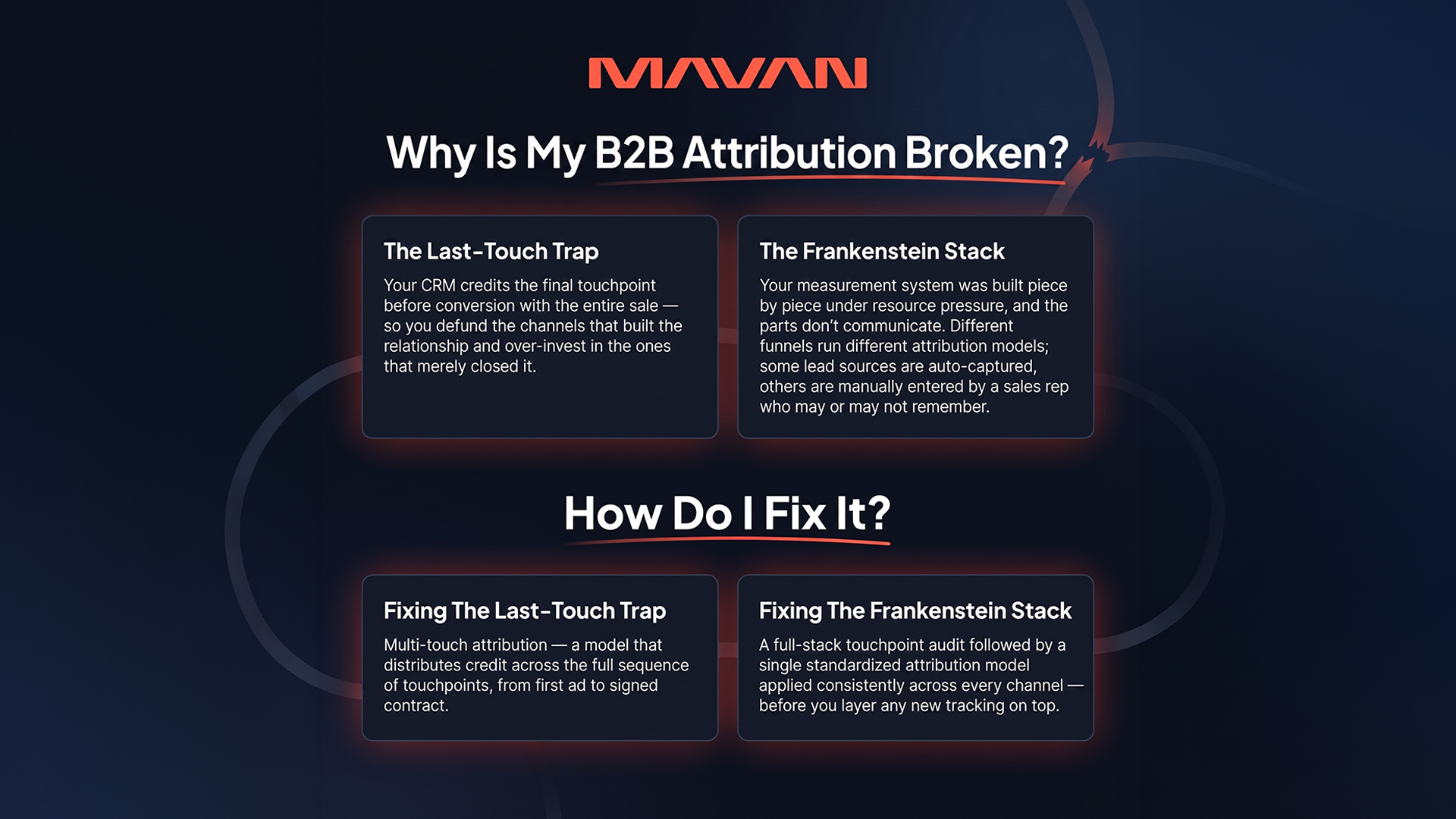
Why Is Your B2B SaaS Attribution Broken — and How Do You Fix It?
Most B2B SaaS attribution stacks fail in one of two predictable patterns: relying solely on last-touch data, or being bolted together piece by piece until the parts no longer communicate. The fix starts with mapping every top- to mid-funnel touchpoint in sequence and tying that complete journey back to the moment a contract closes. TLDR…
-
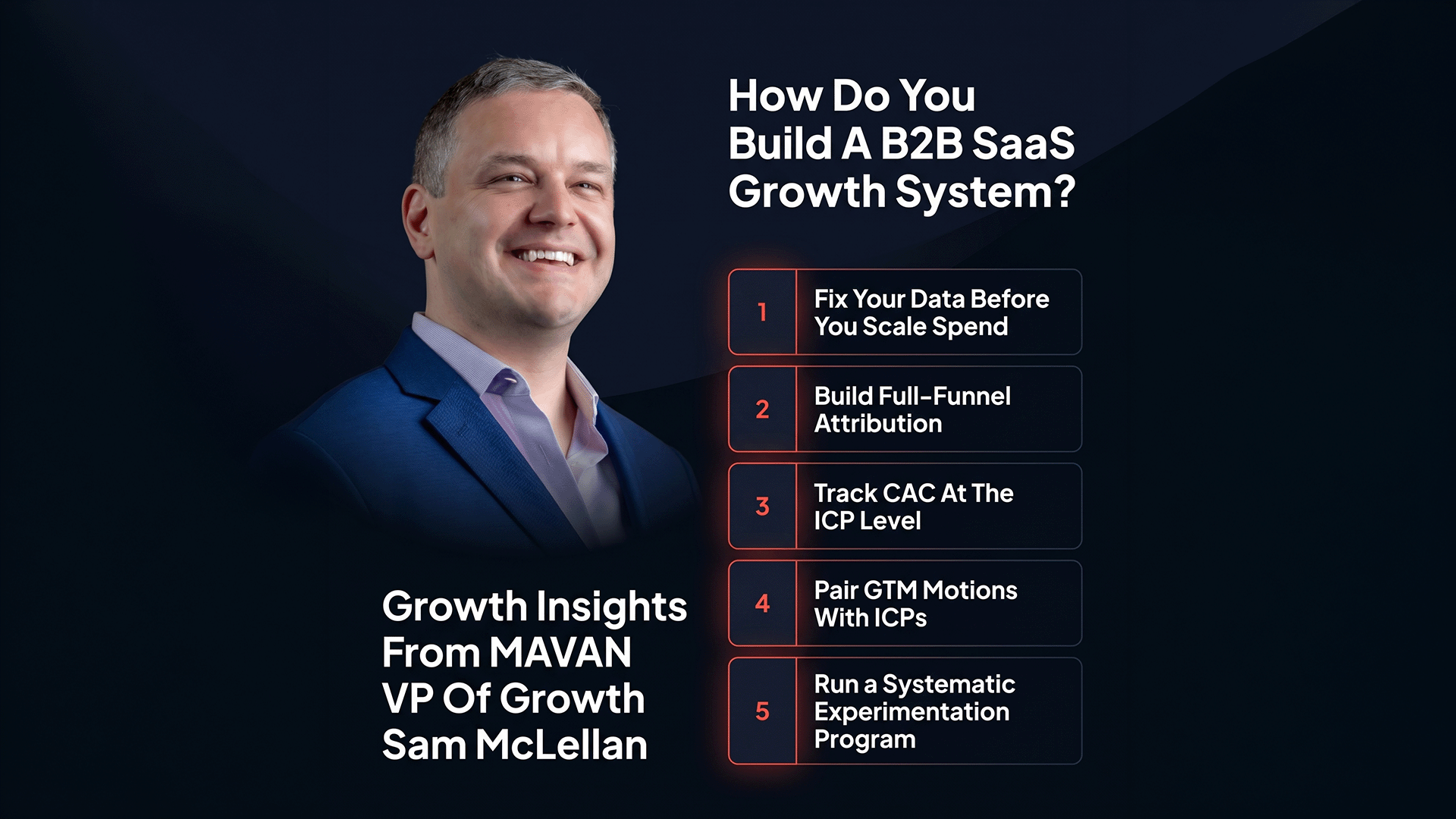
How Do You Build a B2B SaaS Growth System That Scales Beyond Founder-Led?
The fastest-scaling B2B SaaS companies are adopting measurement and experimentation disciplines from mobile gaming — including granular multi-touch attribution, ICP-segmented CAC tracking, and systematic creative testing. Companies that close that gap now are building compounding advantages that won’t be easy to replicate later. TLDR — The 10 Most Important B2B SaaS Growth Lessons Your board…