
- Break down your ad creative into components and iterate on the weakest areas quickly
- Understand the channel’s algorithm to guide decisions in getting your product to the right people at the right time
- Craft a testing cadence that works for your team and budget
- Develop internal processes to help close the feedback loop across teams
If you want to find success with digital advertising, you need to understand how to optimize your creative. In a previous post, I outlined how to build a creative advertising engine. In this post, I’ll break down what your teams should focus on to optimize every piece of creative’s success.
Identify Your Audience and Put the Algorithm to Work
Wherever you’re advertising, the audiences you’ll be targeting are largely pre-defined based on interest demographics, app usage data, and more. If your ad doesn’t drive engagement, it doesn’t reach many people. An underperforming ad implies you’re not conveying the most accurate value proposition and/or your content is reaching the wrong audience.
At Digit, we worked closely with our creative and brand marketing teams to build ads that could be delivered to the right audience at the right time. To optimize the content, we identified and iterated on value proposition, messaging, hook, testing/distribution strategy, and performance data.
Make the First Three Seconds Count
What your account reps are telling you is true. The hook and first three seconds are the most important aspects of your creative. Find a balance between eye-catching hooks without making your creative feel flashy and cheap.
At Digit, we spent a lot of time testing and understanding how certain colors and placements evoke emotion and capture mindshare. The goal was to develop compelling ads that stood out. We found that text treatments and copy placement drove meaningful differences in performance early on, while allowing us to tell similar stories in ways that felt fresh across new iterations.
We learned invaluable qualitative insights, like:
- Color choice impacts emotion and should be carefully chosen
- Big and bold text treatments speak loudly
- Lightness beats lecture. Lighten up the tone
- Readability is everything
We used these learnings to make an impression on our users within three seconds across static and video ads. Once we found a winning combination, we rapidly developed and tested new ads by incorporating some of our best-performing creatives after the hook. For example, we found that showing someone on vacation in Europe was a great way to get people interested in watching longer to find out how to save money for a trip. This testing informed all future iterations, ultimately allowing us to find new home runs while extending the half-life of our existing ads.

Identify a Problem – then Solve it
Your copy and messaging are primary levers for effectively messaging your brand, product, and value propositions. Your ad is a condensed elevator pitch for whatever you’re selling: brand, feature, product, etc. Most users will make a decision in the first 3-5 seconds of any video or static ad.
To craft the best messaging strategy, you need to understand your users’ pain points and needs. Work closely with your product and customer support teams; they understand your customers best. From there we began strategizing on ways to deliver solutions paired with positive emotions. In short: address a problem and then get customers excited about your ability to solve it.
You Have Multiple Value Propositions – Use Them All
Our initial testing showed that our users have various needs—and we needed to match the right hooks, messaging, and value propositions for the right audience. For example, we found ads that summarized our entire product value propositions regardless of ad format produced below-average performance metrics compared to ads purely focused on a particular value proposition.
To help us prioritize, we invested in the value propositions that offered the largest audiences. We used quantitative and qualitative data to estimate the total addressable market for each. Below is a diagram of how we thought about Digit’s primary value propositions:

As we expanded on this strategy, we collaborated and communicated more with our product, customer support, and product marketing peers. This enabled us to learn more about our audiences and personas to bolster customer insights that could be leveraged across all of our efforts moving forward.
Test, Refresh, and Test Again
To optimize your ad’s creative using your insights, you need to think about both ends of the user journey—building awareness and conversion. An ad generating a lot of clicks but not converting indicates you’ve created viral content that is reaching an audience not relevant to your product. Creative is a home run when it satisfies both ends of the user journey.
After new ad concepts launch and are successful, you’ll likely face rapid performance deterioration as you continue to scale and get in front of more users. This is called creative fatigue and is a very common problem. Below is one of my favorite creative lifecycle visuals from Eric Seufert’s Mobile ad creative: how to produce and deploy advertising creative at scale.
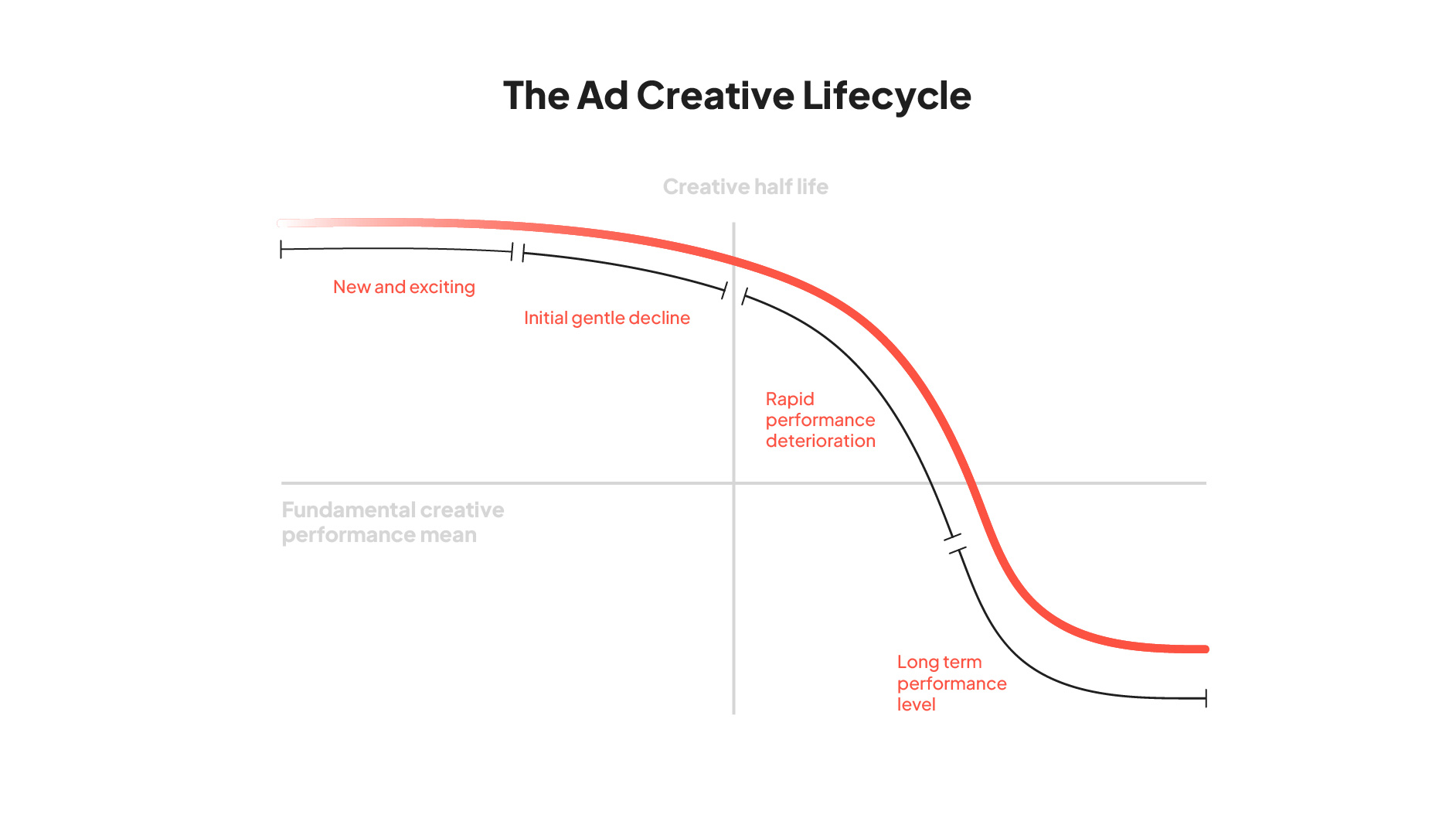
Creative fatigue is an ongoing battle. Our goal is to constantly test to find new winners before rapid performance deterioration. To do so, we ran a deep-dive analysis of our home run creatives and had the following takeaways:
- Top-of-funnel metrics are substantially higher than the last 30-day average at the start of the ad creative lifecycle and have above average bottom-of-funnel metrics. Over time, the top-of-funnel metrics will decline while bottom-of-funnel metrics remain flat.
- Poor early performance means the ad won’t pick up later and should be paused.
- Re-running older creatives with a new hook can create stronger ads with a longer life cycle. We’ve seen old creatives do significantly better after being paired with a high-performing hook.
- Refreshing your creative concepts with new messaging styles, text treatments, and color schemes can yield a big lift in performance and surface new winners.
Turn Results into Actionable Insights
The final important step to the creative flywheel we built was the delivery of actionable results from the outcomes of our experiments back to the team. Our media buyer played a very cross-functional role by working with product, marketing, and finance. On a weekly and monthly weekly basis, a media buyer would evaluate ad creative performance by Return on Ad Spend (ROAS). We aimed to better understand which iterations to the messaging and hook most impacted ROAS to help us inform future iterations.
By using our quantitative and qualitative data, we spent more time on things that mattered — like the hook and messaging. It’s easy to get distracted when thinking about creatives but focusing and going deeper on these critical components were a major key to Digit’s success.
Book a complimentary consultation with one of our experts
to learn how MAVAN can help your business grow.
Want more growth insights?
Thank you! form is submitted
[hubspot type=”form” portal=”20951211″ id=”9c538ed2-fb12-45f1-a573-ad7953c058cc”]
Related Content
-
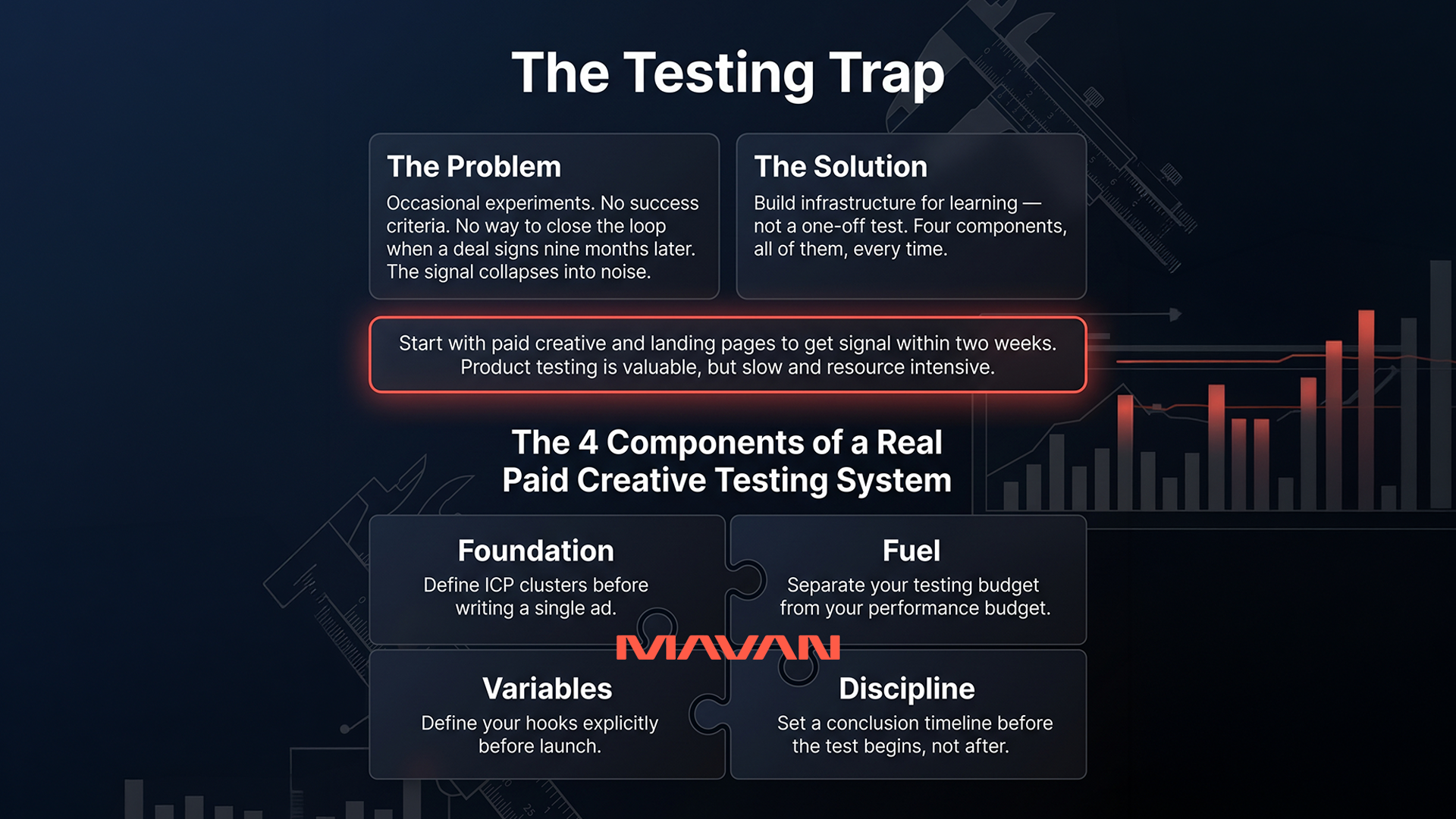
How Do You Build a Real A/B Testing Framework for B2B SaaS?
A functioning B2B SaaS experimentation program is built around paid creative testing and landing page optimization. Even with long sales cycles, you can know if an experiment is heading in the right direction within two weeks — as long as you track from first touch all the way through to closed contract.
-
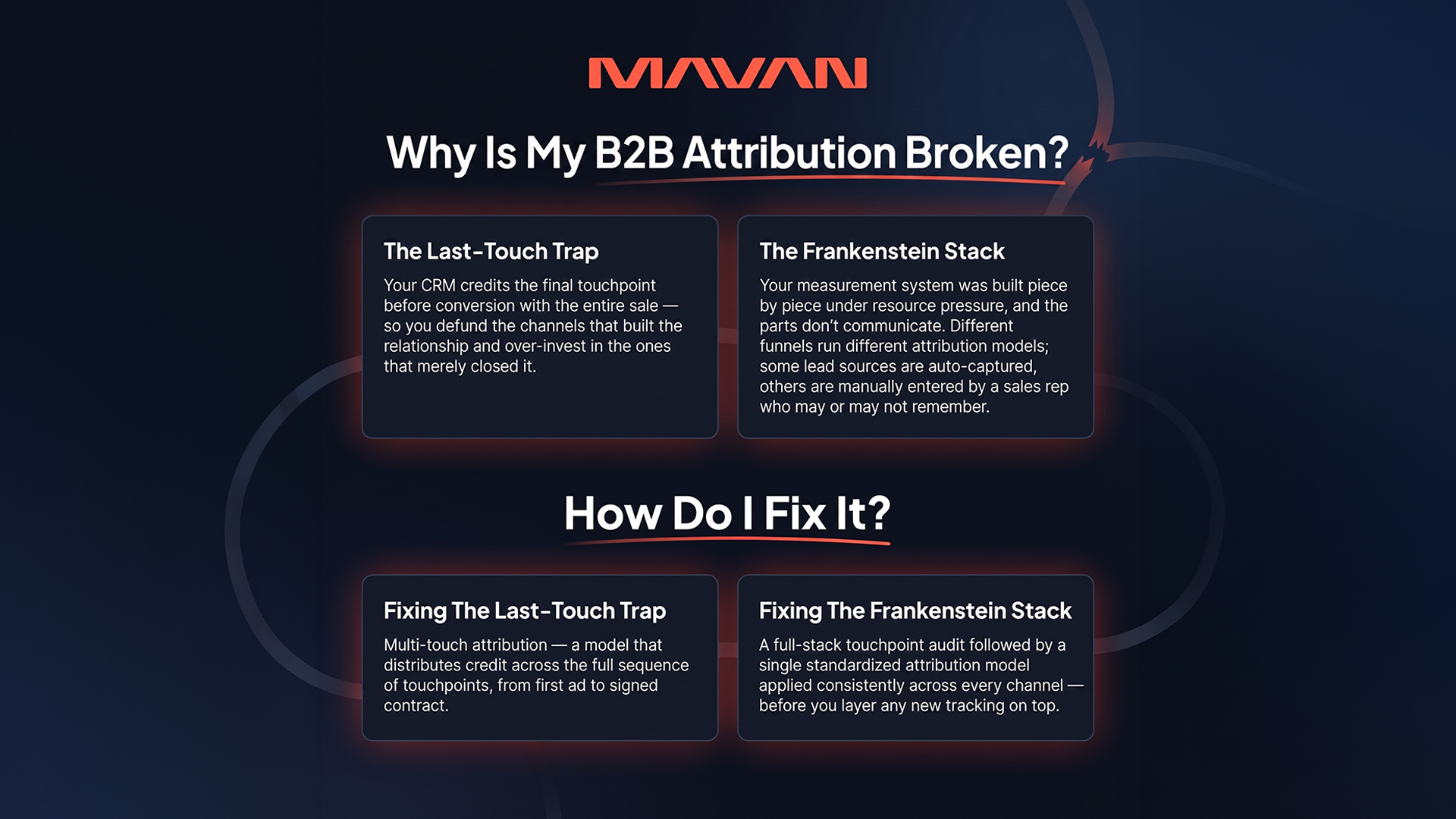
Why Is Your B2B SaaS Attribution Broken — and How Do You Fix It?
Most B2B SaaS attribution stacks fail in one of two predictable patterns: relying solely on last-touch data, or being bolted together piece by piece until the parts no longer communicate. The fix starts with mapping every top- to mid-funnel touchpoint in sequence and tying that complete journey back to the moment a contract closes. TLDR…
-
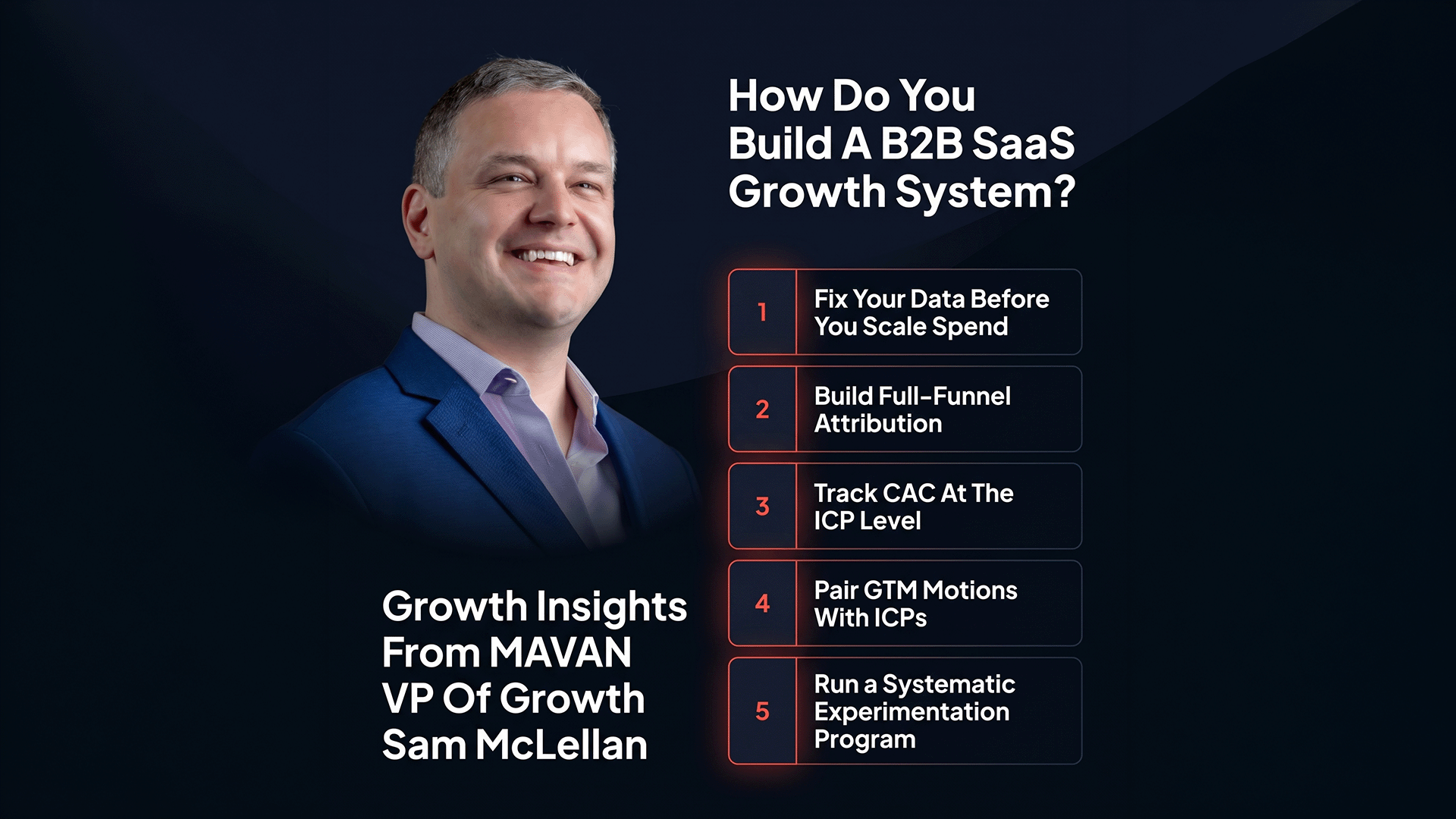
How Do You Build a B2B SaaS Growth System That Scales Beyond Founder-Led?
The fastest-scaling B2B SaaS companies are adopting measurement and experimentation disciplines from mobile gaming — including granular multi-touch attribution, ICP-segmented CAC tracking, and systematic creative testing. Companies that close that gap now are building compounding advantages that won’t be easy to replicate later. TLDR — The 10 Most Important B2B SaaS Growth Lessons Your board…