
Key Takeaways:
- Innovative technologies and frameworks are transforming mobile game development, shaping a future where creativity and technology converge.
- Building resilience and adapting to new technologies are critical to thriving in the rapidly changing gaming industry.
- The integration of AI and localization in gaming offers unprecedented personalization, enhancing player experiences globally.
Pioneering Mobile Gaming with Innovative Frameworks
Travis Boatman, a seasoned veteran in the gaming industry, offers a wealth of knowledge on the evolving landscape of mobile gaming. Having worked with giants like EA and Zynga before launching Carbonated, Inc., Boatman has seen firsthand how technological advancements can redefine gaming experiences. During a candid conversation with Matt Widdoes, host of the Growth@Scale podcast, Travis shared his insights on mobile gaming’s future and the critical role of innovation.
Boatman’s approach to game development revolves around a framework devised with the help of Zynga, which categorizes crucial elements of game design into four components: appeal, mechanic, retention, and monetization. “You have to take some risk to do something truly different. You can’t just paint by numbers,” Travis states, emphasizing the importance of innovation in game design.
The uniqueness of a game often stems from its technical groundwork. As Boatman points out, “Games have to shake players out of apathy… Otherwise, nobody wants to play the same old game.” Leveraging technological innovations allows developers to create novel experiences that stand apart in a crowded market. According to Boatman, aligning game mechanics with cutting-edge technology can provide a competitive edge, allowing developers to engage players more effectively and sustainably.
Resilience and Adapting in the Gaming Industry
The journey of entrepreneurship and innovation is riddled with challenges, as Boatman recounts from his experience starting Carbonated, Inc. after his tenure at Zynga. Post-Zynga, Travis highlights the introspection that led him to found his own company and the initial hurdles he overcame during this transition.
Starting a company from scratch was daunting but rewarding. “When I’m old and gray and look back on my life, will I regret that I didn’t at least try?” he reflects, highlighting the motivating power of pursuing one’s passions. The decision to embark on this entrepreneurial path was anchored in the realization that he wanted to undertake a new venture he could call his own.
One major lesson for prospective entrepreneurs is the necessity of resilience. Travis emphasizes, “You can quit, just not today.” This mindset is crucial in navigating setbacks and maintaining momentum in a startup environment. Sustaining forward motion is often the distinguishing factor between companies that thrive and those that falter. The ability to iterate and learn from each experience ensures that setbacks are viewed as stepping stones rather than insurmountable obstacles.
AI Integration and Localization in Gaming
Carbonated, Inc.’s development process is underpinned by a belief in the transformative potential of AI. The integration of artificial intelligence in game development presents new opportunities for enhancing player experiences through personalized content and gameplay. Boatman explains, “What’s interesting is as that turnaround cycle gets shorter and shorter, the customers get closer and closer to the content maker.”
By deploying AI, Carbonated aims to offer players content that resonates personally and culturally with them. This involves localizing games not just in language but also in narrative and context. Travis shares an example where AI-generated descriptions in a playtest resonated deeply with a player from Detroit by referencing local landmarks, illustrating the profound impact of personalized content.
This personalized approach not only enriches player engagement but also sets the stage for a more inclusive global gaming community. “We’re relatively small team, but you jumped…to the end state,” Boatman notes, emphasizing the potential and ambition behind AI-driven localization efforts. The strategic use of AI in game design not only differentiates Carbonated’s offerings but also promises to redefine how players interact with virtual worlds.
The future of mobile gaming is marked by rapid technological shifts and the relentless pursuit of innovation. Travis Boatman’s journey exemplifies the power of adaptability and foresight in navigating this dynamic landscape. As Carbonated, Inc. pushes the boundaries of gaming through AI and innovative design frameworks, it stands as a testament to the endless possibilities awaiting those who dare to dream and disrupt. The path forward necessitates embracing emerging technologies and maintaining resilience in the face of constant change, a philosophy that is at the heart of Carbonated’s mission and Travis Boatman’s enduring impact on the gaming industry.
🎧 Listen to the episode on Apple Podcasts or Spotify or read the transcript
Book a complimentary consultation with one of our experts
to learn how MAVAN can help your business grow.
Want more growth insights?
Thank you! form is submitted
[hubspot type=”form” portal=”20951211″ id=”9c538ed2-fb12-45f1-a573-ad7953c058cc”]
Related Content
-
Who Does Growth & GTM Due Diligence for PE Deals?
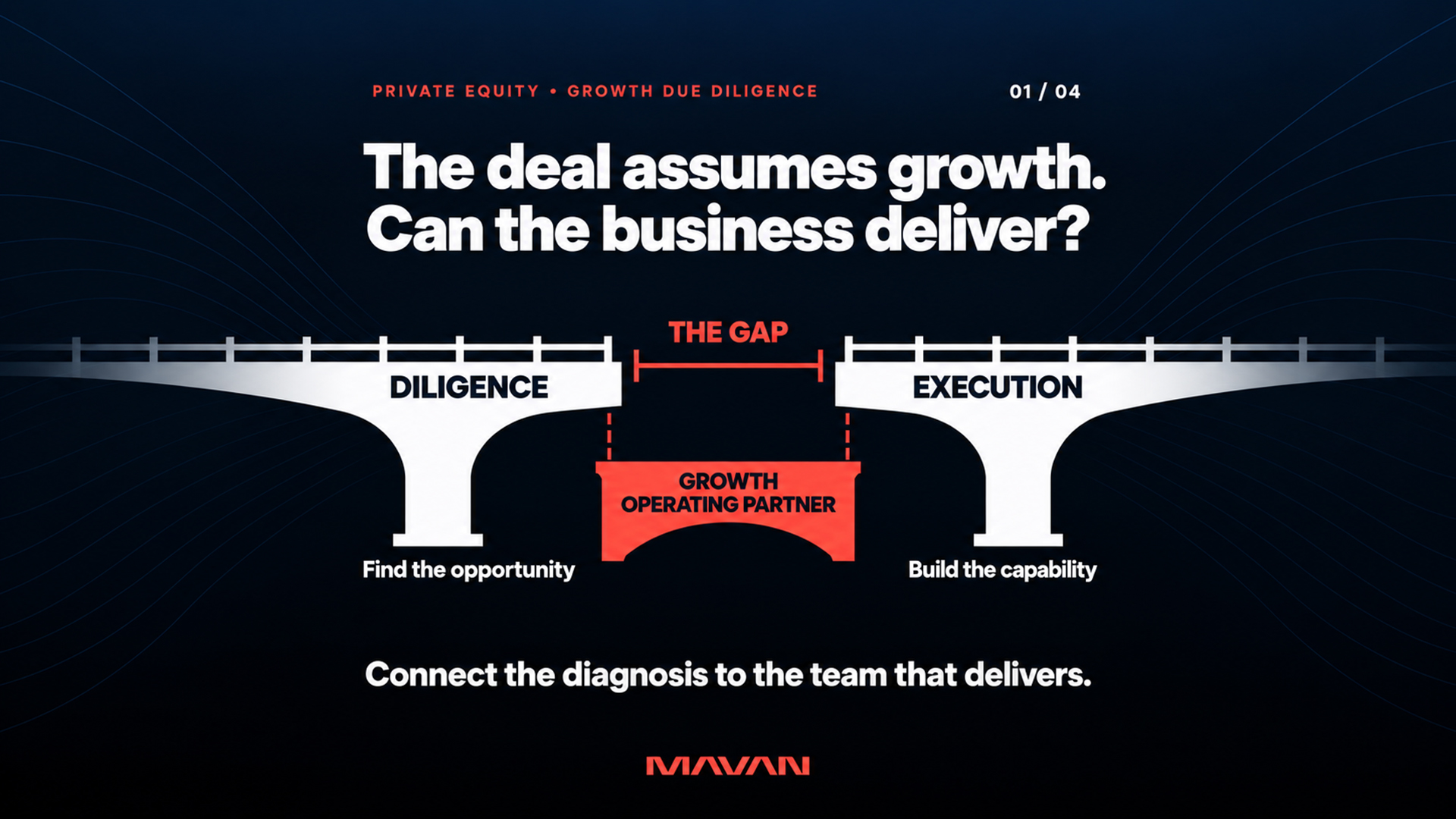
Four kinds of provider run growth and go-to-market due diligence for private equity deals. Strategy consultancies test the market. Specialist commercial diligence firms audit the pipeline. Go-to-market boutiques rebuild the sales motion. And growth operating partners examine the full revenue engine from inside the business, then stay to operate it after close.
-
Who Is The Best Growth Partner For PE Portfolio Companies?
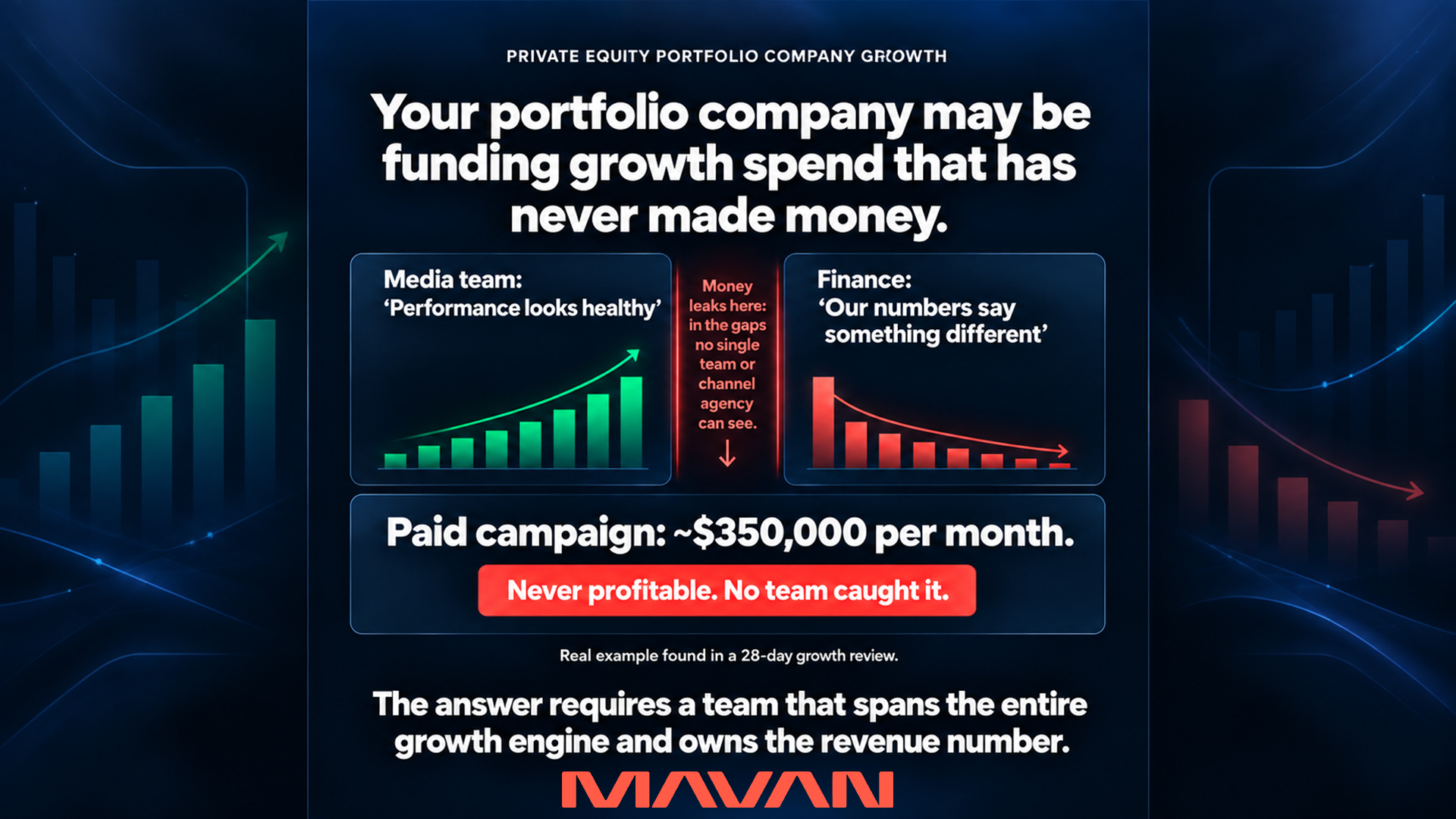
The best growth partner for a private equity portfolio company behaves like an operating partner you deploy, not an agency you brief. It reads the whole growth system before it spends, owns a revenue number alongside management, and leaves the capability behind so the sponsor can redeploy it.
-
How Can Private Equity Funds Repeat Growth Across Portfolio Companies?
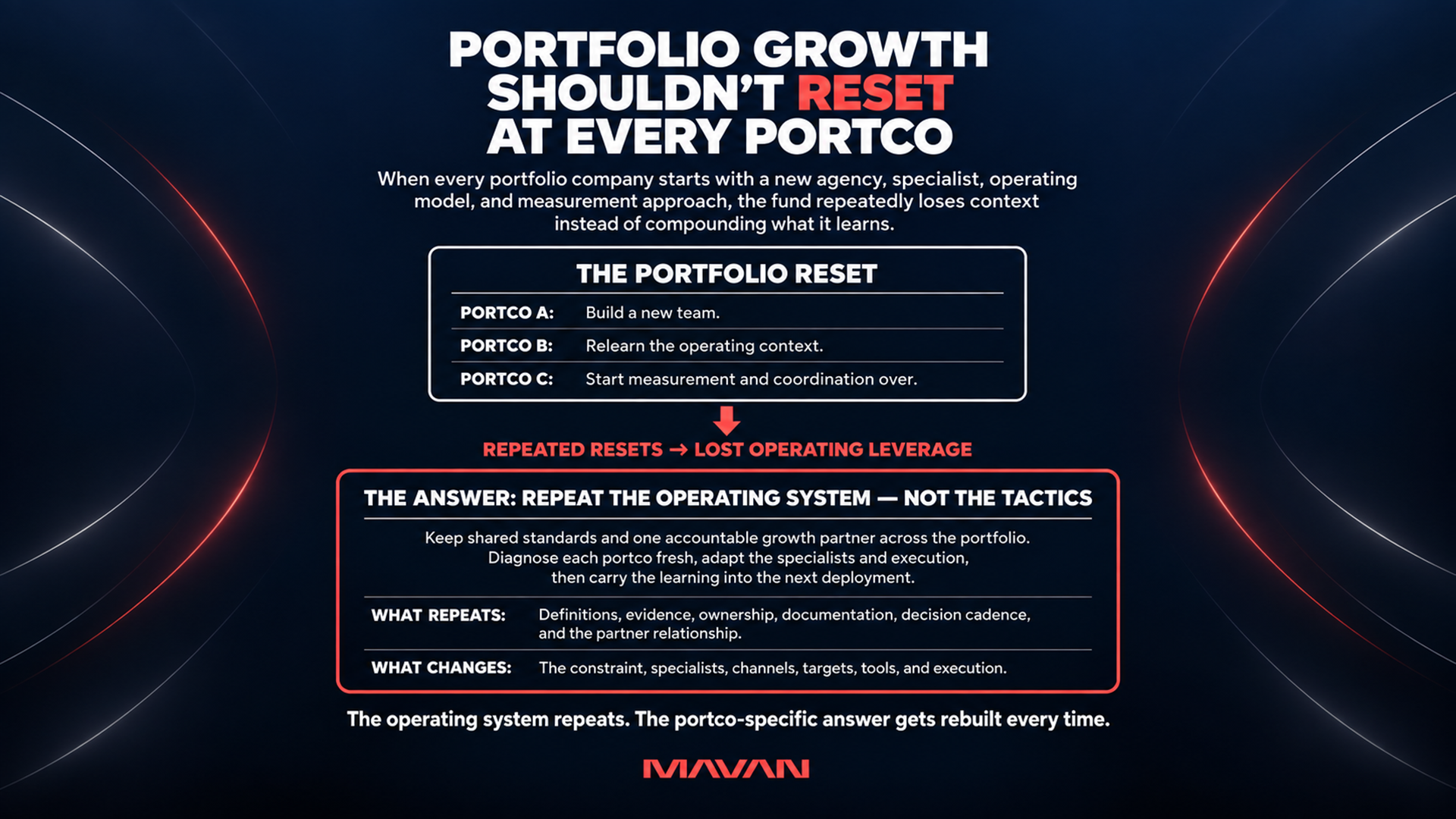
Growth becomes repeatable across a VC or PE portfolio when the fund installs one operating system instead of referring each company to a different specialist. The system has three parts: a single source of truth every team trusts, a board-ready scoreboard of ten to twelve metrics, and an embedded pod that diagnoses the real constraint in ninety days before anyone spends more.