
When you do it right, the fusion of brand and performance thrives to drive substantial growth in your business. As marketing veteran Ryan Maloney tells Matt Widdoes on the Growth@Scale podcast, there are three major factors that determine your company’s ability to scale as you develop your marketing strategy:
- Maintaining a unified brand and performance strategy is essential to your marketing success and growth
- Understanding customer needs and product-market fit should serve as the foundation of your marketing strategy
- Finding and following your North Star – Having a unified shared vision across all company departments to ensure aligned growth initiatives.
Intersection of Brand and Performance
Brand: It’s Not Just Marketing’s Responsibility – Brand strategy is at the very core of any successful company’s growth strategy. Once you can erase the traditional dichotomy of ‘brand vs. performance’, you can maintain a singular marketing unit to fortify the holistic growth of your brand.
The Role of Organizational Design – By eliminating departmental silos and encouraging an enterprise-wide appreciation for the overarching brand narrative, you will discover a more cohesive growth trajectory to scale.
The ‘Brand and Performance’ Coexistence Model – There must be a harmonious relationship between your brand and performance. It should be brand AND performance, not brand OR performance. Establish an ecosystem where both entities work symbiotically towards common growth goals.
Customer Centricity = Key to Growth
Understanding Your Audience – It all starts with a strong product and a thorough comprehension of your target customers. This knowledge isn’t just for marketing machinations; it’s a cornerstone philosophy that should permeate every touchpoint of the organization—from product development to post-sales service.
Customer Dialogue – It’s not sufficient to predict customer needs based on data alone; actual interactions provide greater insights and validation. An open customer dialogue reiterates the importance of maintaining open channels between your customers and you.
Customer Feedback for Product Refinement – Whether through product feedback, CRM initiatives, or other methodologies, using customer interaction to refine and align products to market needs is integral to the continuous improvement of the product’s market fit and company growth.
Align Your Messaging for Sustainable Growth
Setting a Clear Vision Across Your Organization – Well-defined positioning creates a framework for decision-making and prioritization within your company, which can ensure heightened efficiency and prevention from misaligned initiatives.
Bottom-Up Feedback within Your Framework – Not only must you conduct a top-down approach to communication of objectives and strategic goals, but you must also have a mechanism for feedback from the ground up.
Alignment As You Scale – Internal alignment becomes increasingly challenging as your organization scales. That’s why finding your North Star, one that can engage cross-functional teams and incentivize them based on shared objectives, to ensure that even when incremental adjustments are made, your fundamental growth trajectory remains steady.
For more awesome content about how to achieve growth and performance marketing success don’t forget to follow, like, rate, and subscribe to the Growth@Scale podcast!
Book a complimentary consultation with one of our experts
to learn how MAVAN can help your business grow.
Want more growth insights?
Thank you! form is submitted
[hubspot type=”form” portal=”20951211″ id=”9c538ed2-fb12-45f1-a573-ad7953c058cc”]
Related Content
-
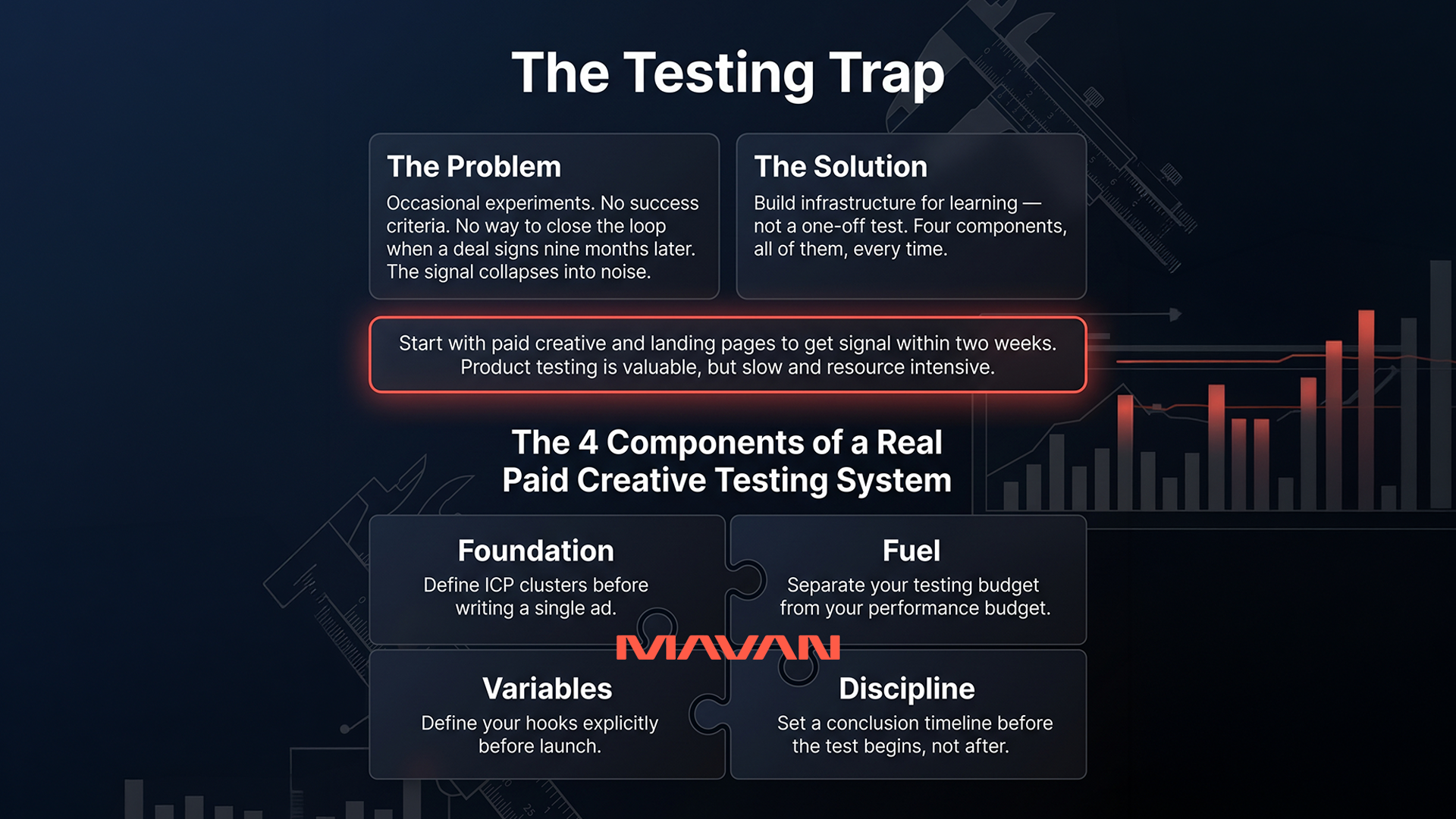
How Do You Build a Real A/B Testing Framework for B2B SaaS?
A functioning B2B SaaS experimentation program is built around paid creative testing and landing page optimization. Even with long sales cycles, you can know if an experiment is heading in the right direction within two weeks — as long as you track from first touch all the way through to closed contract.
-
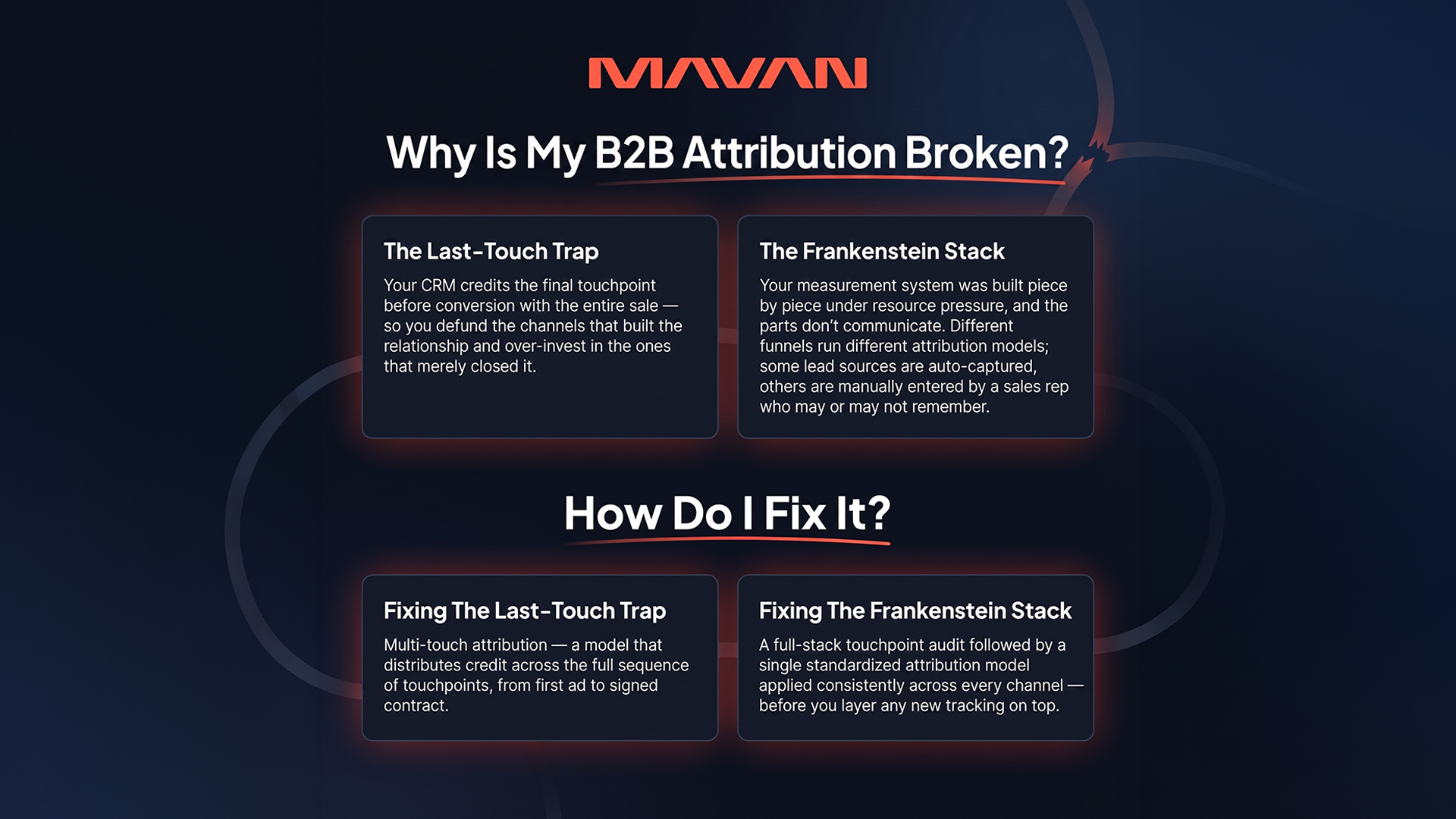
Why Is Your B2B SaaS Attribution Broken — and How Do You Fix It?
Most B2B SaaS attribution stacks fail in one of two predictable patterns: relying solely on last-touch data, or being bolted together piece by piece until the parts no longer communicate. The fix starts with mapping every top- to mid-funnel touchpoint in sequence and tying that complete journey back to the moment a contract closes. TLDR…
-
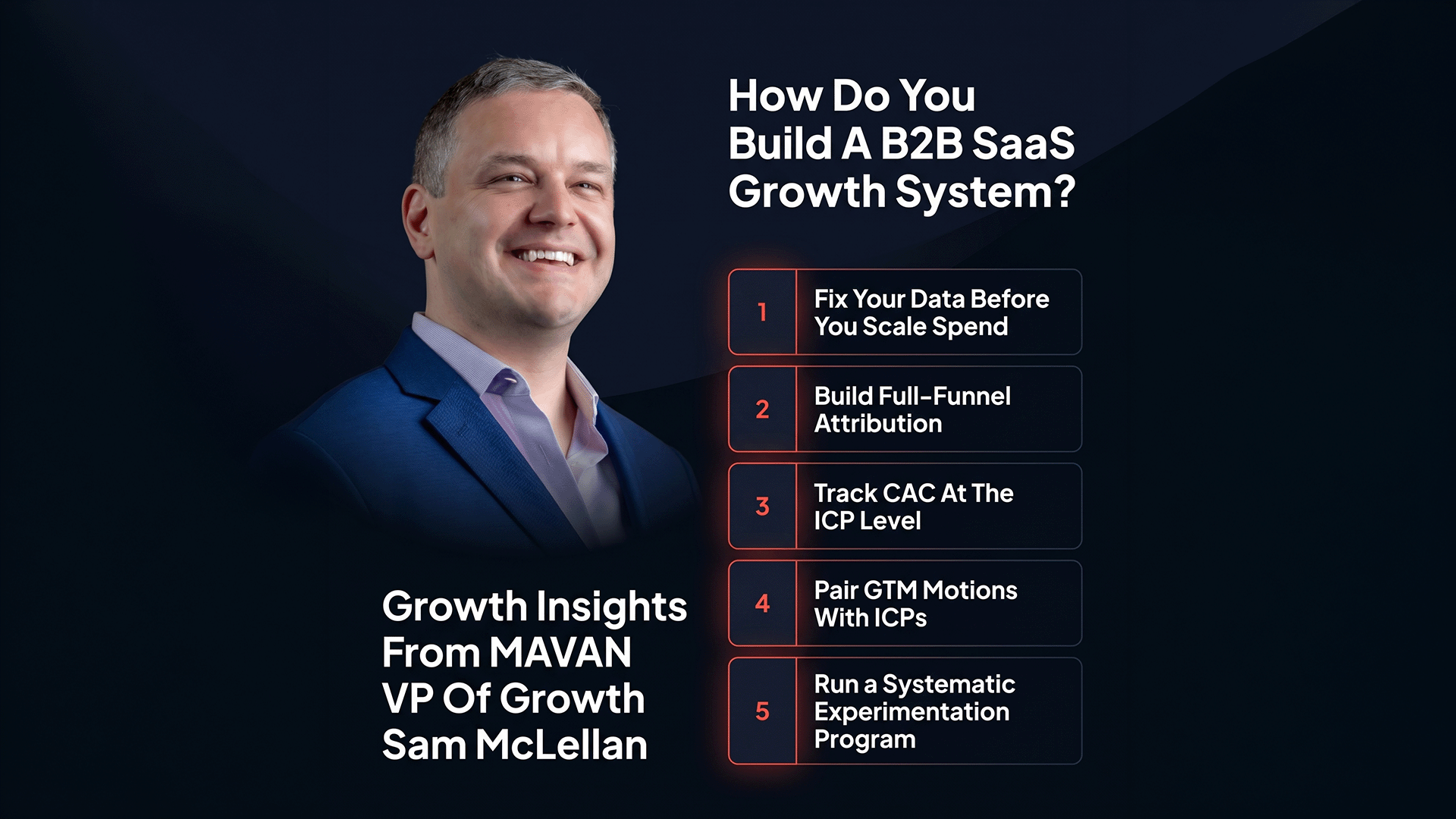
How Do You Build a B2B SaaS Growth System That Scales Beyond Founder-Led?
The fastest-scaling B2B SaaS companies are adopting measurement and experimentation disciplines from mobile gaming — including granular multi-touch attribution, ICP-segmented CAC tracking, and systematic creative testing. Companies that close that gap now are building compounding advantages that won’t be easy to replicate later. TLDR — The 10 Most Important B2B SaaS Growth Lessons Your board…