
Startups are on a never-ending quest to unlock the secrets of predictable, scalable growth. Here, we distill actionable insights from the world of growth marketing, user acquisition, and fundraising, delving into the entrepreneurial drive for innovation in the ever-changing digital landscape.
Crafting Intuitive User Acquisition Strategies
In the wake of the iOS 14 aftermath, the traditional playbook for user acquisition has been rewritten, demanding a shift towards intuition and customer-centric approaches. It’s crucial to understand the real-world context of potential customers, embracing a blend of online and offline on-ramping. Libation Labs’ unconventional move of acquiring a hot air balloon business exemplifies the art of finding and engaging users outside the confines of digital platforms. By prioritizing underlying motivations over data-led models, the company has successfully tapped into a high-intent consumer base, showcasing the power of understanding customer desires beyond algorithmic targeting.
The Art of Storytelling in Startup Fundraising
Fundraising for startups hinges not only on the tangible metrics but also on the intangible art of storytelling and founder conviction. Crafting a compelling narrative that resonates with individual investors is essential for communicating a startup’s growth potential and fostering investor confidence. It’s about engaging in genuine conversations and building a narrative that aligns with each investor’s unique interests and philosophies, transcending standardized fundraising tactics.
Innovative Solutions for Marketplace Volume Challenges
Amidst the quest for critical mass of volume, the acquisition of a hot air balloon business by Libation Labs stands as a prime example of leveraging tangential industries for marketplace growth. This out-of-the-box approach not only provided immediate user traffic but also paved the way for sustainable growth within the app ecosystem, addressing the classic ‘chicken or egg’ problem inherent to the two-sided marketplace model.
In essence, the fusion of innovation, strategic storytelling, and an understanding of customer journeys is the catalyst for sustainable growth in the startup realm. It’s not about adhering to the norm, but about reimagining the path to customer engagement and investor conviction, echoing the boundless innovation that propels the startup ethos.
Book a complimentary consultation with one of our experts
to learn how MAVAN can help your business grow.
Want more growth insights?
Thank you! form is submitted
[hubspot type=”form” portal=”20951211″ id=”9c538ed2-fb12-45f1-a573-ad7953c058cc”]
Related Content
-
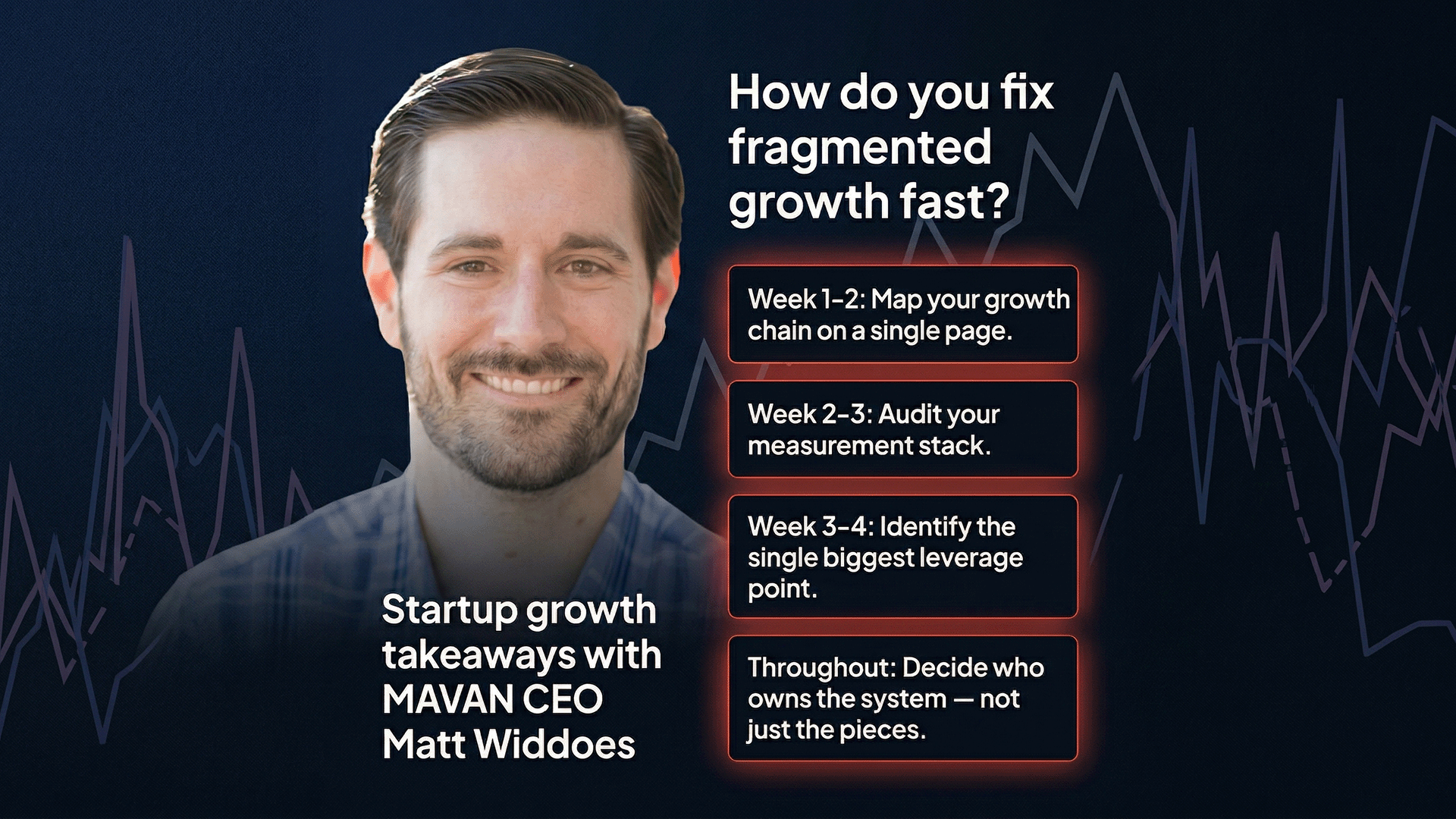
Why Does Startup Growth Feel Broken Even When Your Team Is Working Hard?
Startup growth breaks down when marketing, product, data, and creative teams work in silos. The fix starts with mapping your full growth chain, auditing your measurement stack, and assigning one owner to the whole system — not just the pieces. TLDR — Top Takeaways For Fixing Fragmented Startup Growth You haven’t taken a real vacation…
-
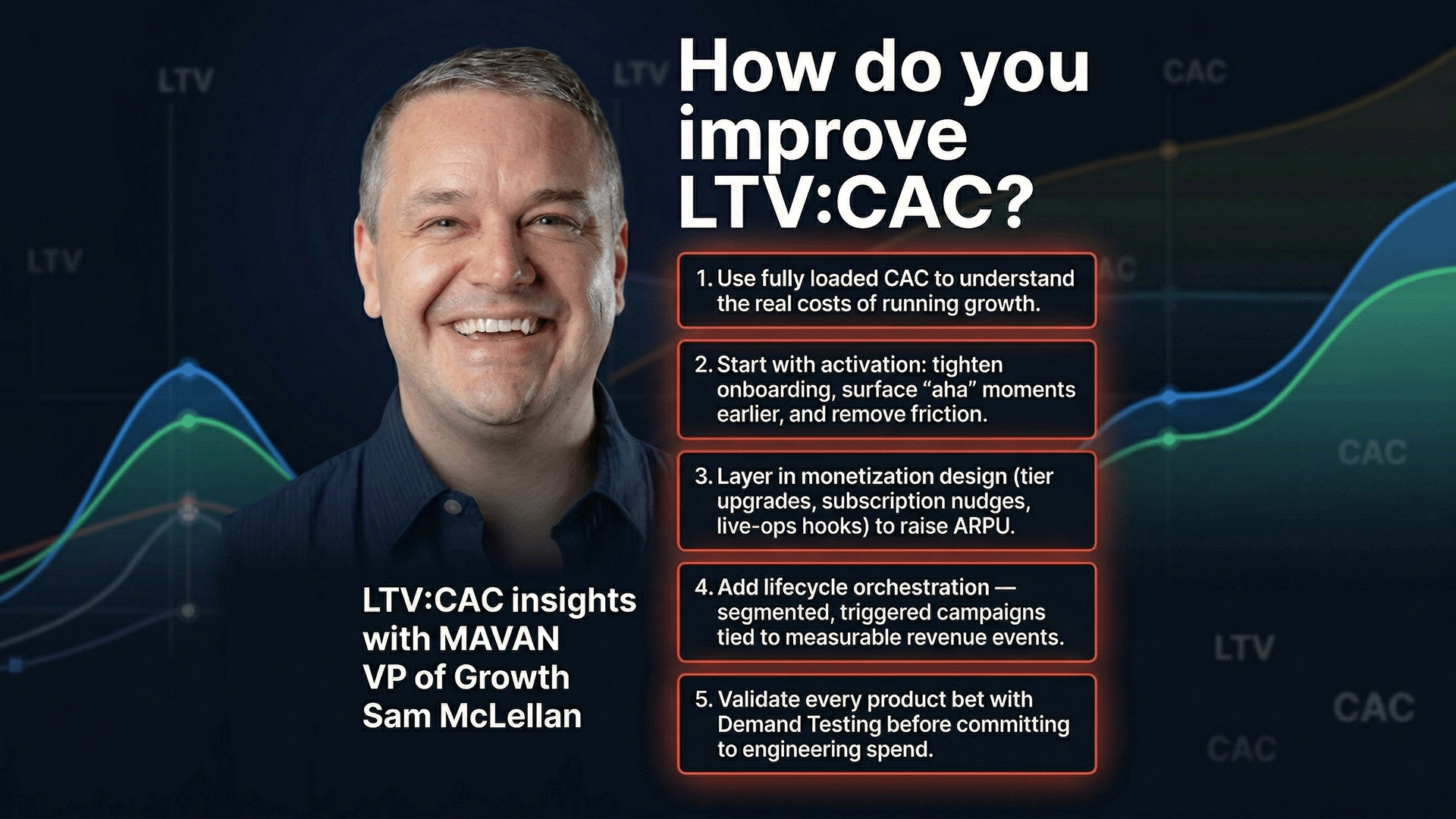
How Do You Actually Improve Your LTV:CAC Ratio?
Most teams try to improve their LTV:CAC ratio by cutting acquisition costs. But the higher-leverage fix is raising lifetime value through product changes — better activation, smarter monetization, and stronger lifecycle orchestration — then validating those changes with demand testing before committing engineering time. TLDR — 10 Critical Insights on LTV and CAC Everyone knows…
-
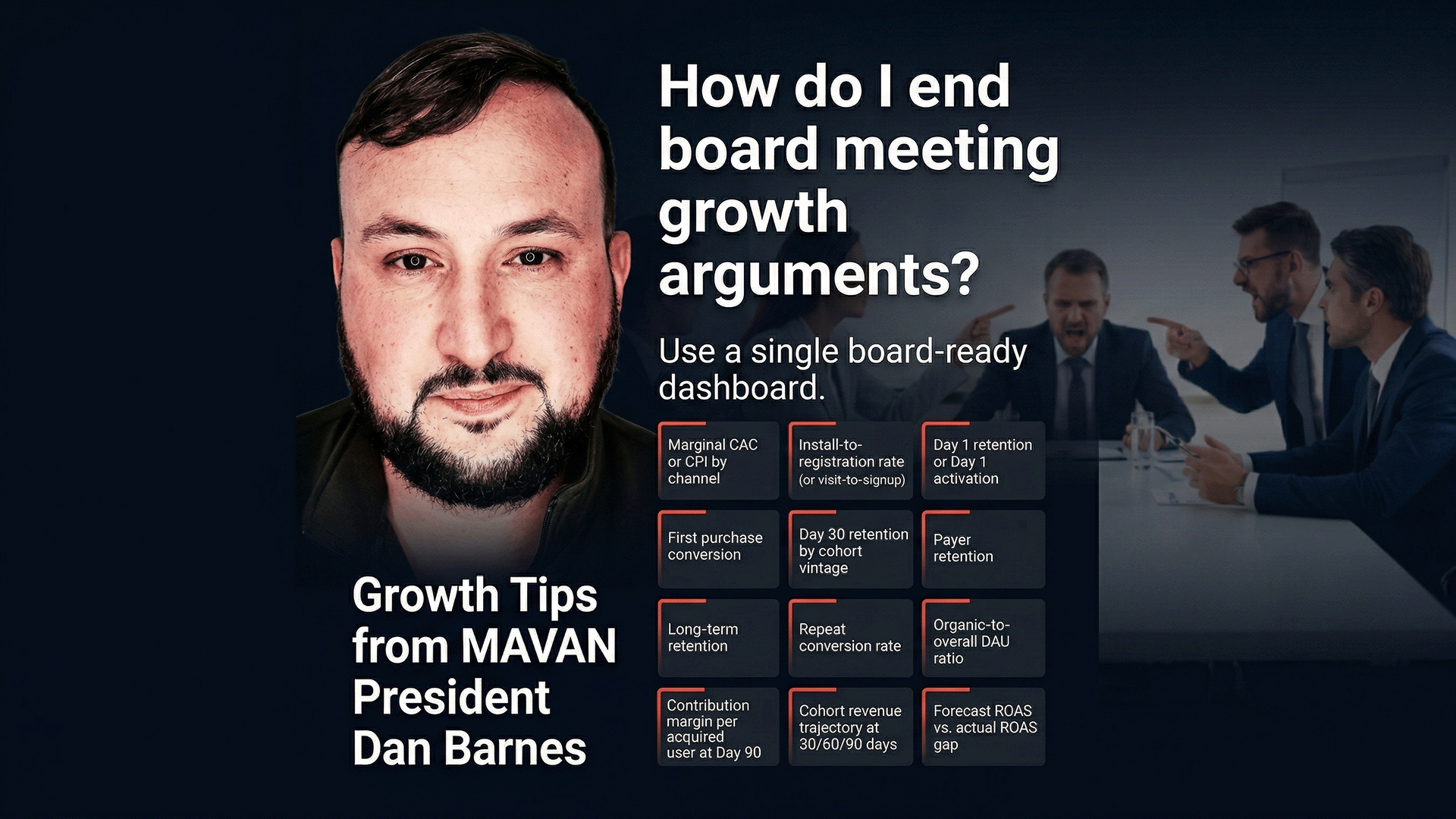
How Do You End Growth Arguments in Board Meetings?
A board-ready KPI scoreboard uses 12 metrics with one shared definition, one owner, one data source, and red-yellow-green thresholds tied to specific actions. It replaces competing narratives with a single shared reality that makes board meetings about decisions, not arguments. TLDR — What Do You Need to Build a Board-Ready KPI Scoreboard in 14 Days?…