
By: Doug Thielen
A great coach once said, “Leadership is alignment”. At first blush, it comes across as a pithy alliteration that a coach tosses out. A throwaway line meant for media headlines. But this on-air oration from a PAC-12 football coach, is the most underrated, under the radar, leadership nugget I’ve heard in 20 years; and one that I believe has the power to turbo charge your organization’s growth, if you can put it into practice.
Find your focus
Focus is an organization’s superpower, yet a surprising number of leaders aren’t able to identify their company’s priorities. In a MIT study, only “28% of executives and middle managers responsible for executing strategy could list three of their company’s strategic priorities”.
That’s terrifying.
Even more frightening, in the same study, “97% of those leaders said they had a clear understanding of the company’s priorities and how their work contributed to corporate objectives”.
How would your organization fair?
While there are likely many factors at play, I posit that the primary offender for most of these organizations was a true lack of focus– a need for a single priority–not eleven. Having 11 priorities isn’t focus; it’s the dogs’ breakfast. It’s a recipe for divisional leaders to each pick the 1 or 2 that matter the most to them – which leads to teams rowing in different directions.
Focus is how you scale.
Organizational focus provides individual empowerment and accountability, letting everyone from entry level contributors to the C-suite operate independently while moving in a coordinated fashion toward the greater goal.
Harness Obsession
Focus is key, but let’s take it a step further. The brands who win in today’s environment aren’t just focused on a single strategic priority… they are downright obsessed. They’ve identified their enemy, and every facet and layer of their org chart is aware of ‘the monster in the room’. It’s empowering, it’s engaging, and it provides personal value and purpose that employees are demanding in this new work environment.
Good requires motivation. Great requires obsession. And obsession can be infectious.
When your organization is obsessed, that obsession becomes a filter; an active framework teams use daily to make decisions, from sourcing and procurement, to marketing and HR.

Obsession Drives Results
One of my favorite examples of organizational obsession in action is the legendary story of Alcoa aluminum and CEO and Chairman Paul O’Neil’s relentless focus. When speaking to a forum of Wall Street investors and asked for his strategic plan to grow the business, instead of speaking to EBITDA and debt ratios, he said that they’d be focused on worker safety; a comment that had him laughed at and labeled as a “crazy hippie”. But it was O’Neill that would have that last laugh, as that focus on safety led to Alcoa’s market value increasing from $3 billion to $27 billion during his 13 year run. (Forbes)
This is a fantastic example of how you go from a mission statement, to being on a mission.
Exercise: Identify Your Team’s Focus and Obsession
Here’s an exercise for your next meeting – ask everyone to write down the answer to one, or all, of the following:
- Part I
- What is our purpose?
- What is our enemy?
- What is our focus?
- What is the one thing we are obsessed with as an organization?
- Part II
- Have them hold their answers up to the screen or have them place the card in the middle of the table
- Did everyone come up with the same thing? Were the answers close?
- If This, Then That Homework
- Have each person, come to the next meeting with the following:
- What should we be obsessed with?
- If we were obsessed with that, how would that impact your work/functional area? What decisions would you make?
- Have each person, come to the next meeting with the following:
From here the real work begins. Define it. Align it. Action it. Measure it.
When you can rally around a common goal and all parts of the organization are aligned and on the same page, it removes bottlenecks, lets startups scale, and fuels ideation and innovation in every sized org.
And if you’re wondering how things worked out for the football coach who quipped this little bit of wisdom off-the-cuff in an interview: two bowl appearances in his first two seasons and handing their fiercest rivals the biggest defeat in history doesn’t sound too bad at all.
Leadership is alignment, indeed.
Book a complimentary consultation with one of our experts
to learn how MAVAN can help your business grow.
Want more growth insights?
Thank you! form is submitted
[hubspot type=”form” portal=”20951211″ id=”9c538ed2-fb12-45f1-a573-ad7953c058cc”]
Related Content
-

How Do You Solve SKAN Attribution For Multi-Channel Apps?
To solve SKAN attribution for multi-channel apps, fix your conversion-value and revenue configuration first, then triangulate SKAN with incrementality testing and one internal source of truth — so every channel gets measured against the same number.
-
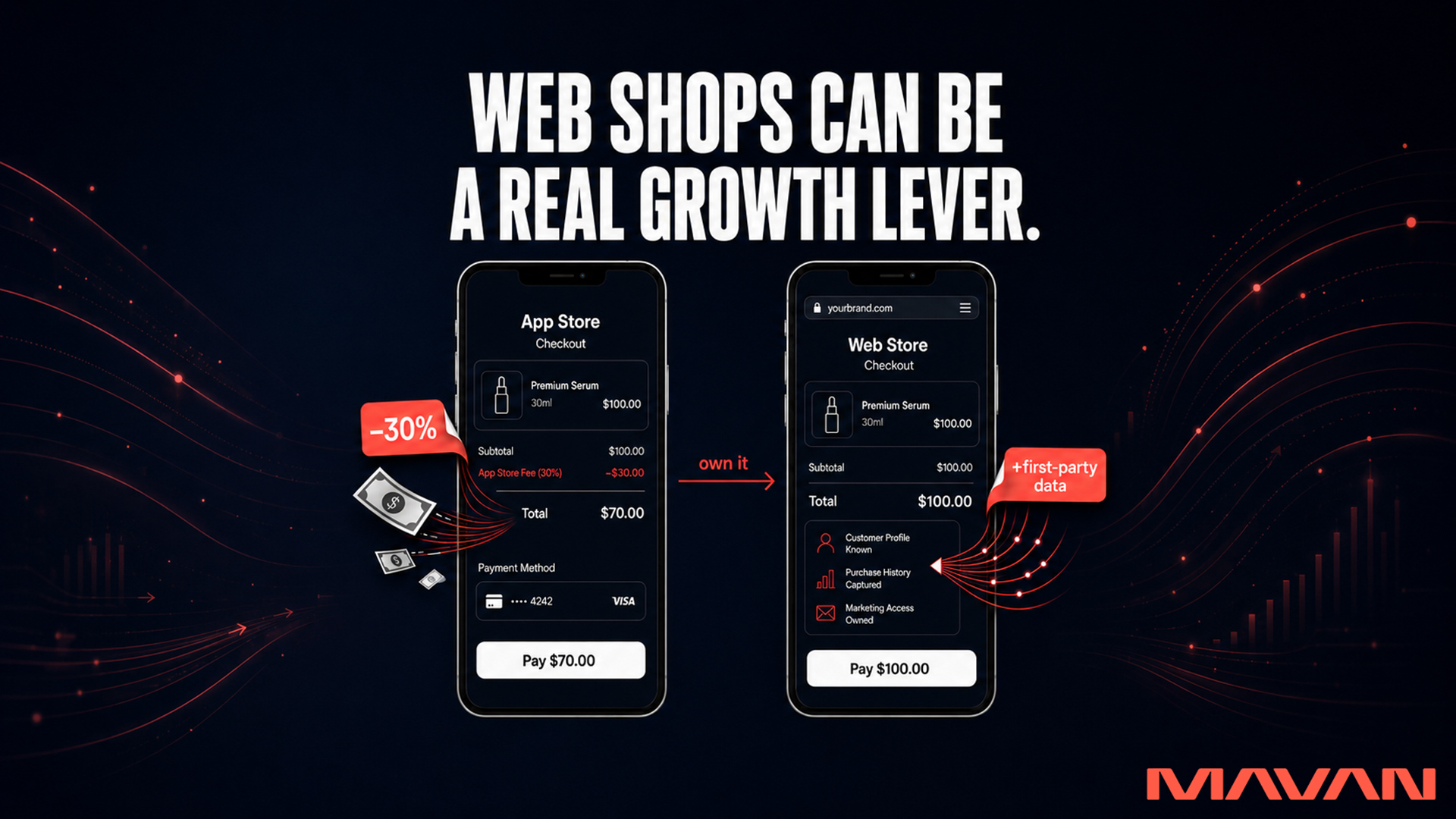
Are Mobile Game Web Shops A Growth Lever In 2026?
After Apple’s IDFA changes, mobile game studios grow by launching a web shop — a game-branded web store they own. It reclaims the 15 to 30 percent that app stores take on every purchase and rebuilds the first-party player data that makes user acquisition work again.
-

How Do You Avoid Hiring A Bad First Growth Hire?
Most first growth hires fail because the person is dropped into a company with no working system to sharpen, not because they lack talent. The fix is to build the system first — document what already drives growth, or embed a growth pod to turn scrappy channels into a coordinated system with a 90-day playbook — then make your senior hire, so they inherit a working machine instead of a blank page.