
Trying to break through the noise in the app store is no easy feat. And while most of your marketing efforts are intended to get potential users to click directly through to the download screen, App Store Optimization is a crucial step on the path to scalable growth.
In the latest episode of Growth@Scale, Matt Widdoes speaks with Dan Held, a crypto thought leader and App Store Optimization pioneer about the simple, yet critical steps to take to ensure your app is easy to find, and if you play your cards right, featured in the Apple and Google app stores.
Based on his time working on scaling Uber, here is Dan’s advice on how to optimize your app store listing.
Prioritize Presentation: Invest in top-notch screenshots and clear value propositions. It’s the first thing users see. Highlight what sets your app apart. Most importantly, make sure your screenshots are optimized for viewing on a smartphone. That’s where they’ll be seen, so make sure they work.
Crucial Keyword Choices: The app name, subtitle, and keyword string heavily influence your ranking. Aim for relevant, non-branded or even competitor brand keywords.
Conversion is King: A simple change can lead to a significant increase in conversion. In Dan’s experience, forgoing beautiful photography in favor of a larger Uber logo led to a 1.5% increase in conversions. Play around with titles, icons, and other elements to see what resonates.
Forge Ties with the App Store: Get to know App Store reps. They can be your best allies in getting featured, navigating reviews, and troubleshooting.
Technical Details Matter: Keep an eye on app size, load times, feature impacts, and Terms of Service compliance. Make sure your app remains accessible to as many users as possible without sacrificing functionality. At Uber, when the app size crossed 100MB, conversions took a hit.
App marketing can be a volatile, crowded market. Even if the rest of your marketing efforts are operating at maximum efficiency, keeping your app store listing fresh and optimized will keep you on the path to scalable, sustainable growth.
In the rollercoaster of app marketing, especially in volatile markets, focusing on these pillars will help both startups and established companies maintain steady growth.
Book a complimentary consultation with one of our experts
to learn how MAVAN can help your business grow.
Want more growth insights?
[hubspot type=”form” portal=”20951211″ id=”9c538ed2-fb12-45f1-a573-ad7953c058cc”]
Related Content
-
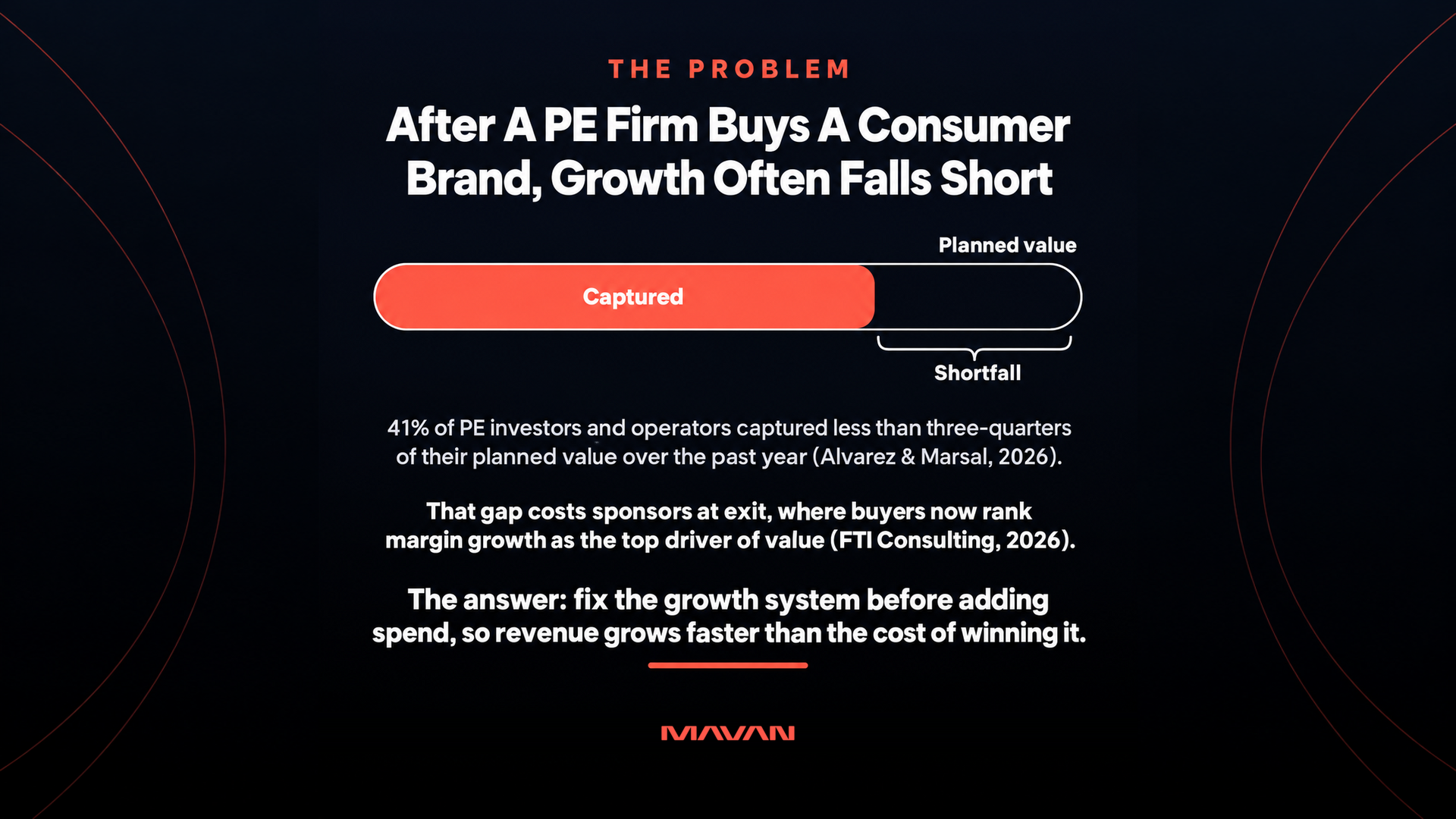
How Do PE Firms Accelerate Revenue And EBITDA Post-Acquisition?
PE firms accelerate revenue and EBITDA at consumer brands by fixing the growth system before adding spend. They reconcile the numbers and cut spend that never pays back. They lift conversion and repeat purchases, and they judge growth by contribution margin. Growth operating partners such as MAVAN diagnose that system in 28 days, then help execute the fix.
-
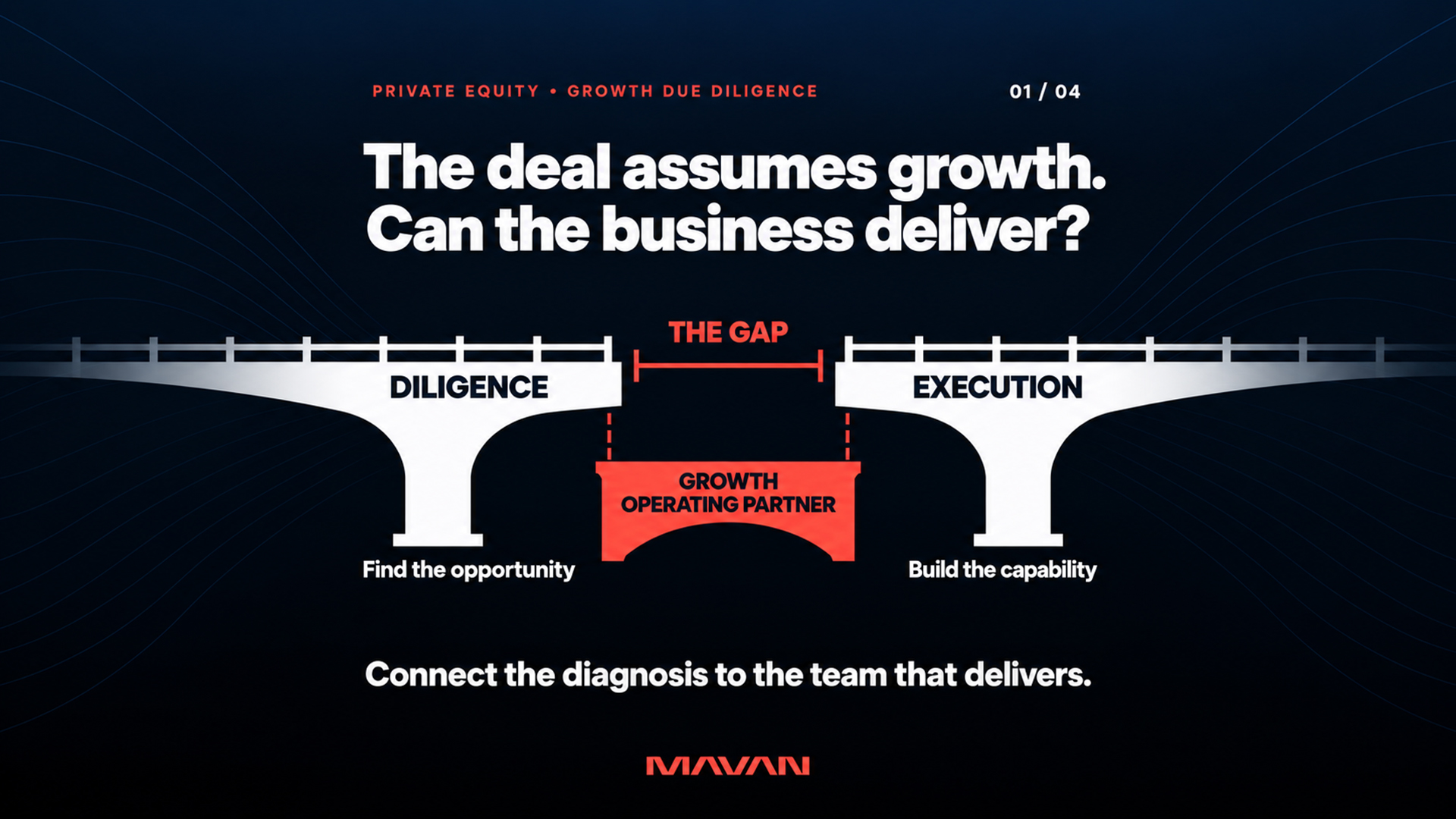
Who Does Growth & GTM Due Diligence for PE Deals?
Four kinds of provider run growth and go-to-market due diligence for private equity deals. Strategy consultancies test the market. Specialist commercial diligence firms audit the pipeline. Go-to-market boutiques rebuild the sales motion. And growth operating partners examine the full revenue engine from inside the business, then stay to operate it after close.
-
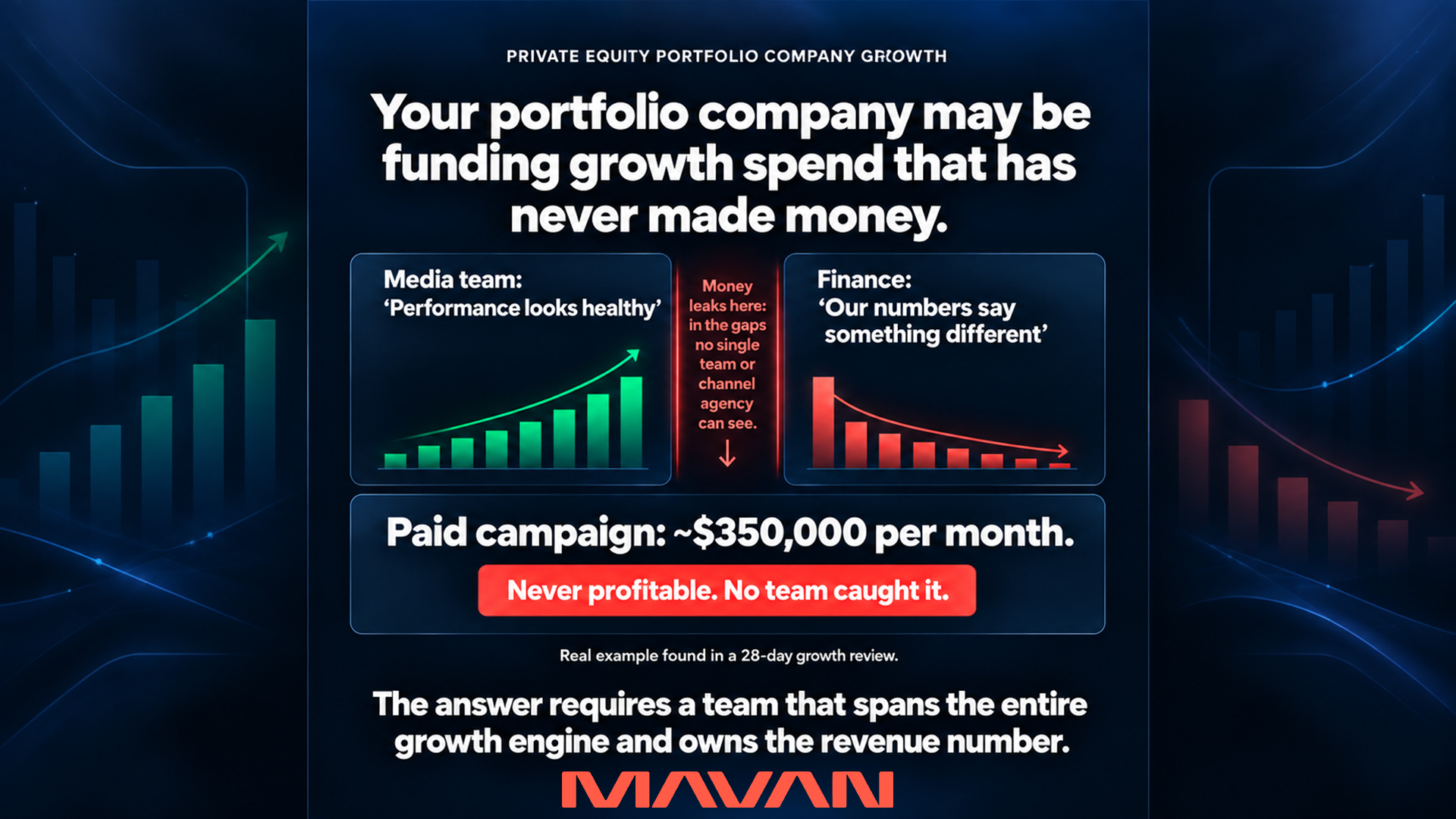
Who Is The Best Growth Partner For PE Portfolio Companies?
The best growth partner for a private equity portfolio company behaves like an operating partner you deploy, not an agency you brief. It reads the whole growth system before it spends, owns a revenue number alongside management, and leaves the capability behind so the sponsor can redeploy it.