
When an app’s user base speaks a language other than a country’s primary language, what is the proper App Store Optimization (ASO) strategy? How do you connect with an audience that is accustomed to communicating in two languages and make sure they can find you on their own terms? This was the challenge we were faced with when approached by ViX – the number one Spanish language streaming service in Mexico – as they sought to promote downloads and traffic in the United States.
When MAVAN began the project in January 2023, ViX’s strategy for US app stores had been to follow the same ASO tactics as its Mexican counterpart. However, those tactics were not performing as well as hoped as growth in both Google Play and the Apple App Store was relatively stagnant in the United States.
As we developed the test plan, we posed two key questions:
- Do customers typically search in their primary language – or, if bilingual, do they match their search to the language of the app store they’re using?
- How does the app store treat diacritics – accents (é) and tildes (ñ) – commonly found in languages such as Spanish?
What we already knew was that the US and Mexican app stores cross-reference each other. That is, keywords used in one store work for the other. Even a phrase where one keyword of the phrase is in the US store and the other word is in Mexico will still trigger a positive search result. Because of this, we felt we could leave the Mexico localization in Spanish, and make changes to the US localization without harming primary sources of traffic.
To determine effectiveness, we performed a series of tests that were measured by using an ASO scoring system that accounts for both the difficulty of the keywords, and the current ViX rank of those keywords.
Test 1 – US App Store Title + Subtitle in English
Our first test used an English title and subtitle in the US app store, however we kept important Spanish keywords such as “novelas” in the hidden keywords field.
App store screenshots were changed from Spanish callouts to English. The majority of hidden keywords in the US app store were competitors that were not language-specific.
This put the app in line with other Spanish language apps that were using English in their title and subtitle.
In the English test we saw a 74% increase in impressions in the US as well as an expected decrease in conversions
In the English test, we saw a dramatic 74% increase in impressions in the US, as well as an expected -3.3% decrease in conversions. The decrease was due to getting some draw from some competitor brands.
During the English test, traffic (downloads/day) decreased 6%. However this was a significantly slower rate than over the same period in Mexico, where they experienced a 40% decrease using the all-Spanish strategy. This was an indicator that the English approach being tested worked in ViX’s favor to combat this decline.
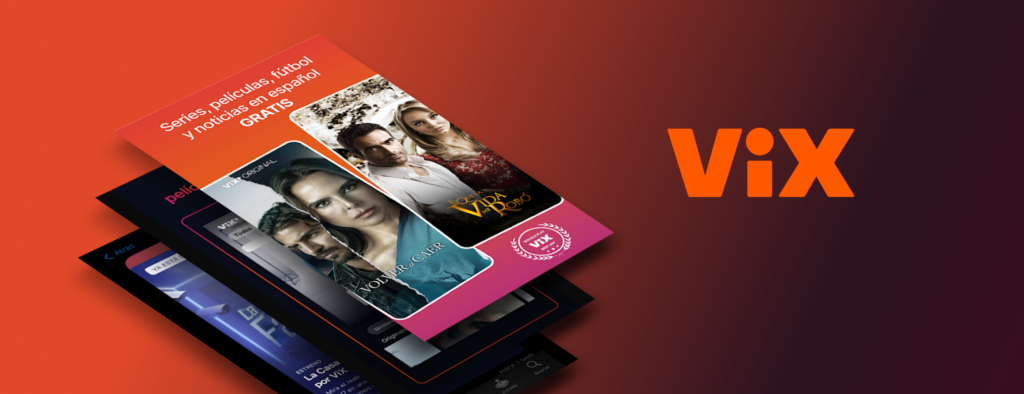
Test 2 – Blended (US App Store Title in English, Subtitle in Spanish)
After reviewing the English test, we identified areas that were and weren’t working and got to work deciding how to further optimize based on those results. We used this data to devise a new plan that would take the best of both the English and Spanish strategies of the past to optimize traffic.
The US app store would have both the high-value English and Spanish keywords in its title/subtitle, while the hidden keywords field would be primarily Spanish language or related to competitive brands in the Spanish-speaking market.
We used the extra space in the keywords field to test if the diacritic versions performed better or worse than the same word using standard US English. Screenshots were changed back to Spanish CTAs.
In the US, we found that keywords without the diacritic marks performed 2x better than keywords with them. However in Mexico, the trend was reversed, indicating that in the US, Spanish-speaking customers searching for Spanish words tend to drop the special marks as they are not as readily available on a standard American English keyboard.
During this test, impressions continued to climb over the full English test – 76% over baseline – and we regained some of the conversion rate lost by switching from full Spanish to full English. As expected, it was not enough to get back to the full Spanish baseline. Overall, this led to a 17% increase in downloads.
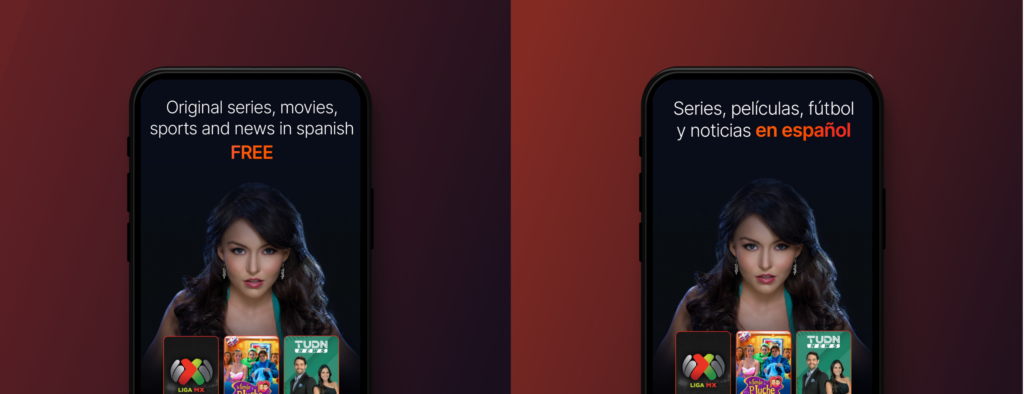
Test 3 – Closing the Loop (Full Spanish, Part 2)
After reviewing the results of the English test and the blended language test, we felt there was an opportunity to close the loop with one more test. We decided to go back to a completely Spanish title and subtitle with a keyword set that took advantage of our learnings from previous campaigns.
While the app had started out in full Spanish, once we gained full access, we retested with a fully optimized Spanish keyword set.
During the third test, one of ViX’s most popular shows, La Casa de los Famosos, released a new season causing massive spikes in traffic. This made it difficult to analyze the organic traffic caused by ASO. Here is where we, and all brands seeking to optimize their app store presence, can benefit from running A/B testing. Without a proper control group, it’s not always easy or possible to measure the true impact of your ASO efforts.
In this case, the release of La Casa de los Famosos was out of our and ViX’s control, so we had to roll with it and learn as much as we could while impressions skyrocketed over 200% in Mexico. It was nearly impossible to exactly discern how much should be attributed to our ASO efforts, directional comparison across the US and Mexico app stores gave us a strong indication.
We did not see the same boost in the US, with impressions actually decreasing slightly compared to the blended English/Spanish test. For those impressions, however, conversion rates were the best they’ve been through all time frames examined, reaching nearly 10%. Even with the slightly decreased impressions, the conversion rate led to the highest number of downloads per day of all three tests.
Is that enough to conclude that the change back to Spanish was the driving factor? It certainly had a positive effect, even if we couldn’t measure precisely how. However, the directional results were quite impressive, and were already trending in that direction before the release of La Casa de los Famosos, with ViX ranking in the top 10 keywords more consistently than all their competitors in both Mexico and the United States. ViX also enjoyed the highest ASO ranking over Flix Latino, Canela, Tubi, and Telemundo in both markets.

The influence of La Casa de los Famosos introduces an anomaly to the data that is nearly impossible to account for. To gain accurate and valuable insights, it’s important to continue running optimization tests for a longer period of time to establish accurate baselines against which we can weigh performance and make the best possible ASO decisions for our client.
Are you looking for an ASO team that blends the art and science of ASO to optimize your app? Reach out to MAVAN using the button below to connect with one of our experts and let’s see what we can do for you!
Book a complimentary consultation with one of our experts
to learn how MAVAN can help your business grow.
Want more growth insights?
Thank you! form is submitted
[hubspot type=”form” portal=”20951211″ id=”9c538ed2-fb12-45f1-a573-ad7953c058cc”]
Related Content
-
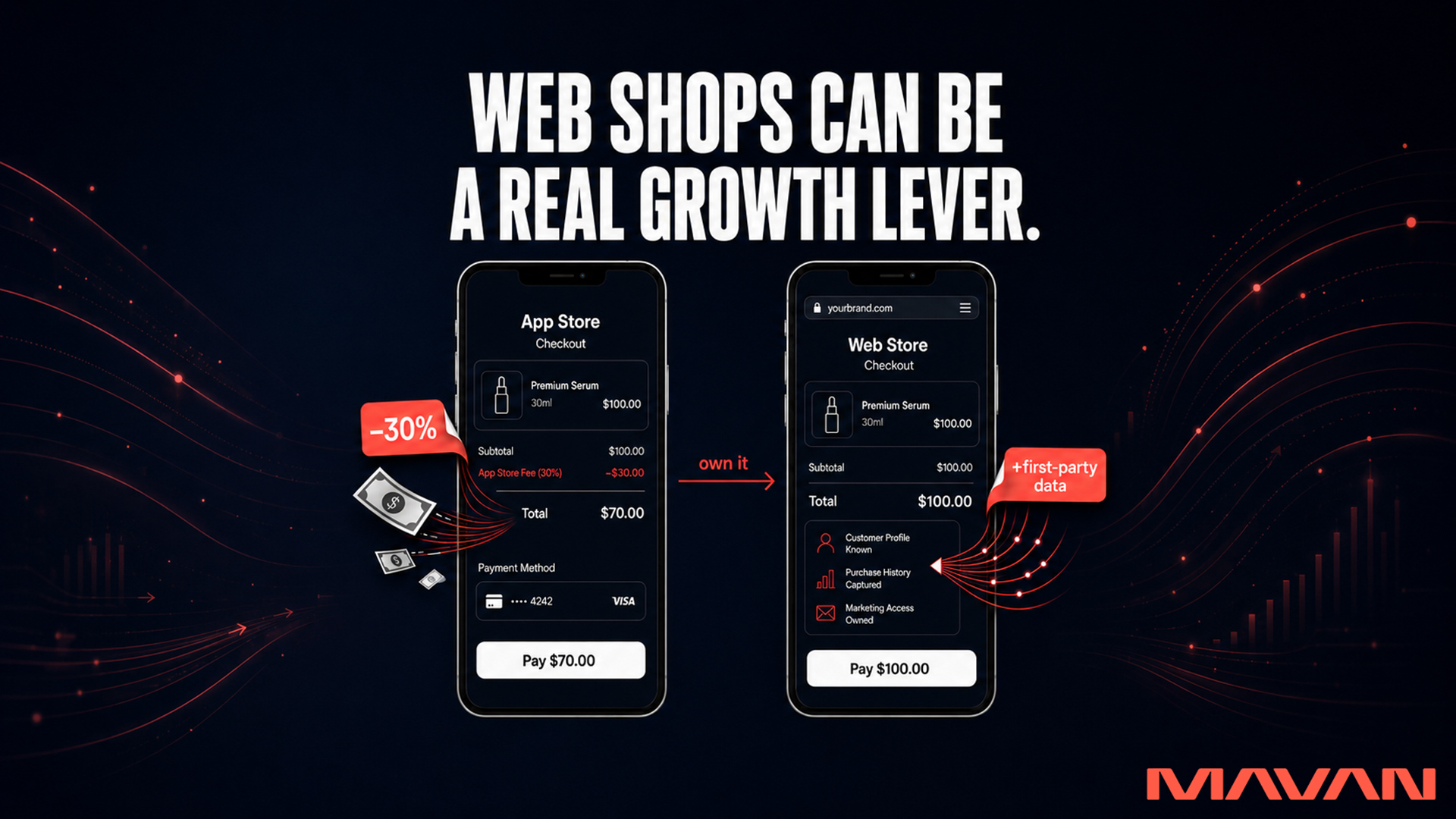
Are Mobile Game Web Shops A Growth Lever In 2026?
After Apple’s IDFA changes, mobile game studios grow by launching a web shop — a game-branded web store they own. It reclaims the 15 to 30 percent that app stores take on every purchase and rebuilds the first-party player data that makes user acquisition work again.
-

How Do You Avoid Hiring A Bad First Growth Hire?
Most first growth hires fail because the person is dropped into a company with no working system to sharpen, not because they lack talent. The fix is to build the system first — document what already drives growth, or embed a growth pod to turn scrappy channels into a coordinated system with a 90-day playbook — then make your senior hire, so they inherit a working machine instead of a blank page.
-
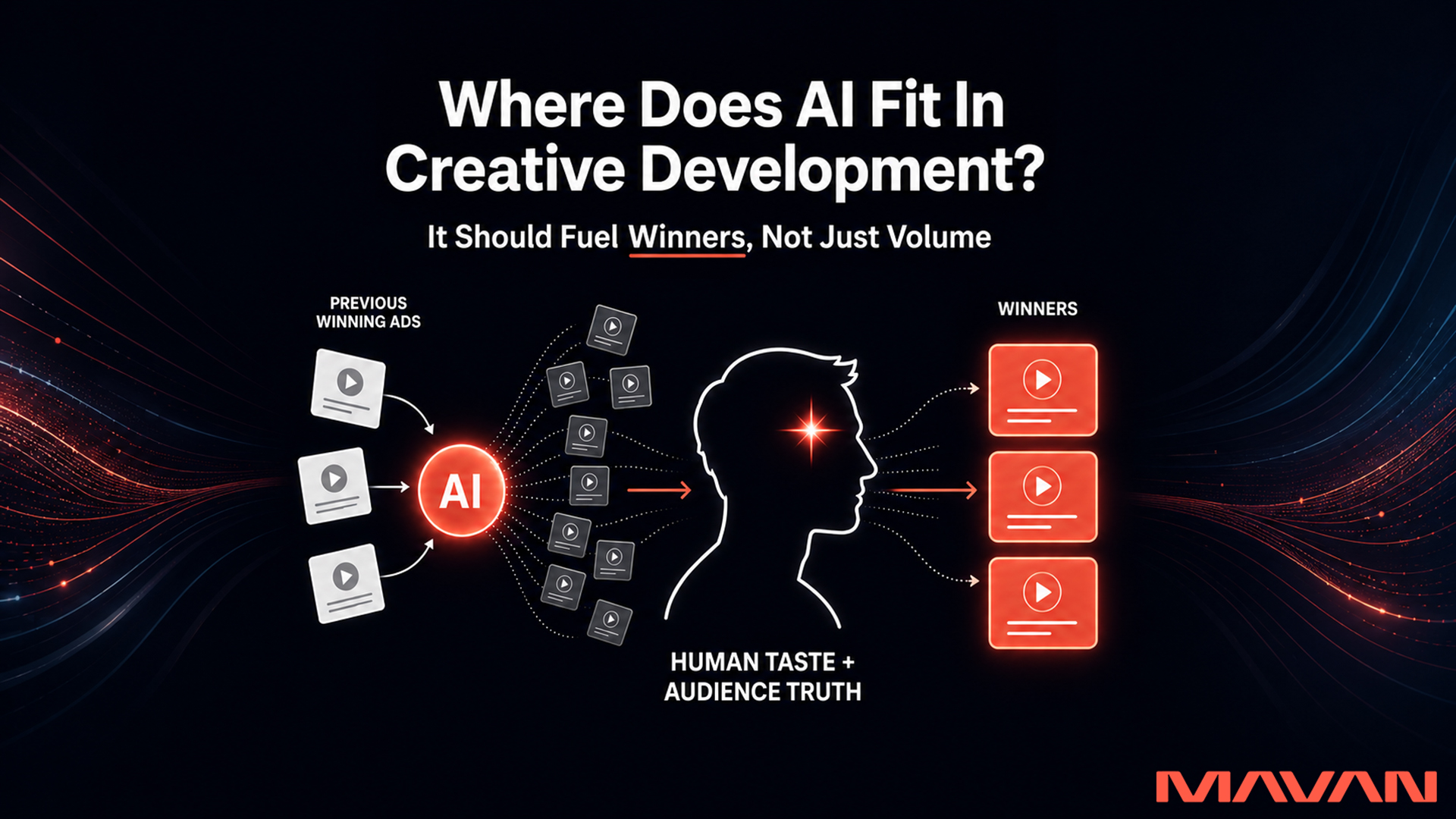
How Do You Use AI For Winning Ads In Creative Development?
AI’s biggest near-term payoff in growth is creative. Use it to generate more concepts and rebuild what already works — then rely on human taste, audience truth, and disciplined testing to decide which creative ships and scales.