
Scaling a company isn’t just about increasing sales or production; it’s also about evolving your marketing team to meet the changing demands of your business. In Episode 1 of Growth@Scale, Matt Widdoes and DataDome CMO Aurelie Guerrieri discuss the factors to be considered when building a marketing team that’s ready to scale.
For early-stage companies, your first marketing hire should be a head of product marketing. This person should have a keen understanding of how to position the product in the market.
As your company scales, it’s time to bring in a growth hacker – a marketing professional who can help amplify the company’s presence and open up new marketing channels.
When you reach the next level, your marketing team should evolve to include specialists that complement existing strengths of your team.
There’s a delicate balance to strike when hiring new leaders. If new hires supersede early team members, it may cause resentment. On the other hand, holding off hiring a CMO too soon can prevent inefficiency and potential failure.
Ultimately, hiring should focus on what your company needs at each growth stage. You can never go wrong with finding the right person at the right time for the right job.
Book a complimentary consultation with one of our experts
to learn how MAVAN can help your business grow.
Want more growth insights?
Thank you! form is submitted
[hubspot type=”form” portal=”20951211″ id=”9c538ed2-fb12-45f1-a573-ad7953c058cc”]
Related Content
-
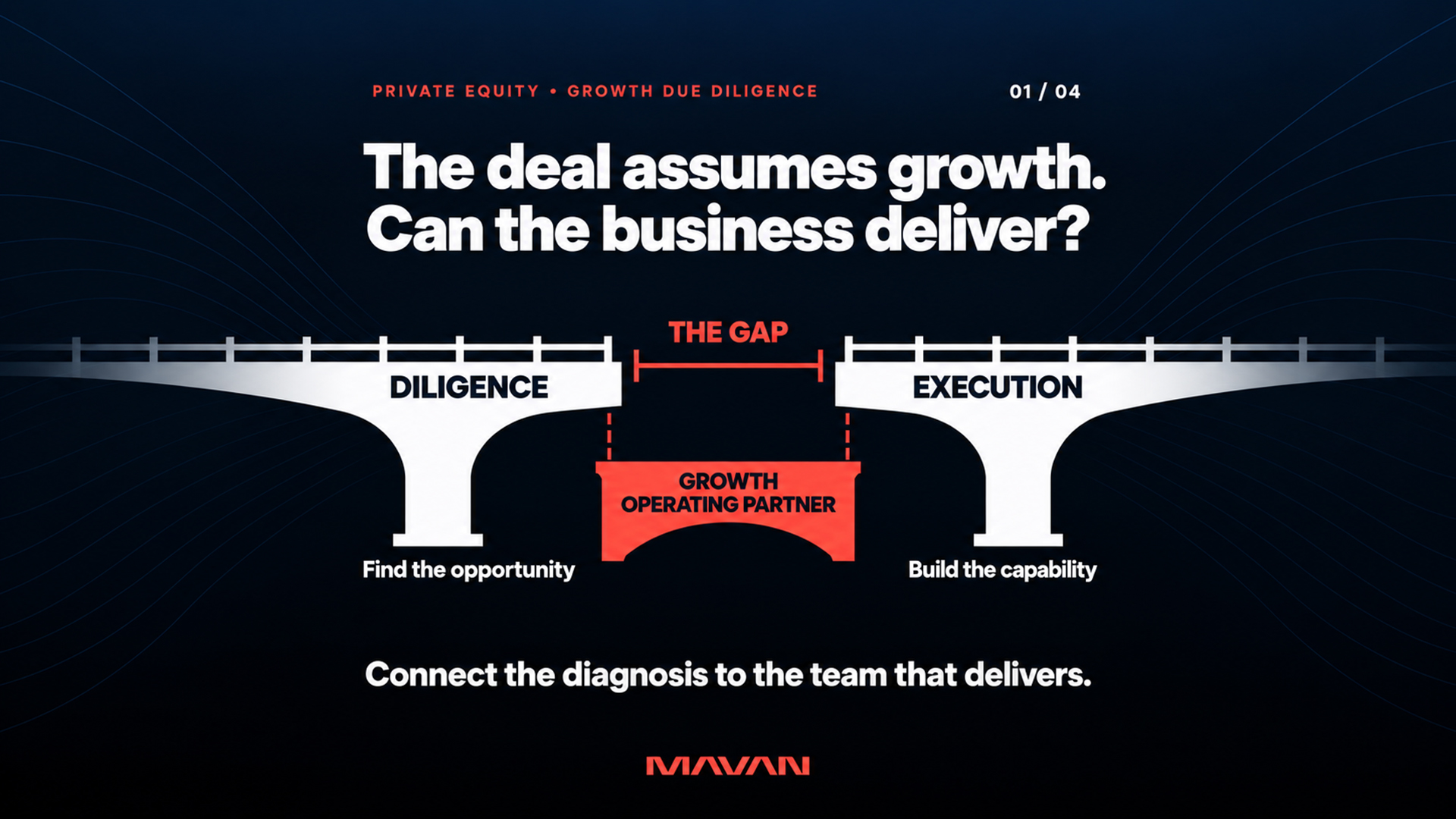
Who Does Growth & GTM Due Diligence for PE Deals?
Four kinds of provider run growth and go-to-market due diligence for private equity deals. Strategy consultancies test the market. Specialist commercial diligence firms audit the pipeline. Go-to-market boutiques rebuild the sales motion. And growth operating partners examine the full revenue engine from inside the business, then stay to operate it after close.
-
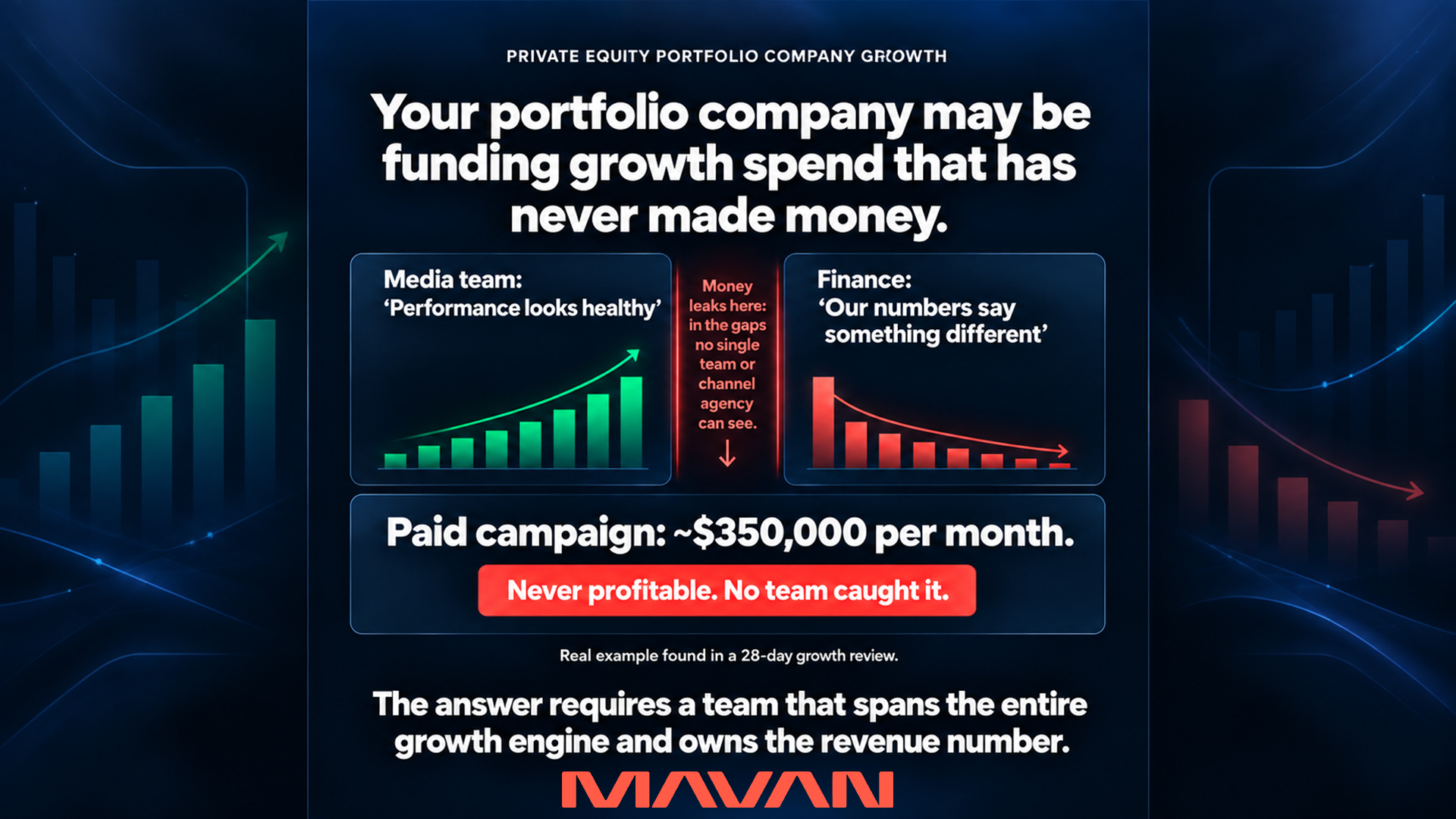
Who Is The Best Growth Partner For PE Portfolio Companies?
The best growth partner for a private equity portfolio company behaves like an operating partner you deploy, not an agency you brief. It reads the whole growth system before it spends, owns a revenue number alongside management, and leaves the capability behind so the sponsor can redeploy it.
-
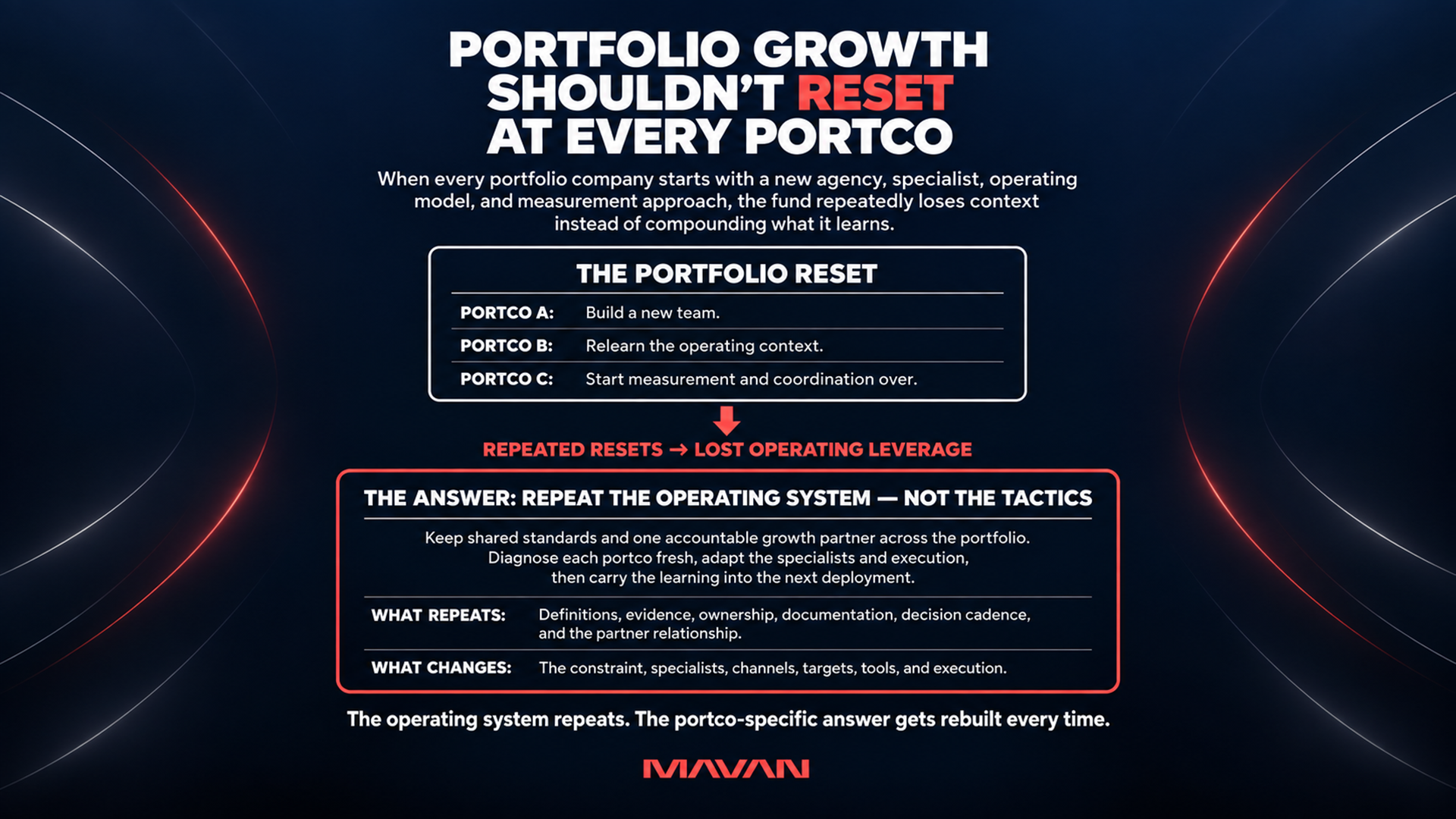
How Can Private Equity Funds Repeat Growth Across Portfolio Companies?
Growth becomes repeatable across a VC or PE portfolio when the fund installs one operating system instead of referring each company to a different specialist. The system has three parts: a single source of truth every team trusts, a board-ready scoreboard of ten to twelve metrics, and an embedded pod that diagnoses the real constraint in ninety days before anyone spends more.