
Key Takeaways
- Insights for leveraging customer feedback at every stage of product development
- Strategies for aligning a diverse teams to achieve common objectives
- Techniques to foster creativity and innovation within your marketing team
Listen to Your Customer at Every Stage
An effective approach involves constant engagement with the consumer to ensure the product resonates with their needs and expectations. You should be bringing the customer with you, through the entire journey of building, launch, optimization, growth, and even sunsetting. A systematic, research-based approach will allow your marketing team to deliver a product that meets market demands and grows your customer base. Involving customers early and often ensures a better product-market fit and higher adoption rates.
Build & Optimize Your Product Funnel
Early-stage founders build and optimize better product funnels by leveraging a “pod” structure. This means assembling a diverse, cross-functional team of experts, including a product marketer, product manager, design specialist, engineer, and an analytics expert. By working closely within pods, teams can quickly iterate on product features, ensuring they meet customer needs more efficiently. Rapid iteration, quick learning, and a Minimum Viable Product (MVP) approach are also valuable ways to de-risk new product launches.
Creating a Culture of Innovation and Creativity
While you scale, focus on creating a psychologically safe environment where team members can feel comfortable expressing themselves and exploring new ideas. As a leader, maintain your own work ethos at every career stage to encourage collaboration and empower team members to take ownership and push the boundaries of what’s possible. Tactics for maintaining creativity ( in both in-person and remote work environments) include:
- Sharing inspirational materials and personal context
- Creating a ‘swipe library’ of artifacts that can spark creativity
- Running workshops focused on idea generation and constructive feedback
Book a complimentary consultation with one of our experts
to learn how MAVAN can help your business grow.
Want more growth insights?
Thank you! form is submitted
[hubspot type=”form” portal=”20951211″ id=”9c538ed2-fb12-45f1-a573-ad7953c058cc”]
Related Content
-
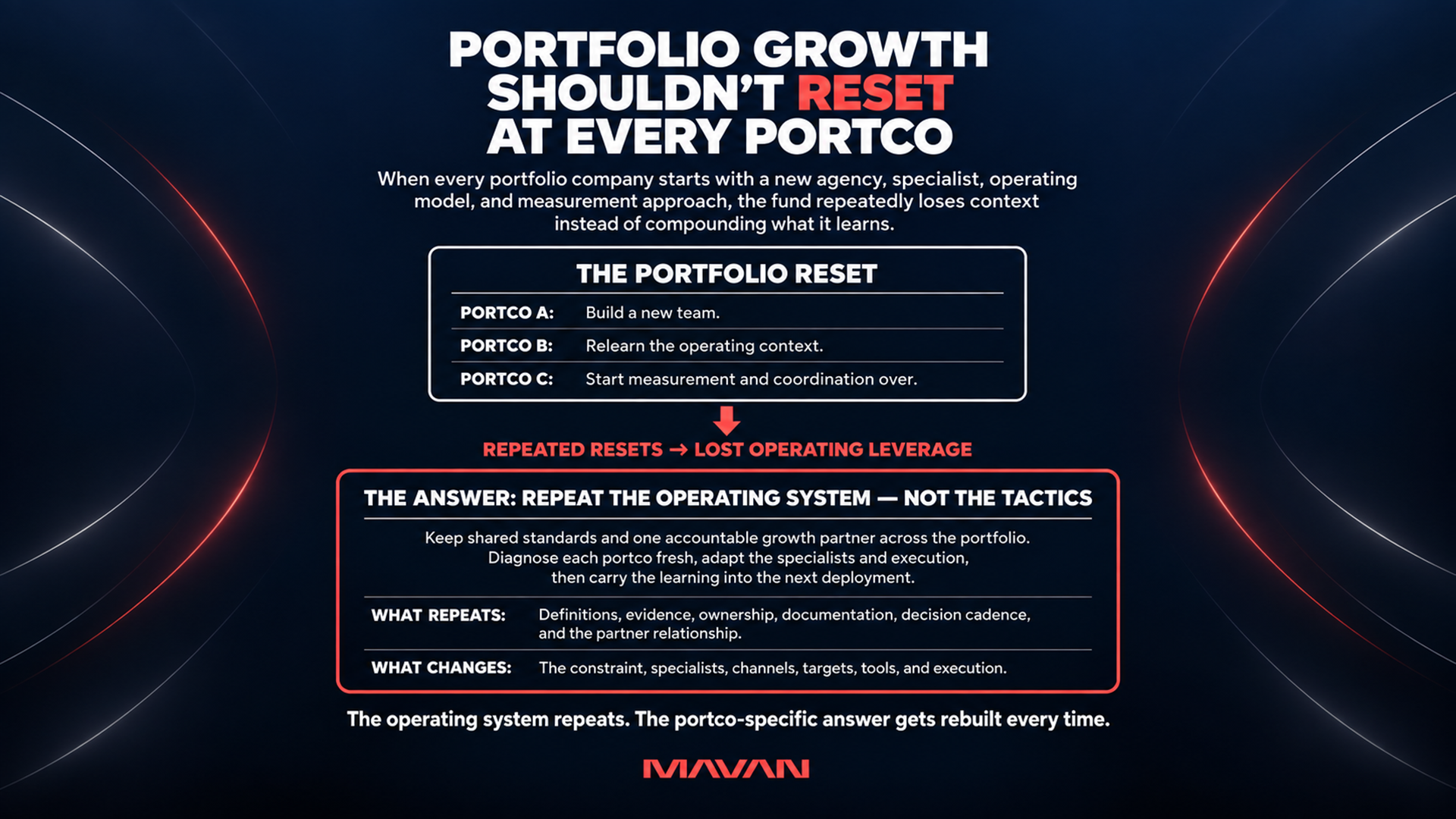
How Can Private Equity Funds Repeat Growth Across Portfolio Companies?
Growth becomes repeatable across a VC or PE portfolio when the fund installs one operating system instead of referring each company to a different specialist. The system has three parts: a single source of truth every team trusts, a board-ready scoreboard of ten to twelve metrics, and an embedded pod that diagnoses the real constraint in ninety days before anyone spends more.
-
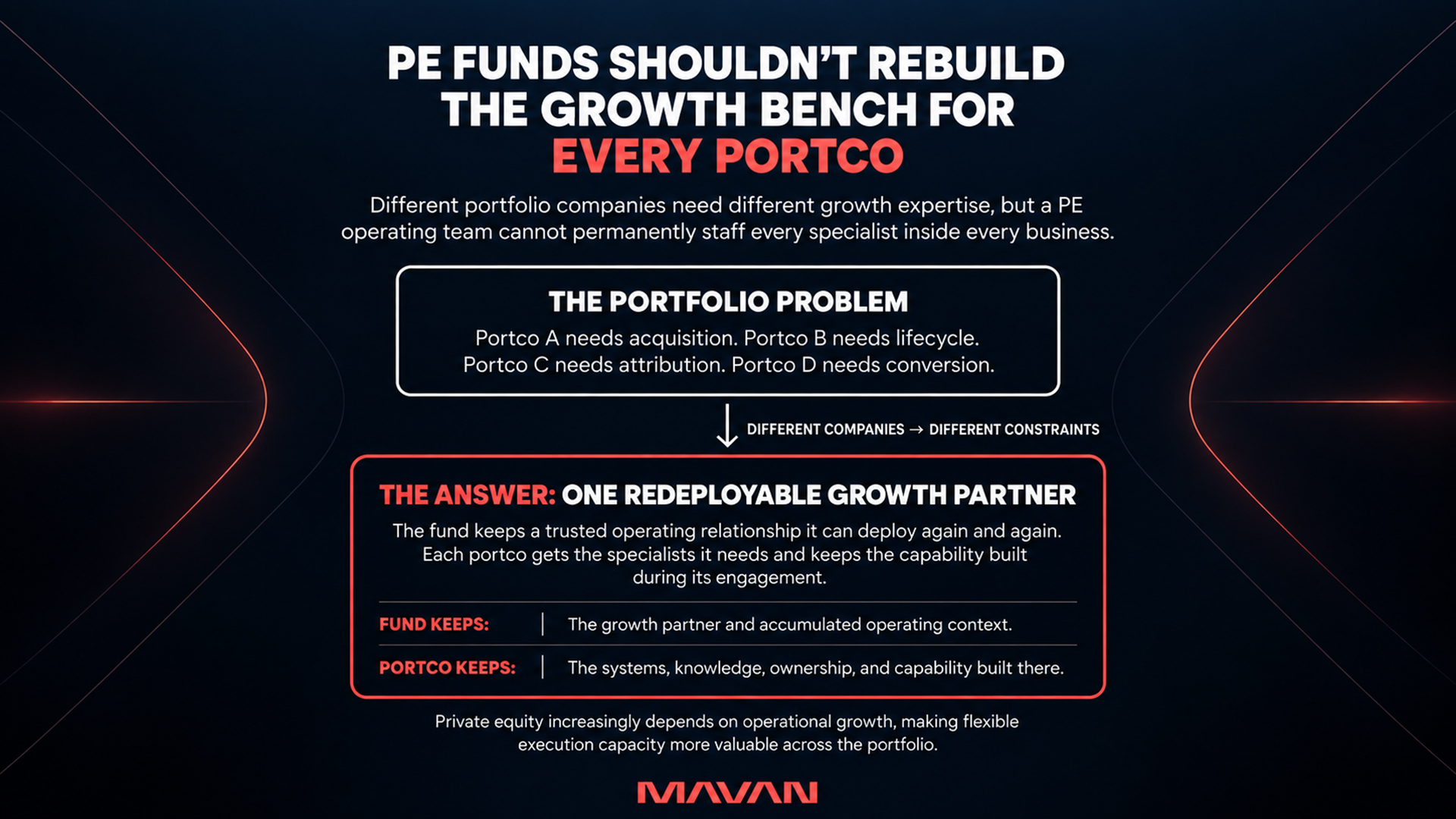
What Do PE Funds Want From a Portfolio Growth Partner? Repeatability!
What funds actually want from a portfolio growth partner is repeatability — a portable growth operating system that produces comparable results across very different portfolio companies. Repeatability shows up as a single source of truth, a board-grade scoreboard, a 90-day sprint, and a clean handoff, so each win compounds across the portfolio instead of staying at one company.
-
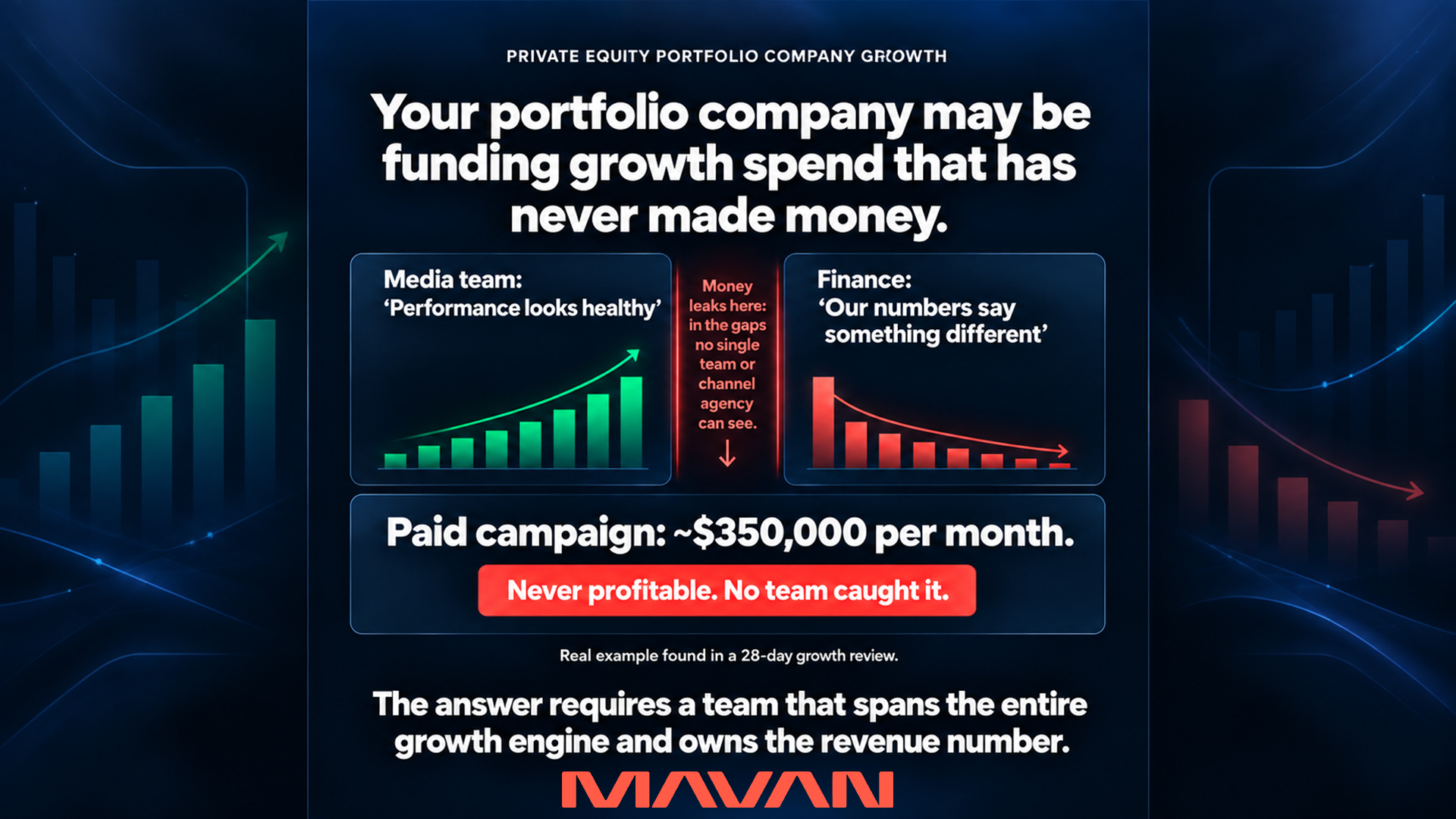
Who Is The Best Growth Partner For PE Portfolio Companies?
The best growth partner for a private equity portfolio company behaves like an operating partner you deploy, not an agency you brief. It reads the whole growth system before it spends, owns a revenue number alongside management, and leaves the capability behind so the sponsor can redeploy it.