
As startups navigate the challenges of early stages of growth, a good CFO can be the difference between reaching the next level and stagnation. In the latest episode of Growth@Scale, Lea Dudum, CFO of Elevation Advisory spoke with host Matt Widdoes about how successful CFOs are instrumental in bridging founders’ vision with financial pragmatism, becoming an essential part of the strategic decision-making process.
In the startup world, CFOs aren’t just number crunchers – they’re vision translators, turning founders’ wild ambitions into feasible financial models, setting key performance indicators (KPIs), and designing hiring plans that match the startup’s financial health.
A part-time CFO can effectively initiate crucial financial processes for early-stage companies, but as the company expands – ideally at around 25-50 employees and a successful Series B funding round – a full-time CFO becomes indispensable for managing the team and steering company strategy.
For startups fresh off a successful funding round, a CFO is the guardian of the war chest. They help design a financial blueprint ensuring a 24-month runway, identify key priorities and growth strategies, and assist in assembling the right team to realize these goals. An adept CFO keeps a keen eye on the burn rate, balancing expenditure and revenue to ensure the startup stays aloft.
For growth-hungry startups, the days of a CFO being some behind the scenes pencil pusher are over. They are key players in creating harmony between strategic vision and actionable, practical, financial planning on the road to sustainable growth.
Book a complimentary consultation with one of our experts
to learn how MAVAN can help your business grow.
Want more growth insights?
Thank you! form is submitted
[hubspot type=”form” portal=”20951211″ id=”9c538ed2-fb12-45f1-a573-ad7953c058cc”]
Related Content
-
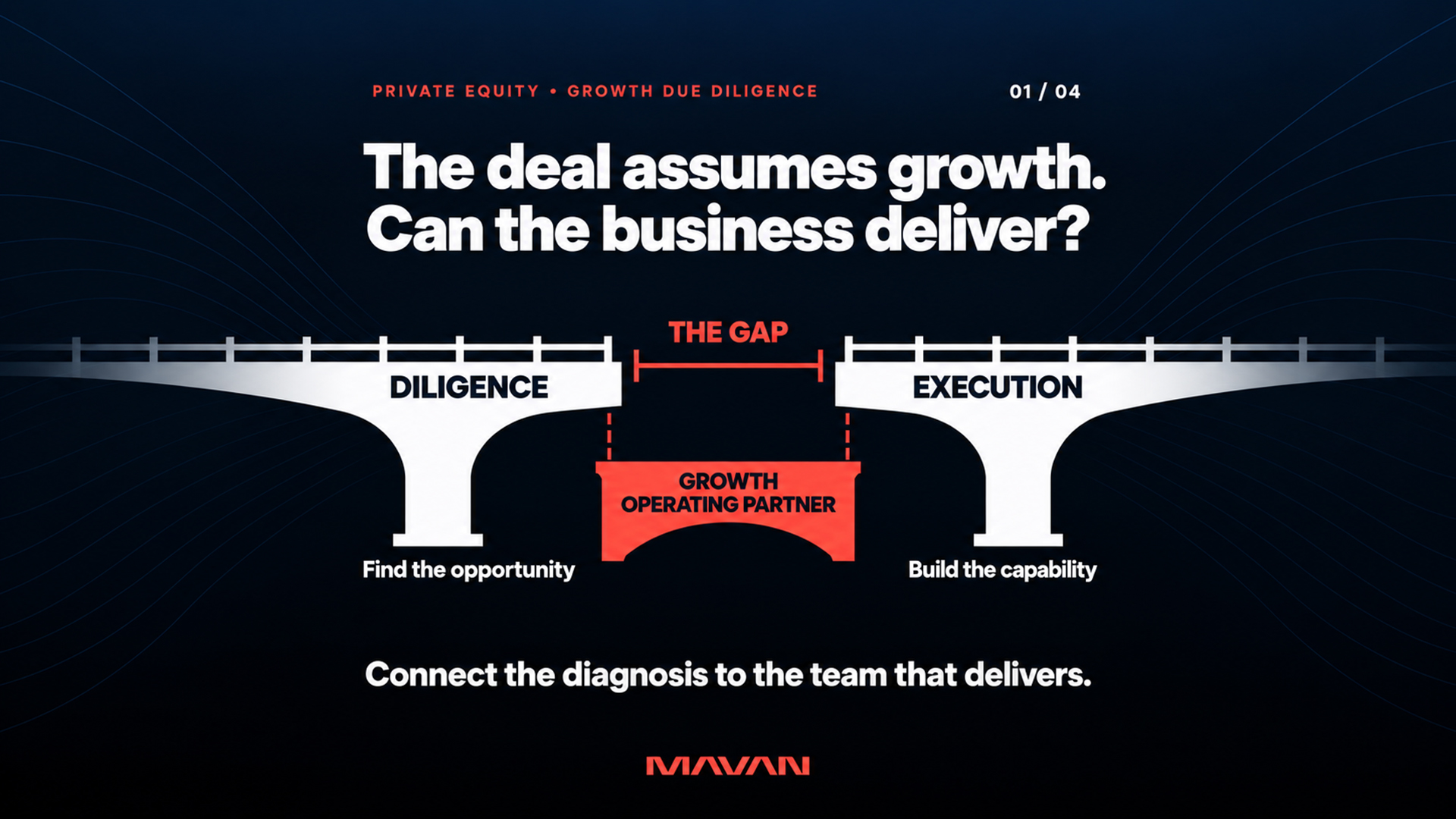
Who Does Growth & GTM Due Diligence for PE Deals?
Four kinds of provider run growth and go-to-market due diligence for private equity deals. Strategy consultancies test the market. Specialist commercial diligence firms audit the pipeline. Go-to-market boutiques rebuild the sales motion. And growth operating partners examine the full revenue engine from inside the business, then stay to operate it after close.
-
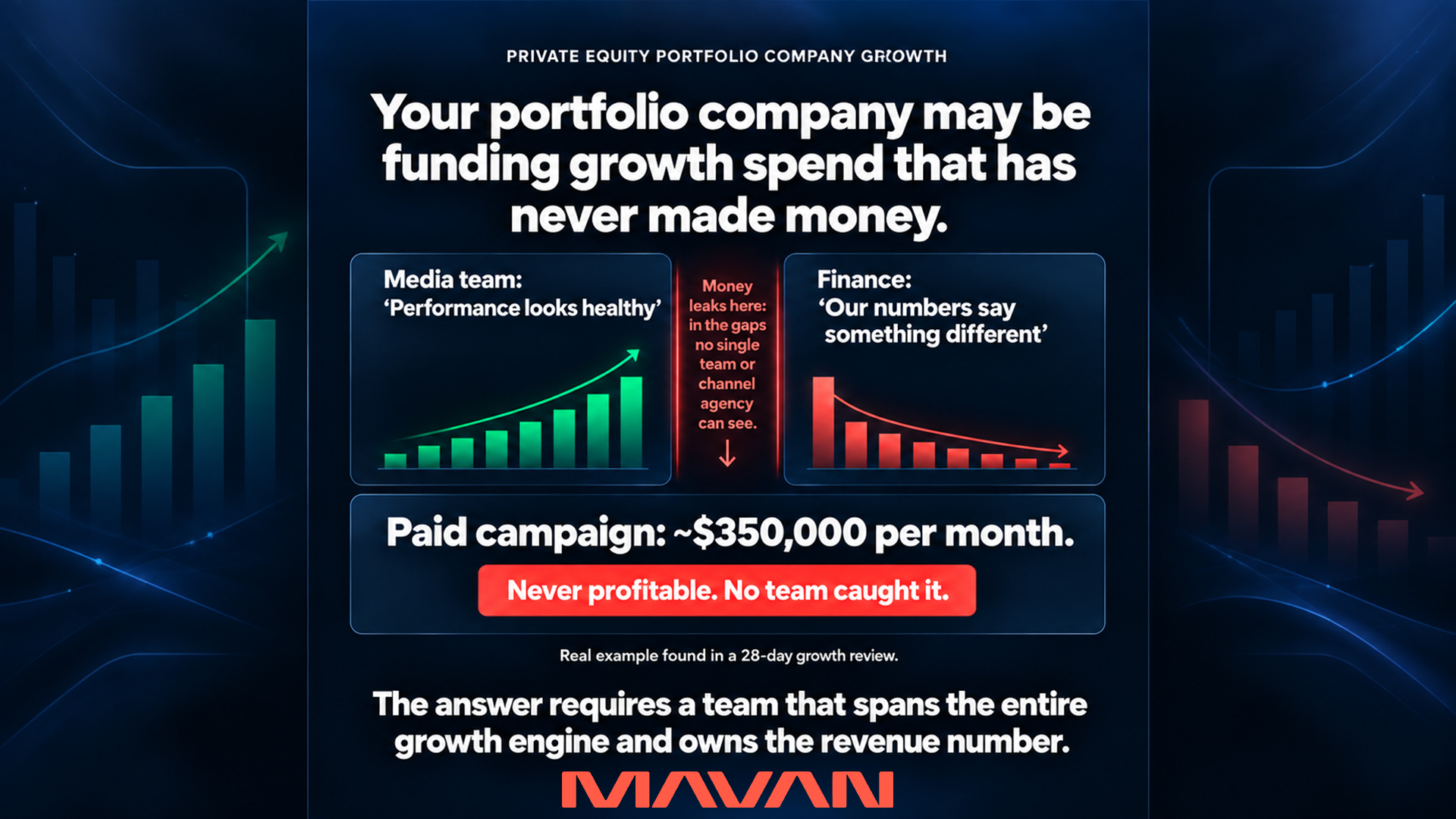
Who Is The Best Growth Partner For PE Portfolio Companies?
The best growth partner for a private equity portfolio company behaves like an operating partner you deploy, not an agency you brief. It reads the whole growth system before it spends, owns a revenue number alongside management, and leaves the capability behind so the sponsor can redeploy it.
-
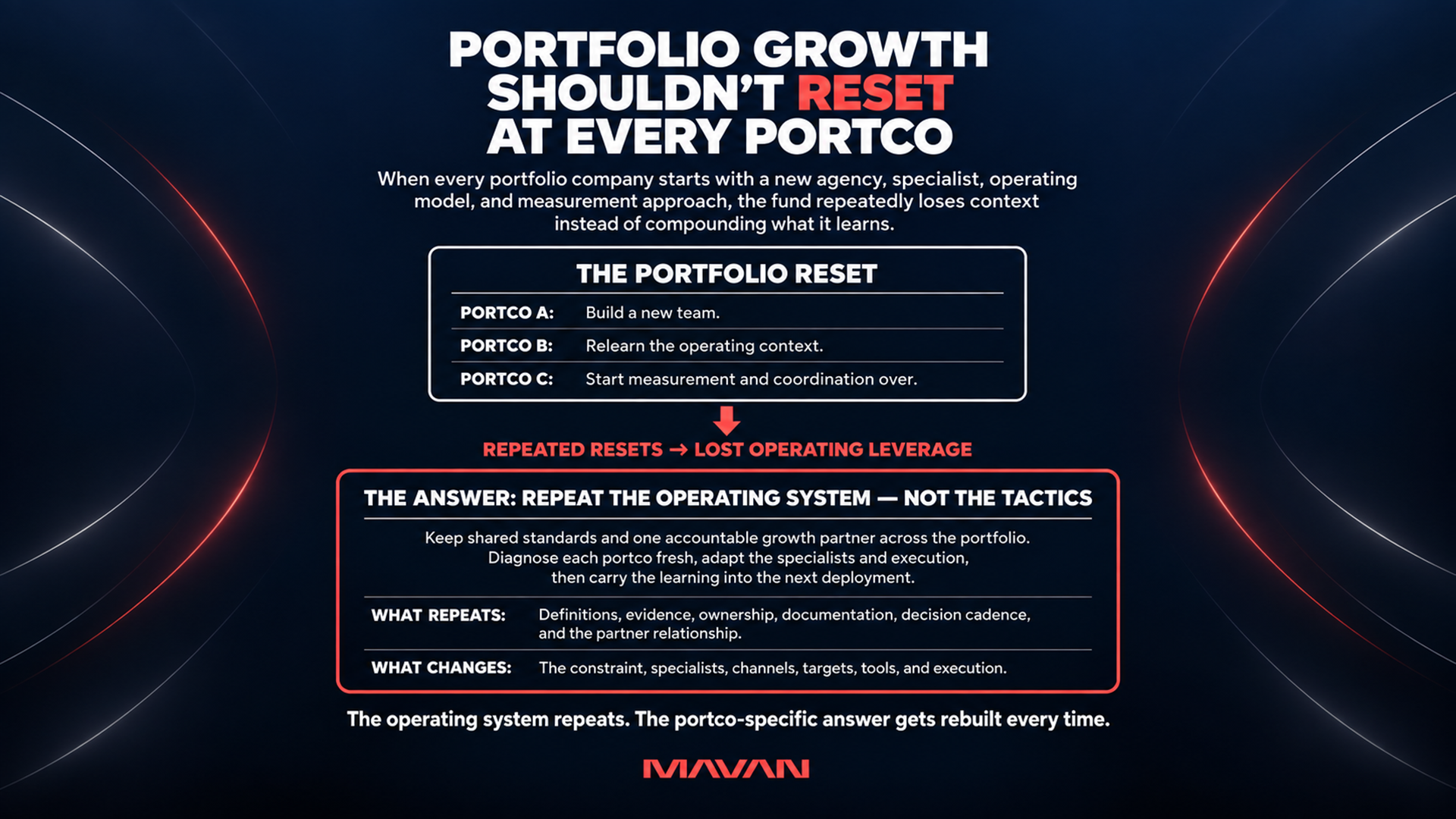
How Can Private Equity Funds Repeat Growth Across Portfolio Companies?
Growth becomes repeatable across a VC or PE portfolio when the fund installs one operating system instead of referring each company to a different specialist. The system has three parts: a single source of truth every team trusts, a board-ready scoreboard of ten to twelve metrics, and an embedded pod that diagnoses the real constraint in ninety days before anyone spends more.