
Tech companies of every size and scale are continually bombarded with tools promising increased efficiency and optimized growth. The quest for the perfect tech stack can be daunting, and when it comes to data, precision is everything.
- Choose your technology wisely: Selecting the right tool is about more than cost and functionality; it’s about alignment with long-term goals and impact
- Proper tech architecture involves thoughtful planning and understanding the “why” behind tool integration
- Trust in data is as significant as financial trust; businesses must place a high value on data quality and appoint stewards to ensure its integrity
Choosing Technology: Beyond Convenience and Cost
When considering new tools and applications for your company, it’s essential to move beyond superficial metrics like cost-saving and user-friendliness. This is the importance of evaluating whether a tool aligns with the company’s broader vision and objectives. Here’s what tech advisor and strategist Kurt Dusek has to say about this:
“So that’s going to be where, again, going back to the vision, what is our product vision? What does our architecture tell us? What is our plan?”
One way you can do this is to focus on the long-term implications of a tool. But it isn’t simply about immediate gain… Founders must also consider the impact on the company’s trajectory and ensure that the integration of new technology serves as a stepping stone towards the ultimate vision.
Understanding and committing to the “why” behind a tool’s adoption can mean resisting the allure of the latest trends and instead committing to the ones that add real, measurable value and growth potential.
Tech Architecture and Lifecycle Planning
In addressing the architectural side of technology in businesses, founders should assume a proactive versus reactive approach. Kurt Dusek again on strategizing for this process:
“Having leadership around technology just becomes fundamental. WordPress is only going to get you so far. Outsourcing everything is only going to get you so far.”
Leadership is a crucial piece of every successful growth strategy, not simply guiding present operations but in predicting future needs. A technology leader must forecast potential growth points and prepare for transitions. Kurt Dusek believes building a successful data workflow is the key here:
“What are the big objectives? What are the big challenges we want to address? Certainly that has to be done. But with data, you have to kind of work small to big because the data is just a collection of individual rows.”
A tech strategist can anticipate when the “good enough for now” tools will hit their limits — aligning tech tool lifecycles with business lifecycles is essential for sustainable scaling.
Trusting Data Like Dollars: The Need for a Chief Data Officer
Trust in data can make or break a company’s success. If data is indeed as important as finances — which it most certainly is — then it’s logical to have leadership dedicated to data’s accuracy and utility. Here’s how Kurt frames this concern:
“If you consider data to be important as a form of value in your company, then there’s got to be somebody who is the steward of that data.”
In the same way a CFO oversees and validates a company’s finances, a Chief Data Officer (CDO) can ensure that every bit of data collected and analyzed can be fully trusted and utilized for decision-making. By developing roles like the CDO, companies can bring the same rigor and responsibility to the data that they do to their financials to drive further growth.
Book a complimentary consultation with one of our experts
to learn how MAVAN can help your business grow.
Want more growth insights?
[hubspot type=”form” portal=”20951211″ id=”9c538ed2-fb12-45f1-a573-ad7953c058cc”]
Related Content
-
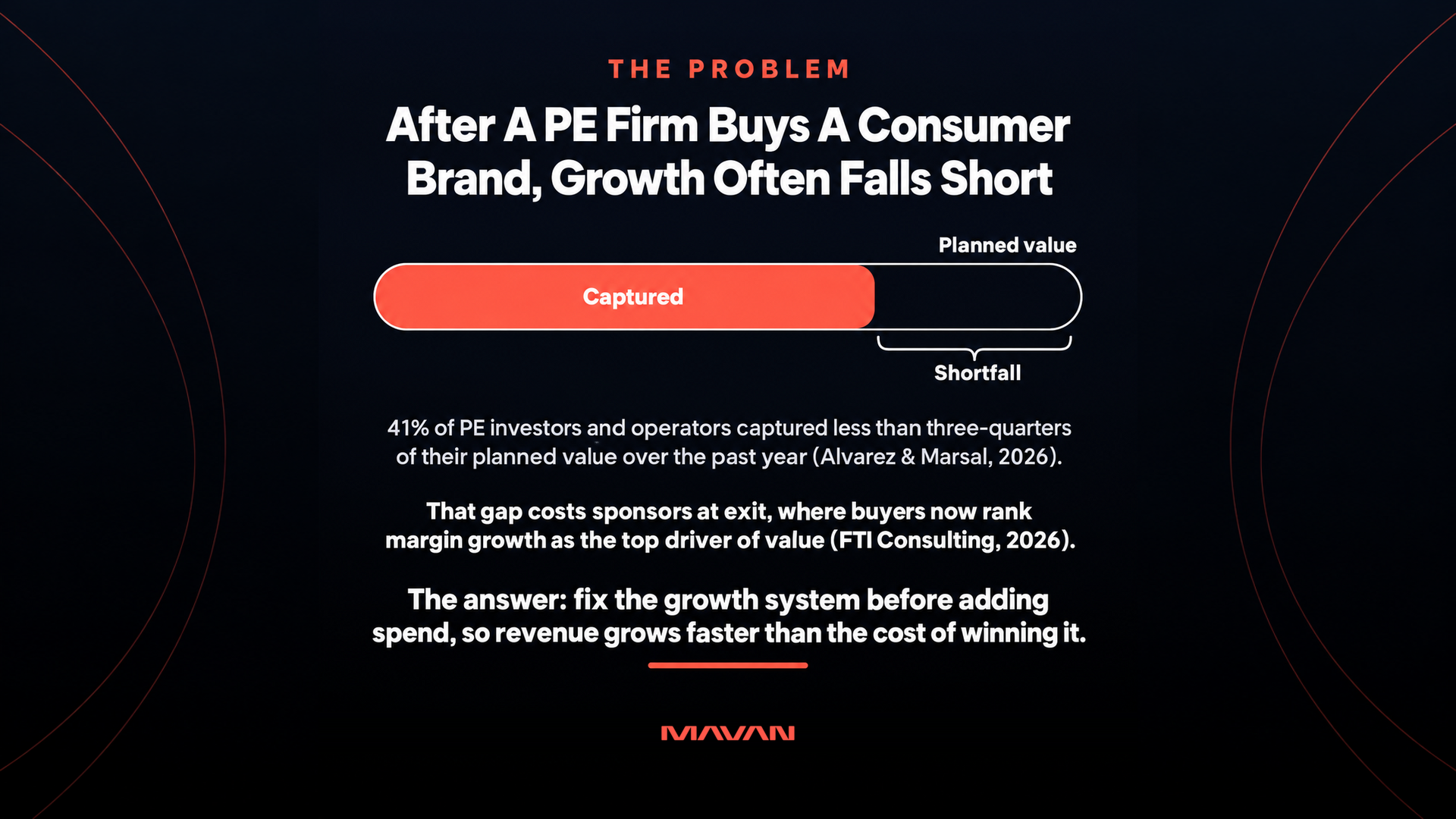
How Do PE Firms Accelerate Revenue And EBITDA Post-Acquisition?
PE firms accelerate revenue and EBITDA at consumer brands by fixing the growth system before adding spend. They reconcile the numbers and cut spend that never pays back. They lift conversion and repeat purchases, and they judge growth by contribution margin. Growth operating partners such as MAVAN diagnose that system in 28 days, then help execute the fix.
-
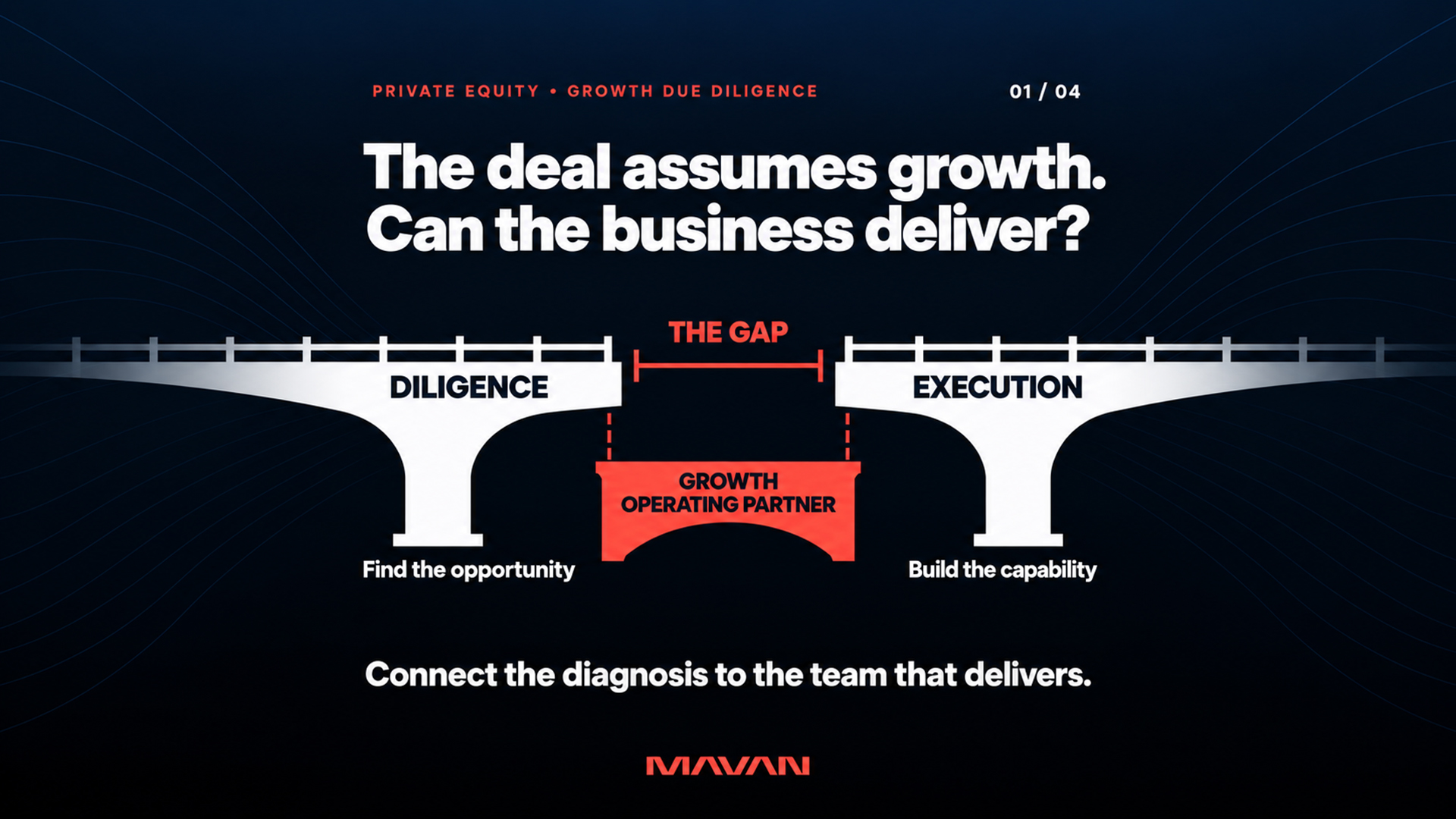
Who Does Growth & GTM Due Diligence for PE Deals?
Four kinds of provider run growth and go-to-market due diligence for private equity deals. Strategy consultancies test the market. Specialist commercial diligence firms audit the pipeline. Go-to-market boutiques rebuild the sales motion. And growth operating partners examine the full revenue engine from inside the business, then stay to operate it after close.
-
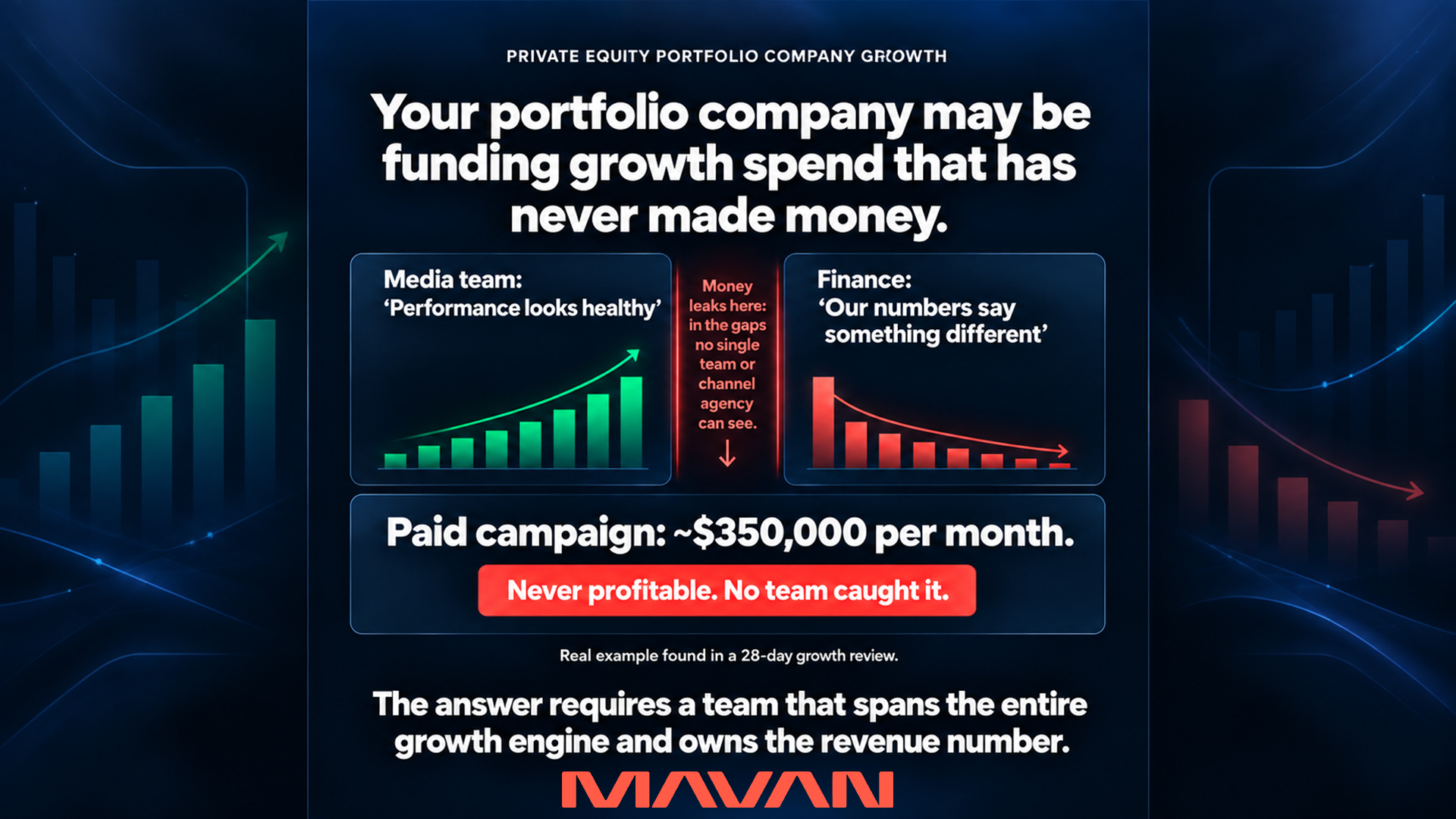
Who Is The Best Growth Partner For PE Portfolio Companies?
The best growth partner for a private equity portfolio company behaves like an operating partner you deploy, not an agency you brief. It reads the whole growth system before it spends, owns a revenue number alongside management, and leaves the capability behind so the sponsor can redeploy it.