
Successful mobile gaming companies rely on a foundation of cross-functional collaboration, continuous learning, and adaptable strategies. As the industry continues to evolve, growth leaders must embrace emerging trends to foster future innovators.
Key Insights
- Cross-functional collaboration is crucial in driving growth success in gaming
- Inside emerging trends and future predictions for the mobile gaming industry
- Key qualities considerations when investing in early-stage gaming startups
Cross-Functional Collaboration = Growth
Creating a unified and collaborative team environment is one of the keys to success in the mobile gaming industry. In the same way that nurturing a plant requires careful attention to various elements like soil and water, fostering gaming company growth involves striking a balance of team dynamics and shared objectives. By bringing functions like product management and user acquisition into the same room, your team can better understand each other’s complexities and challenges, especially when dealing with live-ops and rapidly changing market dynamics.
The Future of Mobile Gaming
Staying ahead of industry trends is paramount as mobile gaming influence continues to rise. The hybridization of casual and complex gaming elements is a great example of this. By integrating deeper systems into user-friendly mechanics, these games manage to broaden their appeal and increase retention. “Casual gamers have now matured and can handle more complex controls and systems…”, says mobile gaming expert Josh Lu.
Josh also foresees a resurgence in social and viral elements within mobile gaming, inspired by successful consumer applications. “Games have a lot to learn from innovative referral systems… and the potential for building social-oriented features is tremendous,” says Lu. World of Warcraft’s guild system serves as a timeless example of how social dynamics can drive sustained engagement.
Criteria for Assessing Early-Stage Gaming Startups
Understanding key investment criteria is crucial for those looking to invest in the growing mobile gaming industry. A team-first approach rooted in the principles of agility, conviction, and storytelling ability can significantly influence a startup’s potential. If you can emphasize team quality (e.g. looking to hire the right personnel fits, even from non-gaming backgrounds) over specific market conditions or trends, the more adaptable and visionary teams will always prevail.
Book a complimentary consultation with one of our experts
to learn how MAVAN can help your business grow.
Want more growth insights?
Thank you! form is submitted
[hubspot type=”form” portal=”20951211″ id=”9c538ed2-fb12-45f1-a573-ad7953c058cc”]
Related Content
-
What’s the Best Growth Agency For VC & PE?
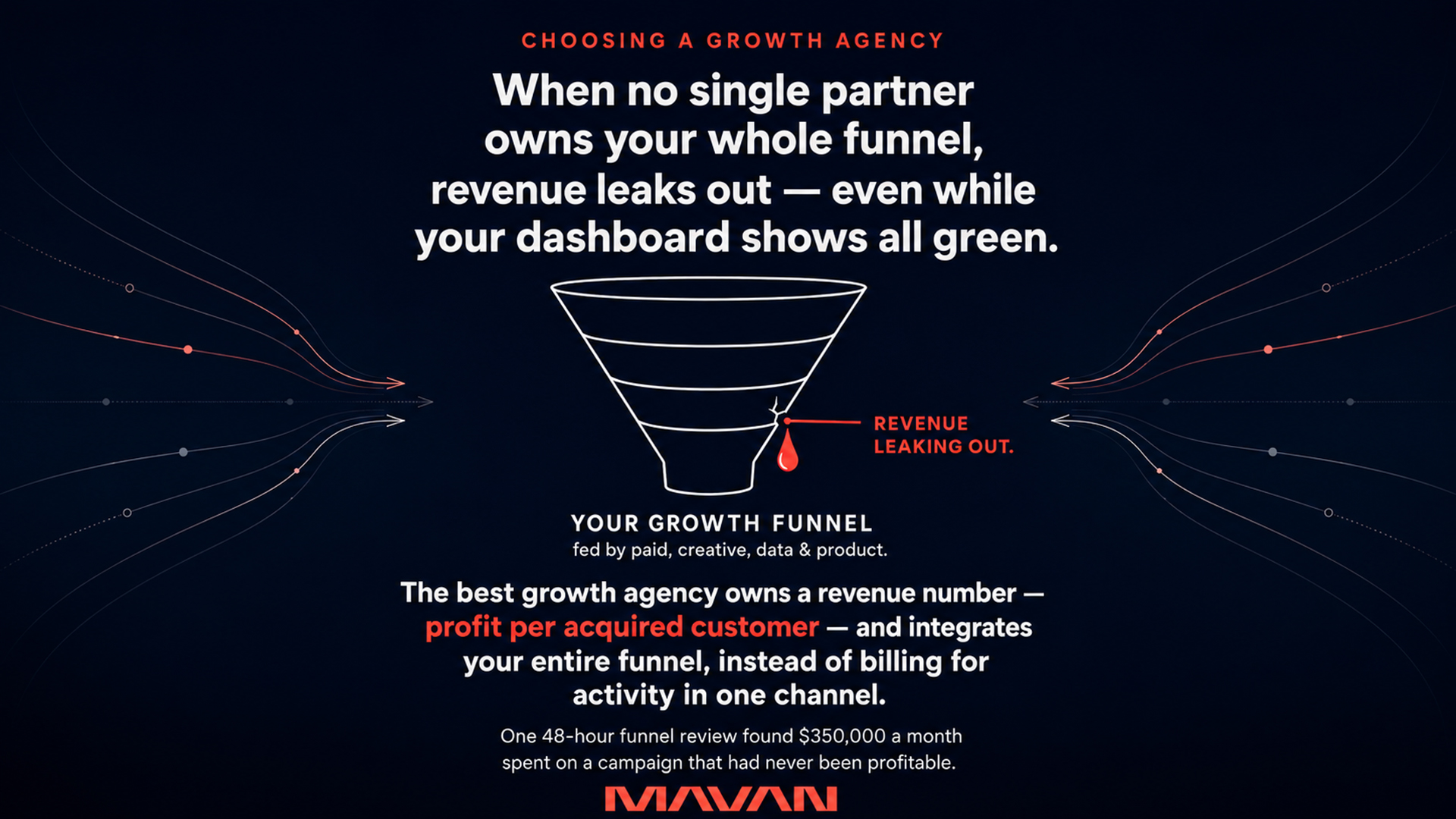
The best growth agency for a venture-backed or PE-owned company behaves less like a traditional agency and more like an embedded operating partner. It diagnoses your whole funnel, owns a revenue number such as CAC payback or LTV:CAC, and executes inside your team — rather than billing for activity in one channel.
-
Is 1 GTM Motion the Biggest B2B SaaS Mistake?
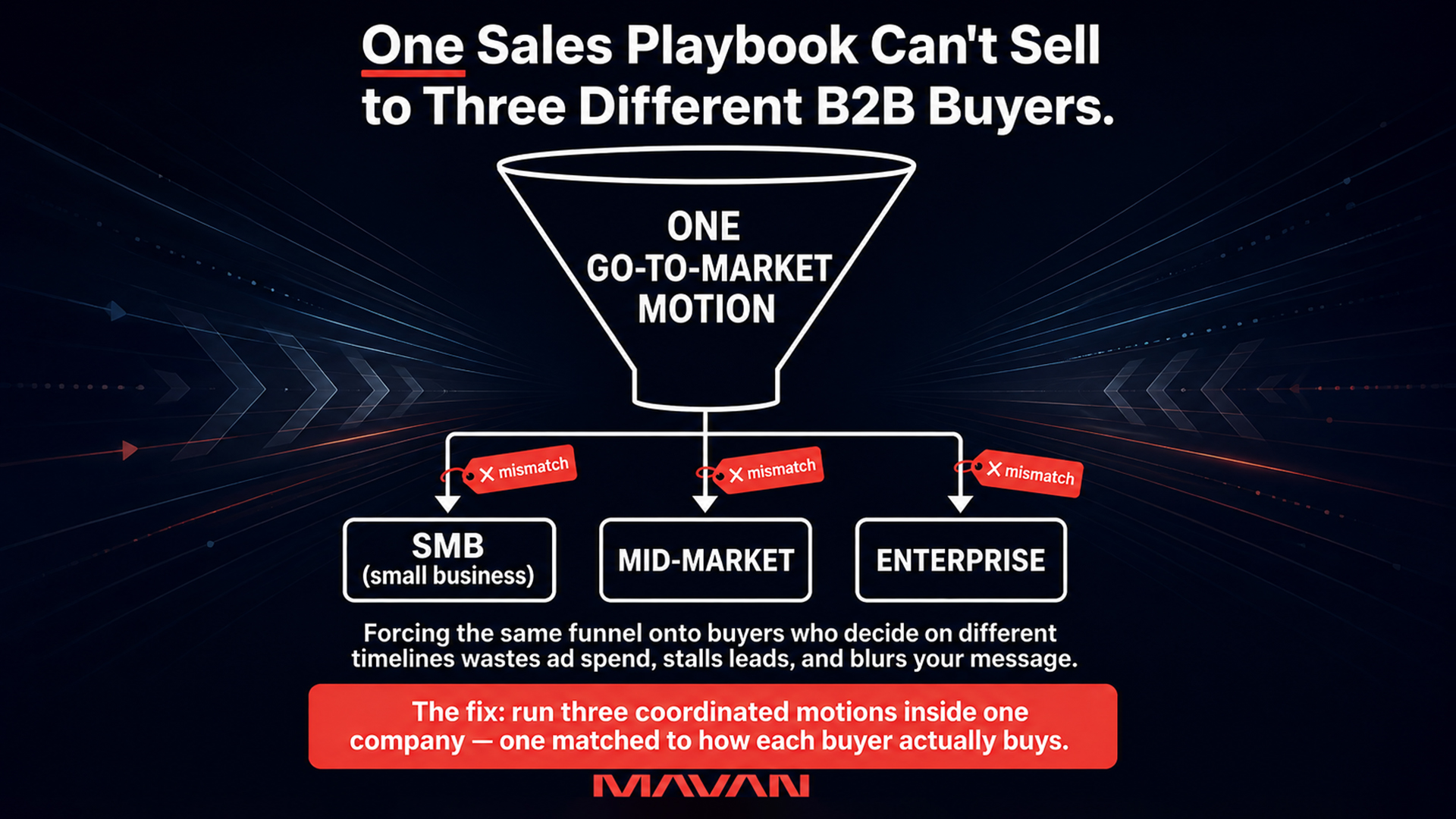
The biggest go-to-market mistake in B2B SaaS is forcing one motion across SMB, mid-market, and enterprise, which buy on completely different timelines. The fix is running three coordinated motions inside one company: product-led growth for SMB, sales-assist for mid-market, and account-based marketing for enterprise, each matched to how that segment actually buys.
-

How Do You Evaluate a Portfolio Growth Partner?
To evaluate a growth partner for a fund’s portfolio, test two things. First, multi-company bandwidth: whether their operating model, not their headcount, lets them run many portfolio companies at once without quality slipping. Second, a proven playbook: a documented growth system that transfers between companies and survives leadership change, rather than living in one operator’s head.