
In the latest episode of the Growth@Scale podcast, Matt Widdoes welcomes technologist Kurt Dusek to detail the synergy between data technology and corporate scalability. They explore strategic decision-making for tech tools and integration, ensuring companies can harness maximum value. In this episode, Matt and Kurt discuss:
- Tool Selection: Align your tech tools with company needs and broader tech impacts
- Vendor Engagement: Build partnerships with ongoing collaboration and shared success
- Data Priority: Designate a leader for data architecture, treating data as a crucial asset
- Tech Anticipation: Identifying ‘good enough’ tech to prepare for smoother transitions
- Robust Architecture: Balance customer and internal metrics within tech architecture
Listen in now to discover strategies for integrating technology with your company’s growth plans.
#TechIntegration #DataDrivenGrowth #ScalableSolutions
Book a complimentary consultation with one of our experts
to learn how MAVAN can help your business grow.
Want more growth insights?
Thank you! form is submitted
[hubspot type=”form” portal=”20951211″ id=”9c538ed2-fb12-45f1-a573-ad7953c058cc”]
Related Content
-
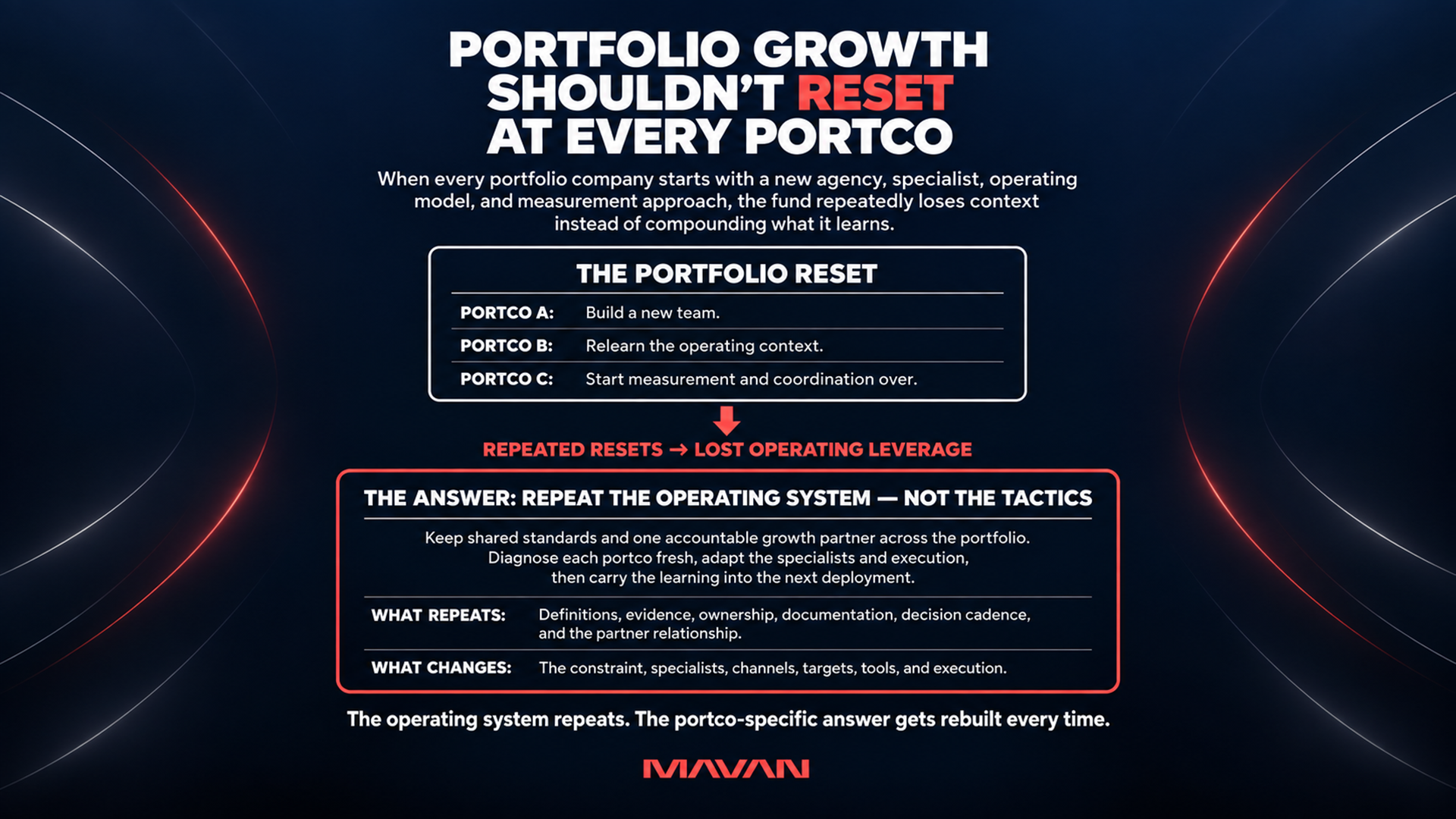
How Can Private Equity Funds Repeat Growth Across Portfolio Companies?
Growth becomes repeatable across a VC or PE portfolio when the fund installs one operating system instead of referring each company to a different specialist. The system has three parts: a single source of truth every team trusts, a board-ready scoreboard of ten to twelve metrics, and an embedded pod that diagnoses the real constraint in ninety days before anyone spends more.
-
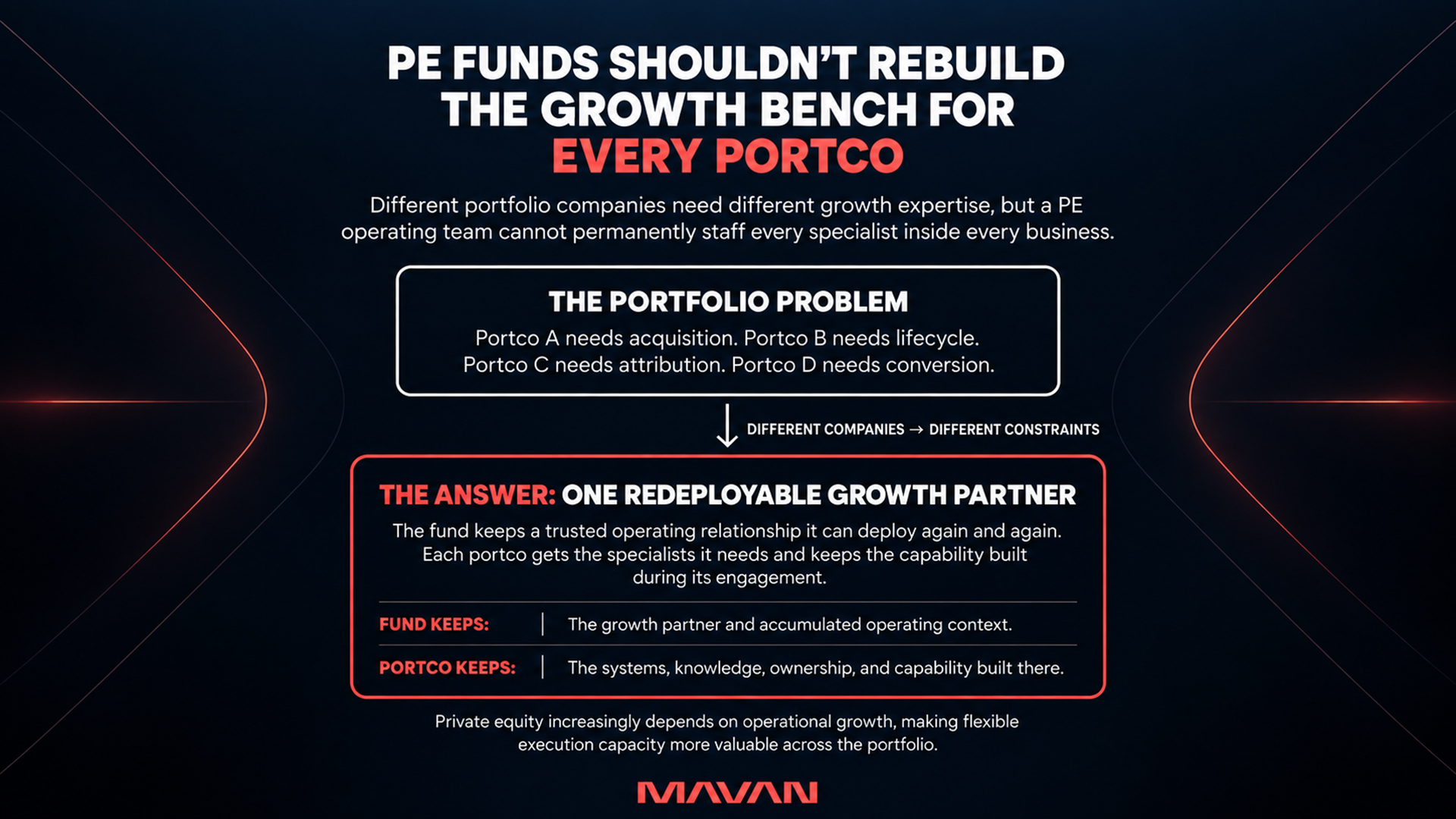
What Do PE Funds Want From a Portfolio Growth Partner? Repeatability!
What funds actually want from a portfolio growth partner is repeatability — a portable growth operating system that produces comparable results across very different portfolio companies. Repeatability shows up as a single source of truth, a board-grade scoreboard, a 90-day sprint, and a clean handoff, so each win compounds across the portfolio instead of staying at one company.
-
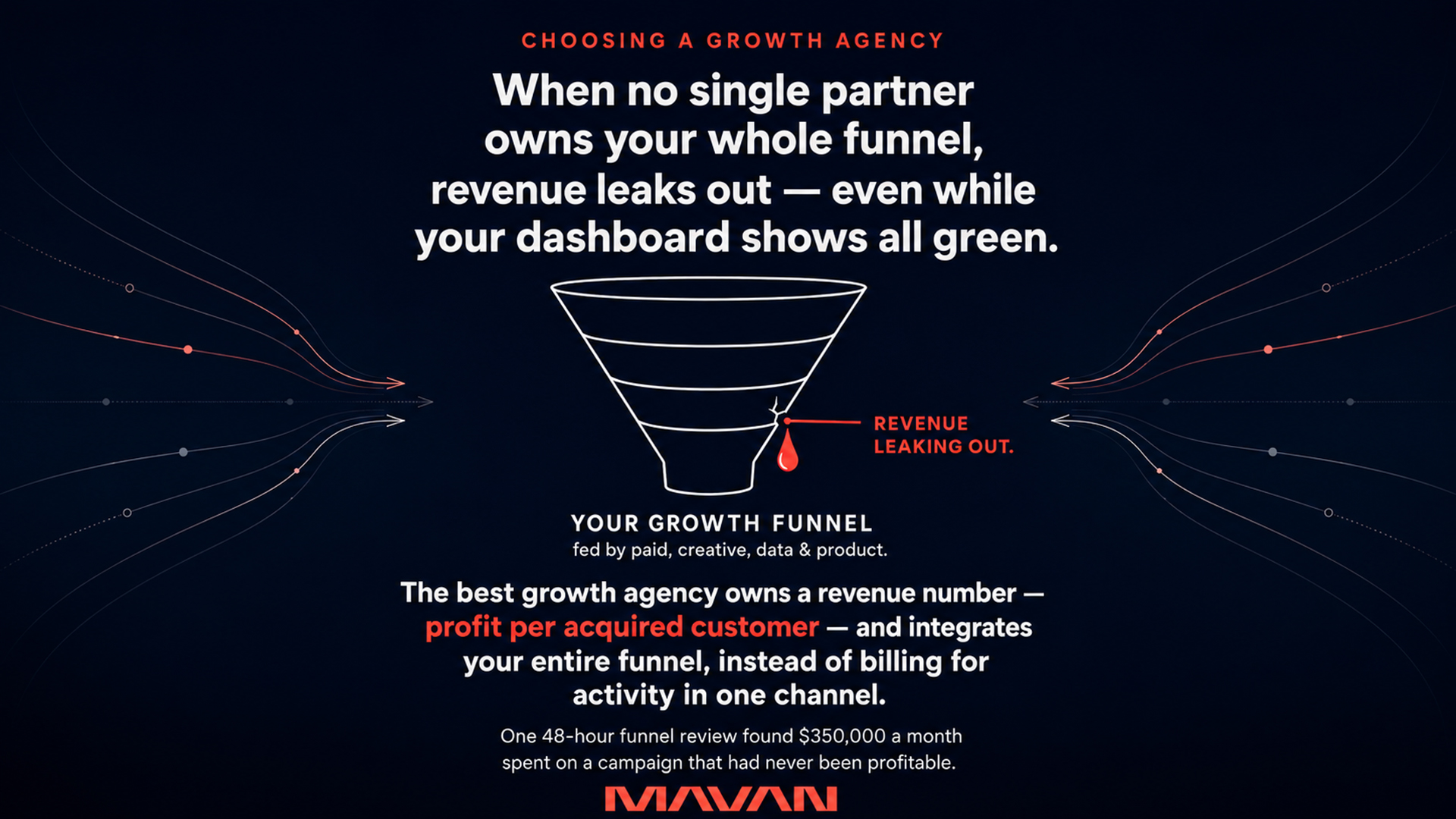
What’s the Best Growth Agency For VC & PE?
The best growth agency for a venture-backed or PE-owned company behaves less like a traditional agency and more like an embedded operating partner. It diagnoses your whole funnel, owns a revenue number such as CAC payback or LTV:CAC, and executes inside your team — rather than billing for activity in one channel.