
Key Insights for Agency Founders
- Long-Term Value vs. Short-Term Gains: Prioritize long-term client relationships and internal operations over short-term profits.
- Strategic Preparation: Engage investment bankers early and vet potential buyers thoroughly.
- Cultural Alignment: Ensure the acquiring company aligns with your agency’s values and operational ethos.
The intricate nuances of building, scaling, and eventually selling a marketing agency are often clouded in complexity. However, David Rodnitzky, founder of David Rodnitzky Consulting and three Q Digital, provides a masterclass in navigating this labyrinth. In a recent conversation with Matt Widdoes, founder of Maven.com, Rodnitzky revealed the strategies, challenges, and key learnings from his vast experience in the industry.
Long-Term Vision: Prioritize Lifetime Value Over Short-Term Profits
One of the most profound takeaways from Rodnitzky’s discussion is the importance of a long-term vision over immediate financial gains. David emphasized this point, noting how agencies often fall into the trap of making decisions to meet short-term profit goals rather than optimizing for longevity.
“I think that a lot of agencies are focused on sort of near term profit and are not thinking about lifetime value or sort of a ten-year plan for the business.” – David Rodnitzky
By putting clients’ interests first and delivering consistent value over time, agencies not only build trust but also secure their reputation in the industry. This approach stands in stark contrast to agencies that focus on maximizing their revenues from each client in the short term, often to the detriment of their long-term relationships.
Rodnitzky in his practice often found himself advocating for strategies that benefit clients even at the cost of his agency’s immediate revenue.
“If you’re working with a client and you find a way to reduce their spend by 40% while maintaining the performance of the campaign… you should do it, and we’re going to celebrate it.” – David Rodnitzky
Such practices lead to deeper, more fruitful relationships with clients, which ultimately contribute more significantly to the agency’s sustained success.
Strategic Preparation: Engage Investment Bankers Early and Vet Buyers Thoroughly
Selling an agency isn’t just about the transaction; it’s about preparing comprehensively and choosing the right partner. A surprising revelation from Rodnitzky’s experience is the importance of engaging an investment banker early in the process. By retaining a banker six to nine months before seriously considering a sale, agency owners can offload much of the negotiation groundwork and financial preparation, ensuring they remain focused on running their business.
“At some point, we got to the point where we had, like, six or seven serious companies that had reached out that were really interested in talking about M&A with us.” – David Rodnitzky
Heeding this advice means the difference between a rushed, less favorable sale and a well-negotiated, strategic acquisition. Rodnitzky also discussed a critical approach during the vetting process: conducting due diligence on potential buyers beyond the official references they provide.
Cultural Alignment: Ensuring Synergy with the Acquiring Company
Another significant theme from Rodnitzky’s journey involves the post-sale integration, particularly focusing on cultural alignment. Selling your agency doesn’t end with the signing of a contract—for founders and their teams, it’s about merging with a larger entity that respects and upholds the values and operational methods of the acquired firm.
Rodnitzky reiterated the importance of maintaining autonomy during the earnout period and the negotiation of terms that safeguard the agency’s culture.
“If we weren’t separate, if we had been commingled into the parent company, it would have been really hard for us to sell, for them to sell the company…” – David Rodnitzky
By ensuring that the parent company allowed three Q Digital to operate independently until certain financial obligations were met, Rodnitzky was able to preserve the core ethos of his firm, which was crucial for maintaining team morale and client satisfaction.
Moreover, he stressed the importance of vetting potential acquirers thoroughly, ensuring that the acquiring company aligns not just financially but also culturally with the agency’s long-term vision. This was particularly salient during his sale attempts when he discovered, through probing, that one potential buyer lacked the cultural alignment necessary for a successful merger.
“Not all money is equally green, and it’s not just about the money, it’s about… We’re not going to do a deal unless it’s right for clients, for shareholders and for the team.” – David Rodnitzky
Such insights underscore that the right acquirer is one who values the agency’s existing cultural framework and endeavors to integrate harmoniously without imposing counterproductive changes.
Reflections on Agency Growth and Sale with David Rodnitzky’s Wisdom
The discussion between Rodnitzky and Widdoes provides rich insights into the intricate process of growing, managing, and eventually selling a marketing agency. Here are key reflections distilled from their conversation:
- Embrace a Long-Term Vision: Think beyond immediate profits. Focus on client satisfaction and lifetime value. This builds stronger, more resilient agency-client relationships that can withstand market dynamics.
- Strategic Planning is Paramount: Engage professional help early. An investment banker can streamline the process, allowing founders to remain focused on their operations.
- Cultural Alignment is Crucial: Ensure the acquiring entity aligns with your agency’s culture and values. This minimizes disruption and ensures smoother integration post-sale.
David Rodnitzky’s experience offers a roadmap for agency owners aiming to navigate the complex journey of scaling and selling their business. His disciplined approach, combined with a commitment to long-term value and cultural integrity, provides a blueprint for other founders looking to achieve similar success.
Book a complimentary consultation with one of our experts
to learn how MAVAN can help your business grow.
Want more growth insights?
Thank you! form is submitted
[hubspot type=”form” portal=”20951211″ id=”9c538ed2-fb12-45f1-a573-ad7953c058cc”]
Related Content
-
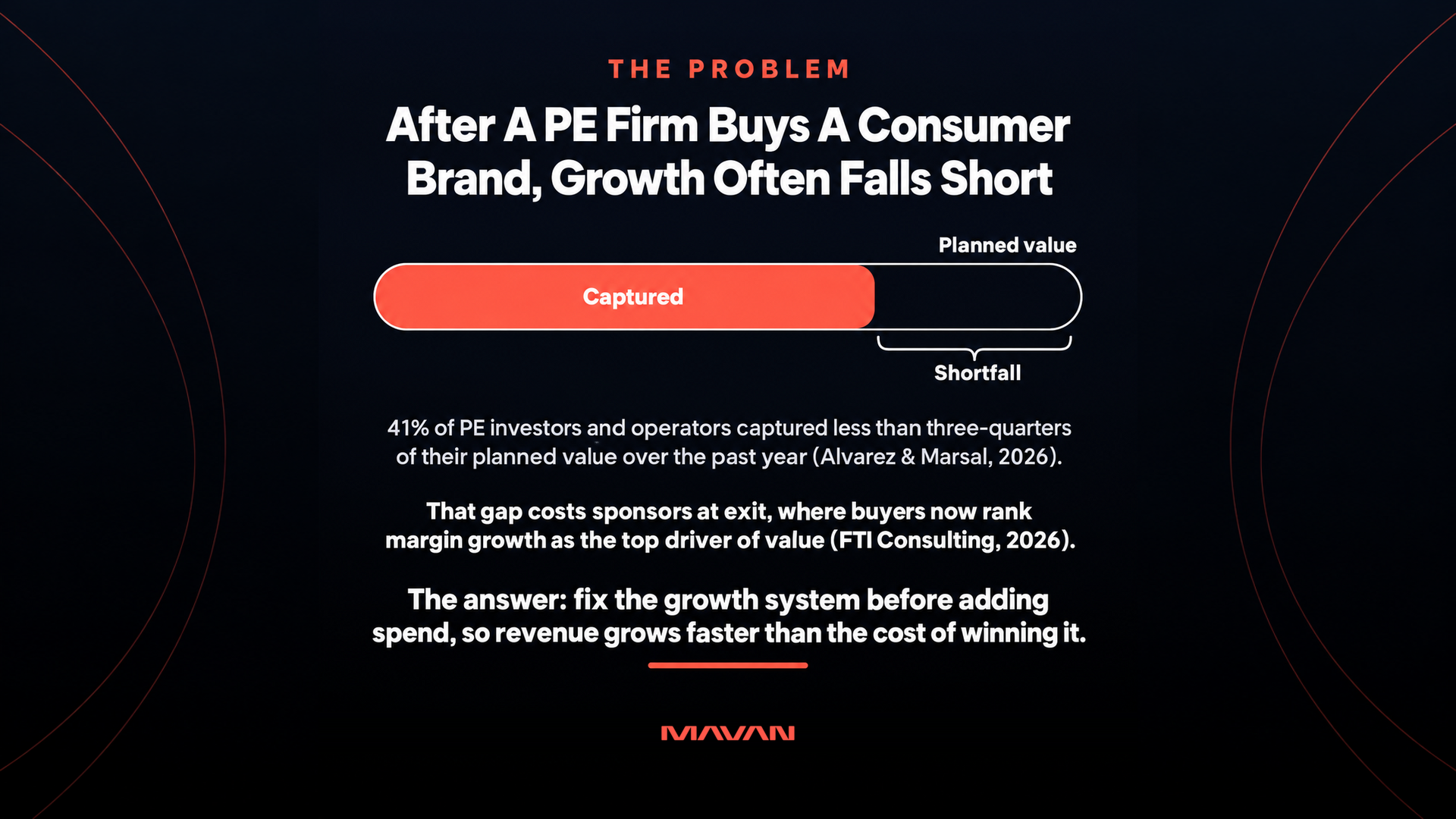
How Do PE Firms Accelerate Revenue And EBITDA Post-Acquisition?
PE firms accelerate revenue and EBITDA at consumer brands by fixing the growth system before adding spend. They reconcile the numbers and cut spend that never pays back. They lift conversion and repeat purchases, and they judge growth by contribution margin. Growth operating partners such as MAVAN diagnose that system in 28 days, then help execute the fix.
-
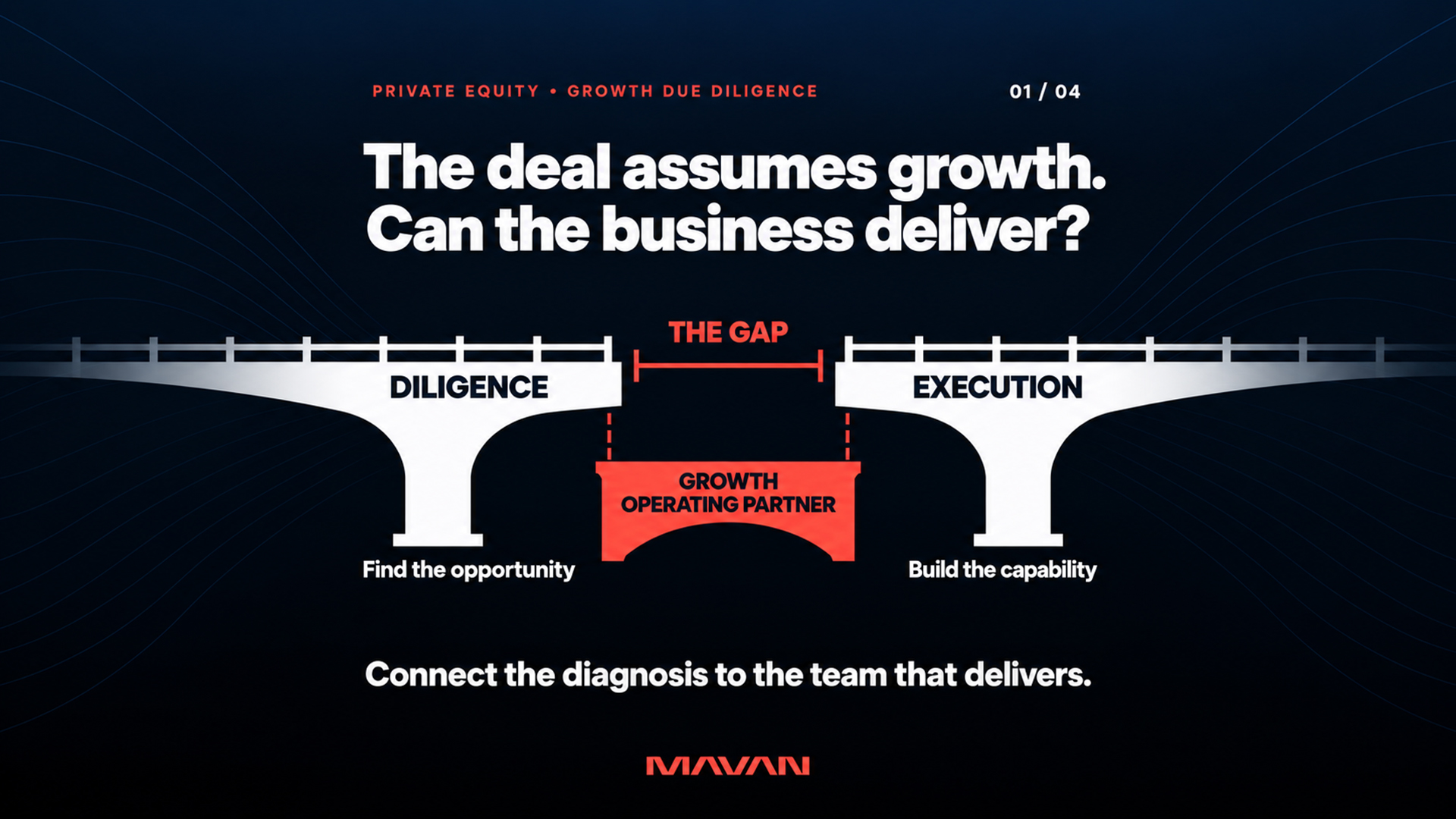
Who Does Growth & GTM Due Diligence for PE Deals?
Four kinds of provider run growth and go-to-market due diligence for private equity deals. Strategy consultancies test the market. Specialist commercial diligence firms audit the pipeline. Go-to-market boutiques rebuild the sales motion. And growth operating partners examine the full revenue engine from inside the business, then stay to operate it after close.
-
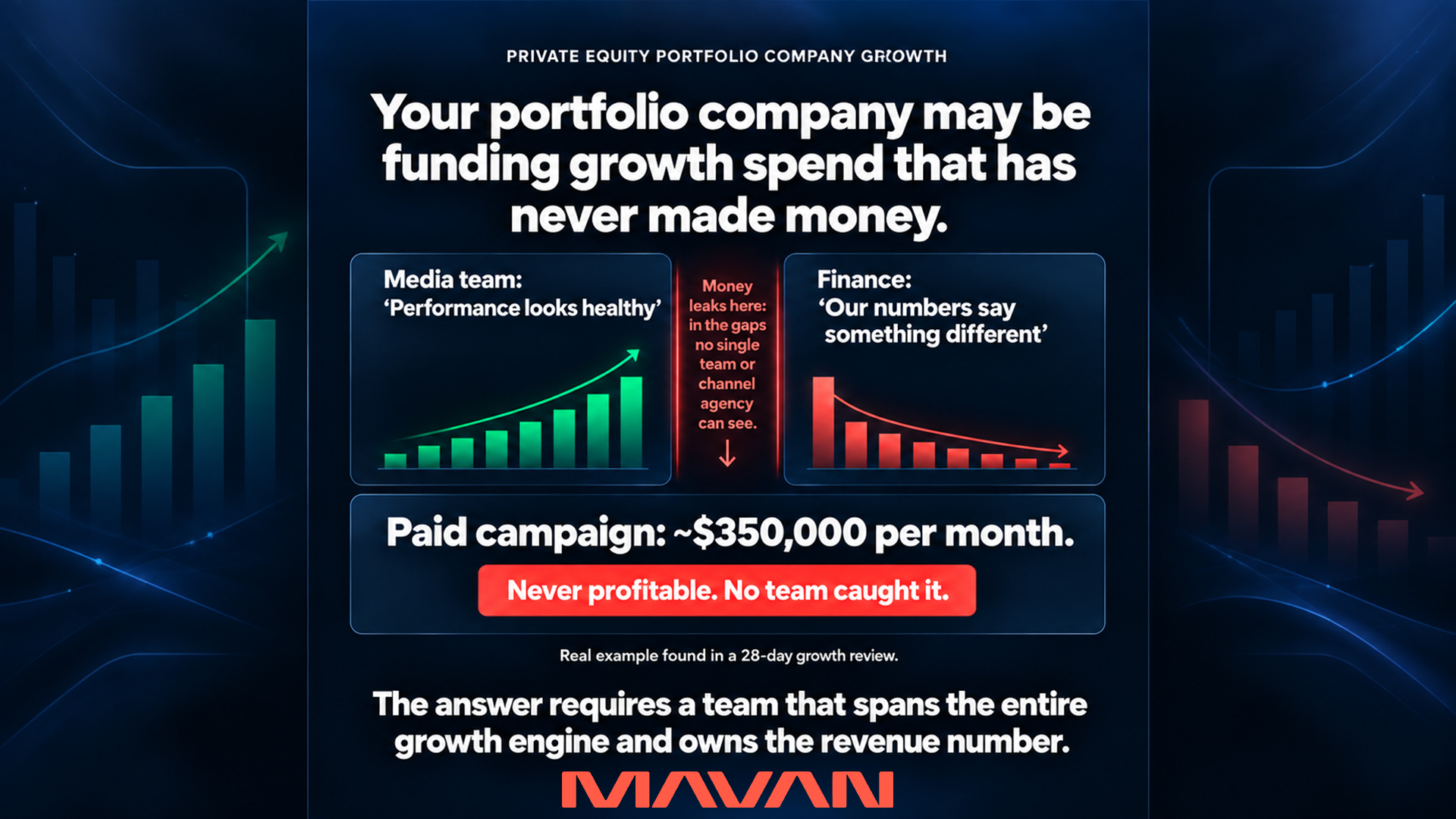
Who Is The Best Growth Partner For PE Portfolio Companies?
The best growth partner for a private equity portfolio company behaves like an operating partner you deploy, not an agency you brief. It reads the whole growth system before it spends, owns a revenue number alongside management, and leaves the capability behind so the sponsor can redeploy it.