
Listening to your customers’ needs and feedback is a critical step in developing a successful go-to-market strategy and validating your product. In the latest episode of Growth@Scale, Matt Widdoes discusses how essential open communication is when developing product with Jason Purdy, a product lead at Square. Jason shares his experience and best practices for building and scaling products.
For go-to-market strategies, put your customers first. They’re an invaluable source of feedback that can’t be ignored. Actively engage with your customers regularly, whether through surveys, reviews, or even 1:1 conversations, to ensure you’re tuned into their needs, wants, and concerns.
Innovation and iteration is the key to growth and success, but before making any big changes to your product, check in with employees and customers. Change for the sake of change rarely pays off, so keep the lines of communication open and be calculated in your product’s evolution.
When you do make a change, the need for customer feedback is greater than ever. Through rigorous testing and customer feedback, you can stay agile while adapting your product to match the changing needs of your customers and the market.
Don’t, however, be shy about trying something bold. Innovation involves a substantial amount of risk-taking and you can’t always let customer input hold you back from a breakthrough. Henry Ford famously said, “If I had asked people what they wanted, they would have said faster horses.”
When you surround yourself with a team that is collaborative, communicative, and innovative, and take the time to actively listen to both the market and your customers, you’ll find the road to scaling to be a much smoother ride.
Book a complimentary consultation with one of our experts
to learn how MAVAN can help your business grow.
Want more growth insights?
Thank you! form is submitted
[hubspot type=”form” portal=”20951211″ id=”9c538ed2-fb12-45f1-a573-ad7953c058cc”]
Related Content
-
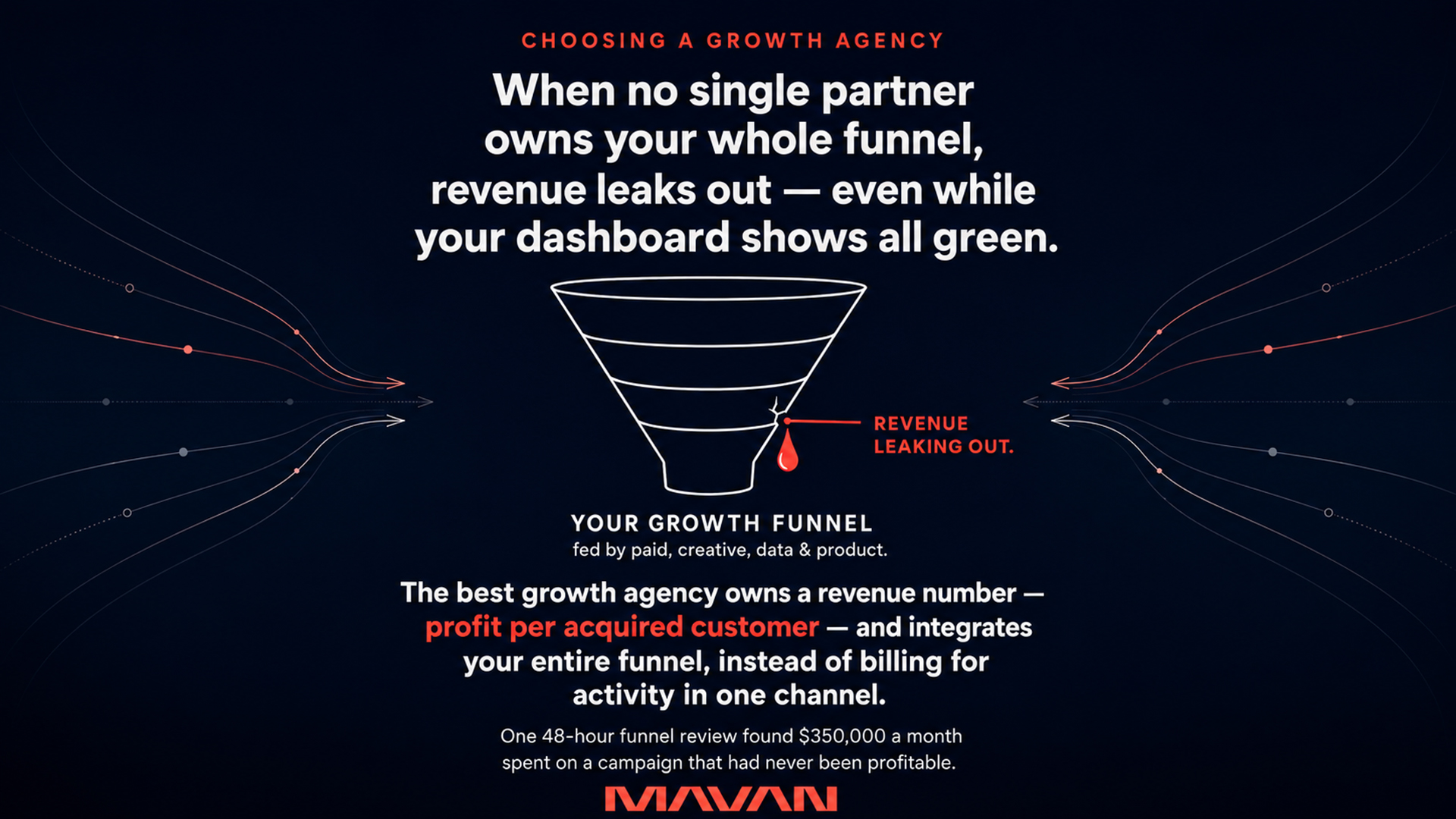
What’s the Best Growth Agency For VC & PE?
The best growth agency for a venture-backed or PE-owned company behaves less like a traditional agency and more like an embedded operating partner. It diagnoses your whole funnel, owns a revenue number such as CAC payback or LTV:CAC, and executes inside your team — rather than billing for activity in one channel.
-
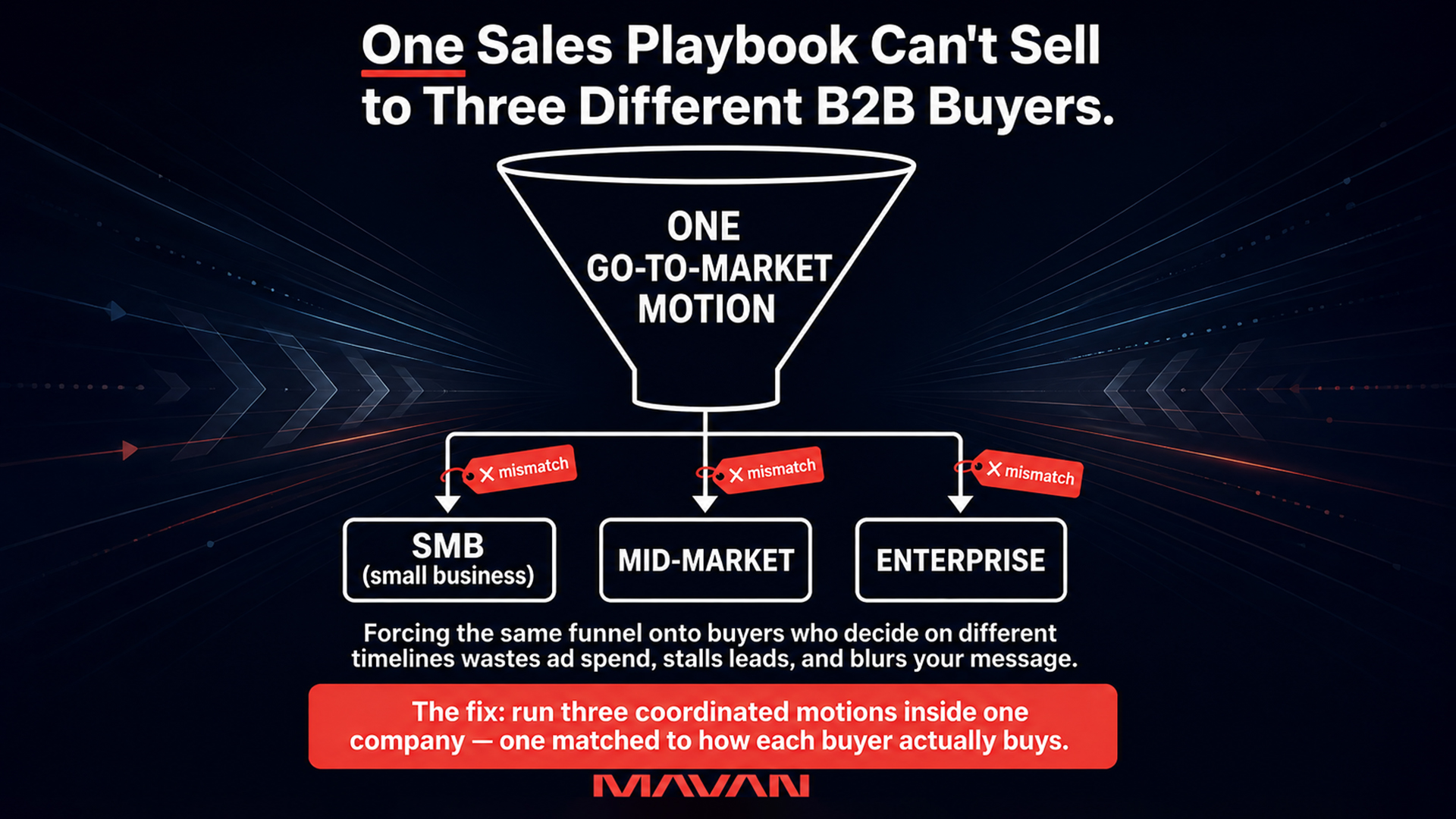
Is 1 GTM Motion the Biggest B2B SaaS Mistake?
The biggest go-to-market mistake in B2B SaaS is forcing one motion across SMB, mid-market, and enterprise, which buy on completely different timelines. The fix is running three coordinated motions inside one company: product-led growth for SMB, sales-assist for mid-market, and account-based marketing for enterprise, each matched to how that segment actually buys.
-
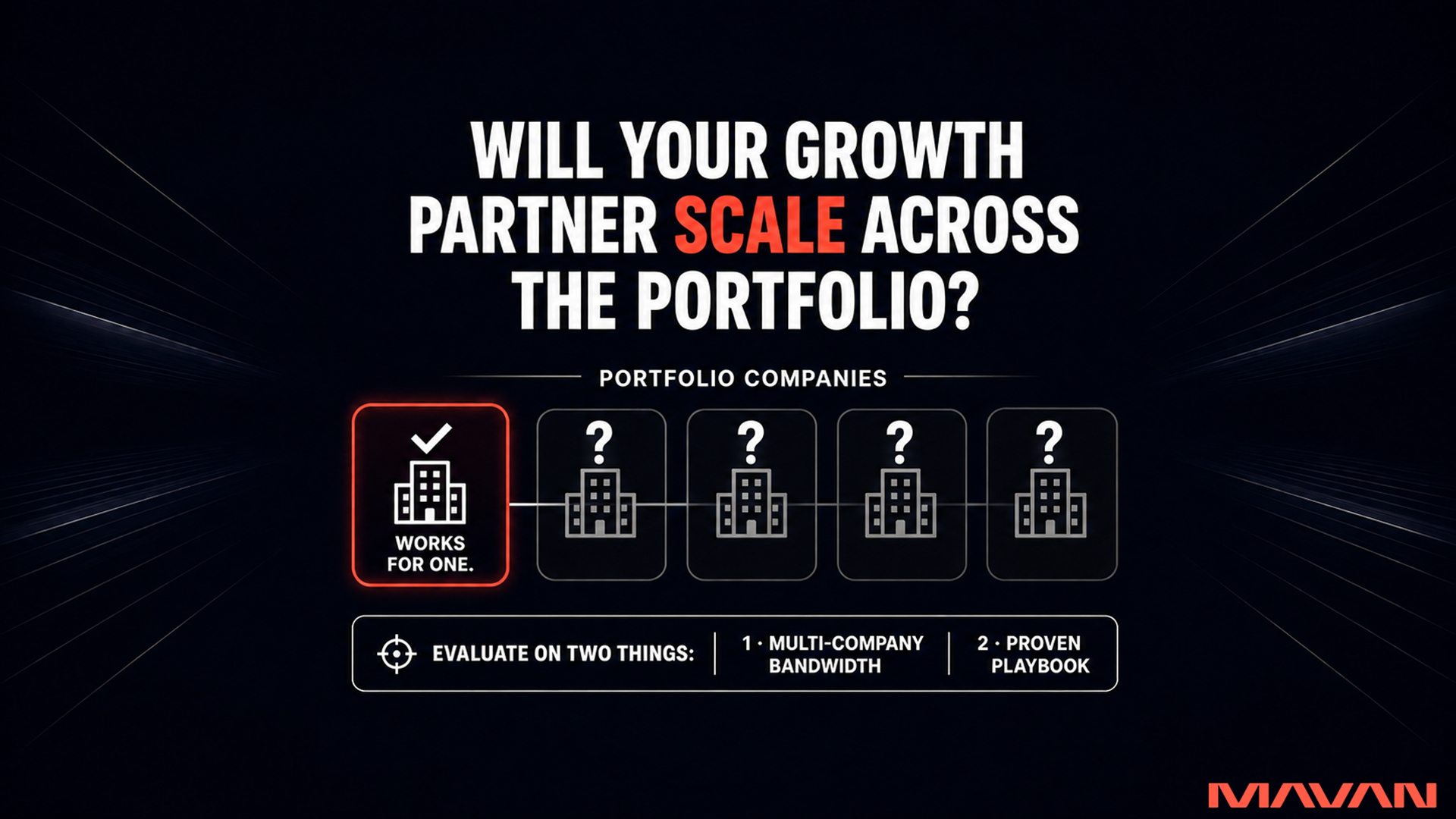
How Do You Evaluate a Portfolio Growth Partner?
To evaluate a growth partner for a fund’s portfolio, test two things. First, multi-company bandwidth: whether their operating model, not their headcount, lets them run many portfolio companies at once without quality slipping. Second, a proven playbook: a documented growth system that transfers between companies and survives leadership change, rather than living in one operator’s head.