
Eric Seufert is an analyst and expert in mobile development, tech marketing, and data analysis. Eric is General Partner at Heracles Capital, a pre-seed stage venture capital fund investing in the future of mobile tech. Eric has also worked at notable consumer mobile tech companies including Skype, Wooga, and Rovio Entertainment, where he was the VP of User Acquisition for the developer behind the popular Angry Birds mobile gaming franchise.
In this episode, Matt and Eric get into the details on startup topics including the dynamics and benefits of a ‘freemium’ model, strategies for launching mobile apps successfully, and where the future of mobile tech investments is headed next.
Key Takeaways:
- Why Freemium Models Work: The freemium model offers users a complete core product experience at no cost, creating a vast user base. To ensure success, founders need to provide a broad range of engaging items that drive effective monetization.
- The Data-Driven Product Launch: User acquisition extends beyond growth; it’s a critical tool for product testing. By leveraging real user data, startups can iterate and improve their offerings efficiently.
- The Future of Mobile Tech: Looking ahead to the future of mobile tech and what’s on the horizon for mobile tech marketing
- Building a Successful Team: A founding team with a proven track record in the mobile space and expertise in monetization and user experience is crucial. Such a team can navigate the complexities of the mobile tech industry effectively.
- Leveraging Iterative Product Development: For successful user engagement and retention during an app launch, founders should rely on methodical, data-driven iterations rather than viral bursts
Book a complimentary consultation with one of our experts
to learn how MAVAN can help your business grow.
Want more growth insights?
Thank you! form is submitted
[hubspot type=”form” portal=”20951211″ id=”9c538ed2-fb12-45f1-a573-ad7953c058cc”]
Related Content
-
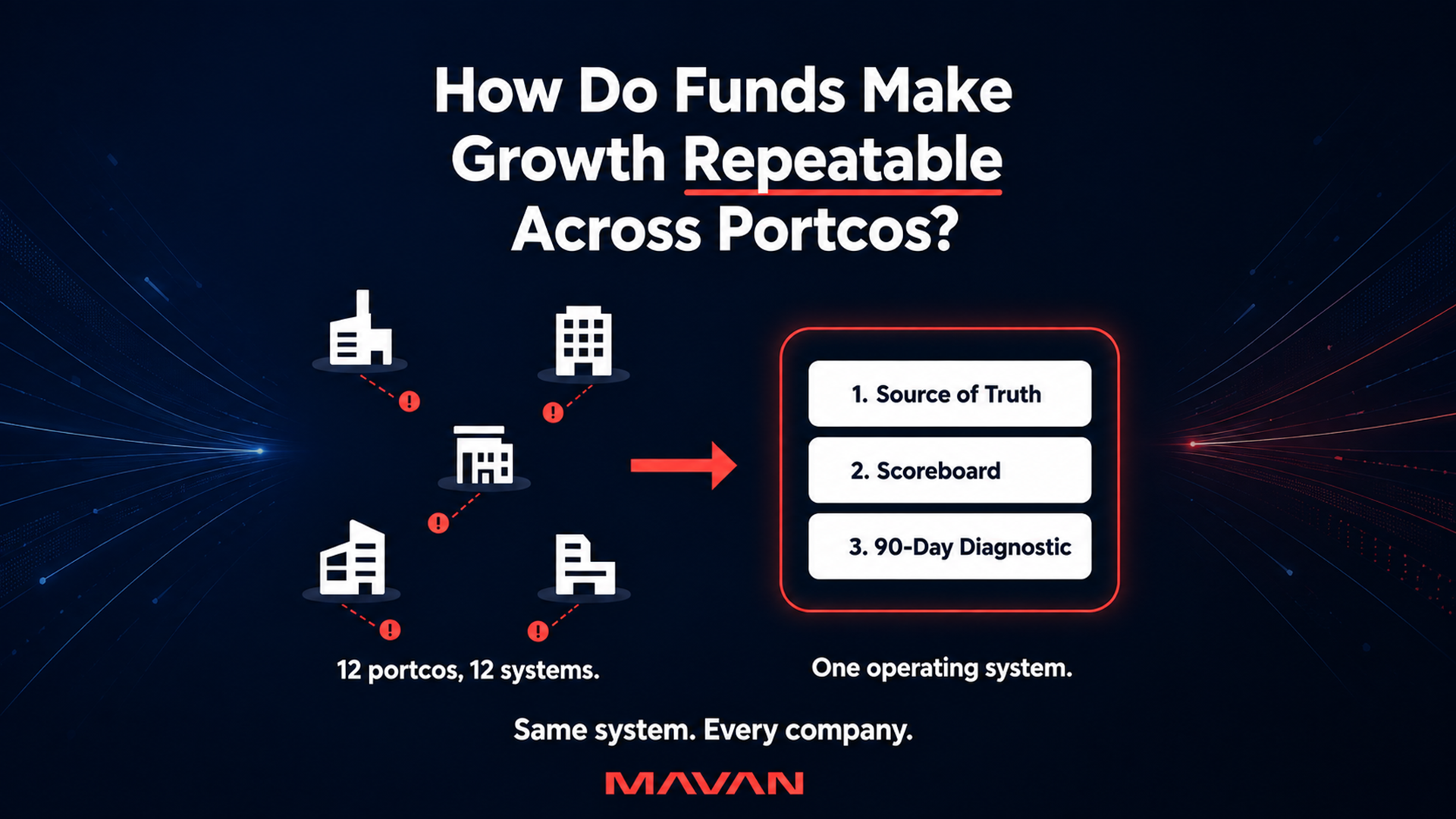
How Can VC And PE Funds Repeat Growth Across Portfolio Companies?
Growth becomes repeatable across a VC or PE portfolio when the fund installs one operating system instead of referring each company to a different specialist. The system has three parts: a single source of truth every team trusts, a board-ready scoreboard of ten to twelve metrics, and an embedded pod that diagnoses the real constraint in ninety days before anyone spends more.
-
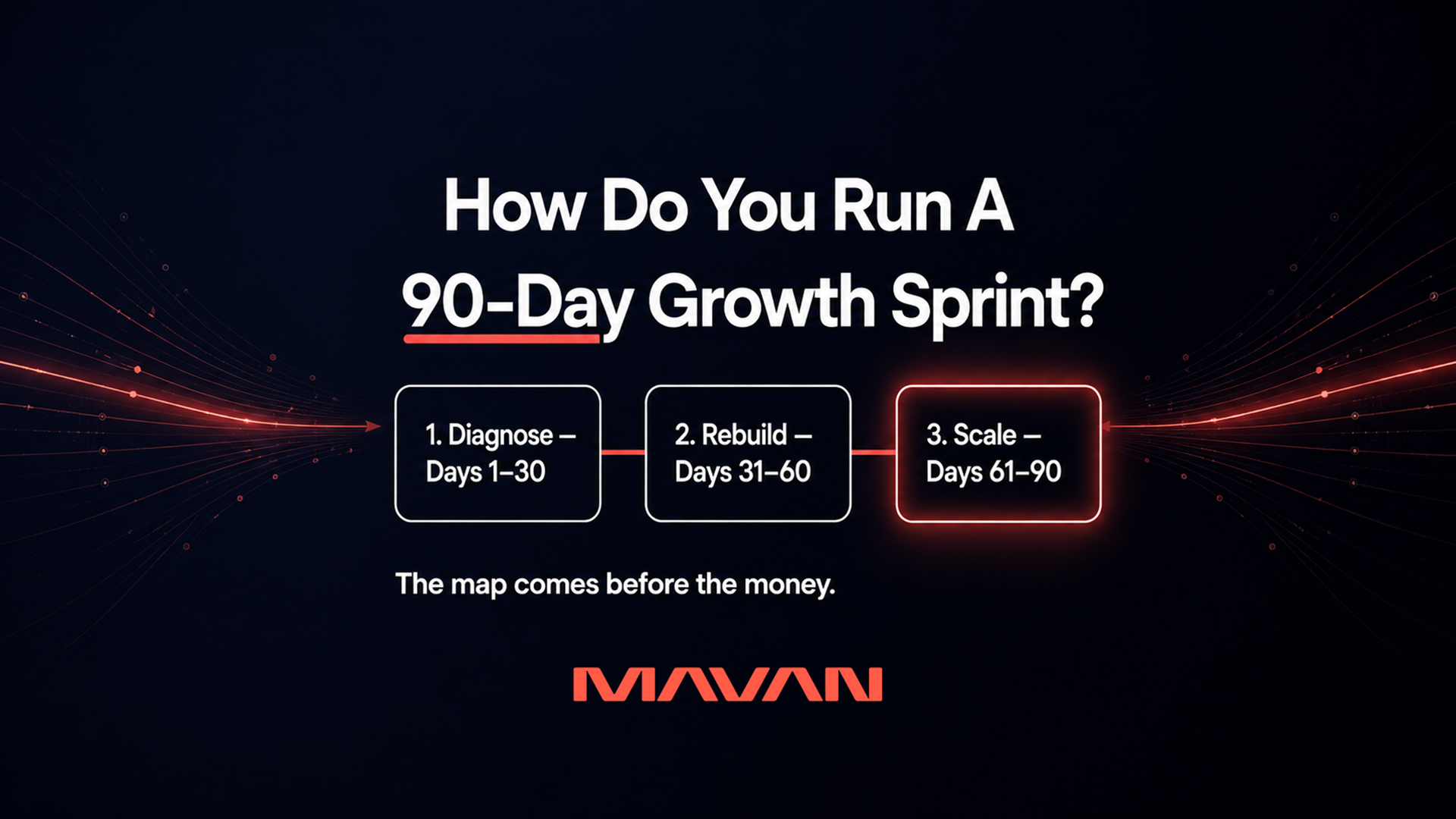
How Do You Run A 90-Day Growth Sprint That Compounds?
A 90-day growth sprint is a focused quarter run in three phases. The first month diagnoses your growth system, the second rebuilds your measurement into one trusted source of truth, and the third scales only the channels the data has proven. One embedded pod can run it, too, tracked against a single scoreboard.
-
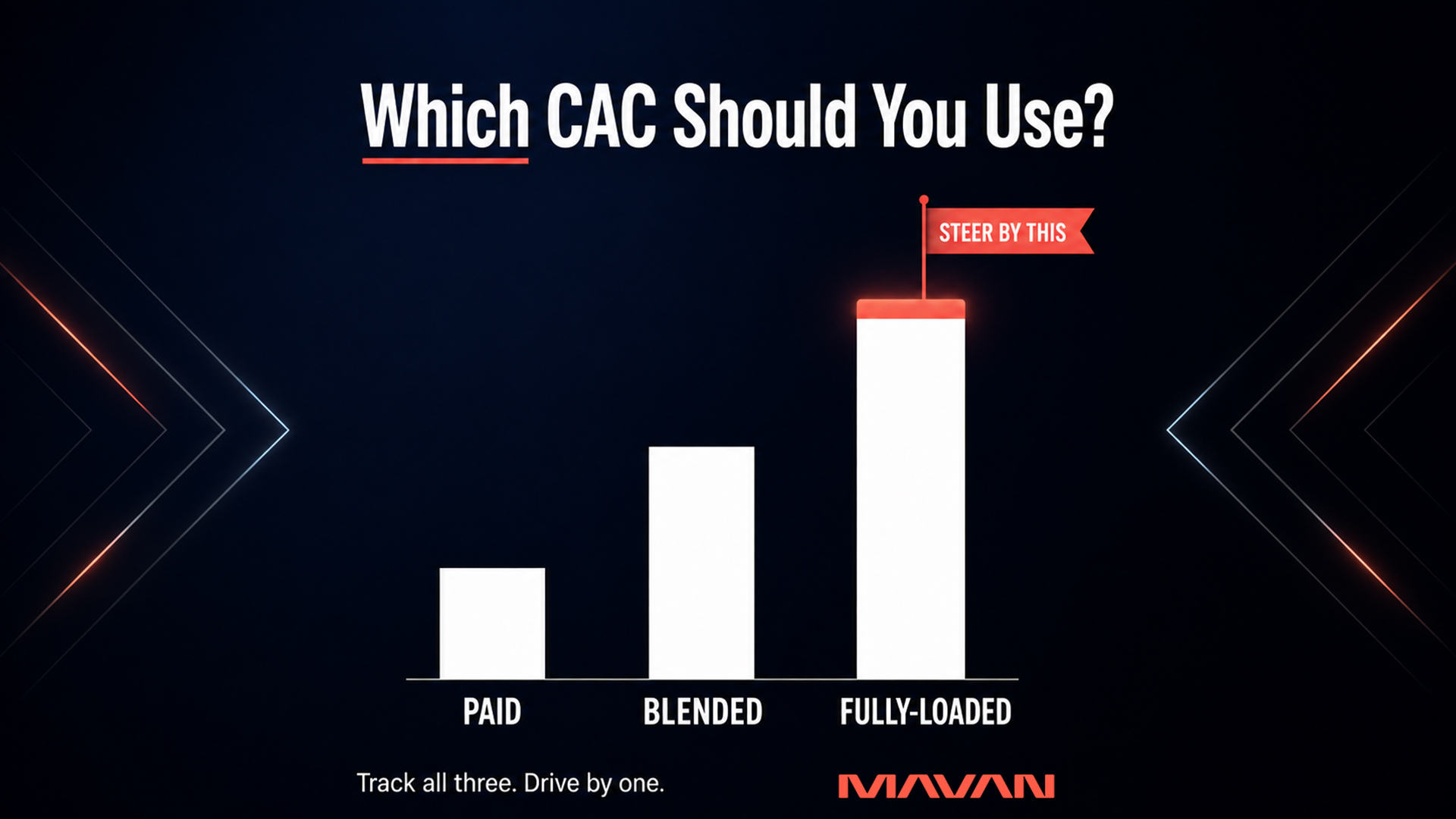
Which CAC Should You Use — Fully-Loaded, Blended, or Paid?
There are three ways to measure customer acquisition cost — paid, blended, and fully-loaded. Most teams pick one per decision. MAVAN’s operators steer by fully-loaded CAC, paired with gross-margin lifetime value, because it counts every cost. Paid and blended stay useful for channel calls and external reporting, but never as the number that drives the business.