
Startups are on a never-ending quest to unlock the secrets of predictable, scalable growth. Here, we distill actionable insights from the world of growth marketing, user acquisition, and fundraising, delving into the entrepreneurial drive for innovation in the ever-changing digital landscape.
Crafting Intuitive User Acquisition Strategies
In the wake of the iOS 14 aftermath, the traditional playbook for user acquisition has been rewritten, demanding a shift towards intuition and customer-centric approaches. It’s crucial to understand the real-world context of potential customers, embracing a blend of online and offline on-ramping. Libation Labs’ unconventional move of acquiring a hot air balloon business exemplifies the art of finding and engaging users outside the confines of digital platforms. By prioritizing underlying motivations over data-led models, the company has successfully tapped into a high-intent consumer base, showcasing the power of understanding customer desires beyond algorithmic targeting.
The Art of Storytelling in Startup Fundraising
Fundraising for startups hinges not only on the tangible metrics but also on the intangible art of storytelling and founder conviction. Crafting a compelling narrative that resonates with individual investors is essential for communicating a startup’s growth potential and fostering investor confidence. It’s about engaging in genuine conversations and building a narrative that aligns with each investor’s unique interests and philosophies, transcending standardized fundraising tactics.
Innovative Solutions for Marketplace Volume Challenges
Amidst the quest for critical mass of volume, the acquisition of a hot air balloon business by Libation Labs stands as a prime example of leveraging tangential industries for marketplace growth. This out-of-the-box approach not only provided immediate user traffic but also paved the way for sustainable growth within the app ecosystem, addressing the classic ‘chicken or egg’ problem inherent to the two-sided marketplace model.
In essence, the fusion of innovation, strategic storytelling, and an understanding of customer journeys is the catalyst for sustainable growth in the startup realm. It’s not about adhering to the norm, but about reimagining the path to customer engagement and investor conviction, echoing the boundless innovation that propels the startup ethos.
Book a complimentary consultation with one of our experts
to learn how MAVAN can help your business grow.
Want more growth insights?
Thank you! form is submitted
[hubspot type=”form” portal=”20951211″ id=”9c538ed2-fb12-45f1-a573-ad7953c058cc”]
Related Content
-
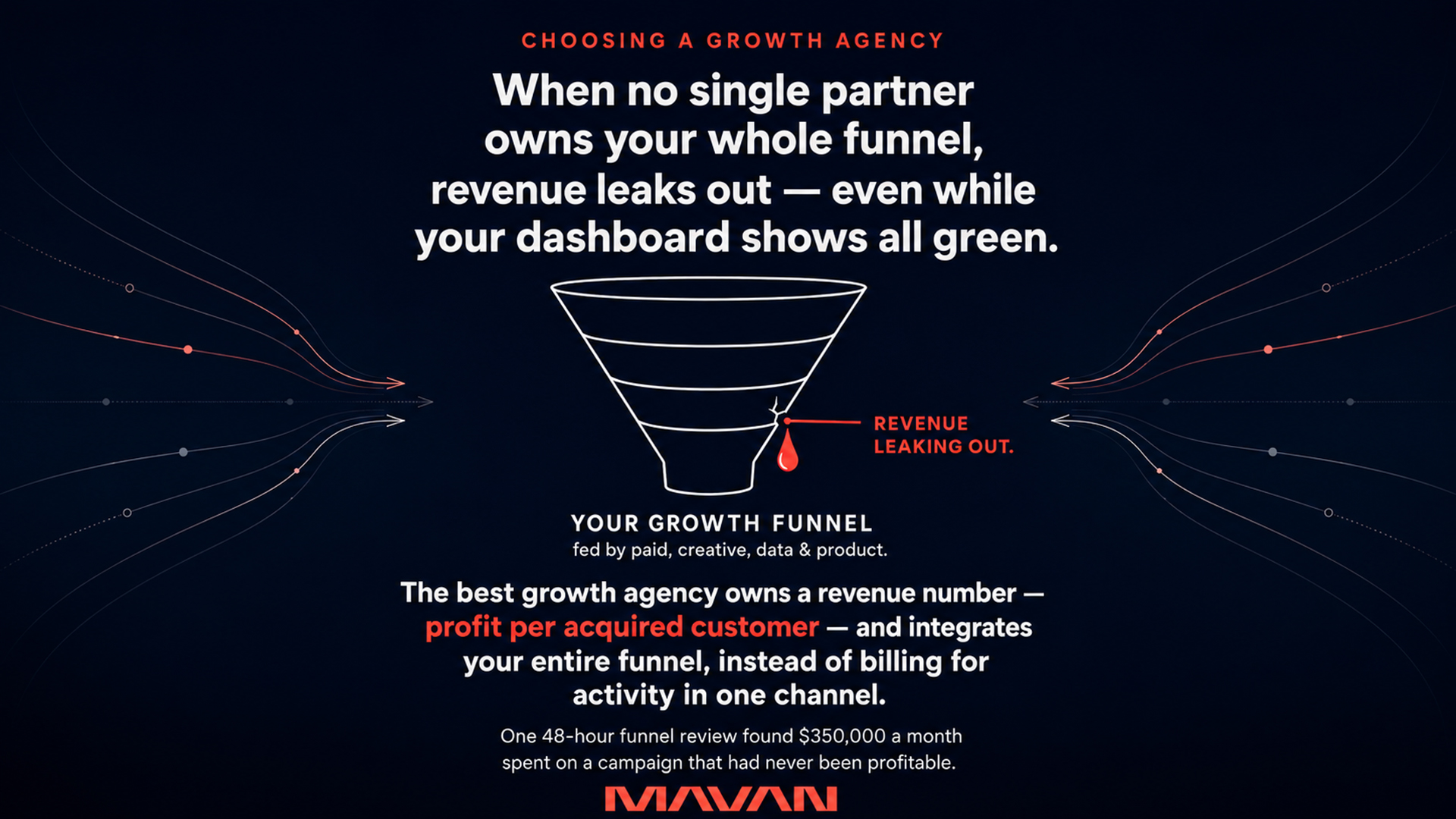
What’s the Best Growth Agency For VC & PE?
The best growth agency for a venture-backed or PE-owned company behaves less like a traditional agency and more like an embedded operating partner. It diagnoses your whole funnel, owns a revenue number such as CAC payback or LTV:CAC, and executes inside your team — rather than billing for activity in one channel.
-
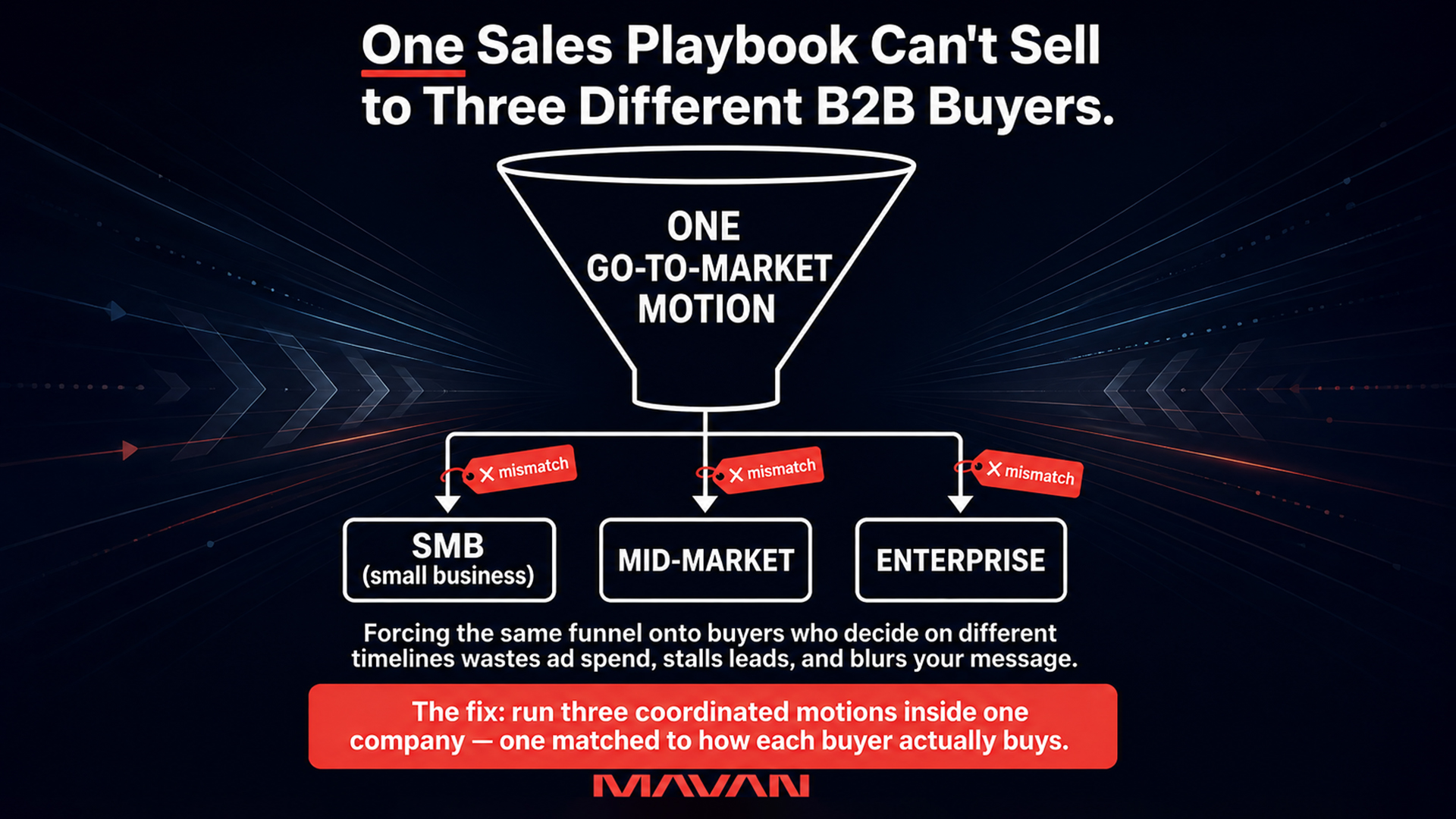
Is 1 GTM Motion the Biggest B2B SaaS Mistake?
The biggest go-to-market mistake in B2B SaaS is forcing one motion across SMB, mid-market, and enterprise, which buy on completely different timelines. The fix is running three coordinated motions inside one company: product-led growth for SMB, sales-assist for mid-market, and account-based marketing for enterprise, each matched to how that segment actually buys.
-

How Do You Evaluate a Portfolio Growth Partner?
To evaluate a growth partner for a fund’s portfolio, test two things. First, multi-company bandwidth: whether their operating model, not their headcount, lets them run many portfolio companies at once without quality slipping. Second, a proven playbook: a documented growth system that transfers between companies and survives leadership change, rather than living in one operator’s head.