
As your business grows and evolves, handling the organizational changes to personnel and leadership roles can play a critical role to your success. In the latest episode of Growth@Scale, Matt Widdoes and organizational strategist Katie Jackson talk about strategies for handling the changes of a company as it grows.
The Personal Journey of Transformation: Each member of an organization experiences transformation in their own way. Leaders play a pivotal role in crafting a supportive environment where their teams can excel while adapting to the changes around them.
Adapting Priorities during Growth: As a company moves from early stage to maturity, priorities can shift significantly. Strategic resource allocation, including the use of both full-time employees and contractors, becomes critical.
The Power of Explicit Company Culture: A robust company culture can help scale more seamlessly. Leaders should strive to make implicit norms explicit, with reflective exercises to identify success-driving actions and behaviors.
Value-Driven Performance Evaluation: A performance evaluation tied to company values can accelerate talent acquisition and employee development. These values and behaviors also have an impact on employee engagement and customer experiences.
Leadership Evolution in Growing Companies: As companies scale, leaders must evolve with it. A growth mindset, a willingness to learn, and a balanced team are pivotal. Special focus should be placed on equipping middle managers with the skills needed to translate the company’s strategy effectively.
These insights underline the imperative role of transformation, a well-defined culture, and effective leadership in a company’s successful journey towards growth.
Having a leadership team that is open to and facilitates transformations within an organization is key to scaling, and successfully navigating the next growth stage.
Listen to the podcast or read the transcript to learn more about navigating organizational transformation.
Book a complimentary consultation with one of our experts
to learn how MAVAN can help your business grow.
Want more growth insights?
Thank you! form is submitted
[hubspot type=”form” portal=”20951211″ id=”9c538ed2-fb12-45f1-a573-ad7953c058cc”]
Related Content
-
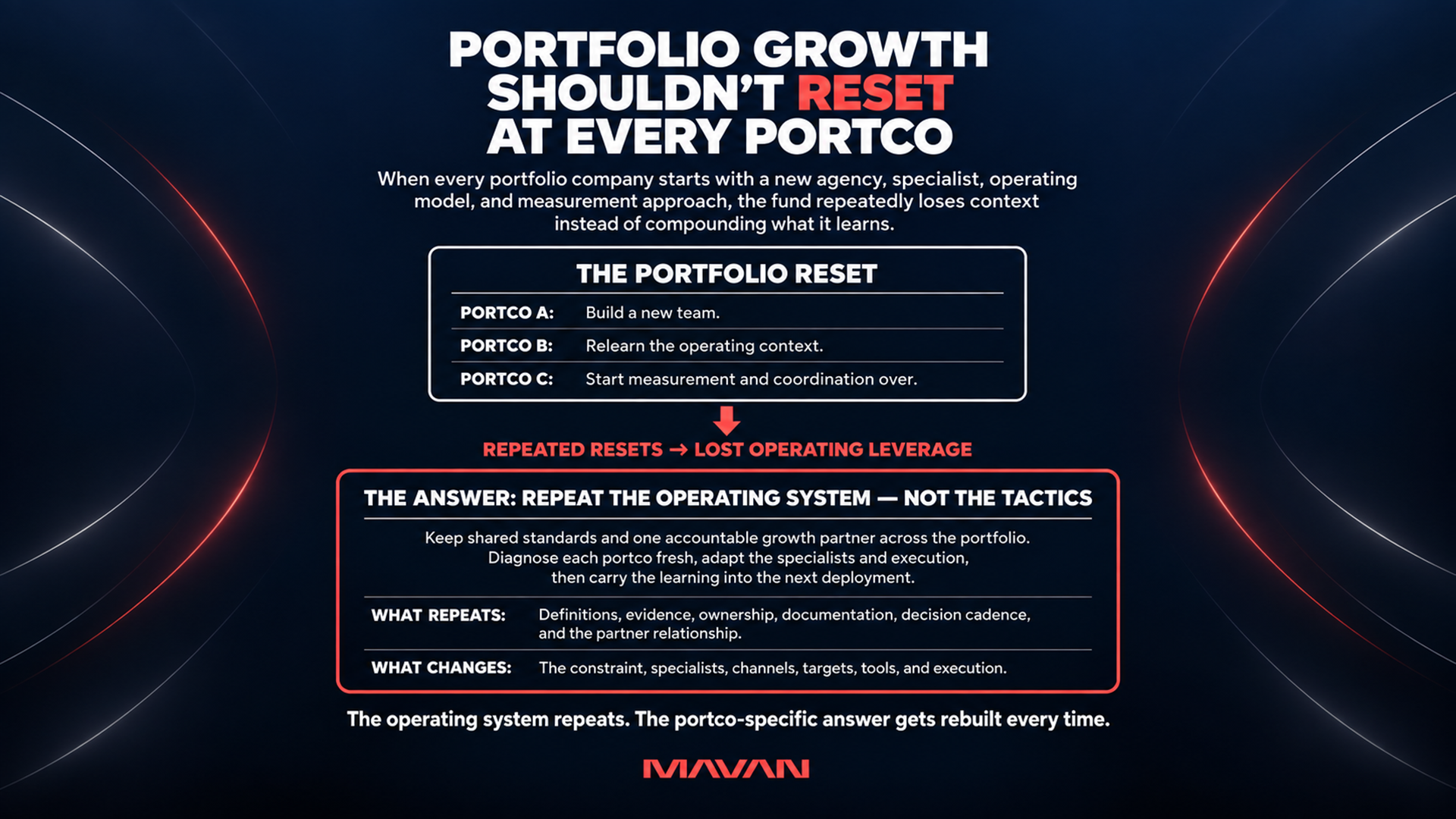
How Can Private Equity Funds Repeat Growth Across Portfolio Companies?
Growth becomes repeatable across a VC or PE portfolio when the fund installs one operating system instead of referring each company to a different specialist. The system has three parts: a single source of truth every team trusts, a board-ready scoreboard of ten to twelve metrics, and an embedded pod that diagnoses the real constraint in ninety days before anyone spends more.
-
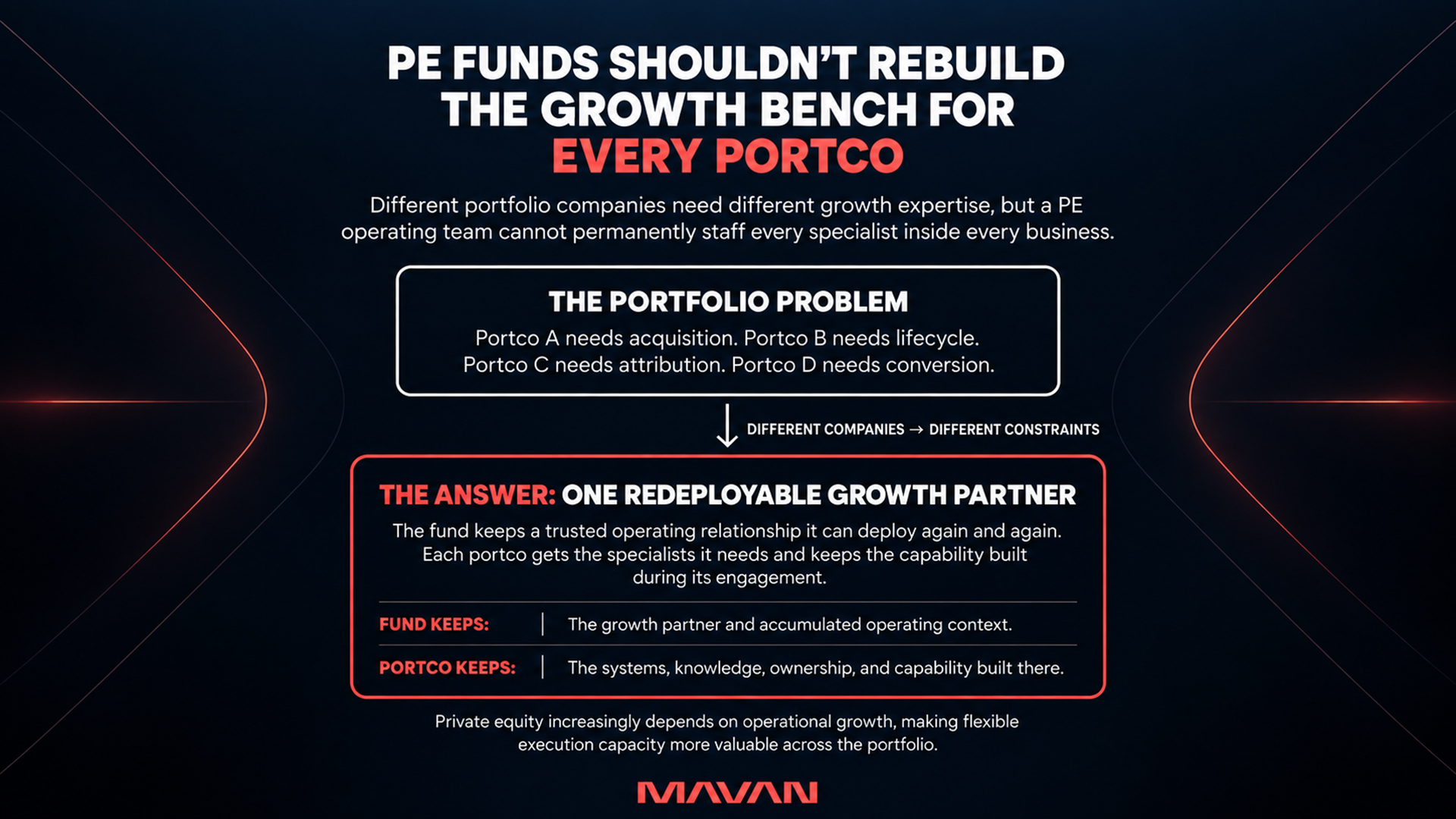
What Do PE Funds Want From a Portfolio Growth Partner? Repeatability!
What funds actually want from a portfolio growth partner is repeatability — a portable growth operating system that produces comparable results across very different portfolio companies. Repeatability shows up as a single source of truth, a board-grade scoreboard, a 90-day sprint, and a clean handoff, so each win compounds across the portfolio instead of staying at one company.
-
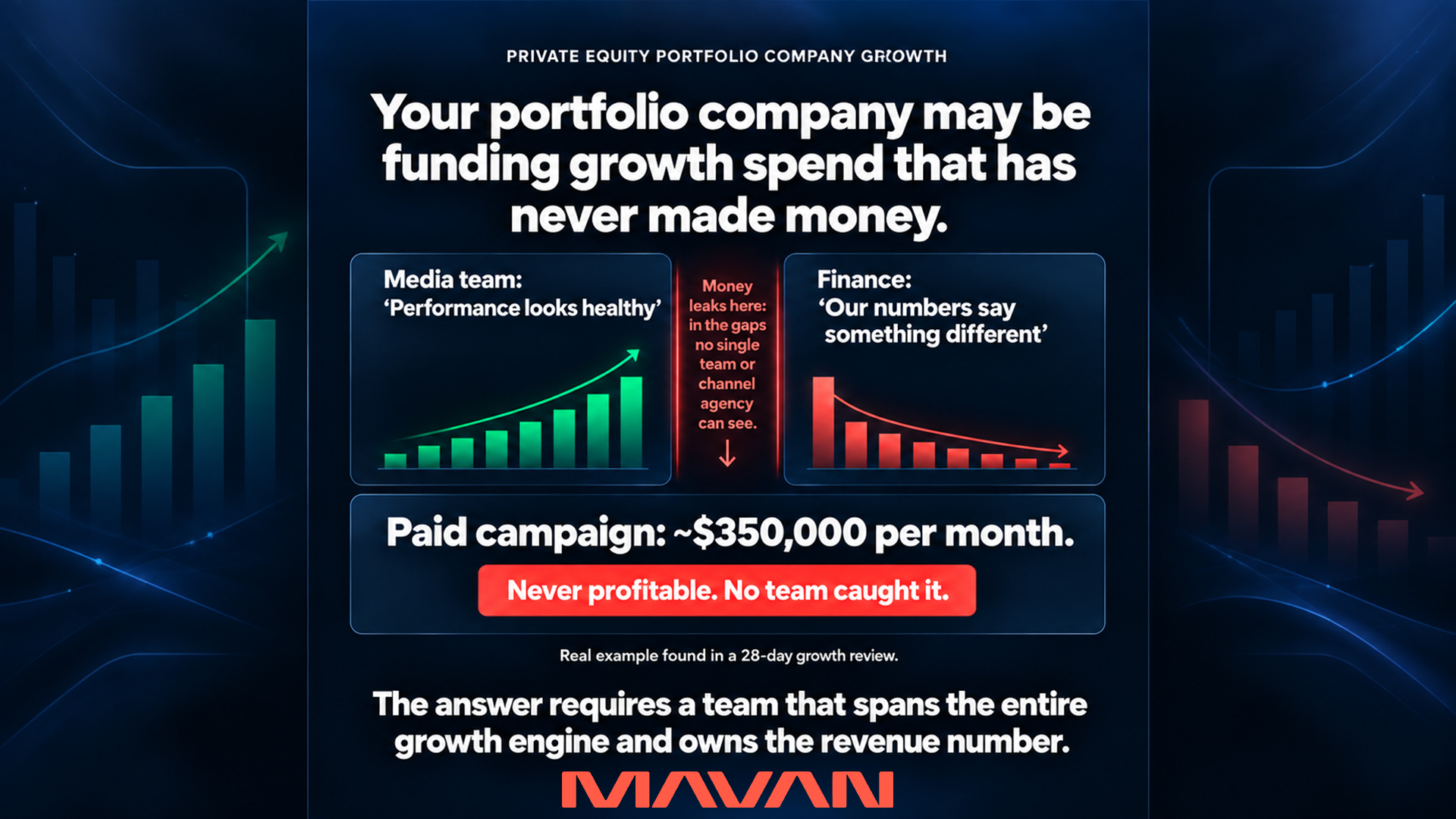
Who Is The Best Growth Partner For PE Portfolio Companies?
The best growth partner for a private equity portfolio company behaves like an operating partner you deploy, not an agency you brief. It reads the whole growth system before it spends, owns a revenue number alongside management, and leaves the capability behind so the sponsor can redeploy it.