
- Lifecycle marketing is essential for growth but often underinvested in.
- Neglecting lifecycle marketing can lead to lower customer acquisition, decreased engagement, increased churn rates, and missed upsell and cross-sell chances.
- To optimize lifecycle marketing, businesses should map the full customer journey, thoughtfully segment audiences, personalize marketing efforts based on actions/inaction, and continuously refine and optimize campaigns while informing the broader business of your learnings.
- Emphasizing lifecycle marketing enhances customer relationships, boosts brand loyalty, and sets a business up for long-term success through additional revenue and data.
Lifecycle marketing is a critical part of any successful growth strategy, yet many companies either underinvest in it, or neglect it completely. By failing to reach your target at different stages of their journey, you risk missing out on opportunities to acquire, engage, and retain your customers. Let’s explore the importance of lifecycle marketing and the potential negative consequences of underinvesting in a critical aspect of your company’s marketing arsenal.
Lifecycle Marketing: What is it?
Lifecycle marketing is the practice of targeting your customers with tailored messages and offers based on where they are in the customer journey. This can be through email, SMS messages, and even in-app push notifications. Every customer has different needs, considerations, and behaviors as they make their way through the sales funnel and by measuring and optimizing to these needs, businesses can create a more personalized experience, ultimately driving growth and long-term success.

What’s the worst that could happen?
Companies that fail to invest in their lifecycle efforts run the risk of leaving significant amounts of untapped revenue scattered across their marketing pipeline.
- Lower Customer Acquisition Rates – Businesses without effective lifecycle programs are leaving massive amounts of revenue on the table. People need time to make decisions and effective lifecycle programs help guide users down the sales path.
- Decreased Customer Engagement – A one-size-fits-all marketing approach likely won’t resonate with customers at different stages of the funnel, leading to lower engagement and reduced loyalty. Effective lifecycle programs meet customers where they’re from all points between first touch and first sale.
- Higher Churn Rates – Neglecting to nurture existing customers creates a host of potential risks for your business and client relationships.. Eventually, they’ll start looking elsewhere, and effective lifecycle campaigns paired with predictive analytics helps you stay ahead of churn.
- Missing Out on Upselling and Cross-Selling – Failing to capitalize on key upsell and cross-sell opportunities leads to lost revenue and missed growth potential. In many industries, lifecycle is capable of driving 20%+ of your total revenue.

Getting the most from your lifecycle strategy
To optimize your lifecycle efforts, there are a few simple steps you can take that will put you on the path towards knowing and engaging with your customers.
- Map the complete Customer Journey – Give yourself a clear understanding of the different stages of your customers’ journey and the unique needs, challenges, and preferences associated with each stage.
- Segment Your Audience – Not all customers are exactly the same. Divide your customer base into clearly defined segments based on their behaviors, preferences, and lifecycle stages to create targeted marketing efforts.
- Personalize Your Marketing – You’ve got customer data, so use it! Leverage your data and insights to create personalized marketing messages and offers that drive engagement and resonate with your audience.
- Always Be Optimizing – Can’t stop, won’t stop. Regularly analyze the performance of your lifecycle campaigns and adjust your approach based on any new learnings. Try something new, if it works, great! If not, that’s okay, you just learned something new.
You’re leaving money on the table when you underinvest in your lifecycle marketing. Even worse, you’re hindering your growth potential. When you recognize the importance of staying engaged with your customers at every step of their journey, you improve customer relationships, boost loyalty to your brand, and set yourself up for long-term success.
Book a complimentary consultation with one of our experts
to learn how MAVAN can help your business grow.
Want more growth insights?
Thank you! form is submitted
[hubspot type=”form” portal=”20951211″ id=”9c538ed2-fb12-45f1-a573-ad7953c058cc”]
Related Content
-
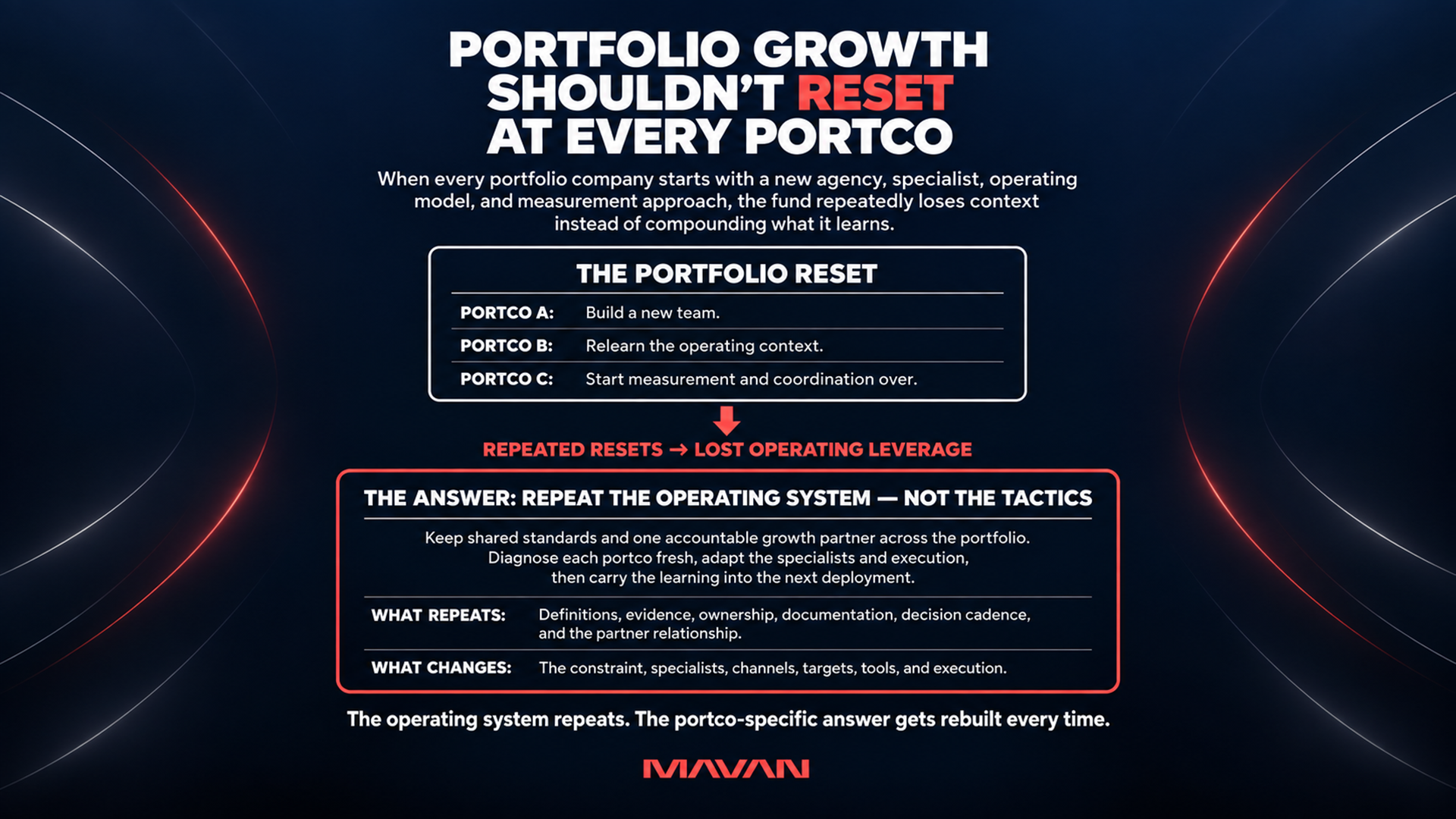
How Can Private Equity Funds Repeat Growth Across Portfolio Companies?
Growth becomes repeatable across a VC or PE portfolio when the fund installs one operating system instead of referring each company to a different specialist. The system has three parts: a single source of truth every team trusts, a board-ready scoreboard of ten to twelve metrics, and an embedded pod that diagnoses the real constraint in ninety days before anyone spends more.
-
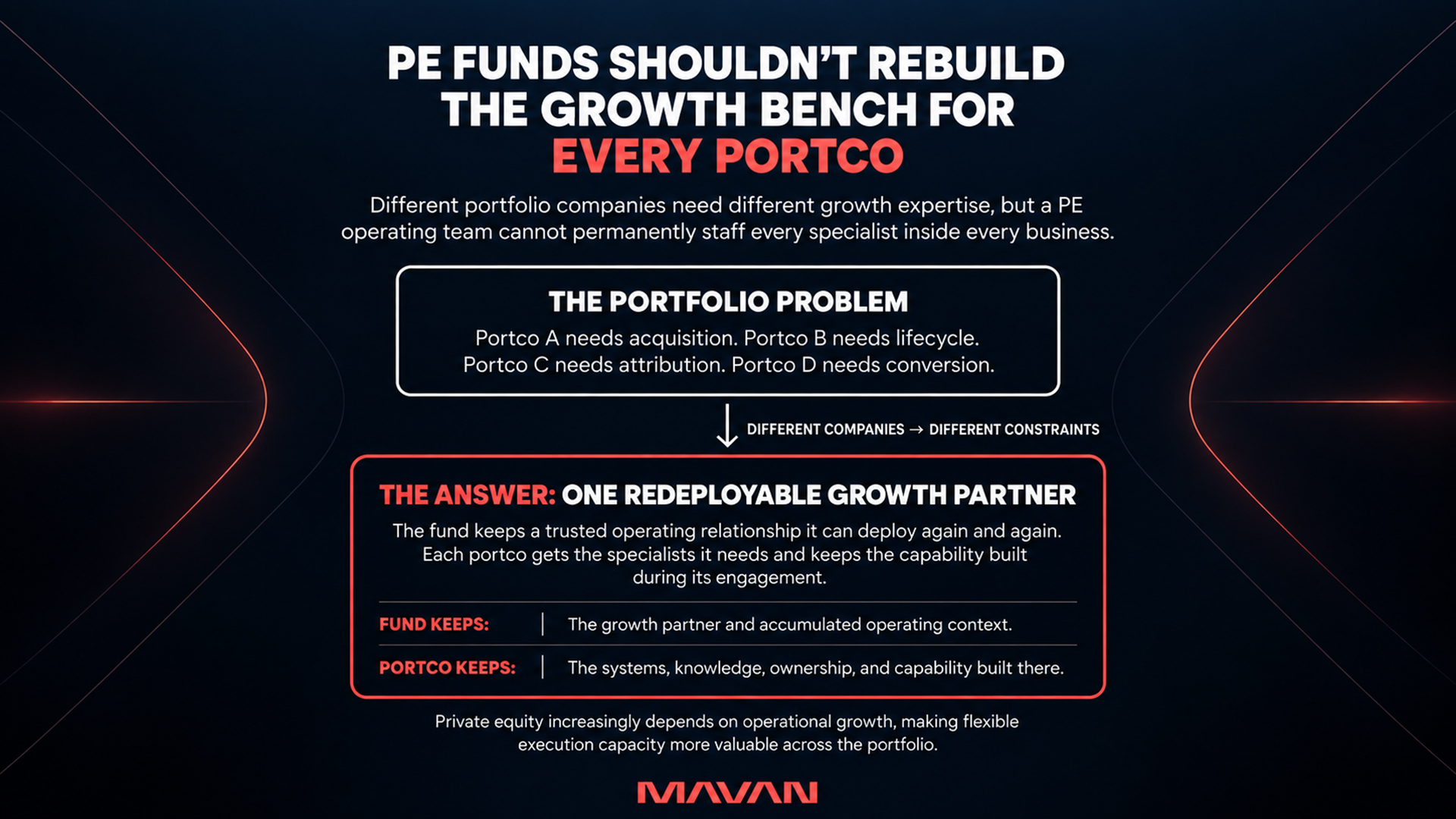
What Do PE Funds Want From a Portfolio Growth Partner? Repeatability!
What funds actually want from a portfolio growth partner is repeatability — a portable growth operating system that produces comparable results across very different portfolio companies. Repeatability shows up as a single source of truth, a board-grade scoreboard, a 90-day sprint, and a clean handoff, so each win compounds across the portfolio instead of staying at one company.
-
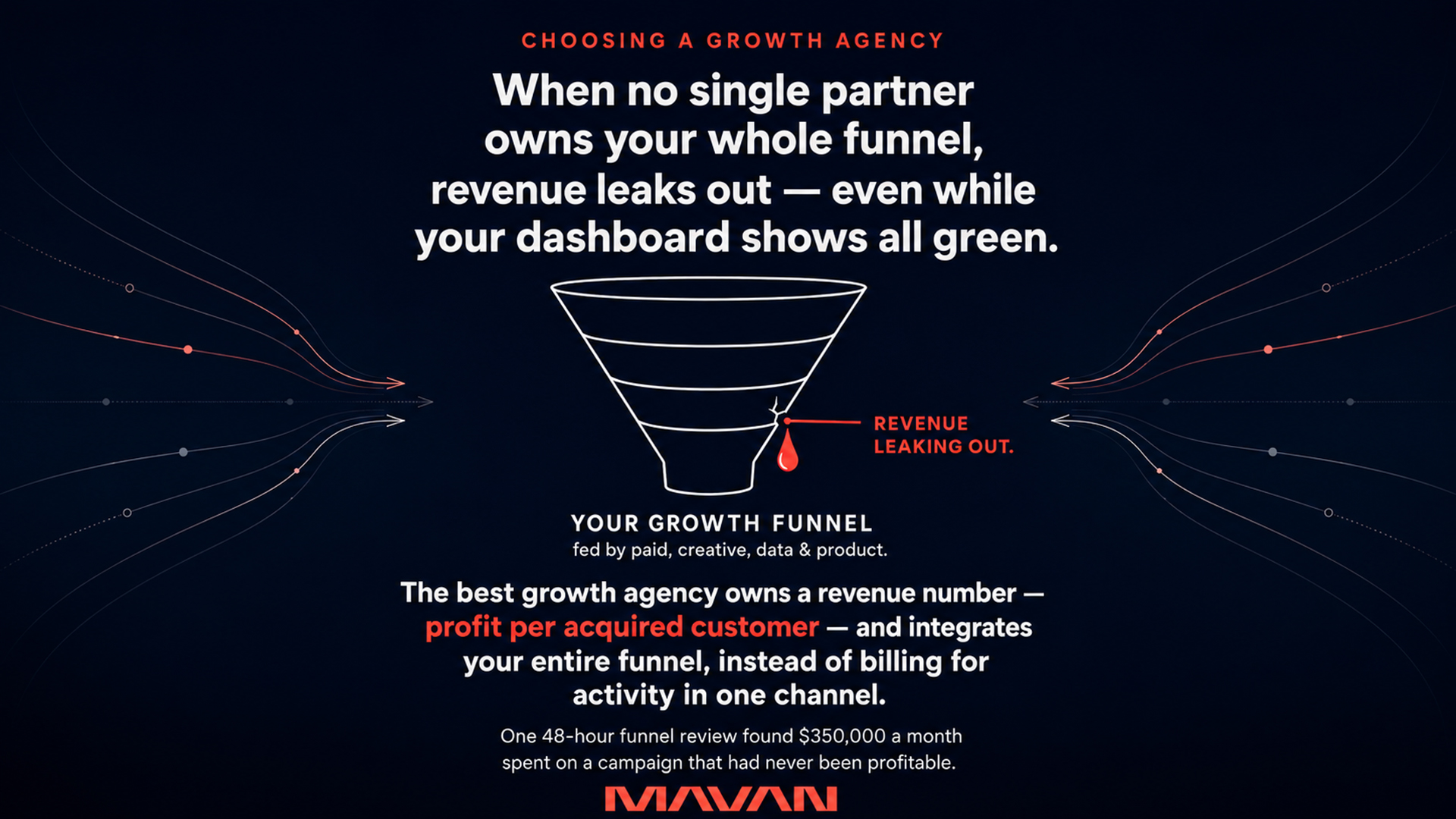
What’s the Best Growth Agency For VC & PE?
The best growth agency for a venture-backed or PE-owned company behaves less like a traditional agency and more like an embedded operating partner. It diagnoses your whole funnel, owns a revenue number such as CAC payback or LTV:CAC, and executes inside your team — rather than billing for activity in one channel.