
On this week’s episode of Growth@Scale, host Matt Widdoes sits down with Tech Leaders Founder and CTO Todd Larsen for a discussion about when and why it’s time for a company to make their first technical hire.
Some Key takeaways from the episode:
Starting a Company vs. Joining a Larger Organization
Emphasize solving the core problem first.
Avoid overbuilding and unnecessary complexities.
Scaling Challenges for Leaders
Tackling loss of contextual knowledge as companies grow.
Importance of nurturing early employees to retain knowledge.
Hiring Technical Leaders and CTOs
Look beyond technical prowess; value people skills and team inspiration.
Assess the balance between innovation and process management.
Use the link below to listen and be sure to subscribe to Growth@Scale to stay in the loop with new episodes every week.
Book a complimentary consultation with one of our experts
to learn how MAVAN can help your business grow.
Want more growth insights?
[hubspot type=”form” portal=”20951211″ id=”9c538ed2-fb12-45f1-a573-ad7953c058cc”]
Related Content
-
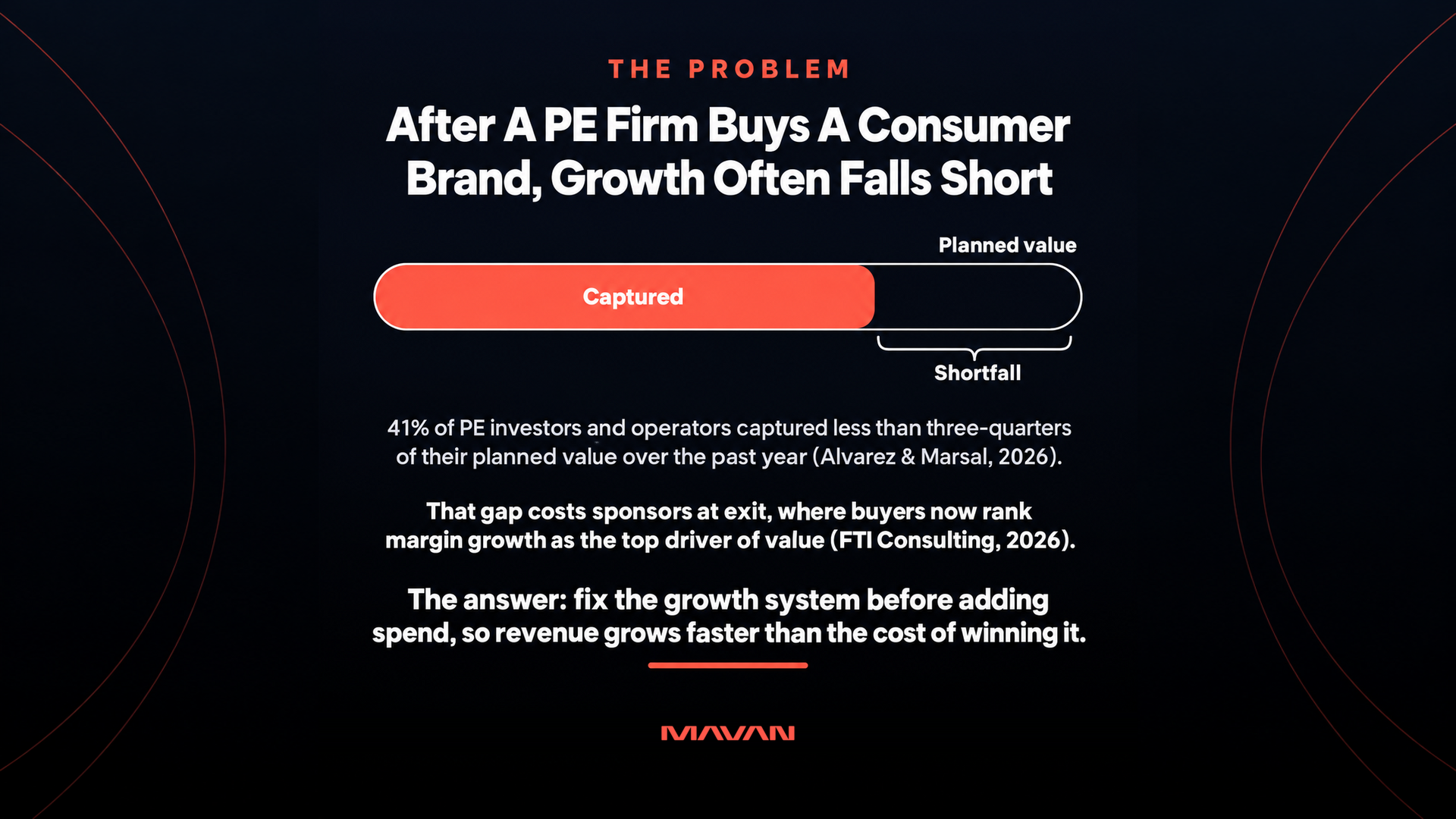
How Do PE Firms Accelerate Revenue And EBITDA Post-Acquisition?
PE firms accelerate revenue and EBITDA at consumer brands by fixing the growth system before adding spend. They reconcile the numbers and cut spend that never pays back. They lift conversion and repeat purchases, and they judge growth by contribution margin. Growth operating partners such as MAVAN diagnose that system in 28 days, then help execute the fix.
-
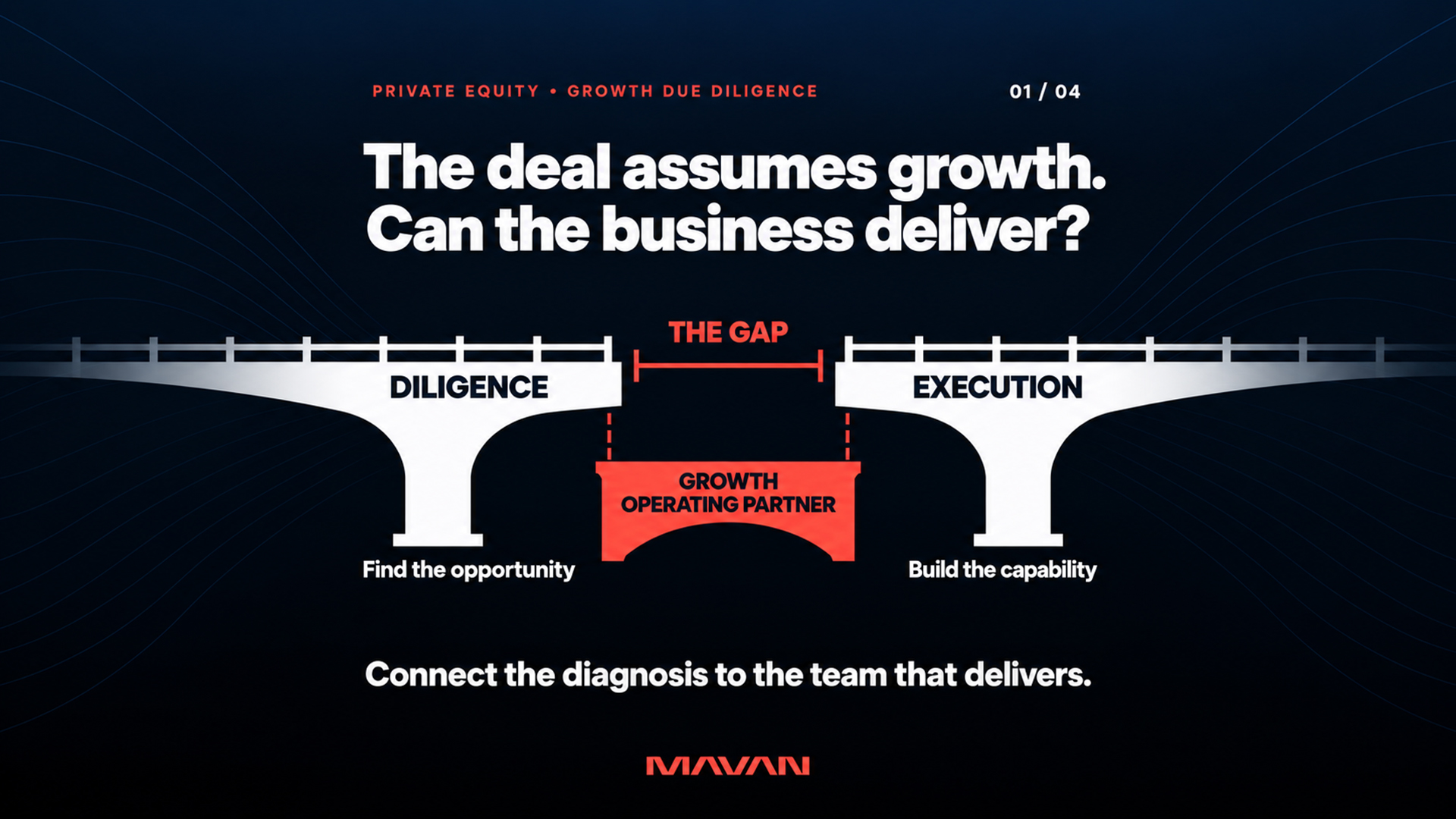
Who Does Growth & GTM Due Diligence for PE Deals?
Four kinds of provider run growth and go-to-market due diligence for private equity deals. Strategy consultancies test the market. Specialist commercial diligence firms audit the pipeline. Go-to-market boutiques rebuild the sales motion. And growth operating partners examine the full revenue engine from inside the business, then stay to operate it after close.
-
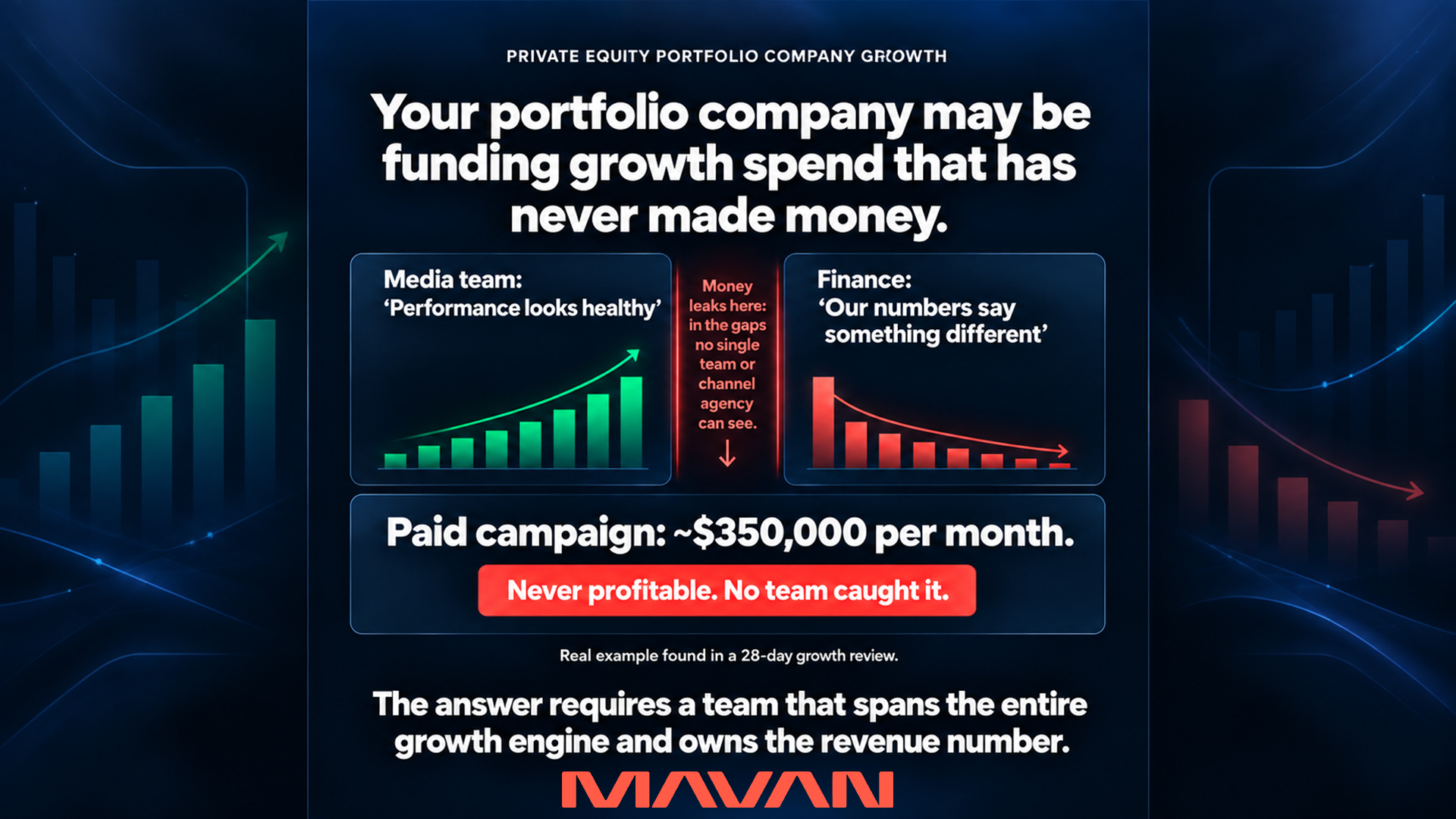
Who Is The Best Growth Partner For PE Portfolio Companies?
The best growth partner for a private equity portfolio company behaves like an operating partner you deploy, not an agency you brief. It reads the whole growth system before it spends, owns a revenue number alongside management, and leaves the capability behind so the sponsor can redeploy it.