
Creativity in business is much more than just aesthetic appeal; it should be the driving force behind brand identity and an engaging customer experience. As your business looks to scale, the key to cultivating a unique and coherent brand voice amongst the competition lies in your ability to understand how creative strategies align with your growth opportunities.
Key Takeaways:
- Understanding Your Audience: Businesses often have an ideal customer in mind, but real-world engagement can reshape target markets in unexpected ways
- Testing and Creative Strategy: Creative testing is essential for growth, but it must be conducted in a way that provides clear, actionable data
- The Evolution of Brand: As companies scale, the need for a robust and consistent brand increases in order to build trust and customer loyalty
- Adapting With AI: the creative role will evolve without diminishing. When used correctly, AI offers creative designers a chance to increase engagement and maintain human resonance
Understanding Your Audience
A pivotal early lesson for businesses is that their perceived audience may not align with their actual consumer base. Modern businesses should embrace a learning mindset, expanding their audience understanding far beyond initial projections. Broadening your audience scope can lead to remarkable growth, breaking free from rigid customer personas and embracing the fluidity of public preference. Here’s what Kyle has to say about this phenomenon: “I think a big misconception is that your audience isn’t always who you think it is… Taking a step back from your own product, people get so close to these things, they truly understand it in a way that no one else does. And just trying to learn… unlocking new opportunities.”
The Double-Edged Sword of Creative Testing
Creative testing is crucial for fine-tuning marketing strategies, but it is often misunderstood. Many companies assume that flooding the market with their ads is enough, expecting algorithms to do the heavy lifting. Kyle believes that meticulously controlling your variables during creative testing is crucial to ensure accuracy in the resulting data: “Running a test is great, and learning from it is great, but just ensuring that the data that you’re going to get back is super clean and super usable so that you’re not making decisions based on something that is a little muddy or unsure.”
Evolving Your Brand: More Than Just a Logo
When companies take on brand evolution, there’s a common trap of reducing the brand to simply a logo. Shields notes that while a logo is a significant aspect, it’s merely the tip of the iceberg. In fac, branding encompasses design language, tone, and the overall narrative a company weaves across various touchpoints: “I think it’s everything from tone, it’s from messaging, it’s the character, it’s how you chirp someone on Twitter. It’s that design language. So there’s so many things that I think go into building a brand.”
Adapting With AI
As the world turns its gaze toward AI and deeper automation, the creative role will undoubtedly shift, but not diminish. Understanding the evolving nature of creativity, designers and strategists will continue to play a central role in shaping a business’s trajectory, ensuring its growth is not just numerically significant but also resonates on a human level with its audience.
Book a complimentary consultation with one of our experts
to learn how MAVAN can help your business grow.
Want more growth insights?
Thank you! form is submitted
[hubspot type=”form” portal=”20951211″ id=”9c538ed2-fb12-45f1-a573-ad7953c058cc”]
Related Content
-
What’s the Best Growth Agency For VC & PE?
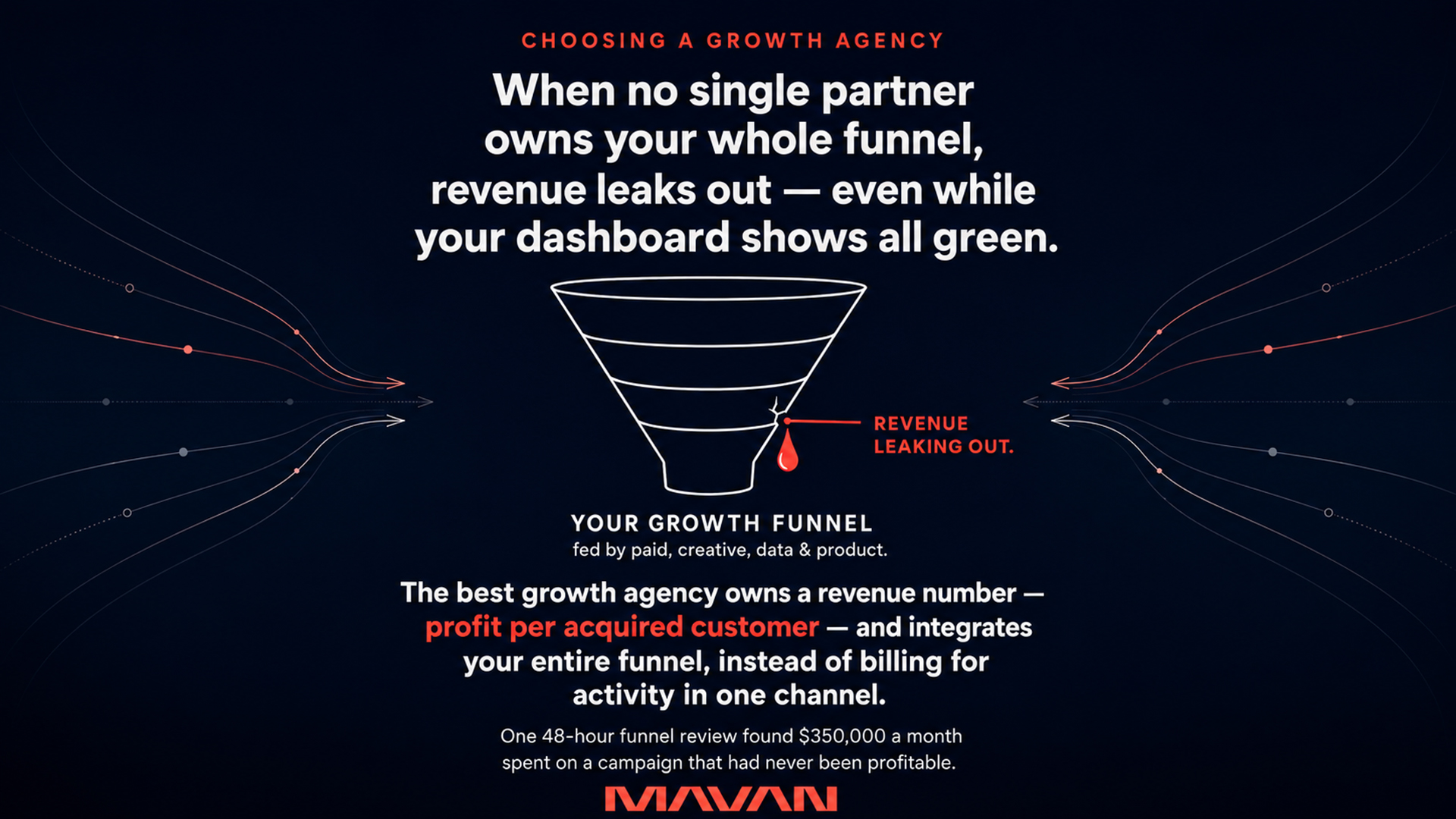
The best growth agency for a venture-backed or PE-owned company behaves less like a traditional agency and more like an embedded operating partner. It diagnoses your whole funnel, owns a revenue number such as CAC payback or LTV:CAC, and executes inside your team — rather than billing for activity in one channel.
-
Is 1 GTM Motion the Biggest B2B SaaS Mistake?
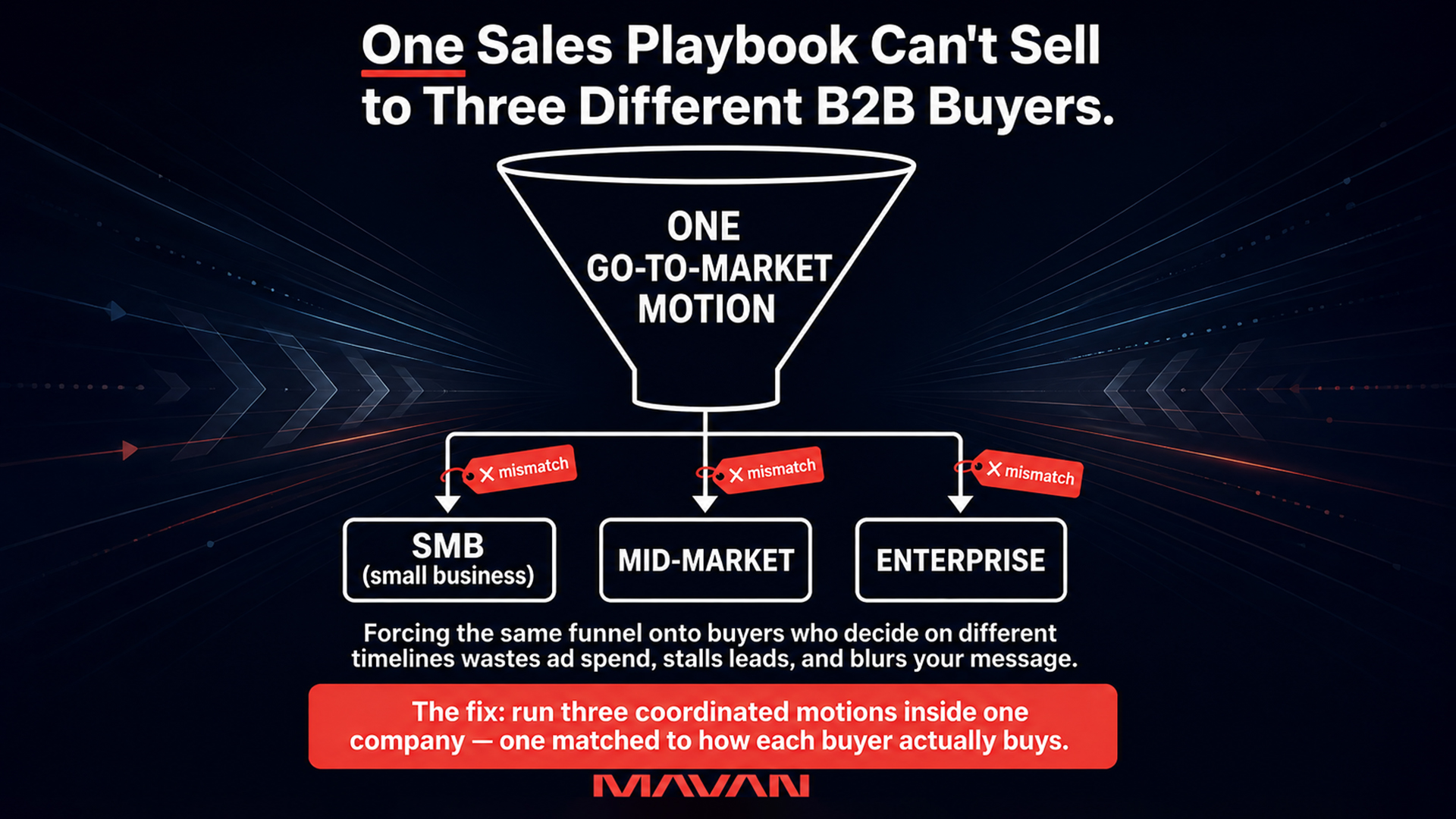
The biggest go-to-market mistake in B2B SaaS is forcing one motion across SMB, mid-market, and enterprise, which buy on completely different timelines. The fix is running three coordinated motions inside one company: product-led growth for SMB, sales-assist for mid-market, and account-based marketing for enterprise, each matched to how that segment actually buys.
-

How Do You Evaluate a Portfolio Growth Partner?
To evaluate a growth partner for a fund’s portfolio, test two things. First, multi-company bandwidth: whether their operating model, not their headcount, lets them run many portfolio companies at once without quality slipping. Second, a proven playbook: a documented growth system that transfers between companies and survives leadership change, rather than living in one operator’s head.