
Marketing and advertising agencies have been around ever since one bold industrialist said, “Can’t someone else do it?” and another, even bolder industrialist said, “Sure, I’ll give it a shot.” In the 150+ years since, the function has largely been the same: agencies promise exceptional results, then try their best to meet client expectations. However, things don’t always go as planned.
In this post, we take a look at some of the common reasons agencies fall short of expectations and explore how businesses can make better-informed decisions when choosing an agency partner.
Siloed Expertise
Some agencies are really good at one thing, and they do that one thing so well that they don’t really focus on anything else. While this can often be presented as a strength (who would argue against focus) this can lead to one of two problems for growing companies. Either you partner with a handful of different agencies all working on their own niche field of expertise, separated from every other part of your business, or you go with a jack of all trades agency that may be just “okay” at everything.
In both cases your company is at risk of running generic campaigns that don’t deliver, or that aren’t informed or aligned holistically across all of your business’ unique needs.
The most common way to combat this problem is to build your own in-house team of experts (time consuming, risky, and expensive), or find an agency partner equipped with access to world-class talent across all areas of the funnel.

Overpromise, under deliver
It’s human nature to be eager to please, especially when your income and profits depend on it. Some agencies, in their drive to land a contract, will promise the world to a prospective client and plan on ‘figuring it out later’. Nothing is out of scope in the pitch phase. The only problem is when it’s time to get down to business. Inexperienced teams are often stretched too thin and in over their heads, and the deliverables, outcomes, and results leave much to be desired.
By working with an agency to set a clearly defined scope of work, complete with timelines, costs, and agreed upon deliverables, your business can protect itself from an agency that’s potentially punching above its weight.

Stuck in their ways
Agencies that fail to keep up with evolving market trends and solutions will have a hard time crafting effective marketing strategies. Nobody wants to sink their marketing dollars into an agency that suggests you “just cross-post your Instagram stories on TikTok!”
There’ss too much competition in the marketplace to partner with agencies that rely on tired, cookie-cutter marketing campaigns. Bespoke, comprehensive solutions that are catered to a business’ unique needs should be the norm, not the exception. This is the same expectation companies have of their internal teams, and it should be no different when engaging with an agency.
Growth-seeking companies need to partner with agencies that are current on marketing strategies, are always testing and open to new approaches, and have instant access to experts as new opportunities present themselves. An agency with flexibility and the ability to stay ahead of the curve are surefire ways to avoid disappointment when it’s time to look at results.

Are we even on the same team?
A good agency partner puts themselves in their clients’ shoes. Their goals are your goals. Their budgets are your budgets. Share the wins, and the losses. When an agency is more focused on driving up billable hours rather than conversions, that leads to an imbalance in motivation and incentives.
When an agency is open and transparent with their clients with their reporting and results, everyone wins. A lack of transparency can make it difficult for clients to assess the success of their campaigns and that uncertainty leads to an erosion of trust between client and agency.
Not every agency suffers from these shortfalls, but working with one that does will cause undue stress and frustration for any company that is seeking reliable, trustworthy expertise for their business’ needs. By putting in the work spending the time to find an agency that understands and excels at every part of your business, puts your success first, and is constantly pushing the envelope and innovating, you’ll save yourself equal parts frustration and money as your company starts to soar.
Book a complimentary consultation with one of our experts
to learn how MAVAN can help your business grow.
Want more growth insights?
Thank you! form is submitted
[hubspot type=”form” portal=”20951211″ id=”9c538ed2-fb12-45f1-a573-ad7953c058cc”]
Related Content
-

How Can SaaS and Consumer Products Improve Retention?
SaaS and consumer brands need to take a page out of gaming’s retention playbook. Games keep players for years by treating launch as the starting line, building an engagement loop into the product’s core, and continuously deploying content and rewards. Non-gaming products can apply the same live-operations approach to turn retention into their cheapest source of growth.
-
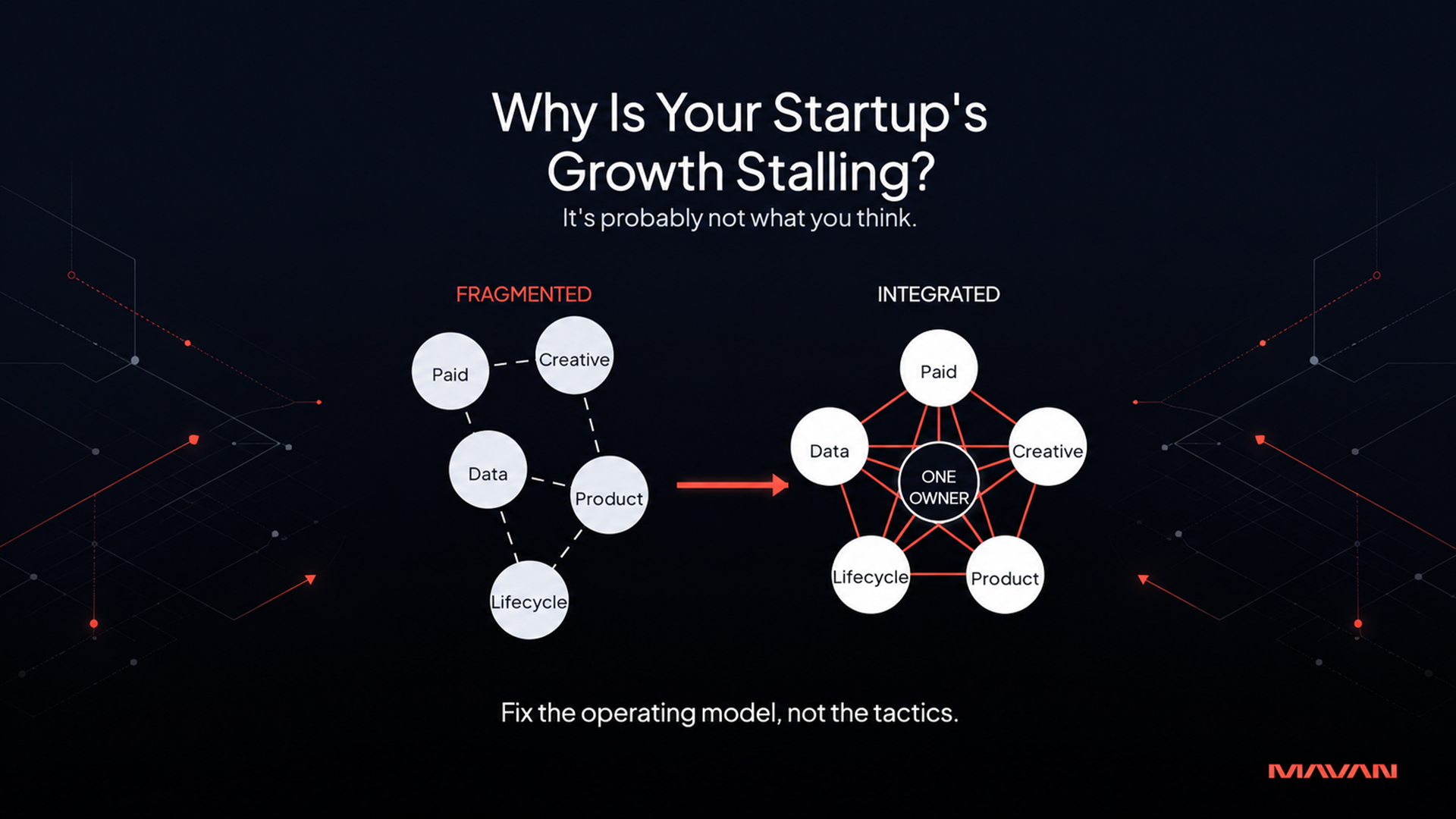
Why Is Your Startup’s Growth Stalling? Here’s The Fix.
Growth-stage startups don’t usually stall because the team isn’t working hard enough. They stall because hard work gets distributed across too many disconnected efforts, and nobody owns the system that ties them together. The fix isn’t more ad spend or more specialists — it’s integrating what you already have.
-
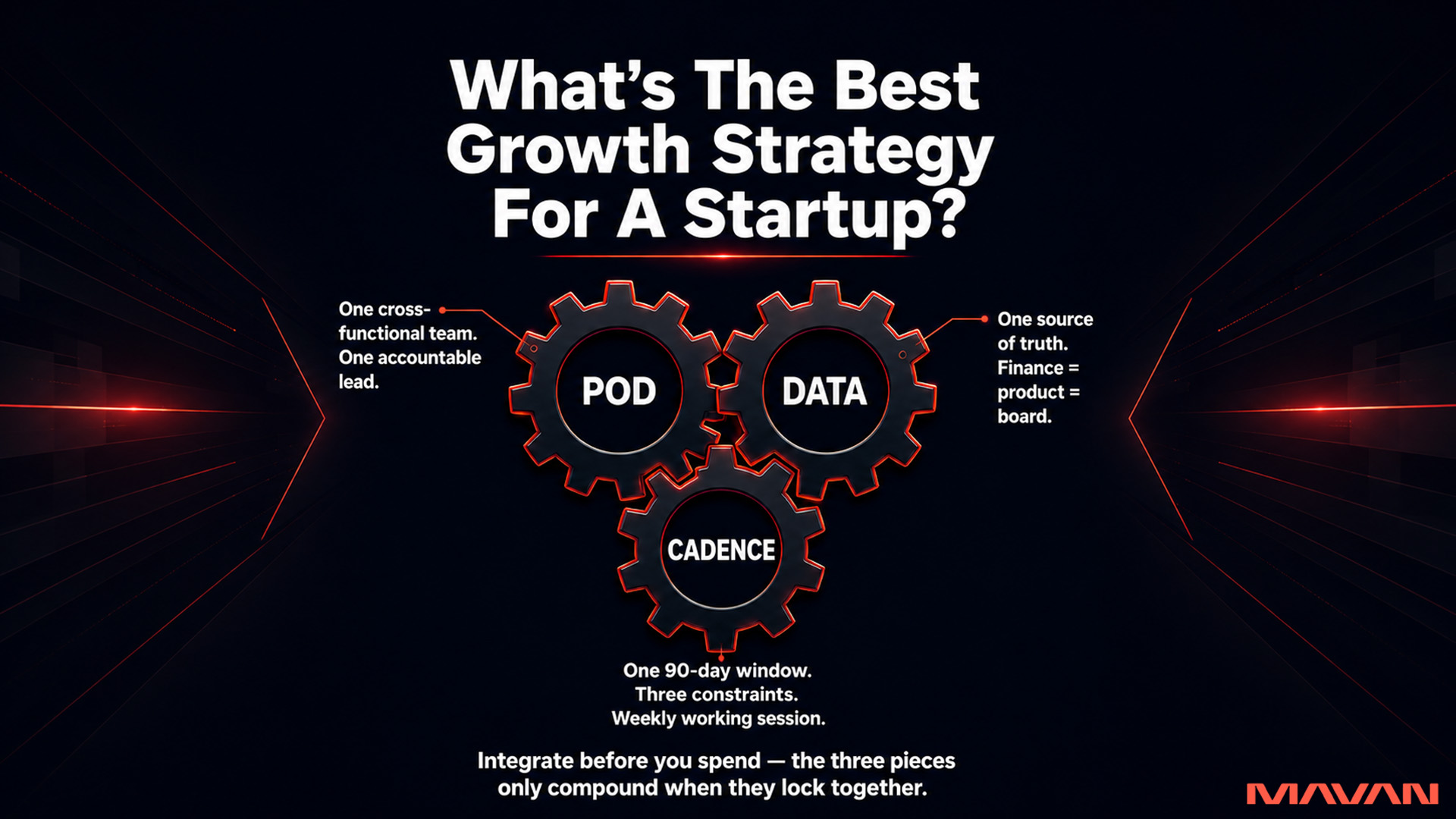
What’s The Best Growth Strategy For A Startup In 2026?
The best growth strategy for a venture-backed startup in 2026 is to integrate before you spend. Fragmented teams, tools, and data silently inflate CAC even when every individual channel looks healthy. Fix the operating model — one accountable pod, one source of truth, one 90-day cadence — and the wins start compounding instead of canceling each other out. Channels do not break unit economics. Lack of measurement discipline does.