
On a recent episode of the Growth@Scale podcast, Dan Barnes,a seasoned mobile gaming executive, unpacks the essence of what makes not just gaming companies, but any company thrive. His decade-long experience at companies like Network, Natural Motion, Zynga, and Machine Zone informs a unique perspective of company culture, gaming, and the cutting-edge automation transforming tech and growth.
Key Takeaways
- Intrinsic Motivation: The success of a company culture relies on intrinsically motivated individuals who execute with unambiguous data and clear objectives
- Live Operations in Gaming: Real-time content updates in games (LiveOps) are a staple of modern gaming, driving player engagement and revenue growth
- Creative Lifecycles in UA: Creative asset optimization is crucial in user acquisition, where iteration can extend a creative’s lifecycle but doesn’t necessarily ease the creation of new concepts
Isolating Intrinsic Motivation within a Thriving Company Culture
In the podcast, Barnes stresses the significance of intrinsic motivation as a cornerstone of a successful culture. This self-motivation is essential when hiring, ensuring the right fit for the organization—people who don’t just wait for instructions but actively seek the right course of action.
Understanding Intrinsic Motivation’s Value
Intrinsic motivation goes beyond the typical employee enthusiasm. It’s about staff who understand the business’s core objectives and identify psychologically safe spaces where they can err and grow. It’s likened to a gardener leaving a glass of water out, and the potential employee’s decision to clear it up after an interview reflects an innate drive to contribute positively without external prompting.
Cultivating Intrinsic Motivation
In the workplace, fostering intrinsic motivation isn’t just about hiring; it’s about nurturing. Organizations must provide unambiguous data and objectives, allowing for a culture that encourages proactive behavior. Systems like the ABC 123 prioritization method Dan mentions, which categorizes tasks into ‘must, should, and could do,’ guide employees towards self-motivated action.
“I think there are three parts to that answer. I think the first one is from a human standpoint, the people that are executing have to be intrinsically motivated.” – Dan Barnes
Embracing the Game of LiveOps for Sustained User Retention
The term LiveOps refers to the activities conducted by game developers to sustain and monetize a game post-launch. According to Barnes, LiveOps is not just a fleeting addition to a game but must be built into the software from the start to effectively change player behavior.
The Core of LiveOps
LiveOps is integral in creating a game that continually grows, adapting to player responses and engaging them with new content. It maintains the relevance of games like “Runescape” or “Words with Friends,” as they are structurally engineered to evolve with the community—a lesson applicable to various industries.
Data-Driven Enhancements
Using clear, unambiguous data, innovative companies can tailor every new game update to enhance user engagement. This real-time tweaking based on data analytics is how games remain not only fun but also profitable in the long-term landscape of the gaming industry.
“The most important thing was taking an insight to an action in the shortest amount of time possible.” – Dan Barnes
Extending the Lifespan of Creative Outputs in User Acquisition
User acquisition is a large part of a mobile game’s success. Barnes discusses the use of generative AI tools, like the one developed internally at his company called Draper, which could rapidly produce iterations of existing creative to reduce ‘ad fatigue.’ However, this machine-aided iteration extended the life cycle but did not solve the conundrum of creating original concepts which remains, as he implies, an essentially human challenge.
Generative AI’s Limits in Creativity
The tools Barnes and his team created improved efficiency in creating variations of successful ads, but they faced the ultimate barrier: producing an entirely fresh idea that captivates and converts. Generative AI has not yet bridged the creativity gap that human designers and marketers bring to the table.
The Necessity of Human Intervention
Every optimized ad is only as good as the original concept from which it stems. Generating new concepts to feed the algorithm remains a task where human insight, creativity, and intuition cannot be replicated, emphasizing the invaluable role of creative staff and contradistinguishing them from AI counterparts, which at best serve as facilitators.
“But it doesn’t make it easier to create things.” – Dan Barnes
The future of gaming distribution, as envisaged by Dan Barnes, acknowledges the inevitability of change in which interactivity is not confined to traditional platforms. It awaits an era of ubiquity—where the very definition of what constitutes a game is broadened and gaming experiences are seamlessly integrated into the fabric of everyday life. This future bucks the trend of the faltering hit-driven gaming model, promising a renaissance of interactive experiences that connect more profoundly with the rhythms of daily existence.
The insights shared by Dan Barnes emphasize innovation that transcends mere feature updates in games and the use of data in iterative creative processes. They call for a dynamic, intrinsically motivated culture across industries, attuned to the providential shift towards ubiquitous gaming experiences. With his finger on the pulse of gaming’s future, Dan Barnes predicates the dawn of a new genre—one that breaks free from the stagnant parameters and flourishes in the free flow of unfettered interactivity.
Book a complimentary consultation with one of our experts
to learn how MAVAN can help your business grow.
Want more growth insights?
[hubspot type=”form” portal=”20951211″ id=”9c538ed2-fb12-45f1-a573-ad7953c058cc”]
Related Content
-
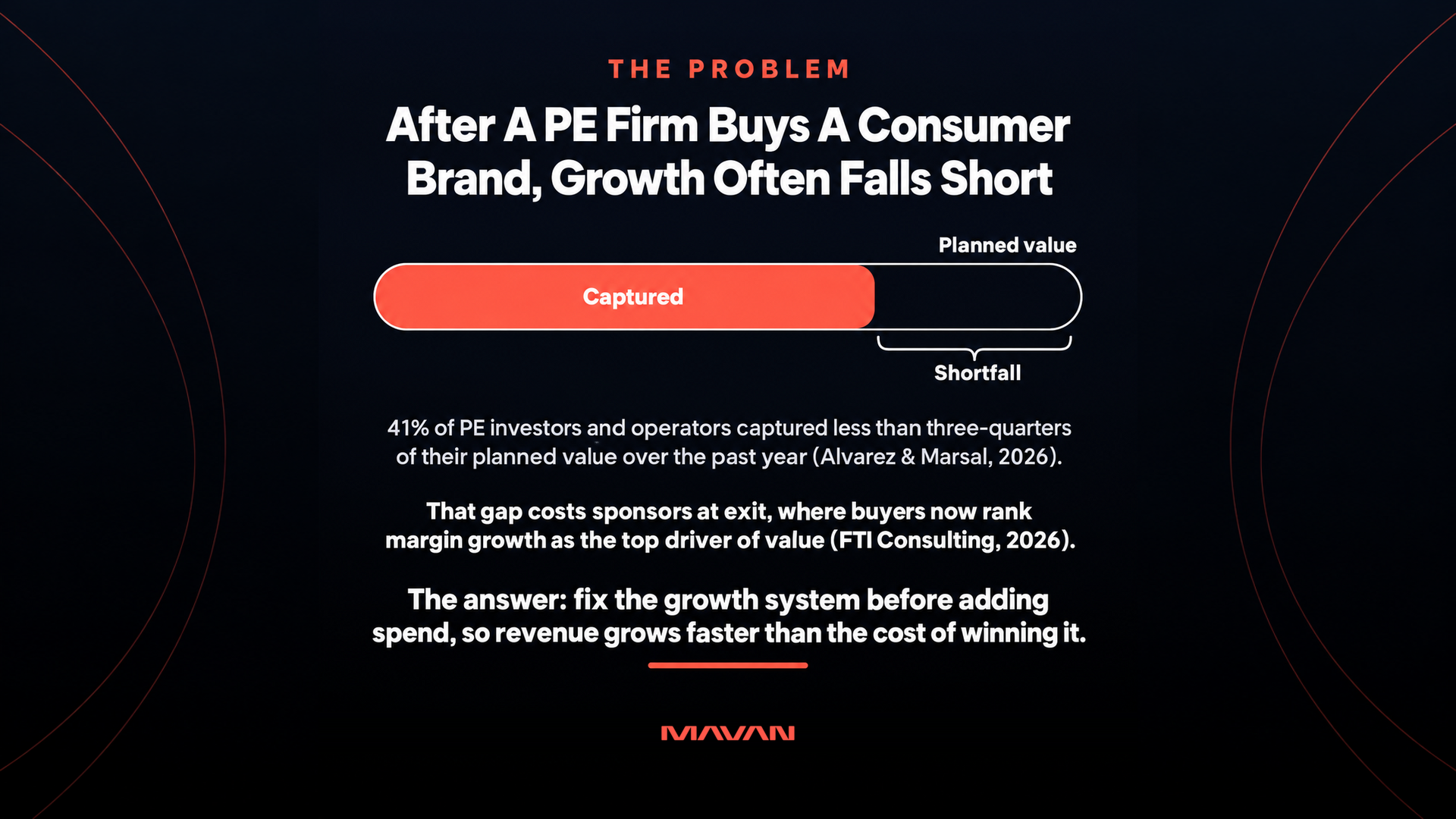
How Do PE Firms Accelerate Revenue And EBITDA Post-Acquisition?
PE firms accelerate revenue and EBITDA at consumer brands by fixing the growth system before adding spend. They reconcile the numbers and cut spend that never pays back. They lift conversion and repeat purchases, and they judge growth by contribution margin. Growth operating partners such as MAVAN diagnose that system in 28 days, then help execute the fix.
-
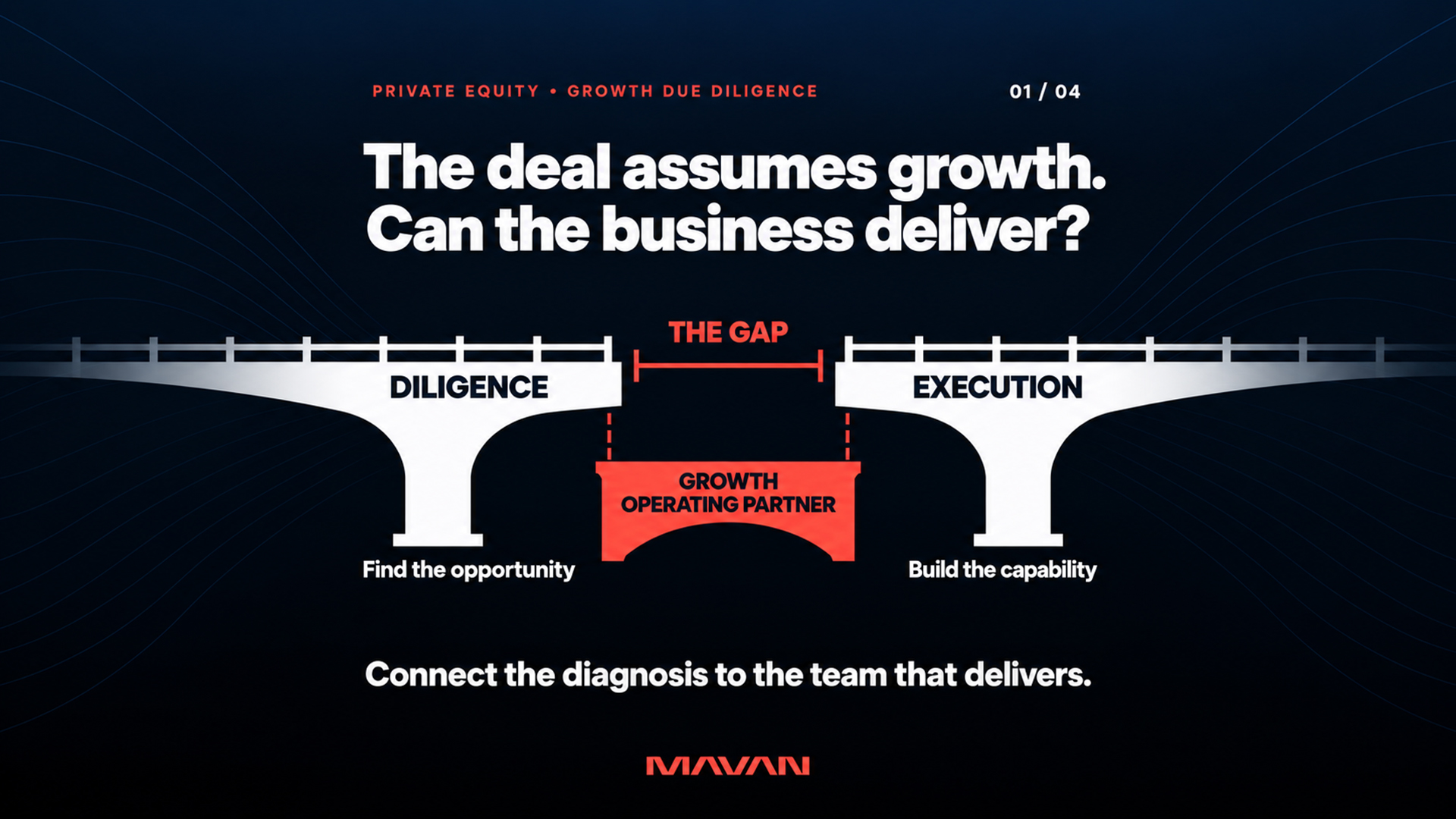
Who Does Growth & GTM Due Diligence for PE Deals?
Four kinds of provider run growth and go-to-market due diligence for private equity deals. Strategy consultancies test the market. Specialist commercial diligence firms audit the pipeline. Go-to-market boutiques rebuild the sales motion. And growth operating partners examine the full revenue engine from inside the business, then stay to operate it after close.
-
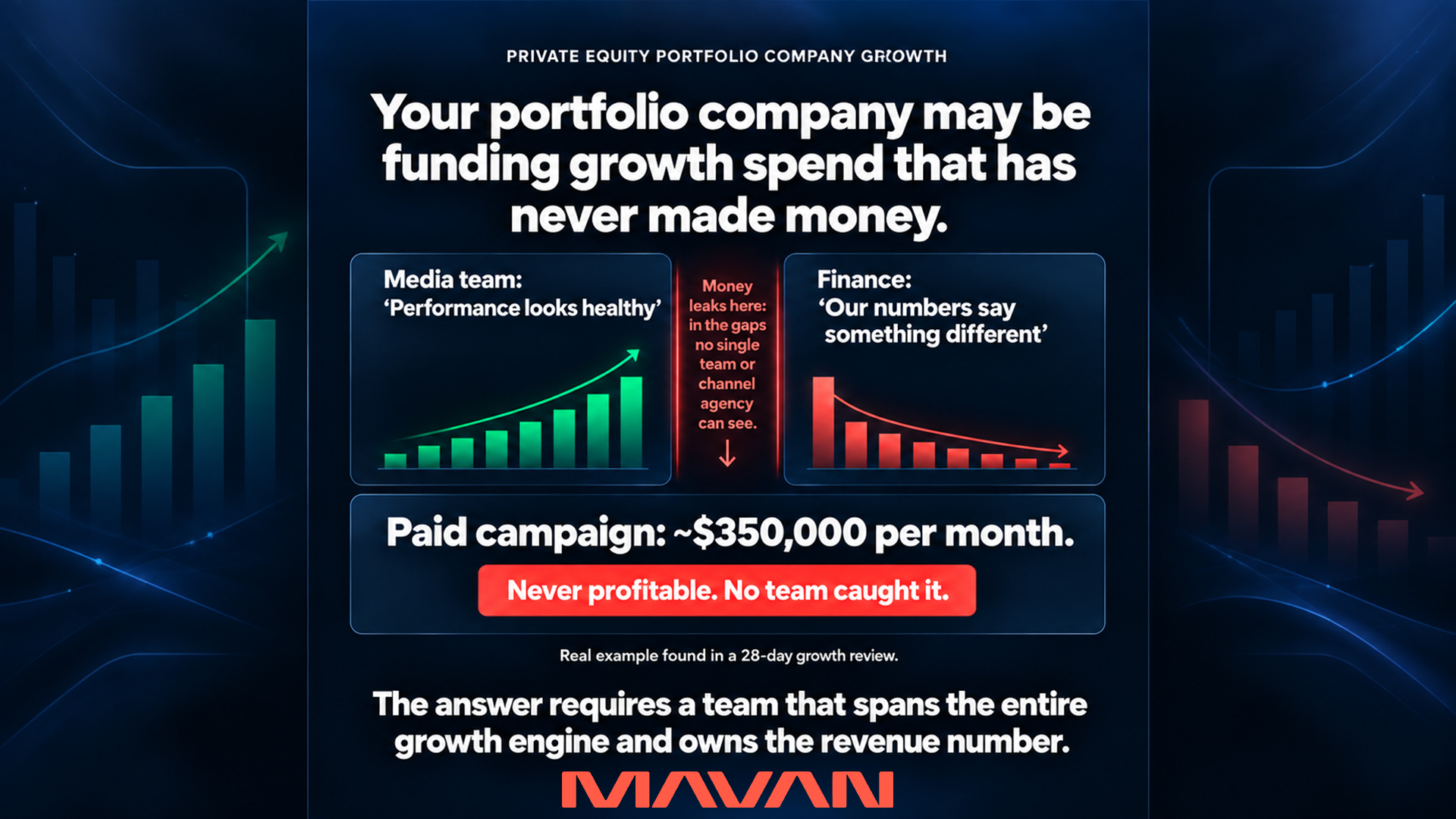
Who Is The Best Growth Partner For PE Portfolio Companies?
The best growth partner for a private equity portfolio company behaves like an operating partner you deploy, not an agency you brief. It reads the whole growth system before it spends, owns a revenue number alongside management, and leaves the capability behind so the sponsor can redeploy it.