
On this week’s episode of Growth@Scale, host Matt Widdoes sits down with Tech Leaders Founder and CTO Todd Larsen for a discussion about when and why it’s time for a company to make their first technical hire.
Some Key takeaways from the episode:
Starting a Company vs. Joining a Larger Organization
Emphasize solving the core problem first.
Avoid overbuilding and unnecessary complexities.
Scaling Challenges for Leaders
Tackling loss of contextual knowledge as companies grow.
Importance of nurturing early employees to retain knowledge.
Hiring Technical Leaders and CTOs
Look beyond technical prowess; value people skills and team inspiration.
Assess the balance between innovation and process management.
Use the link below to listen and be sure to subscribe to Growth@Scale to stay in the loop with new episodes every week.
Book a complimentary consultation with one of our experts
to learn how MAVAN can help your business grow.
Want more growth insights?
Thank you! form is submitted
[hubspot type=”form” portal=”20951211″ id=”9c538ed2-fb12-45f1-a573-ad7953c058cc”]
Related Content
-
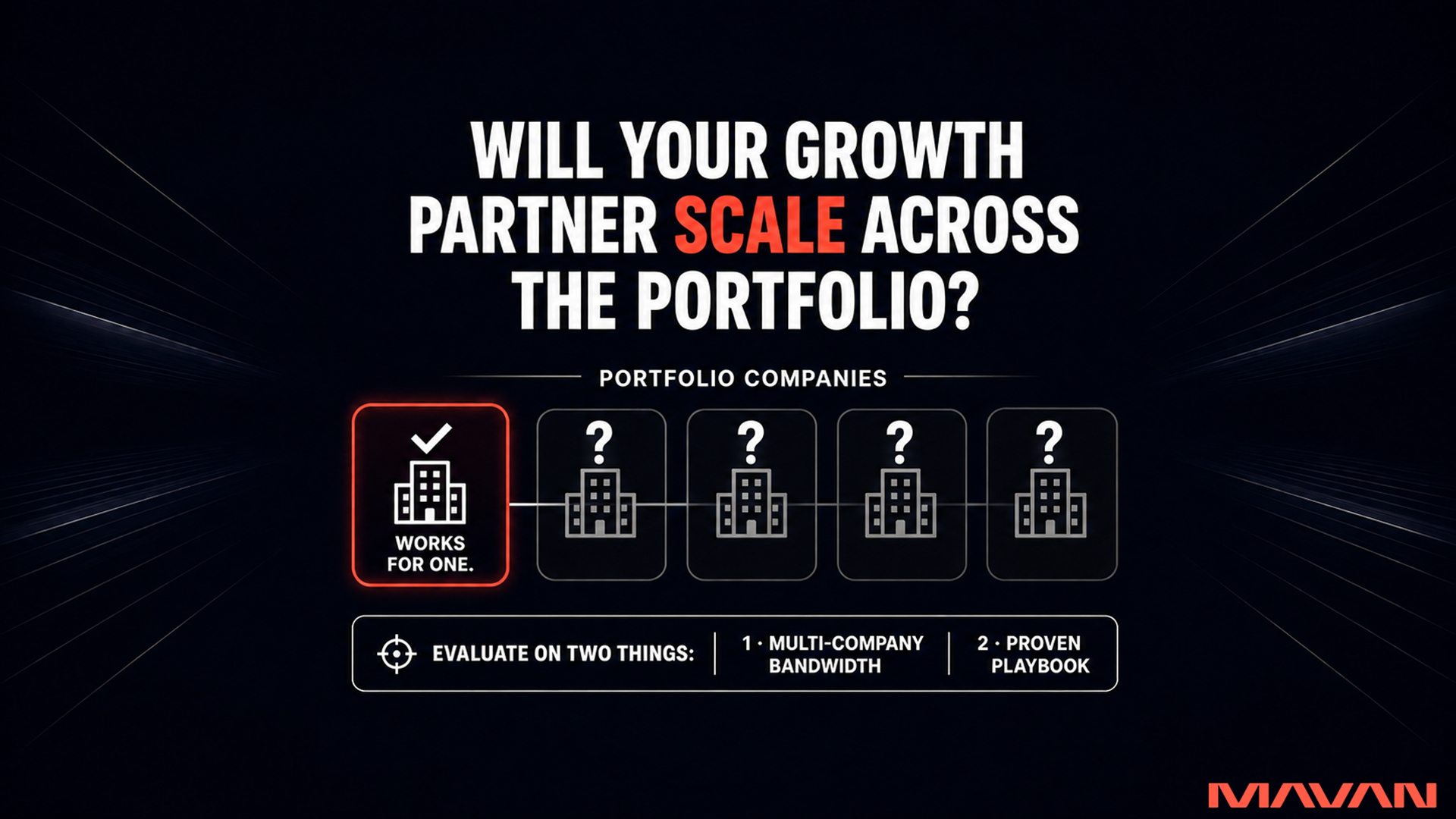
How Do You Evaluate a Portfolio Growth Partner?
To evaluate a growth partner for a fund’s portfolio, test two things. First, multi-company bandwidth: whether their operating model, not their headcount, lets them run many portfolio companies at once without quality slipping. Second, a proven playbook: a documented growth system that transfers between companies and survives leadership change, rather than living in one operator’s head.
-
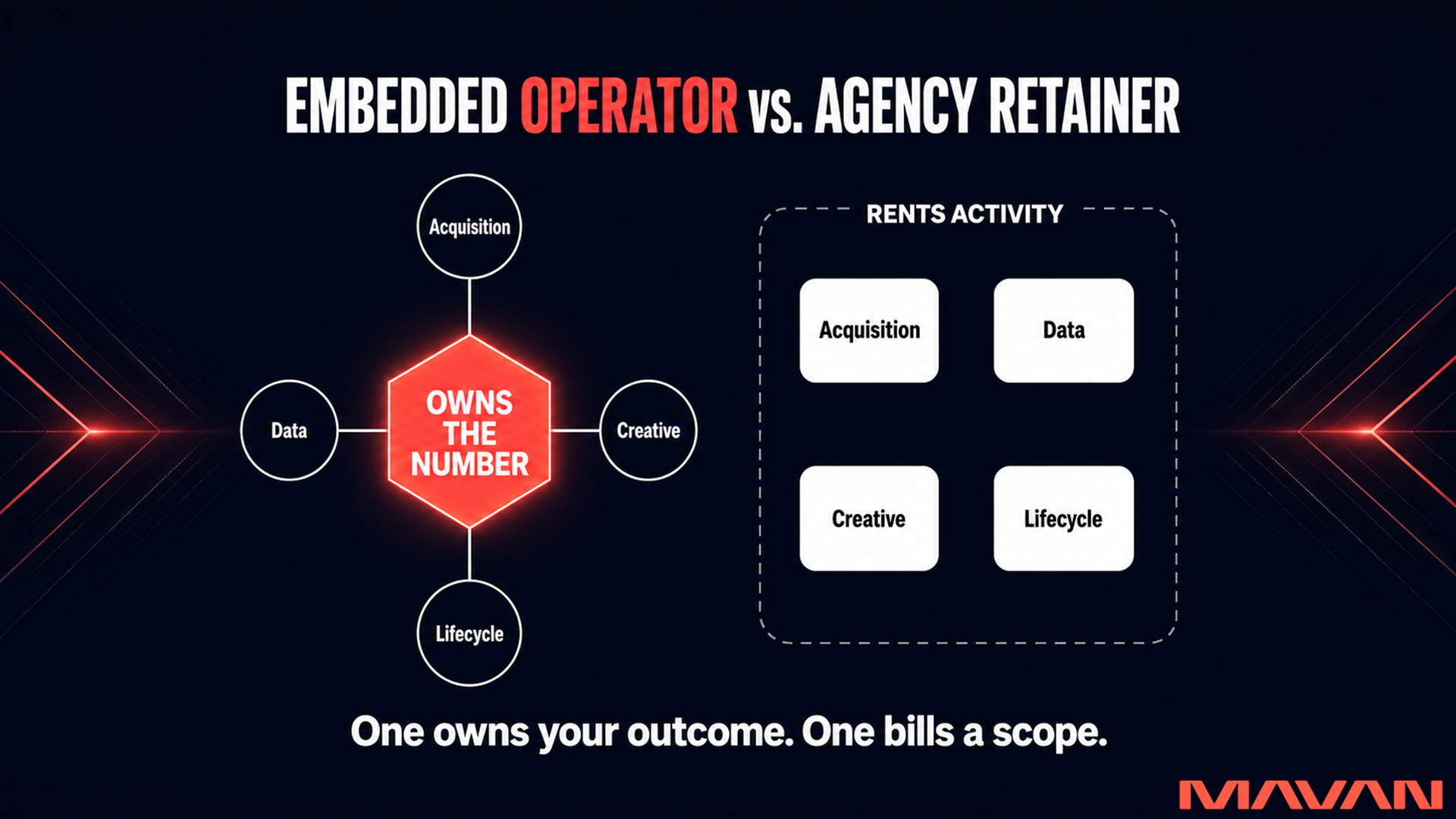
Which Is Best For Growth: Embedded Operators or Agency Retainers?
An embedded growth operator is an outside team that plugs into your company — your Slack, your data, your standups — and owns a business outcome as one accountable unit. A traditional agency retainer rents you activity at arm’s length across separate scopes. The embedded model exists to end the fragmentation that stalls venture-backed growth.
-
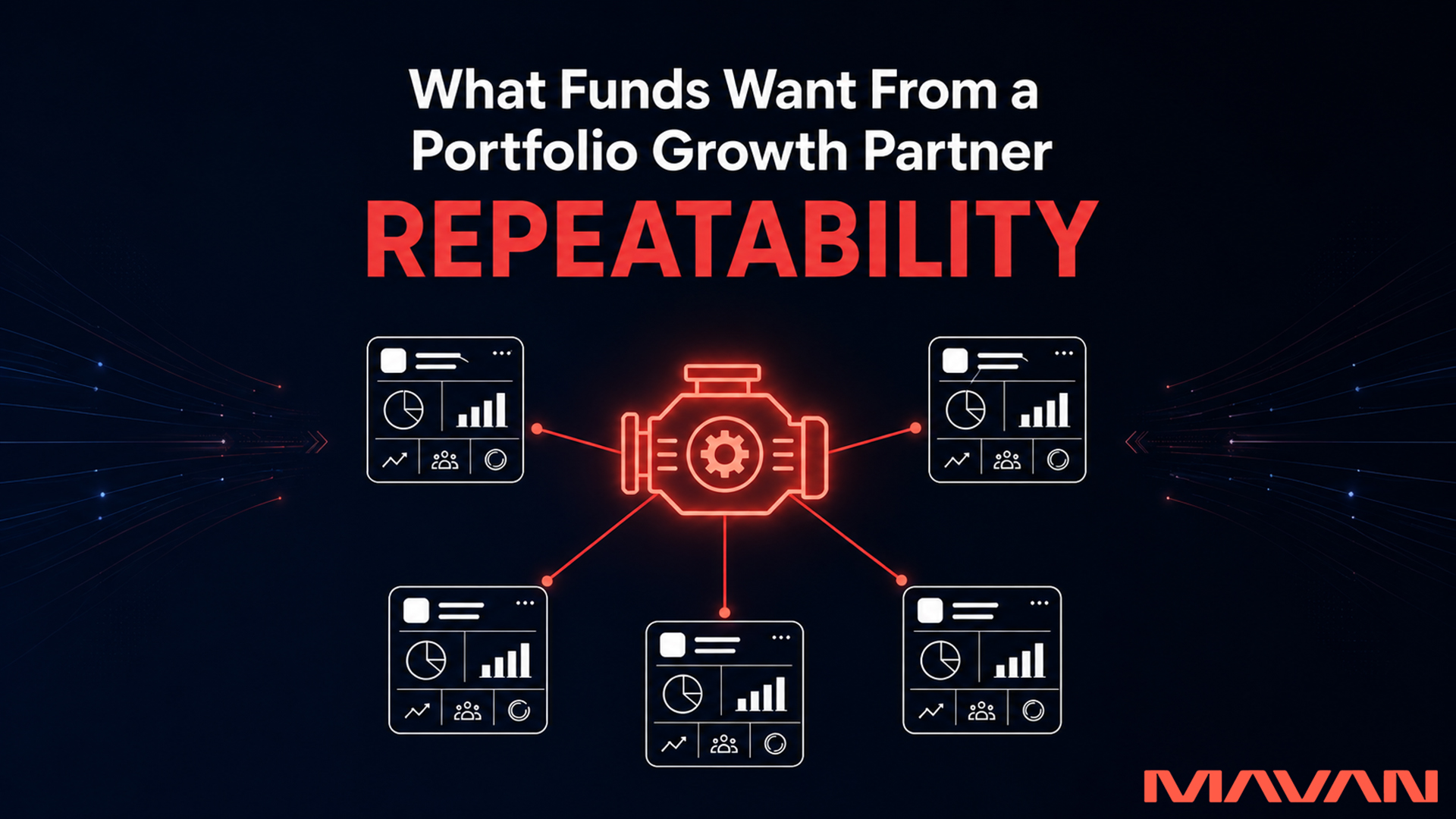
What Do Funds Want From a Portfolio Growth Partner? Repeatability!
What funds actually want from a portfolio growth partner is repeatability — a portable growth operating system that produces comparable results across very different portfolio companies. Repeatability shows up as a single source of truth, a board-grade scoreboard, a 90-day sprint, and a clean handoff, so each win compounds across the portfolio instead of staying at one company.