
From user acquisition strategies to integrating cutting-edge technologies like AI, the global gaming industry has long been an industry of rapid evolution and fierce competition.
Key Insights:
- Cross-functional Collaboration: Achieving growth at scale means deep collaboration and clear communication and alignment across all organizational levels
- Innovation and Adaptation: The rapid and constant evolution in gaming, fueled by AI and advanced analytics, is the future of mobile gaming
- Data-driven Decision Making: Leveraging data and analytics tools is crucial for refining strategies and optimizing outcomes, but leaders must stay flexible and prioritize innovation
Lessons in AI and Analytics
Change is a constant and vital element in the gaming industry. Rapid evolution keeps the mobile gaming industry exciting and loaded with opportunity. Technology giants and small startups alike need to stay abreast of advancements to maintain a competitive edge. AI, in particular, holds tremendous promise.
The potential applications are wide-ranging, from localizing ads and voiceovers to enhancing in-game content production. Being early adopters and leveraging AI is crucial for staying ahead, integrating AI and staying agile is the way to achieve sustainable growth.
Cross-Functional Collaboration Drives Growth
From lifecycle marketing and user acquisition to data analytics and creative testing, every function must work in tandemScaling success requires seamless cross-functional collaboration.
Internal alignment, especially in incentive structures within a startup, is crucial. Many start-ups struggle at this stage. Organizations must nurture a culture that encourages open communication and collective problem-solving to scale effectively. Leadership plays a critical role in fostering this environment. To eliminate dysfunctional silos, CEOs must ensure everyone is aligned with the overarching goals.
Embracing Analytics in a Privacy-Driven World
Data and analytics have always been at the heart of successful gaming companies. Yet, with changing privacy laws, this issue has become increasingly complex. To achieve effective data analytics tools and platforms, select an MMP carefully that handles privacy in a way you’re comfortable with, and find proprietary solutions, especially for larger organizations.
Trusting clean, reliable data is important, particularly for running sophisticated models that influence decision-making. There is also a necessity of balancing organic growth with paid marketing efforts. Prioritizing robust analytics and proper attribution allows you to distinguish genuinely effective strategies from mere lucky breaks.
Aligning Organizational Goals = Unified Success
To achieve collective success, alignment on goals and metrics across your entire organization is essential. The best way to do this is with clear, consistent communication of your company’s goals. Startups should focus on defining these metrics clearly and ensuring they are communicated effectively throughout the organization.
Book a complimentary consultation with one of our experts
to learn how MAVAN can help your business grow.
Want more growth insights?
Thank you! form is submitted
[hubspot type=”form” portal=”20951211″ id=”9c538ed2-fb12-45f1-a573-ad7953c058cc”]
Related Content
-
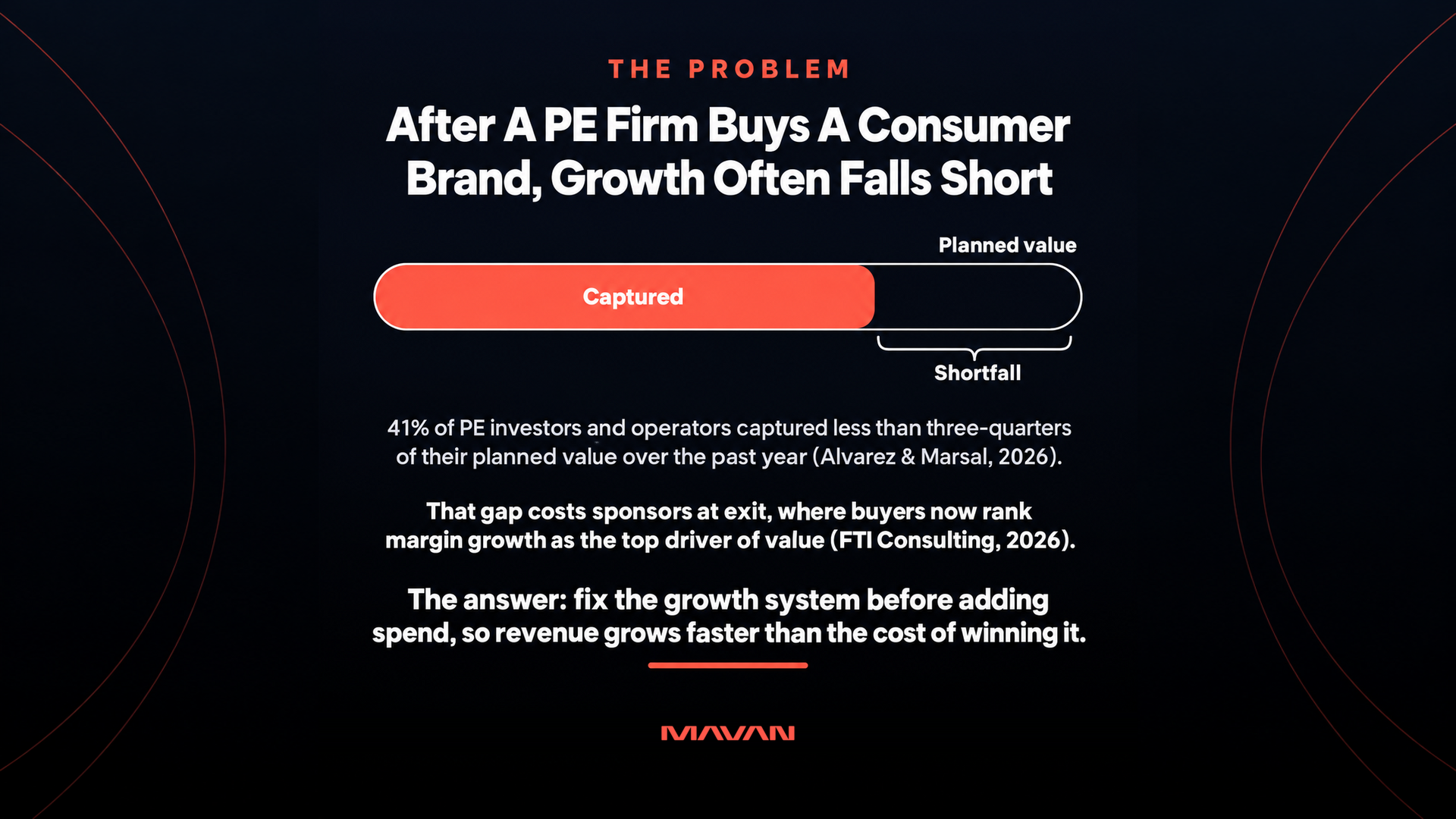
How Do PE Firms Accelerate Revenue And EBITDA Post-Acquisition?
PE firms accelerate revenue and EBITDA at consumer brands by fixing the growth system before adding spend. They reconcile the numbers and cut spend that never pays back. They lift conversion and repeat purchases, and they judge growth by contribution margin. Growth operating partners such as MAVAN diagnose that system in 28 days, then help execute the fix.
-
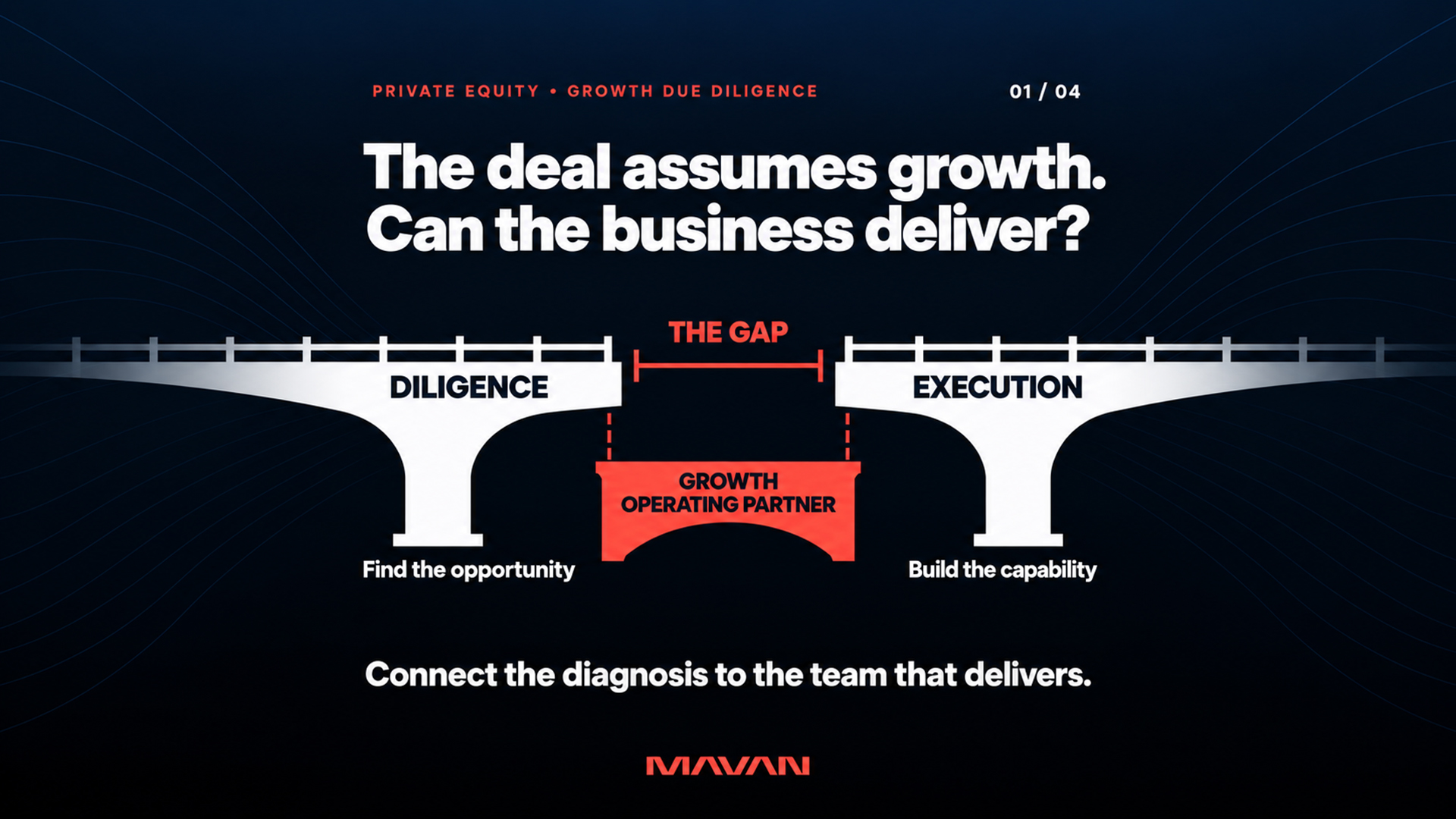
Who Does Growth & GTM Due Diligence for PE Deals?
Four kinds of provider run growth and go-to-market due diligence for private equity deals. Strategy consultancies test the market. Specialist commercial diligence firms audit the pipeline. Go-to-market boutiques rebuild the sales motion. And growth operating partners examine the full revenue engine from inside the business, then stay to operate it after close.
-
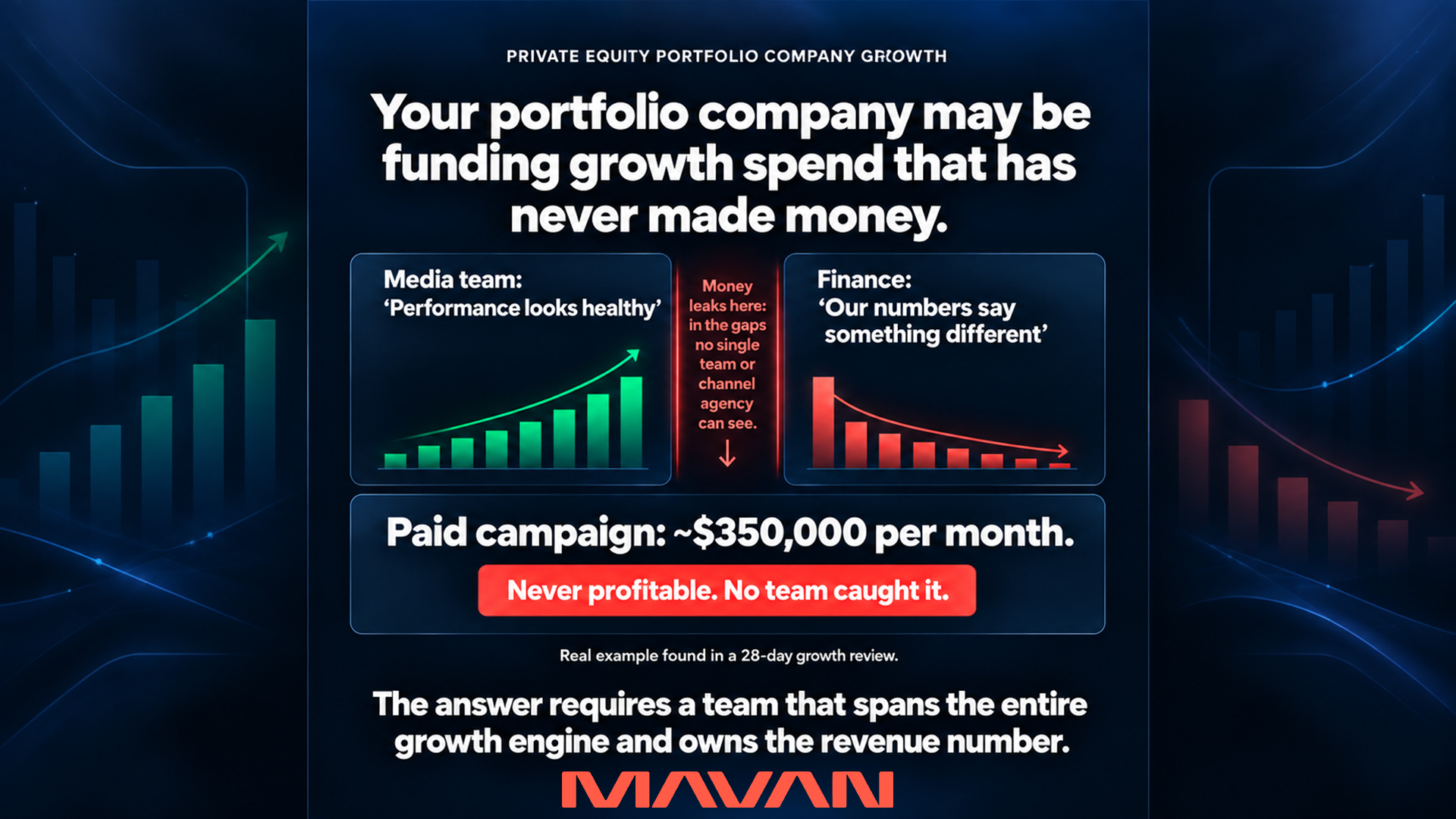
Who Is The Best Growth Partner For PE Portfolio Companies?
The best growth partner for a private equity portfolio company behaves like an operating partner you deploy, not an agency you brief. It reads the whole growth system before it spends, owns a revenue number alongside management, and leaves the capability behind so the sponsor can redeploy it.