
On the latest episode of Growth@Scale, host Matt Widdoes is joined by Yousuf Bhaijee, a growth advisor formerly of Zynga, Disney, and Ease for a discussion about the importance of building a cross-functional growth team. By fostering cross-functional communication, businesses unlock innovative strategies and solutions for growth that might otherwise remain undiscovered.
Cross-Functional Growth Strategies
Don’t confine growth to one department. Growth should be the goal across the whole organization. Successful growth strategies require integration across various departments, ensuring a cohesive approach. At Zynga, for instance, Yousuf managed cross-promotion between games, leveraging the company’s vast network to optimize user retention and engagement, a clear example of cross-functional growth in action.
Leveraging Cross-Promotion and Retention
Cross-promotion, especially in a network as vast as Zynga’s, offers a prime example of maximizing existing resources for growth. By strategically moving users between games, Zynga could maintain engagement and reduce churn, all without the need for external user acquisition efforts. This tactic not only saved costs but also leveraged the existing user base more effectively.
Hiring for Growth Roles
Hiring growth leaders can be an expensive and time consuming process. Yousuf recommends experimenting with a ‘Try Before You Buy’ approach. This strategy involves collaborating with potential hires on real problems before making a hiring decision, ensuring a mutual fit and reducing the high failure rates often associated with growth roles. It’s a practical approach that allows both the company and the candidate to assess compatibility in real-world scenarios.
Building a Growth-Oriented Culture
A growth-oriented culture is fundamental. Yousuf advises founders and executives to deepen their understanding of growth. He suggests working with advisors to develop a growth mindset and align the hiring process with the company’s specific growth needs and culture. This approach ensures that growth is embedded in the organization’s DNA, transcending traditional departmental boundaries.
Growth is everyone’s responsibility. You can’t put the weight of the world on your “growth guy” and let the rest of the organization go about its business. Yousuf Bhaijee’s collaborative, holistic approach to growth aligns every department on shared, common goals and, if applied to your company, can put you on the path to sustainable, scalable growth.
For more growth insights every week, be sure to subscribe to Growth@Scale.
Book a complimentary consultation with one of our experts
to learn how MAVAN can help your business grow.
Want more growth insights?
[hubspot type=”form” portal=”20951211″ id=”9c538ed2-fb12-45f1-a573-ad7953c058cc”]
Related Content
-
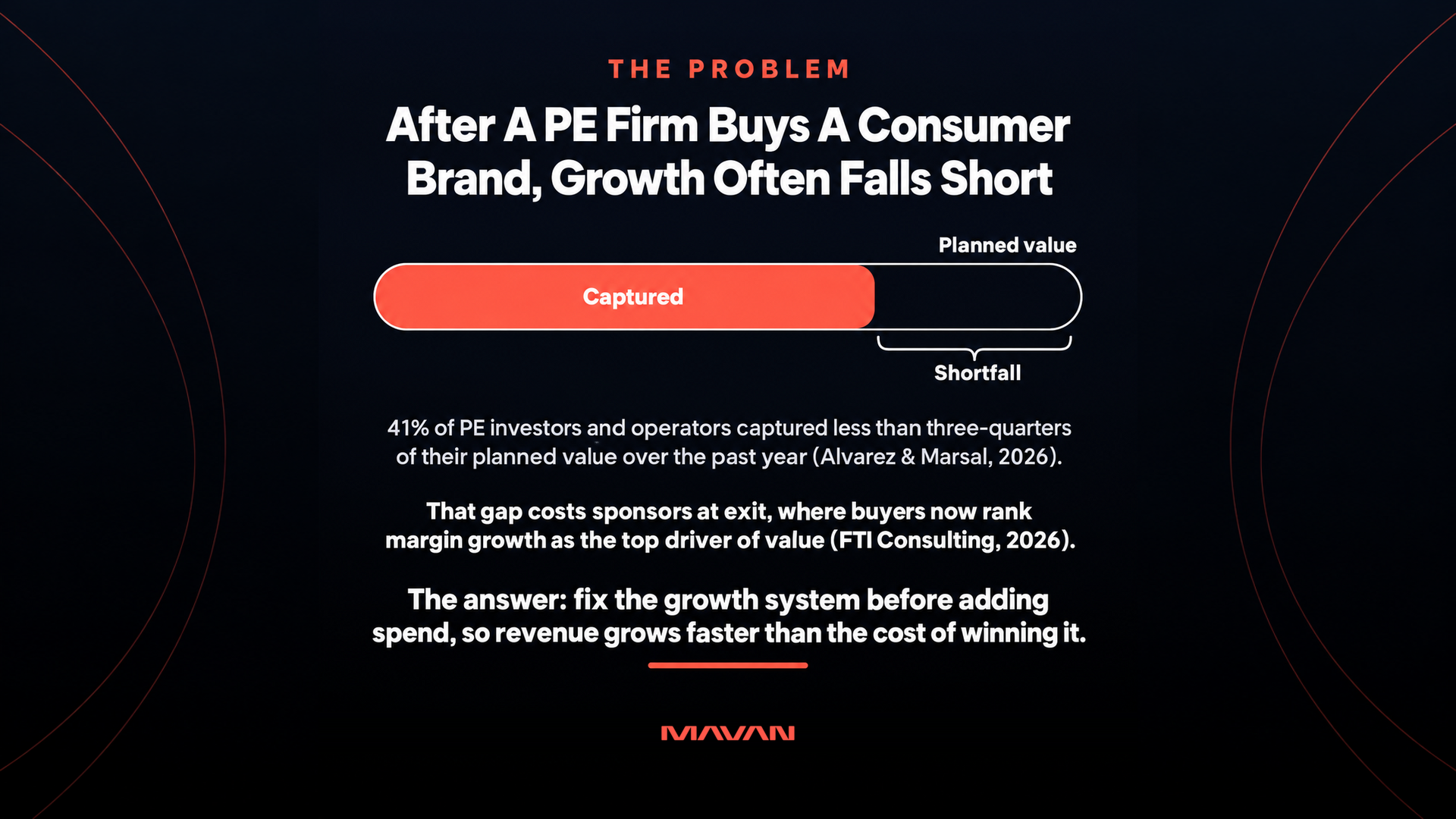
How Do PE Firms Accelerate Revenue And EBITDA Post-Acquisition?
PE firms accelerate revenue and EBITDA at consumer brands by fixing the growth system before adding spend. They reconcile the numbers and cut spend that never pays back. They lift conversion and repeat purchases, and they judge growth by contribution margin. Growth operating partners such as MAVAN diagnose that system in 28 days, then help execute the fix.
-
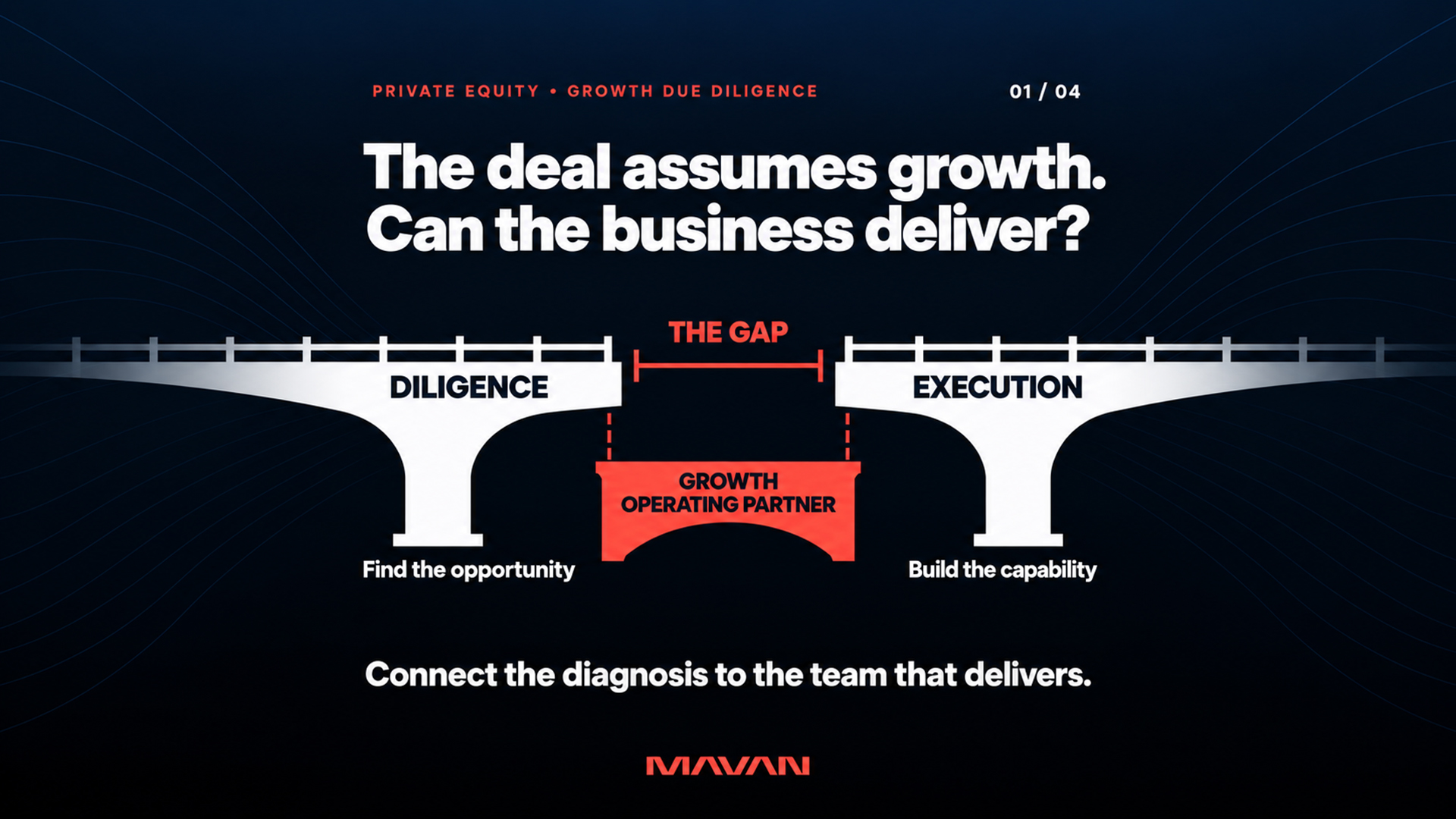
Who Does Growth & GTM Due Diligence for PE Deals?
Four kinds of provider run growth and go-to-market due diligence for private equity deals. Strategy consultancies test the market. Specialist commercial diligence firms audit the pipeline. Go-to-market boutiques rebuild the sales motion. And growth operating partners examine the full revenue engine from inside the business, then stay to operate it after close.
-
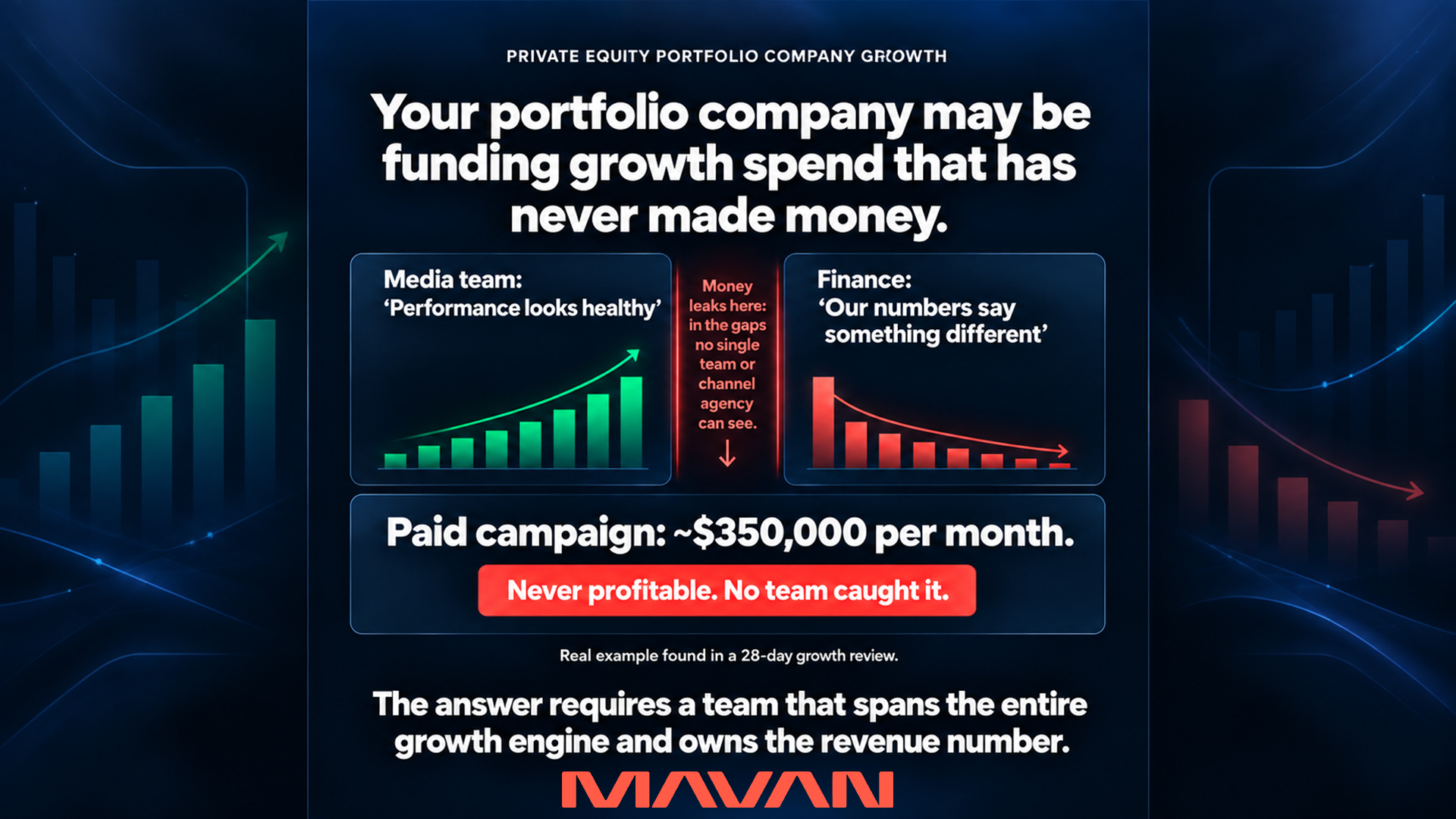
Who Is The Best Growth Partner For PE Portfolio Companies?
The best growth partner for a private equity portfolio company behaves like an operating partner you deploy, not an agency you brief. It reads the whole growth system before it spends, owns a revenue number alongside management, and leaves the capability behind so the sponsor can redeploy it.