
Cybersecurity has become a cornerstone of sustainable business growth. On the latest episode of Growth@Scale, CISO and cybersecurity expert Khelan Bhatt gives an in-depth look into the vital role cybersecurity plays within organizations of any size. From startups to giants, it’s a universal concern that can drive or derail success.
Key Takeaways:
- Cybersecurity from Day One: Even at inception, businesses must consider the importance of data protection and threat detection.
- Growth and Security Interplay: Security considerations must align with company vision, strengthening trust and establishing long-term resilience.
- Role Evolution and Preparedness: As companies scale, the role of cybersecurity evolves, necessitating a proactive rather than reactive approach.
The Inception of Cybersecurity in Startups
Startups often view cybersecurity as a luxury exclusively reserved for larger organizations. However, Khelan Bhatt emphasizes the critical need for early consideration of security measures. In early stage companies, the onus is on the founder or the CTO to establish the groundwork for data protection and threat management.
As a startup grows, security needs become more complex and integral to company health. This requires delineating clear responsibilities and adopting security frameworks, such as the NIST Cybersecurity Framework, as Bhatt discusses. By implementing security protocols from the onset, startups not only protect themselves from potential threats but also lay the foundation for scalable growth.
“So a CISO’s role is really to be the top person at an organization responsible for information security… The technology part is a little easier. It’s the culture and the people, which is always harder.” – Khelan Bhatt
As inherent as it is to have robust financial and operational plans, startups must treat cybersecurity with equal importance. Leaving the door open to cyber-attacks can lead to significant business disruptions, loss of customer trust, and hampered growth trajectories.
Security as a Growth Catalyst
The interplay between security measures and growth potential is often underestimated. Bhatt points out that with the rise of cyber-attacks and increased media coverage, ensuring customer data protection has become not just essential to avoid pitfalls but a distinct competitive advantage. For companies in hyper-growth mode, reaching scale amplifies the ramifications of a security breach.
Investing in security infrastructure can be a differentiator for customers and can even enable new business models. Features like single sign-on and role-based access control can accelerate partnerships and sales cycles—revealing how security efforts contribute to the overall growth narrative.
“Think about security as a feature to increase the speed of business and let you operate at what I call the speed of trust.” – Khelan Bhatt
For CEOs who have their sights set on rapid expansion, integrating top-tier security measures is a strategic move, underpinning trust and smoothing out the pathway to scale.
Cybersecurity as an Ongoing Strategy
Discussing the evolution of the cybersecurity role in organizations, Bhatt advises on the importance of iterative assessments and alignment with the company’s mission and scope. He suggests this approach should be consistent with other long-term growth strategies, such as product, marketing, and customer success.
The growth journey involves regular audits and updates to keep pace with an evolving threat landscape. Forward-thinking companies do not settle for static measures; they vigilantly adapt their cybersecurity strategies in stride with their development.
“I think the answer is, pick a standard. Start with that, because lots of people have thought about the different pillars of security, the different controls, and then just map that to your business.” – Khelan Bhatt
Cybersecurity is not a one-time checkbox but an integral part of the company’s DNA, evolving with every product iteration, market expansion, or strategic pivot. It’s dynamic, reflecting the agility of the organization it protects.
From incorporating security into initial business strategies to integrating it as a unique market offering and maintaining diligence as the company scales, cybersecurity is non-negotiable. Security is more than a safeguard—it’s a workforce behind the scenes, ensuring the company’s march towards success is undeterred by the digital world’s ever-present threats.
Book a complimentary consultation with one of our experts
to learn how MAVAN can help your business grow.
Want more growth insights?
Thank you! form is submitted
[hubspot type=”form” portal=”20951211″ id=”9c538ed2-fb12-45f1-a573-ad7953c058cc”]
Related Content
-
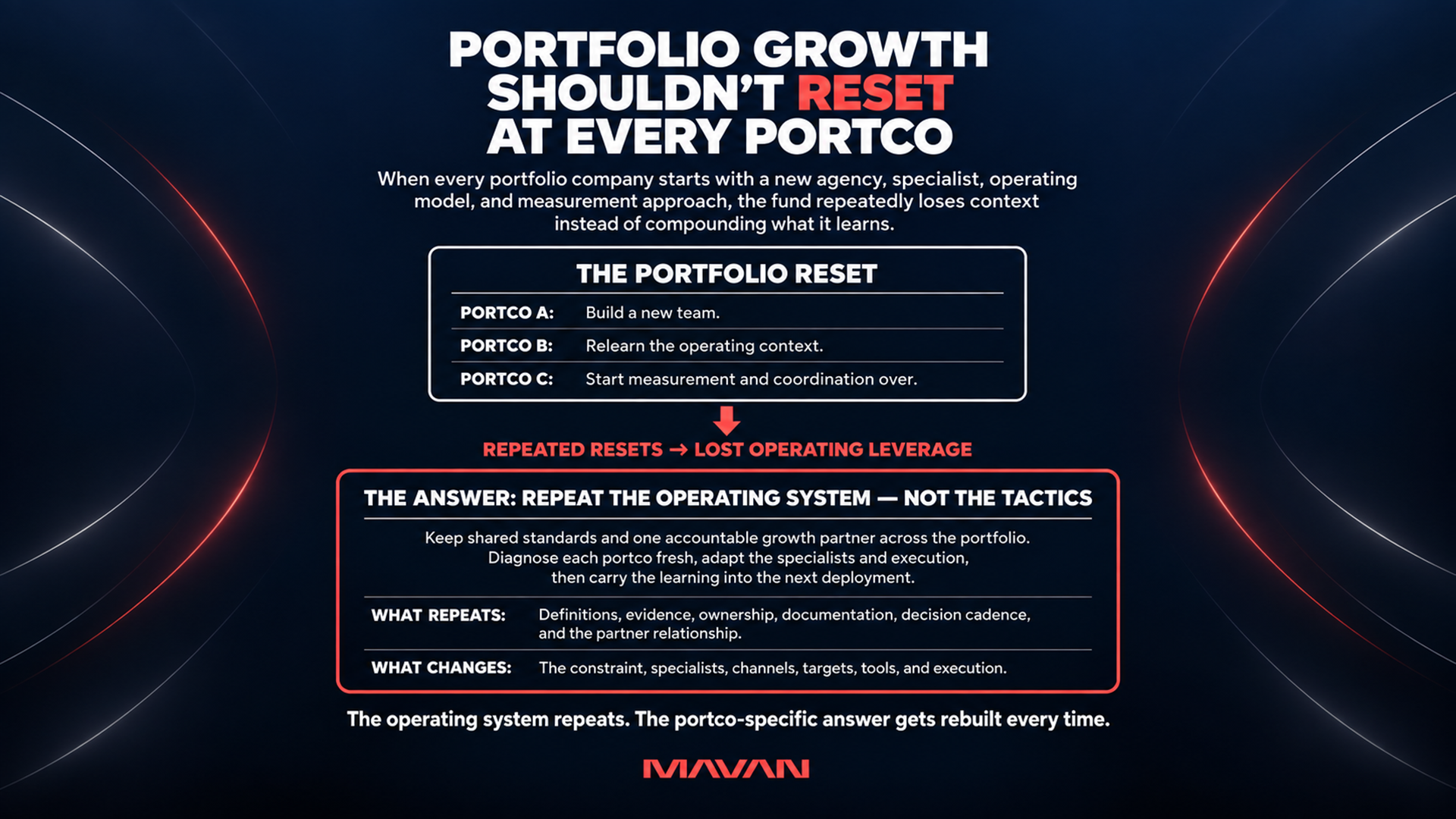
How Can Private Equity Funds Repeat Growth Across Portfolio Companies?
Growth becomes repeatable across a VC or PE portfolio when the fund installs one operating system instead of referring each company to a different specialist. The system has three parts: a single source of truth every team trusts, a board-ready scoreboard of ten to twelve metrics, and an embedded pod that diagnoses the real constraint in ninety days before anyone spends more.
-
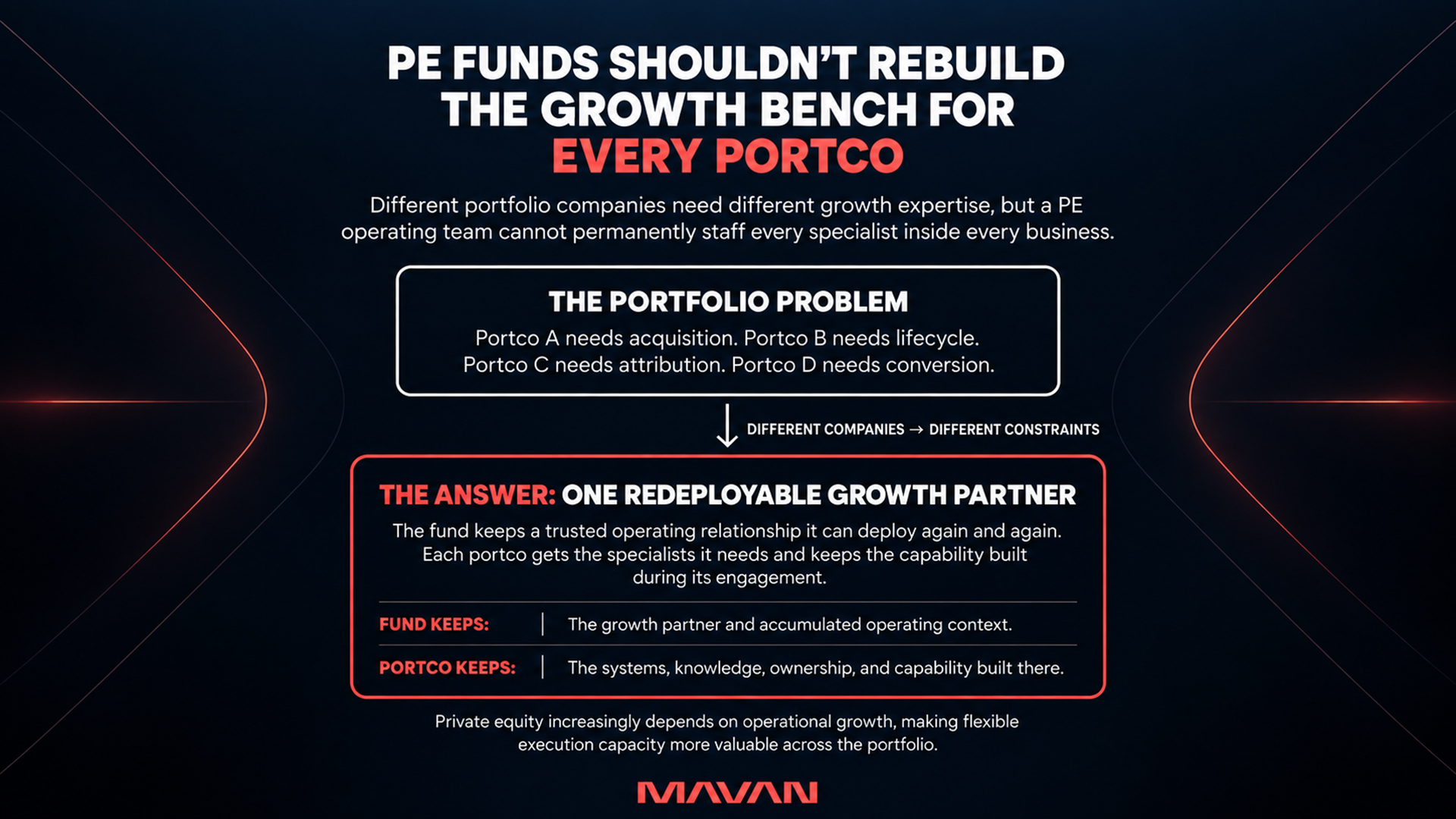
What Do PE Funds Want From a Portfolio Growth Partner? Repeatability!
What funds actually want from a portfolio growth partner is repeatability — a portable growth operating system that produces comparable results across very different portfolio companies. Repeatability shows up as a single source of truth, a board-grade scoreboard, a 90-day sprint, and a clean handoff, so each win compounds across the portfolio instead of staying at one company.
-
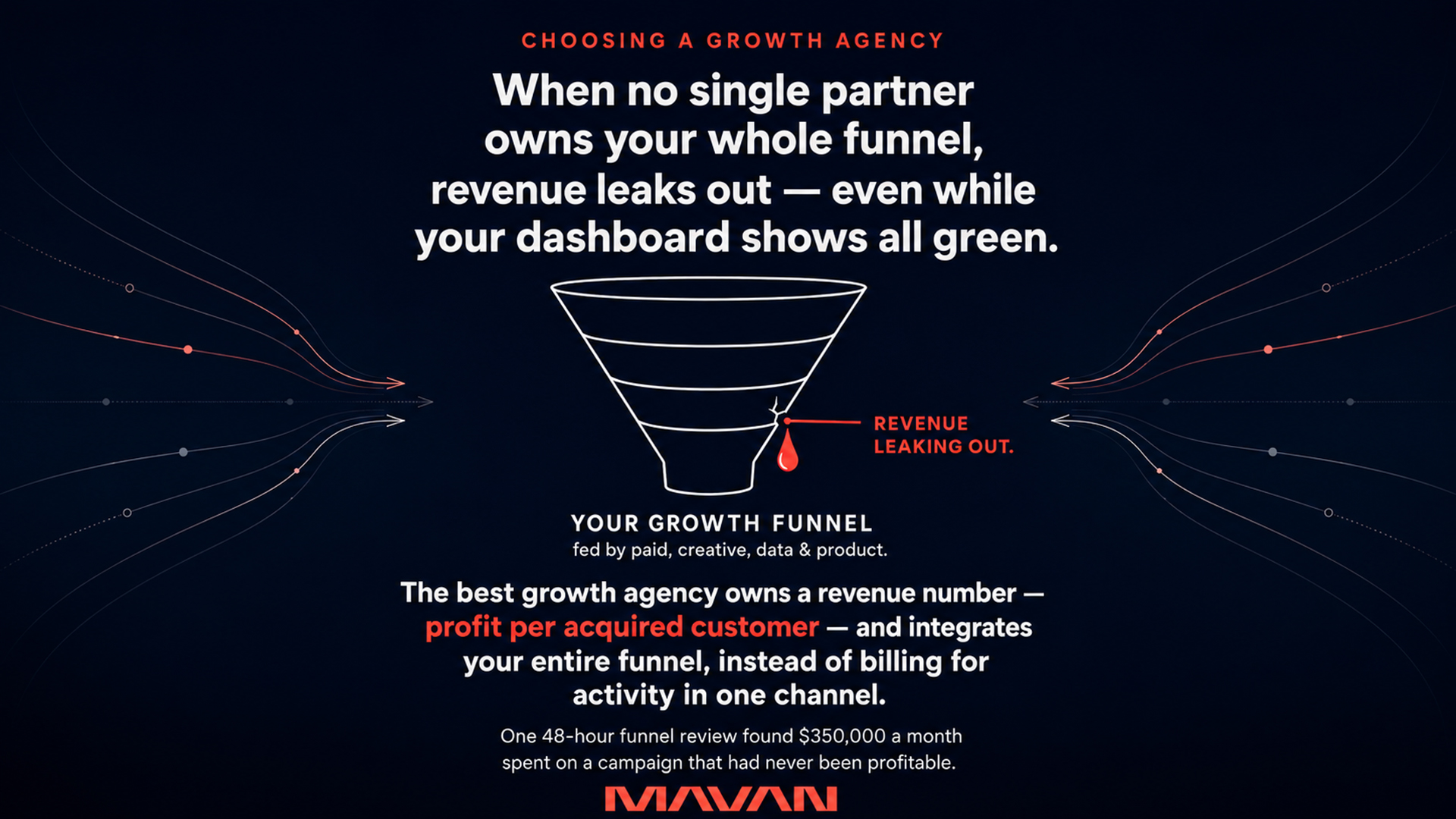
What’s the Best Growth Agency For VC & PE?
The best growth agency for a venture-backed or PE-owned company behaves less like a traditional agency and more like an embedded operating partner. It diagnoses your whole funnel, owns a revenue number such as CAC payback or LTV:CAC, and executes inside your team — rather than billing for activity in one channel.