
This week on Growth@Scale, Matt Widdoes is joined by Jeremy Leal, Founder of Helen Agency and experiential marketing expert. Jeremy talks about how the innovative marketing tactics he learned at Red Bull can apply to other industries.
Jeremy stresses that the key to effective experiential marketing is to create memorable moments through one-on-one interactions. That may be hosting an event that surprises and delights the unsung heroes working back of house at a night club, or dressing up your sales reps as FedEx drivers to make surprise deliveries at 1am to exhausted doormen. Whatever you can do to create a memorable experience for the people both using or selling your product will go a long way.
Listen at the link below and subscribe to Growth@Scale to stay in the loop with new episodes every week.
Book a complimentary consultation with one of our experts
to learn how MAVAN can help your business grow.
Want more growth insights?
Thank you! form is submitted
[hubspot type=”form” portal=”20951211″ id=”9c538ed2-fb12-45f1-a573-ad7953c058cc”]
Related Content
-
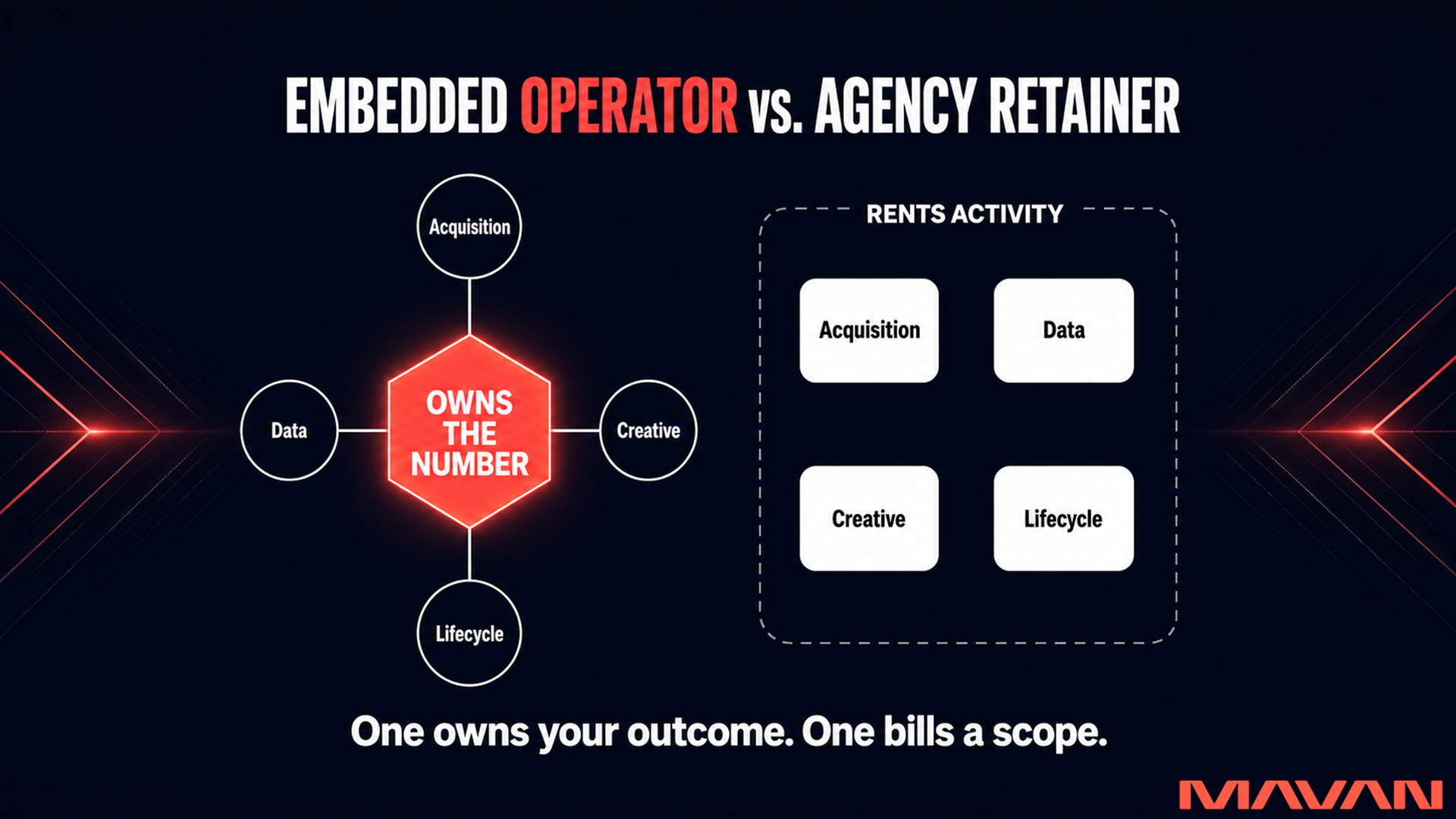
Which Is Best For Growth: Embedded Operators or Agency Retainers?
An embedded growth operator is an outside team that plugs into your company — your Slack, your data, your standups — and owns a business outcome as one accountable unit. A traditional agency retainer rents you activity at arm’s length across separate scopes. The embedded model exists to end the fragmentation that stalls venture-backed growth.
-
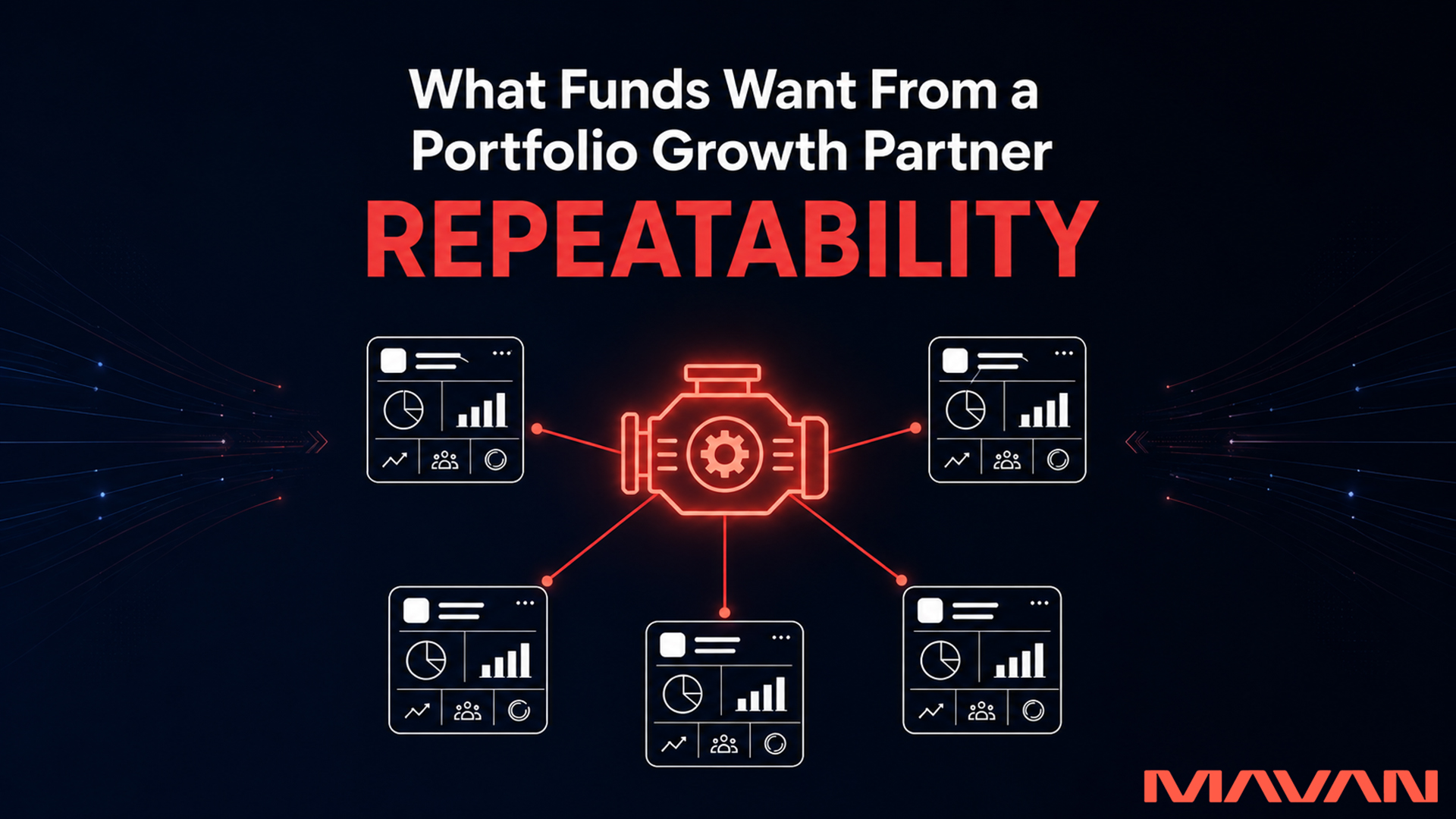
What Do Funds Want From a Portfolio Growth Partner? Repeatability!
What funds actually want from a portfolio growth partner is repeatability — a portable growth operating system that produces comparable results across very different portfolio companies. Repeatability shows up as a single source of truth, a board-grade scoreboard, a 90-day sprint, and a clean handoff, so each win compounds across the portfolio instead of staying at one company.
-
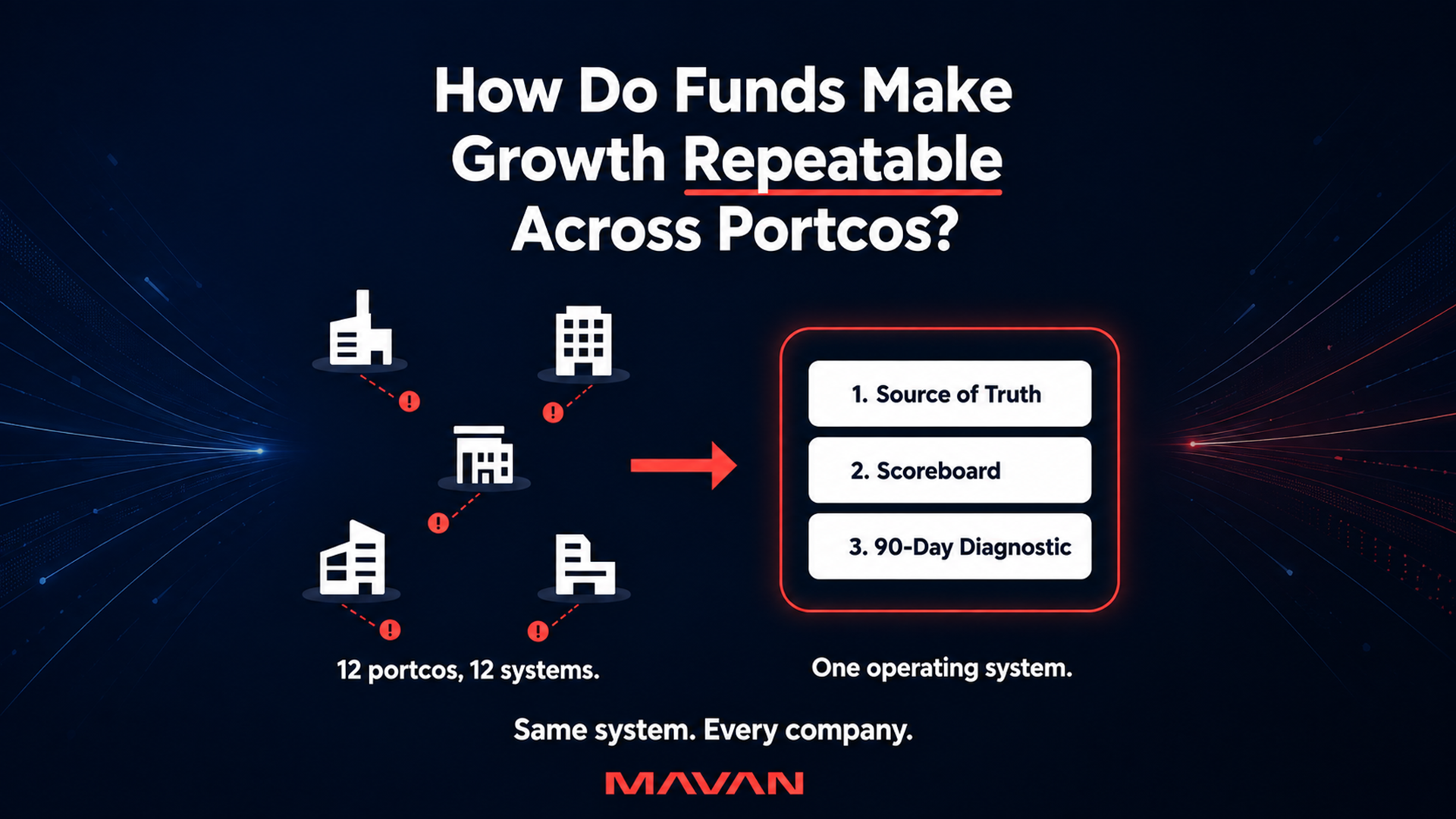
How Can VC And PE Funds Repeat Growth Across Portfolio Companies?
Growth becomes repeatable across a VC or PE portfolio when the fund installs one operating system instead of referring each company to a different specialist. The system has three parts: a single source of truth every team trusts, a board-ready scoreboard of ten to twelve metrics, and an embedded pod that diagnoses the real constraint in ninety days before anyone spends more.