
Key Takeaways:
- Achieve’s Unique Journey: How to navigate the complexities of fintech without external funding
- Consumer-Centric Financial Solutions: How Achieve personalizes its offerings to combat inefficiencies in consumer finance
- Harnessing AI and Data for Better Financial Health: How emerging technologies are reshaping fintech and consumer experiences
Achieve’s Bootstrap Journey: Navigating Financial Scalability
Many fintech startups rely heavily on venture capital to drive their early phases and expansion. Achieve is a testament to what can be accomplished through disciplined market exploration and a commitment to organic growth. With proper due diligence, you can actually carve out a significant portion of the market without external funding.
Thorough market analysis and understanding inefficiencies within the value chain will ensure you have the right product fit before scaling.Taking a methodical approach lays the groundwork for success – because the greatest opportunities often come from meticulously validated ideas rather than quick-win strategies.
Battling Inefficiencies to Find Consumer-Centric Financial Solutions
A successful business model centers around addressing inefficiencies in consumer finance. Realizing that many consumers are underserved by traditional banks, fintech companies like Achieve leverage personalized and multi-faceted financial solutions for consumers and consumer debt.
Achieve’s product suite ranges from debt resolution to personal loans, each tailored to fit individual needs. By doing so, Achieve differentiates itself in a crowded space where other more prominent financial institutions often fail to offer personalized support.
Harnessing AI and Data for Better Financial Health
Achieve’s also leverages innovative AI and machine learning to provide highly personalized financial advice. The integration of such technologies allows them to turn vast amounts of analytics into actionable insights for consumers, helping customers achieve better financial outcomes.
Book a complimentary consultation with one of our experts
to learn how MAVAN can help your business grow.
Want more growth insights?
Thank you! form is submitted
[hubspot type=”form” portal=”20951211″ id=”9c538ed2-fb12-45f1-a573-ad7953c058cc”]
Related Content
-

How Can SaaS and Consumer Products Improve Retention?
SaaS and consumer brands need to take a page out of gaming’s retention playbook. Games keep players for years by treating launch as the starting line, building an engagement loop into the product’s core, and continuously deploying content and rewards. Non-gaming products can apply the same live-operations approach to turn retention into their cheapest source of growth.
-
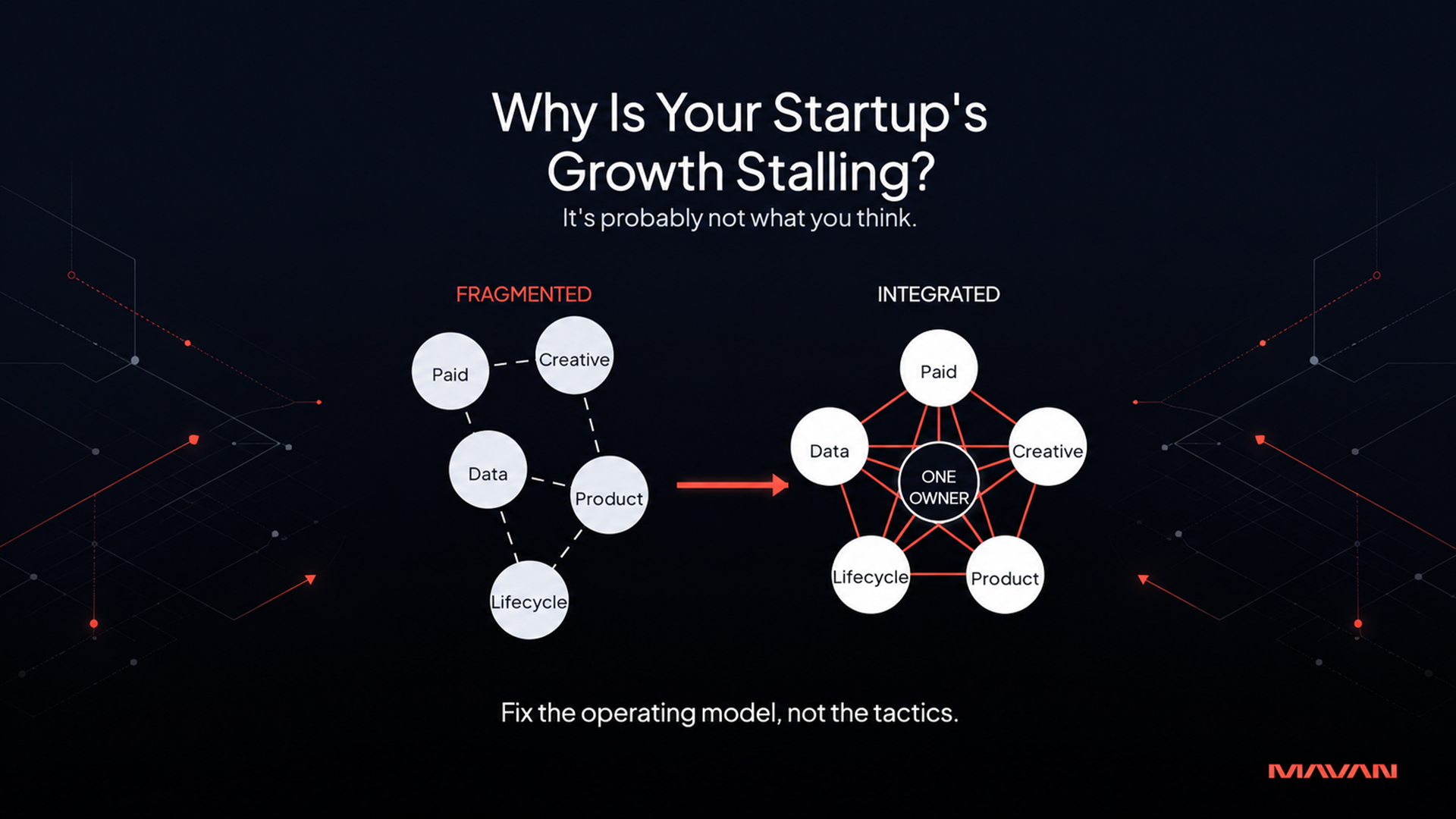
Why Is Your Startup’s Growth Stalling? Here’s The Fix.
Growth-stage startups don’t usually stall because the team isn’t working hard enough. They stall because hard work gets distributed across too many disconnected efforts, and nobody owns the system that ties them together. The fix isn’t more ad spend or more specialists — it’s integrating what you already have.
-
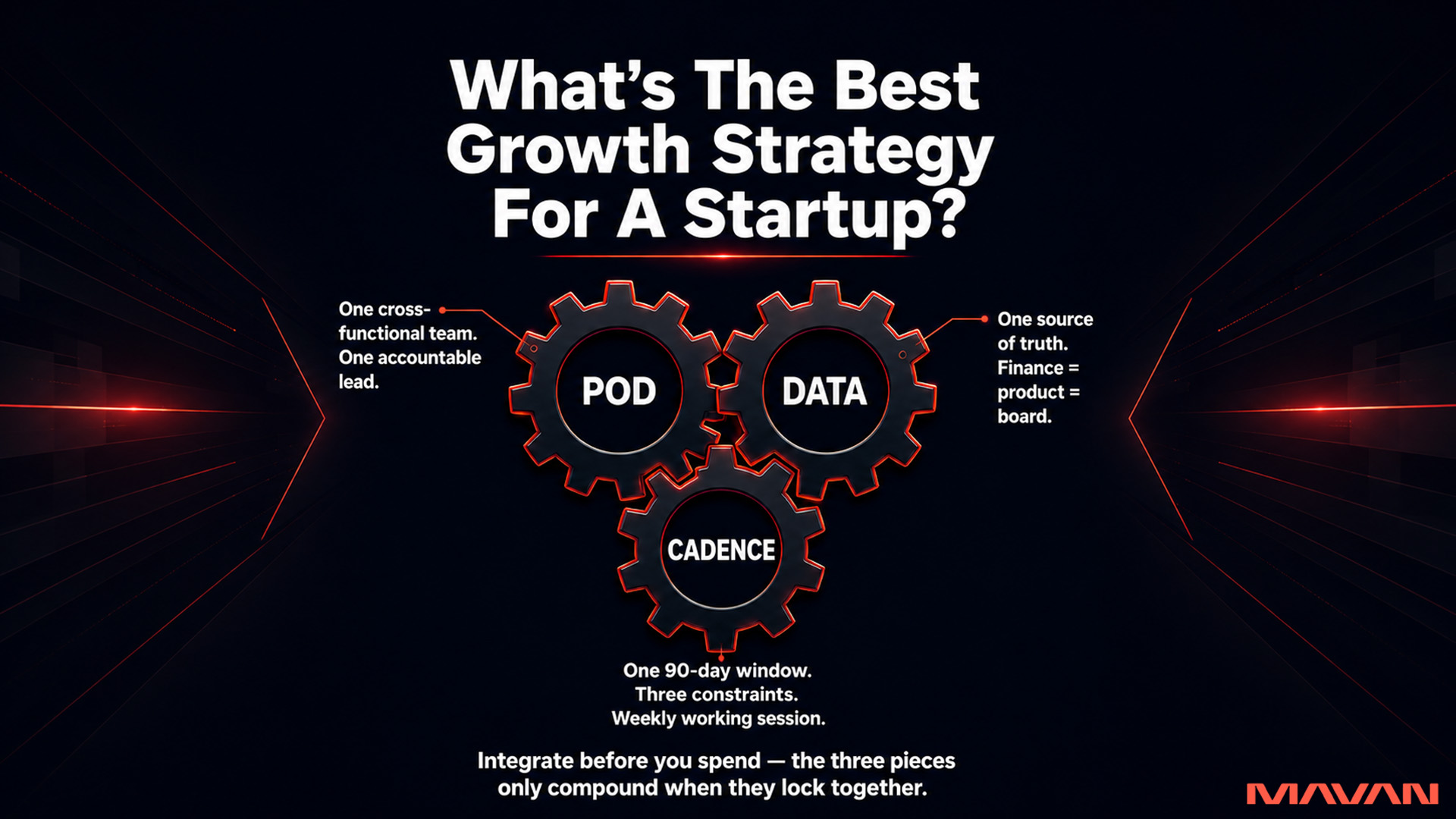
What’s The Best Growth Strategy For A Startup In 2026?
The best growth strategy for a venture-backed startup in 2026 is to integrate before you spend. Fragmented teams, tools, and data silently inflate CAC even when every individual channel looks healthy. Fix the operating model — one accountable pod, one source of truth, one 90-day cadence — and the wins start compounding instead of canceling each other out. Channels do not break unit economics. Lack of measurement discipline does.