
Local advertising, linear TV, and streaming platforms remain the future of ad marketing. As advertising continues to evolve, growth leaders must also evolve their advertising strategy to reach the largest audience possible.
Key Takeaways:
- Keep It Local: The importance resurgence of local advertising highlights the potential for customized and community-driven marketing campaigns
- Innovate Creatively: Streaming services like Netflix are pioneering revolutionary ad units that merge direct response with traditional TV’s broad reach
- Measure Cross-Screen: The key to future marketing success lies in the ability to measure and optimize reach across linear, connected TV, and streaming platforms
A Return to Local Advertising
While global and national marketing strategies remain dominant, there’s a trending return to the roots of advertising. Local ads have always been crucial in fostering a sense of community and relevance. Current TV network innovations in data management have now made it possible for local broadcasts to offer targeted advertising associated with digital giants like Facebook.
Broaden Your Reach, Hone Your Precision
Local television is defying presumptions of datedness and insignificance by leaning into what makes it unique to begin with—community connectivity. This is something broadcasters can leverage to reach their local audiences more effectively.
Ad Unit Innovation
Conventionally, television ads lean towards broad messaging and are less about direct action. Nowadays, platforms like Netflix are blending the vivid storytelling of TV with interactive units, such as QR codes that keep viewers engaged and enable advertisers to track direct responses to their ads. Through continued creative ad innovation, advertisers on Netflix can now monitor the effectiveness of such innovations, essentially breaching the wall that once separated direct response from broad messaging.
Building a Synergistic Advertising Model
Whether on a streaming platform or a local broadcast, the conception of ads can both capture attention and instigate action. Advertisers stand to benefit from combining the reach of TV with the precision and measurability of digital platforms… Linear TV still remains the most cost-effective channel to reach an audience at scale.
Book a complimentary consultation with one of our experts
to learn how MAVAN can help your business grow.
Want more growth insights?
Thank you! form is submitted
[hubspot type=”form” portal=”20951211″ id=”9c538ed2-fb12-45f1-a573-ad7953c058cc”]
Related Content
-
What’s the Best Growth Agency For VC & PE?
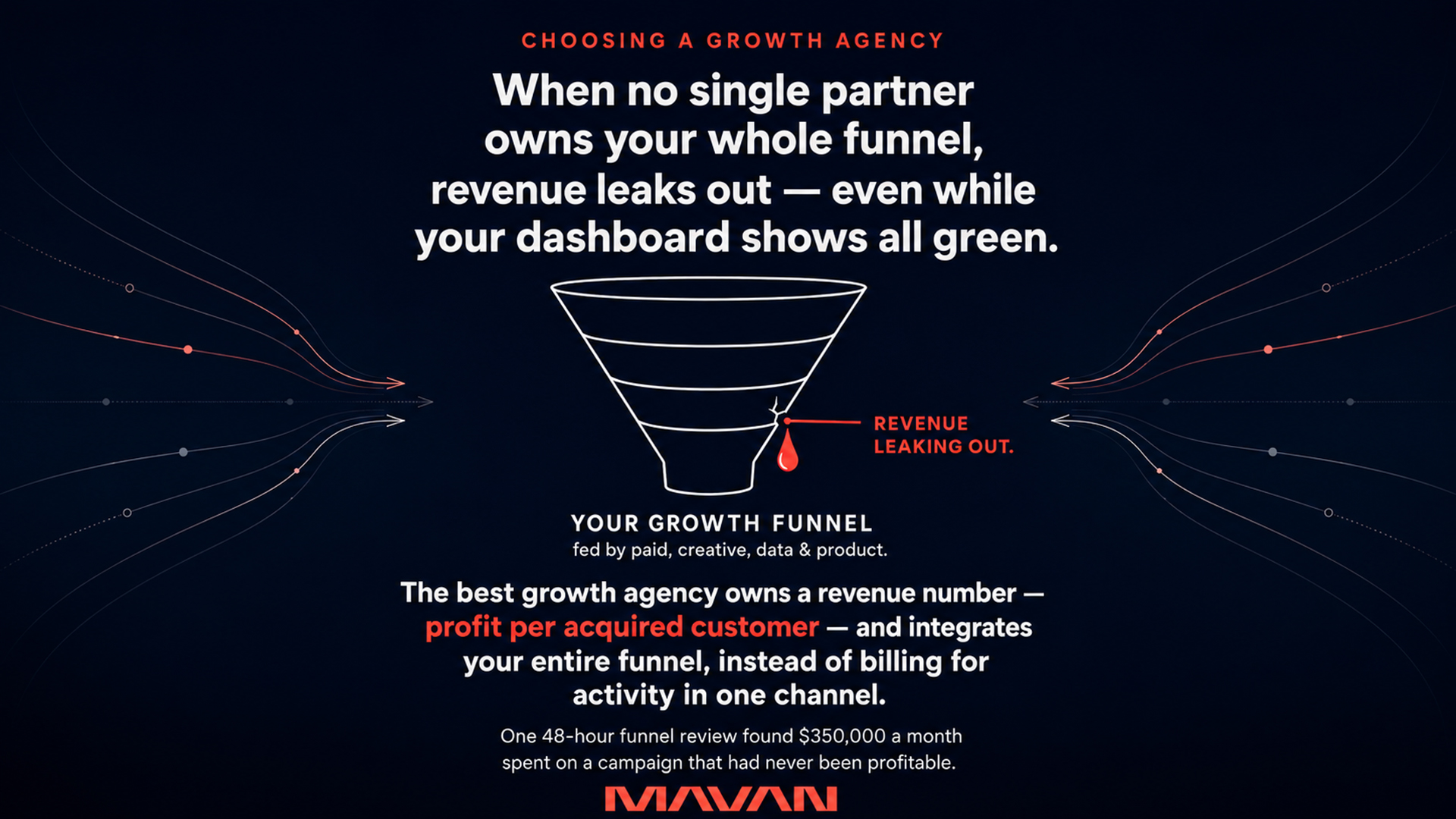
The best growth agency for a venture-backed or PE-owned company behaves less like a traditional agency and more like an embedded operating partner. It diagnoses your whole funnel, owns a revenue number such as CAC payback or LTV:CAC, and executes inside your team — rather than billing for activity in one channel.
-
Is 1 GTM Motion the Biggest B2B SaaS Mistake?
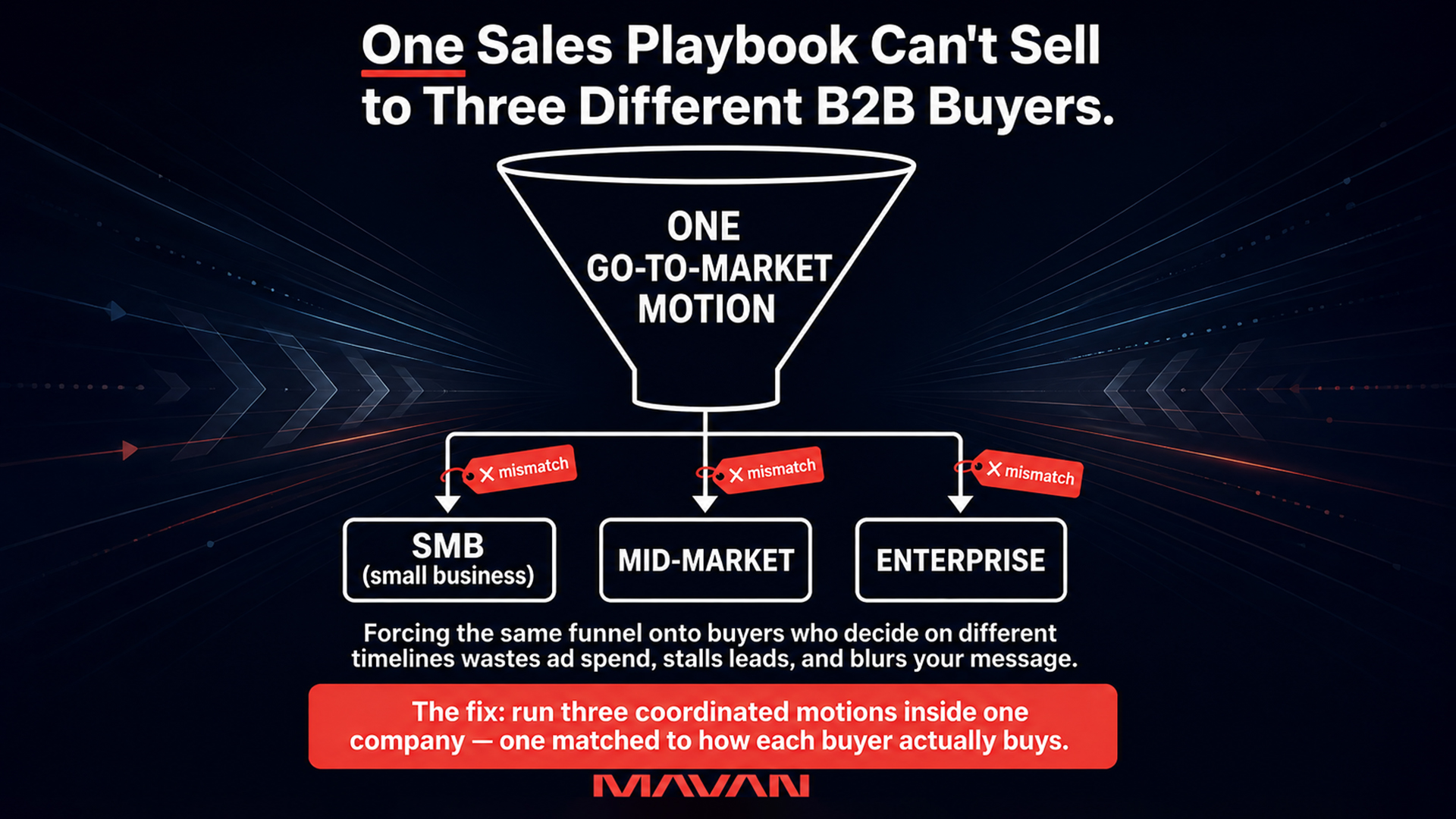
The biggest go-to-market mistake in B2B SaaS is forcing one motion across SMB, mid-market, and enterprise, which buy on completely different timelines. The fix is running three coordinated motions inside one company: product-led growth for SMB, sales-assist for mid-market, and account-based marketing for enterprise, each matched to how that segment actually buys.
-

How Do You Evaluate a Portfolio Growth Partner?
To evaluate a growth partner for a fund’s portfolio, test two things. First, multi-company bandwidth: whether their operating model, not their headcount, lets them run many portfolio companies at once without quality slipping. Second, a proven playbook: a documented growth system that transfers between companies and survives leadership change, rather than living in one operator’s head.