
Working in user acquisition can feel like you’re trying to navigate an ever-changing maze. One common pitfall is to adopt a one-size-fits-all solution for your marketing strategy. In the latest episode of Growth@Scale, Matt Widdoes talks about adapting user acquisition strategies to a changing landscape with Ed Lee, a growth expert formerly at Digit.
Just because a campaign crushes it in one market, or on a certain operating system, that doesn’t mean it will work everywhere. Every audience is different and your approach should be, too.
Post IDFA, a lot has changed and it seems like we’re returning to an age of brand building. This is because we’re currently in a world where trying to figure out who your users are is like solving a Rubik’s cube. Having a solid, trustworthy brand can be a game changer, so it’s okay to go a little old school with your marketing tactics.
When it comes to algorithms, we can all agree that they’re a handy, useful tool, but by no means should they be handling all the work. It’s important to stay hands-on, especially when it comes to campaign design. Creativity and the human touch can outshine any algorithm, helping you reach new users without breaking the bank.
In our digital age, don’t forget the human factor. Marrying traditional marketing wisdom with modern user acquisition strategies is always a recipe for success.
Listen now or read the transcript.
Book a complimentary consultation with one of our experts
to learn how MAVAN can help your business grow.
Want more growth insights?
Thank you! form is submitted
[hubspot type=”form” portal=”20951211″ id=”9c538ed2-fb12-45f1-a573-ad7953c058cc”]
Related Content
-
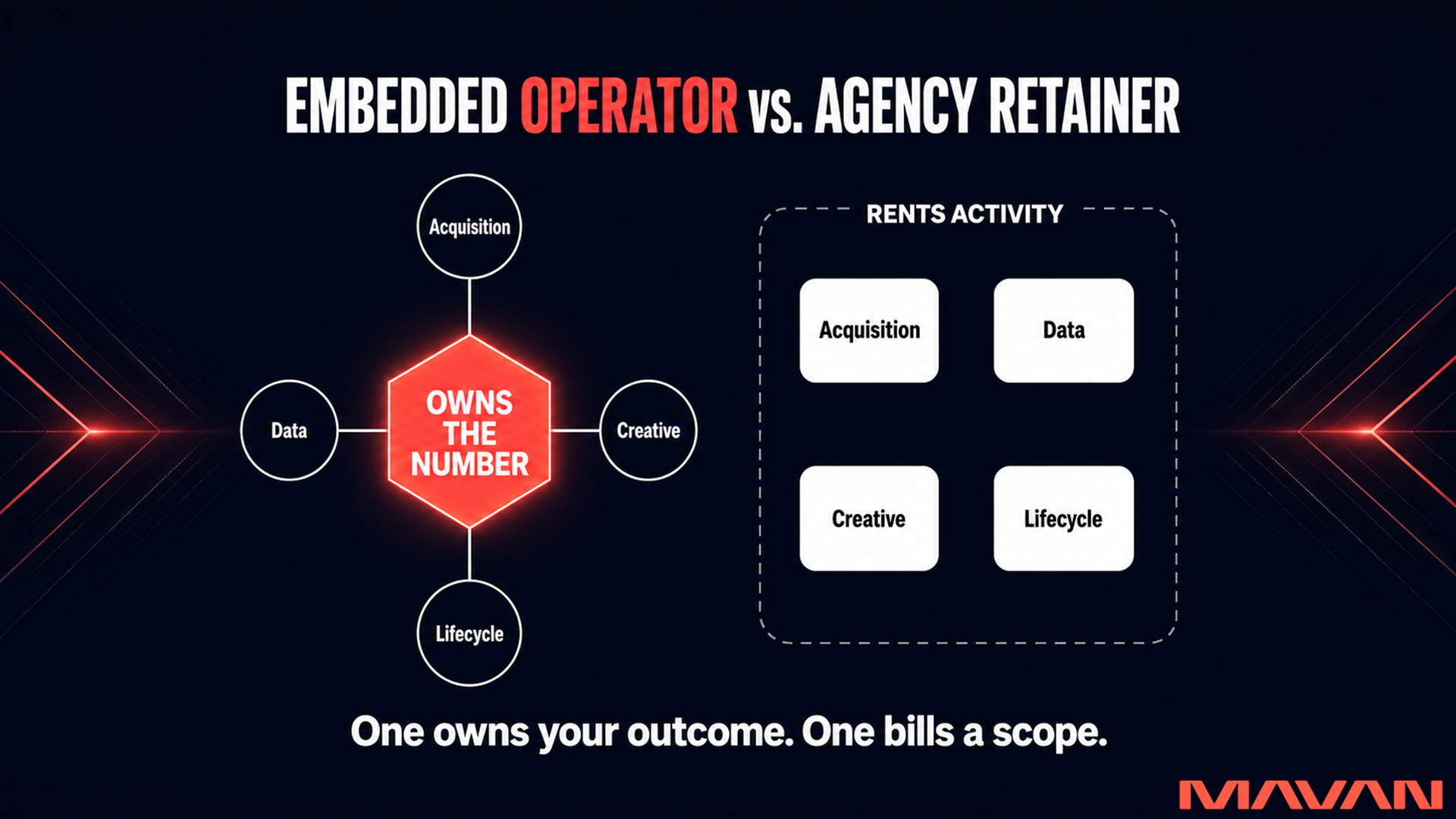
Which Is Best For Growth: Embedded Operators or Agency Retainers?
An embedded growth operator is an outside team that plugs into your company — your Slack, your data, your standups — and owns a business outcome as one accountable unit. A traditional agency retainer rents you activity at arm’s length across separate scopes. The embedded model exists to end the fragmentation that stalls venture-backed growth.
-
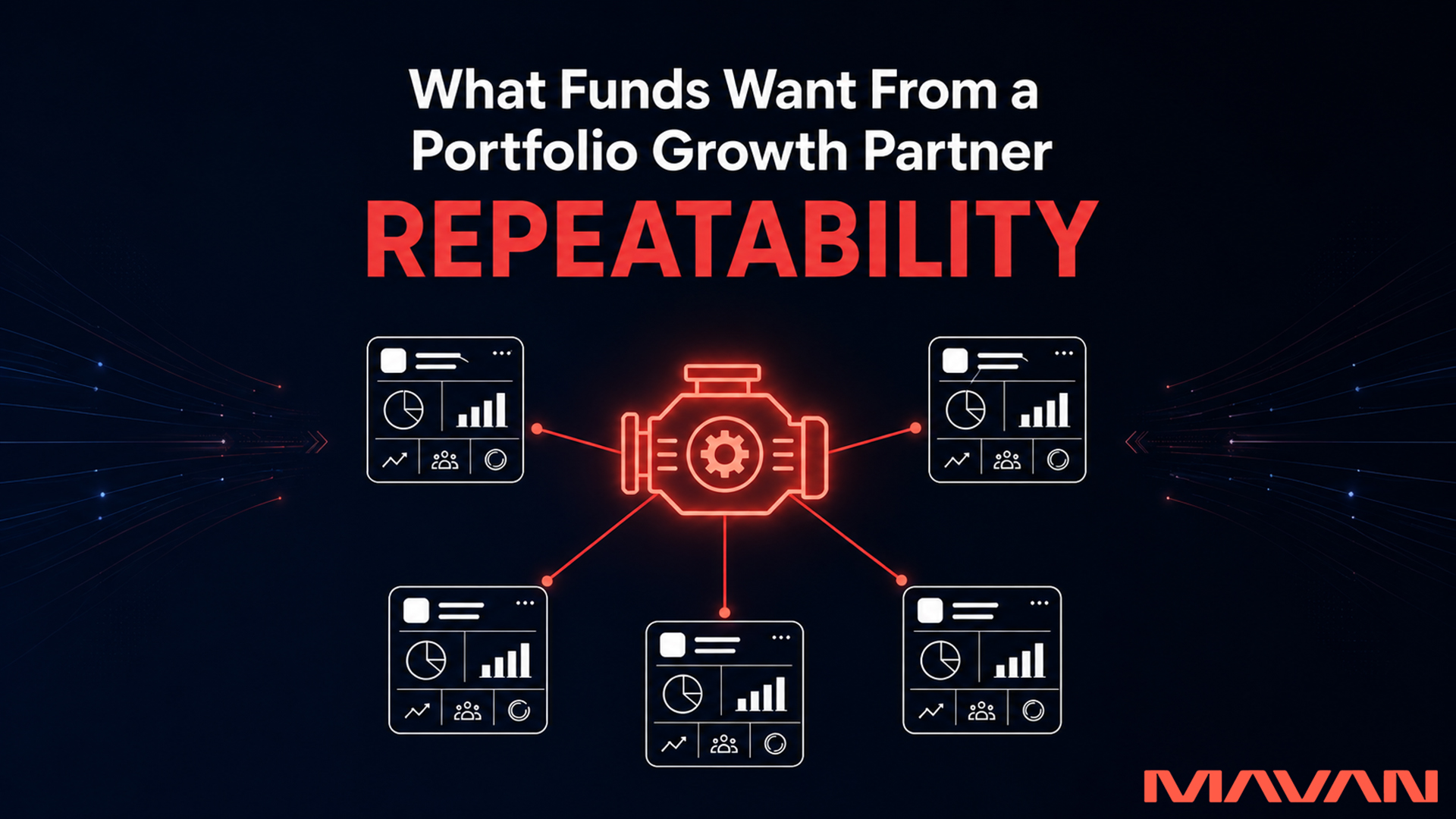
What Do Funds Want From a Portfolio Growth Partner? Repeatability!
What funds actually want from a portfolio growth partner is repeatability — a portable growth operating system that produces comparable results across very different portfolio companies. Repeatability shows up as a single source of truth, a board-grade scoreboard, a 90-day sprint, and a clean handoff, so each win compounds across the portfolio instead of staying at one company.
-
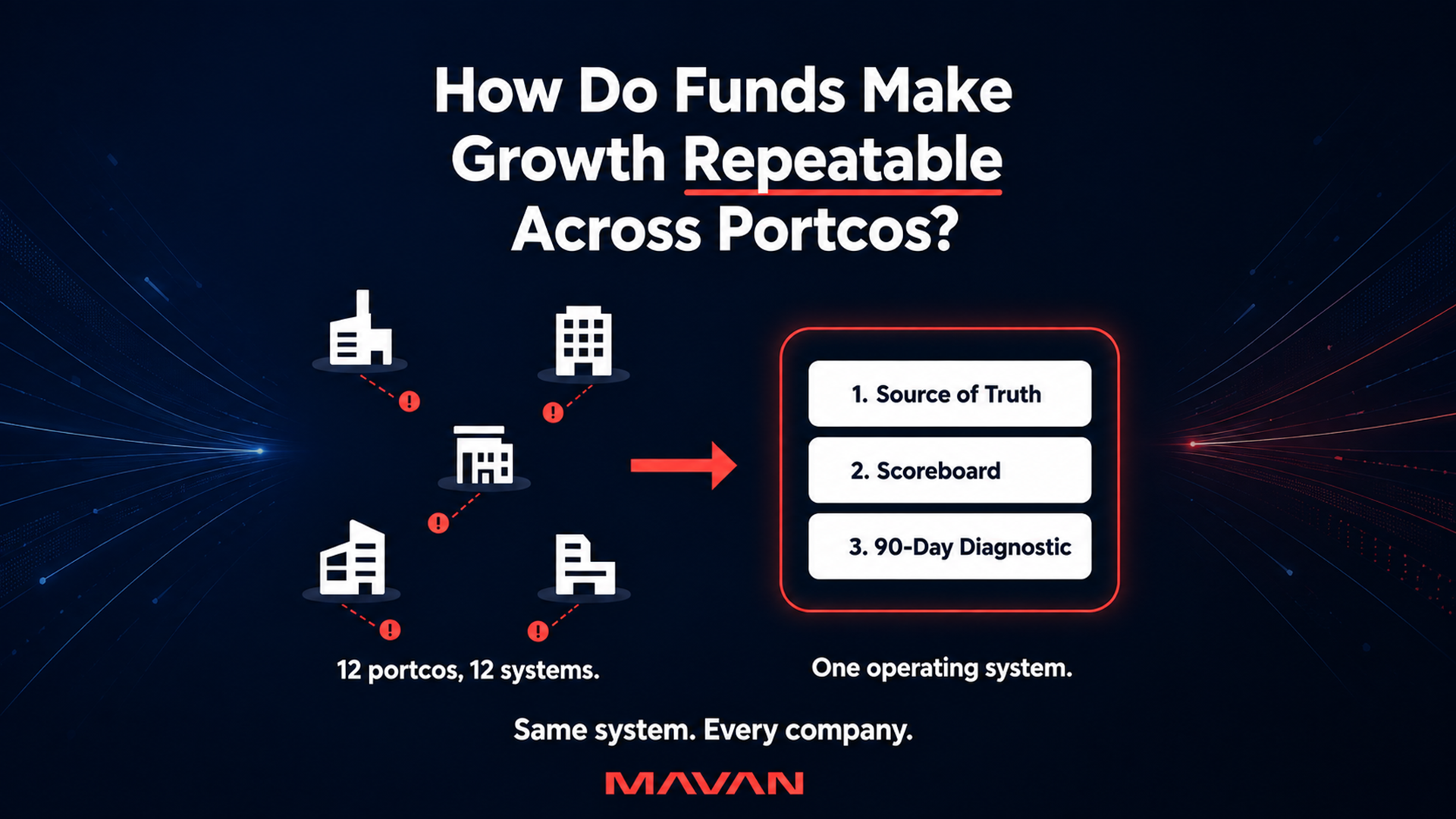
How Can VC And PE Funds Repeat Growth Across Portfolio Companies?
Growth becomes repeatable across a VC or PE portfolio when the fund installs one operating system instead of referring each company to a different specialist. The system has three parts: a single source of truth every team trusts, a board-ready scoreboard of ten to twelve metrics, and an embedded pod that diagnoses the real constraint in ninety days before anyone spends more.