
On the latest episode of Growth@Scale, product and growth expert Ed Lee returns to talk about turning creative failures into learning opportunities and how to use cross-functional collaboration to unlock growth.
Some of the main topics discussed include:
Focused Growth Strategies: Instead of trying to be everything to everyone, successful User Acquisition strategies involve targeting your core audience where they are and speaking to them in a way that resonates.
Experimentation and Learning: The foundation of growth, especially for early-stage companies, is experimentation; success often means poring over creative failures to glean new learnings to leverage into future success.
Cross-Functional Collaboration: From creative and design, to data analytics, product, and sales, collaboration among different teams is a valuable way to share knowledge and innovate new strategies based on different experiences with the customer journey.
Integration of Product and Marketing: Both product-driven and marketing-driven approaches are essential and should be integrated, with successful companies leveraging strategies that unite both elements.
Budgeting for Growth: Decisions about spending on growth channels are based on data-driven test plans, with phased approaches and checkpoints to ensure money is spent wisely.
Building a Strong Creative Team: Building an effective creative team is a complex process that doesn’t stop at just hiring the best talent. You also need to establish effective test structures so you can get adequate learnings from every creative.
Creative Optimization: Dissect what works, understand the components of successful creatives, and iterate based on those insights. Sometimes you’ll see significant impact from something as simple as adjusting copy.
Listen at the link below and subscribe to Growth@Scale to hear new episodes every week.
Book a complimentary consultation with one of our experts
to learn how MAVAN can help your business grow.
Want more growth insights?
[hubspot type=”form” portal=”20951211″ id=”9c538ed2-fb12-45f1-a573-ad7953c058cc”]
Related Content
-
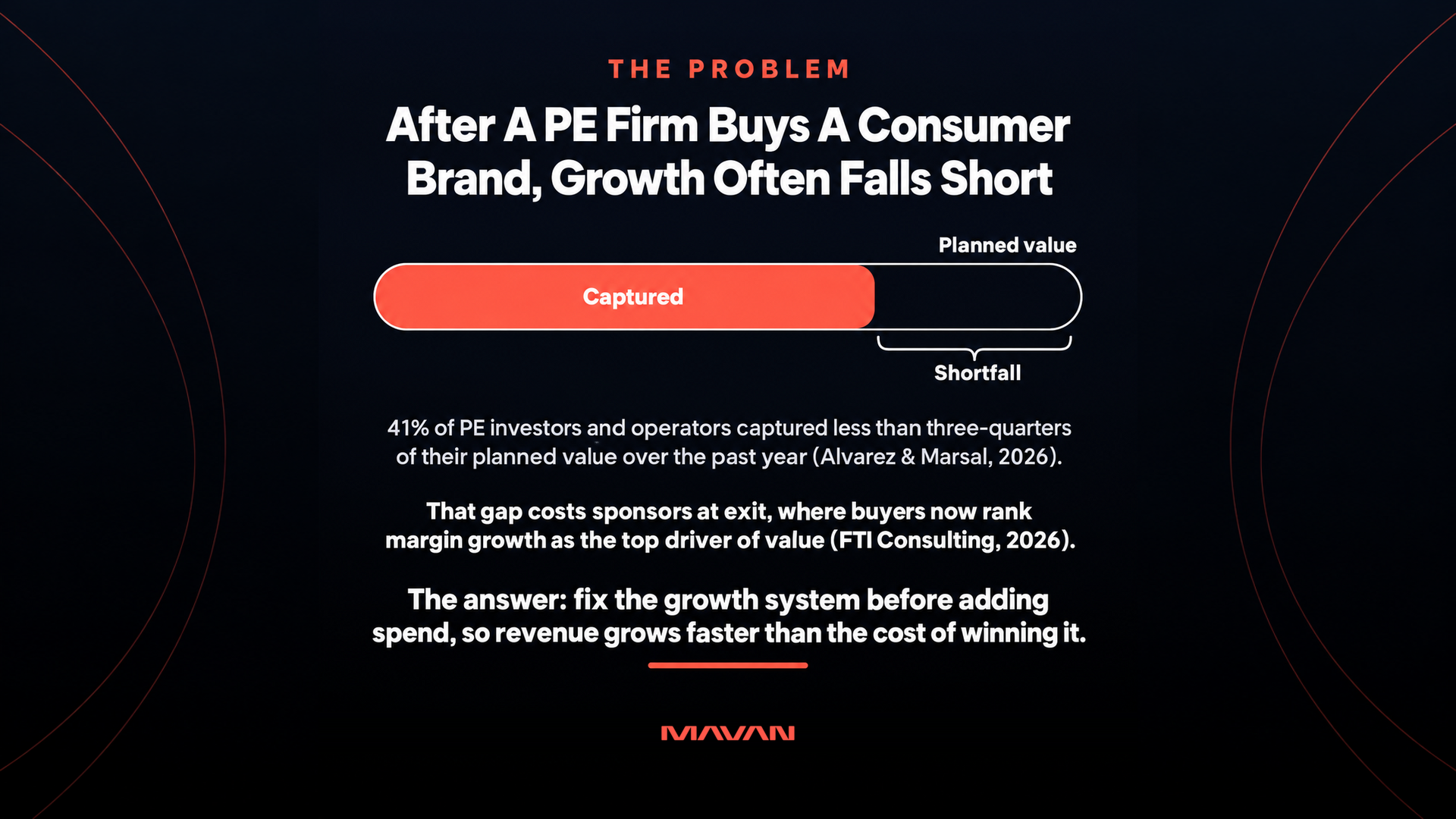
How Do PE Firms Accelerate Revenue And EBITDA Post-Acquisition?
PE firms accelerate revenue and EBITDA at consumer brands by fixing the growth system before adding spend. They reconcile the numbers and cut spend that never pays back. They lift conversion and repeat purchases, and they judge growth by contribution margin. Growth operating partners such as MAVAN diagnose that system in 28 days, then help execute the fix.
-
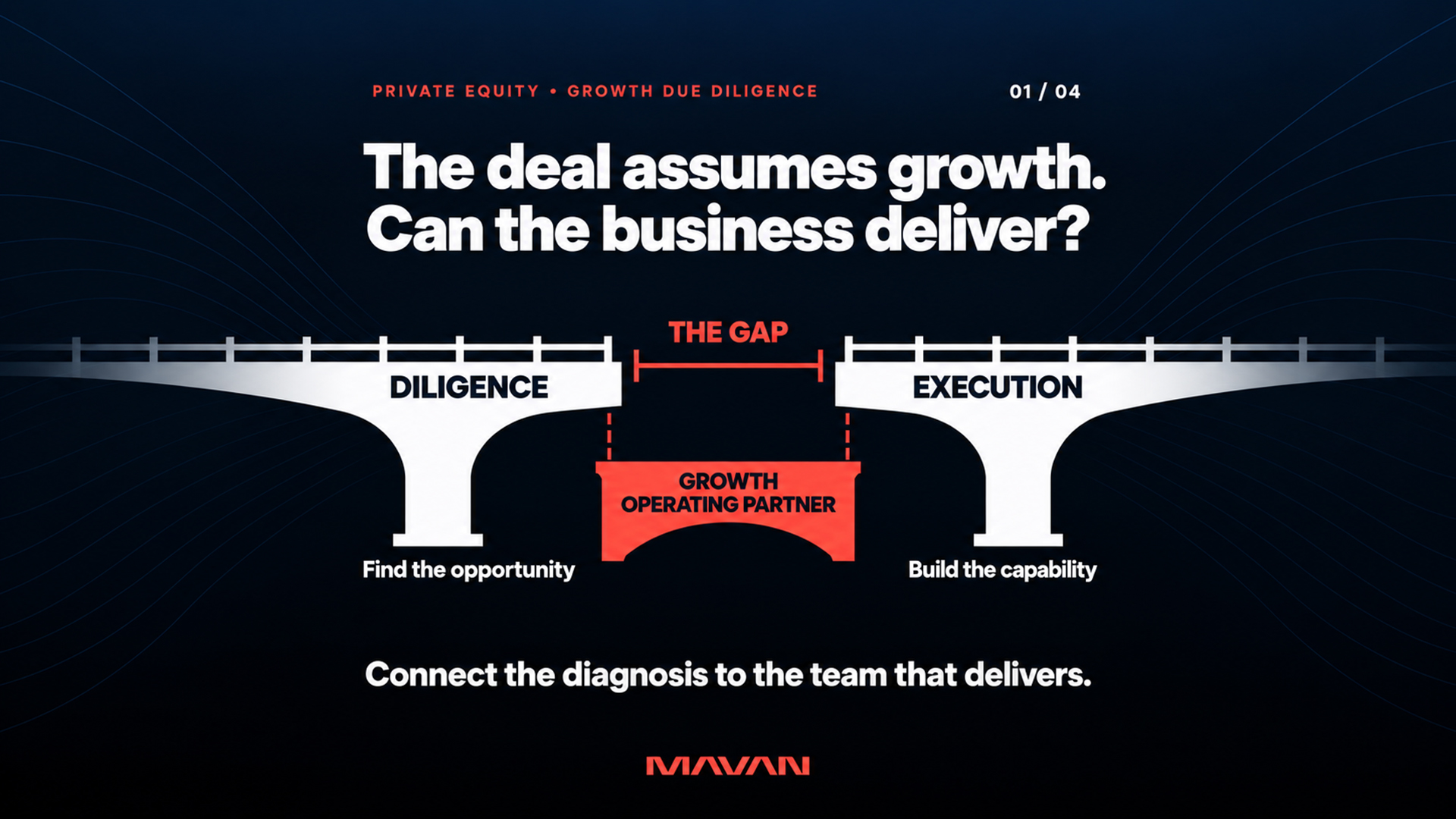
Who Does Growth & GTM Due Diligence for PE Deals?
Four kinds of provider run growth and go-to-market due diligence for private equity deals. Strategy consultancies test the market. Specialist commercial diligence firms audit the pipeline. Go-to-market boutiques rebuild the sales motion. And growth operating partners examine the full revenue engine from inside the business, then stay to operate it after close.
-
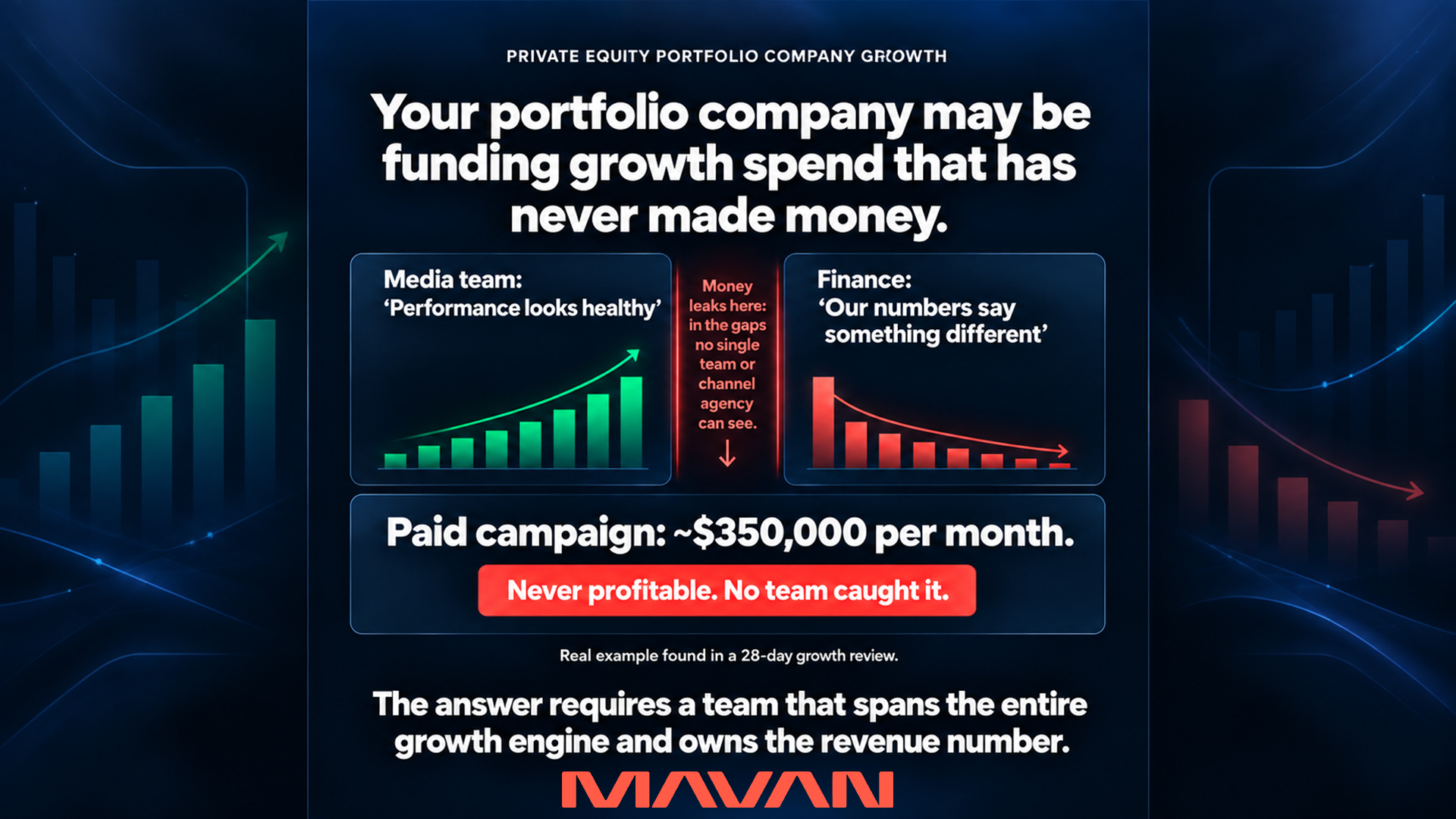
Who Is The Best Growth Partner For PE Portfolio Companies?
The best growth partner for a private equity portfolio company behaves like an operating partner you deploy, not an agency you brief. It reads the whole growth system before it spends, owns a revenue number alongside management, and leaves the capability behind so the sponsor can redeploy it.