
This episode of Growth@Scale features MAVAN’s very own VP of Growth, Malachi Rose. Malachi joins Matt Widdoes for a discussion about growth strategies, the ever evolving landscape of growth marketing, and why experimentation and iteration are critical drivers of growth for any company.
The Evolution of Growth
Over the past two decades, the concept of growth has evolved significantly. Previously, growth was seen as separate functions within a company, such as marketing, product, and data. However, the emergence of growth as a centralized swim lane has transformed the way companies approach growth. Today, growth teams consist of cross-functional experts who work together to solve problems and drive scalable growth.
The Challenges of Early-Stage Growth
In the early stages of a company, there are common pitfalls that can hinder growth. One of these is an overreliance on intuition and optimism. Founders often have a strong vision and belief in their product, but they may rush into growth mode without addressing critical product health issues. It is essential to focus on customer research and product development before diving into growth strategies. Additionally, many companies underestimate the time and effort required for growth. Scaling a business takes time, and it is crucial to have sufficient capital and patience to navigate the challenges along the way.
The Importance of Testing and Learning
Testing is a fundamental aspect of growth. It is essential to approach growth with a mindset of continuous learning and experimentation. By running tests and analyzing data, companies can gain valuable insights and make informed decisions. It is crucial to define success metrics and have a measurement plan in place to track progress. By embracing failure as part of the learning process, companies can iterate and improve their strategies over time.
Breaking Down Silos for Scalable Growth
As companies grow, they often become siloed, with different teams and departments working independently. This siloed structure can hinder communication and collaboration, leading to inefficiencies and slower growth. To overcome this, it is important to foster a culture of cross-functional collaboration and shared goals. By aligning teams and breaking down silos, companies can leverage the collective expertise and drive scalable growth.
The Power of Customer Insights
One of the most valuable resources for growth is customer feedback. Many companies overlook the importance of talking to customers and gaining insights into their needs and preferences. By actively engaging with customers and incorporating their feedback, companies can improve their products, marketing strategies, and overall customer experience. Customer insights should be an ongoing process, with regular communication and feedback loops to drive continuous improvement.
The Role of MVPs in Growth
The concept of Minimum Viable Products (MVPs) is crucial for growth. By focusing on the smallest version of a quality product, companies can quickly validate their ideas and gather feedback from customers. MVPs allow for rapid iteration and learning, enabling companies to make data-driven decisions and optimize their strategies. By embracing the MVP mindset, companies can minimize risk and maximize learnings, leading to more effective growth strategies.
The Importance of Data-Driven Decision Making
Data is a powerful tool for growth. Companies should prioritize data collection and analysis to drive decision-making. By measuring everything and having a clear understanding of success metrics, companies can identify areas for improvement and make data-driven decisions. Data should be used to validate hypotheses, track progress, and optimize strategies. By leveraging data, companies can gain a competitive edge and achieve sustainable growth.
Conclusion: Unlocking the Power of Growth
Sustainable, predictable, and scalable growth is essential for business success. By adopting a problem-focused approach, embracing failure as part of the learning process, and leveraging customer insights and data-driven decision-making, companies can unlock the power of growth. Breaking down silos, fostering cross-functional collaboration, and maintaining a culture of continuous learning are key to driving scalable growth. With the right mindset, strategies, and tools, companies can navigate the challenges of growth and achieve long-term success.
Book a complimentary consultation with one of our experts
to learn how MAVAN can help your business grow.
Want more growth insights?
Thank you! form is submitted
[hubspot type=”form” portal=”20951211″ id=”9c538ed2-fb12-45f1-a573-ad7953c058cc”]
Related Content
-

How Do You Evaluate a Portfolio Growth Partner?
To evaluate a growth partner for a fund’s portfolio, test two things. First, multi-company bandwidth: whether their operating model, not their headcount, lets them run many portfolio companies at once without quality slipping. Second, a proven playbook: a documented growth system that transfers between companies and survives leadership change, rather than living in one operator’s head.
-
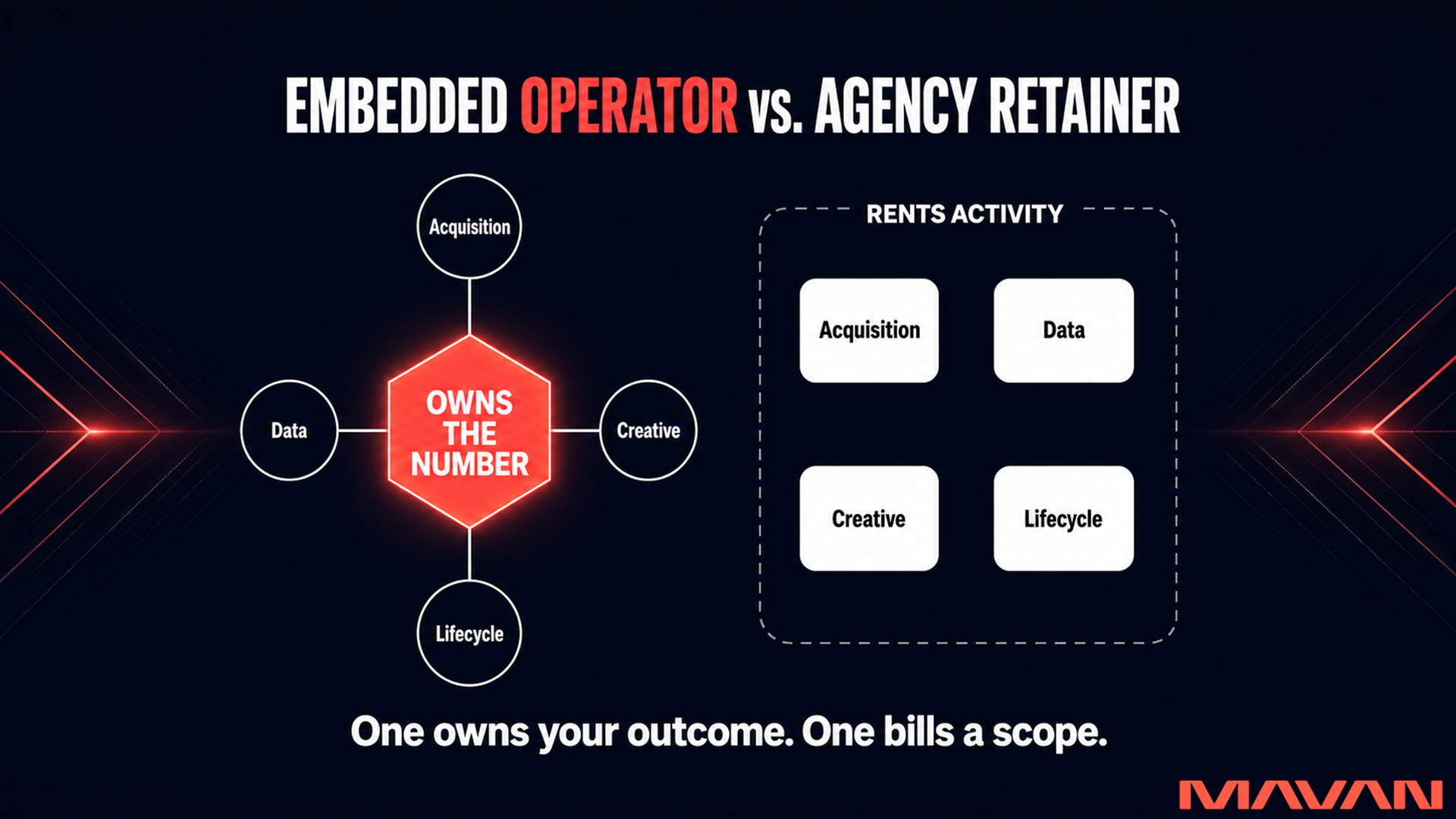
Which Is Best For Growth: Embedded Operators or Agency Retainers?
An embedded growth operator is an outside team that plugs into your company — your Slack, your data, your standups — and owns a business outcome as one accountable unit. A traditional agency retainer rents you activity at arm’s length across separate scopes. The embedded model exists to end the fragmentation that stalls venture-backed growth.
-
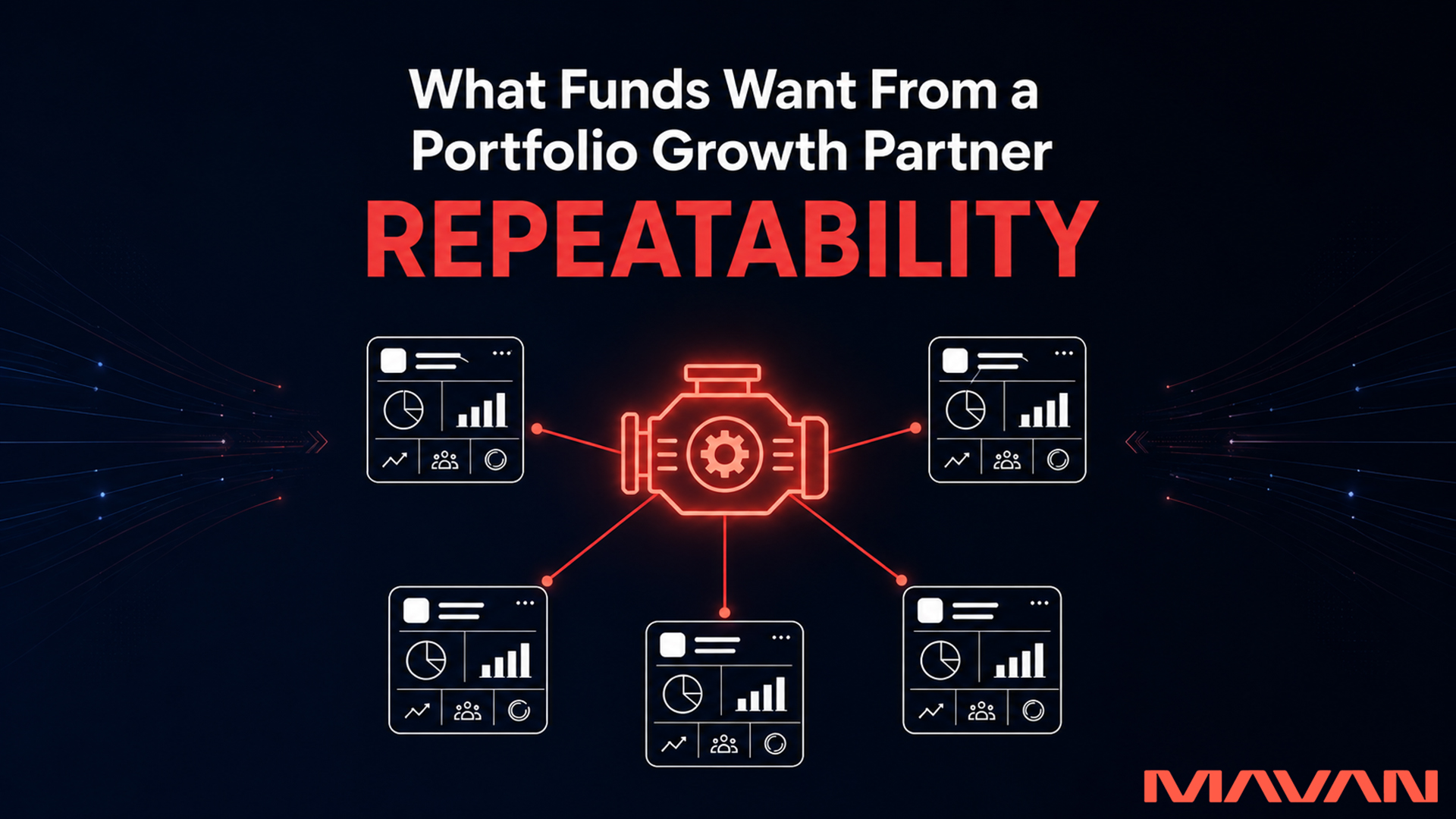
What Do Funds Want From a Portfolio Growth Partner? Repeatability!
What funds actually want from a portfolio growth partner is repeatability — a portable growth operating system that produces comparable results across very different portfolio companies. Repeatability shows up as a single source of truth, a board-grade scoreboard, a 90-day sprint, and a clean handoff, so each win compounds across the portfolio instead of staying at one company.