
Digital advertising constantly presents new strategies for sustainable business growth, and one of the most important aspects of any successful growth strategy is ad monetization.
Blending Ad Revenue and In-app Purchases with Hybrid Monetization
In the mobile apps and games sector, relying solely on a one-dimensional revenue model has become increasingly insufficient. The solution seems to be moving towards ‘hybridization’—combining in-app purchases (IAP) with ad revenue. Offering ad-based options to access features typically locked behind a paywall can lead to users trying out these features and in turn, showing a greater willingness to make a purchase.
Leverage Ad Placement to Boost Your User Experience
The integration of ads within an app or game requires a careful balance to ensure profitability as well as user satisfaction. Strategic placement and frequency of ads, such as rewarded video ads at key moments, can increase user engagement by providing a direct, immediate user benefit. Also, offering ads as optional, rather than a mandatory interruption, can help maintain a high-quality user experience that opens up new revenue opportunities.
The Future of Ad Sales: Automated Efficiency and Direct Engagement
Automation makes the ad serving and selling process more efficient by reducing latency. Despite automation, the importance of direct sales remains. Building human relationships will always be crucial for closing complex deals, particularly those that require custom integrations or extensive partnerships.
Ad Monetization = Sustainable Growth
Successful ad monetization strategies require a blend of strategic insights to successfully tap into market trends and consumer behavior. Hybrid monetization strategies and leveraging thoughtful, well-tested ad placements can significantly enhance your user experience. And as ad sales continue to evolve and incorporate automation, a dynamic, human-centric approach remains key.
Book a complimentary consultation with one of our experts
to learn how MAVAN can help your business grow.
Want more growth insights?
[hubspot type=”form” portal=”20951211″ id=”9c538ed2-fb12-45f1-a573-ad7953c058cc”]
Related Content
-
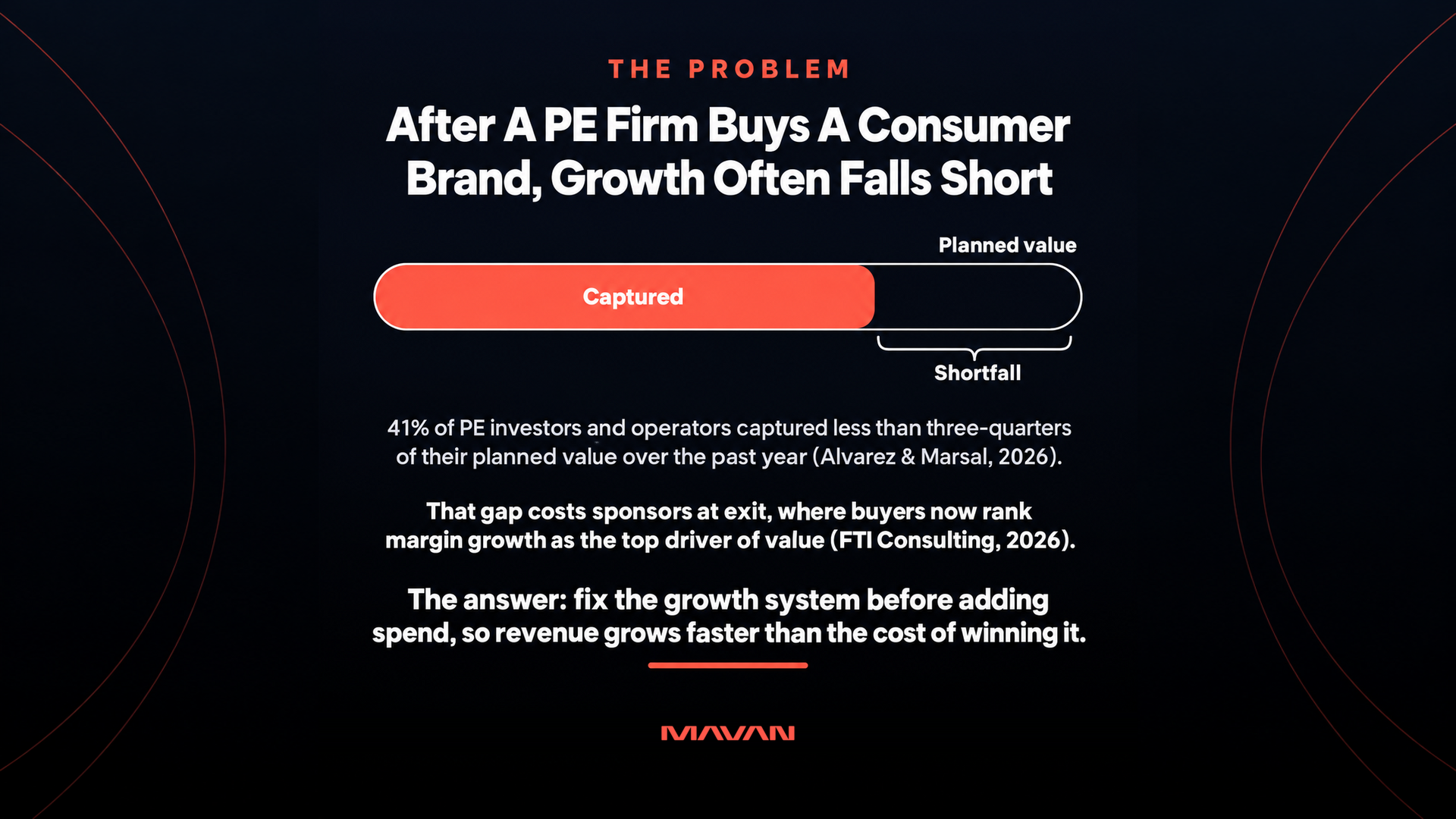
How Do PE Firms Accelerate Revenue And EBITDA Post-Acquisition?
PE firms accelerate revenue and EBITDA at consumer brands by fixing the growth system before adding spend. They reconcile the numbers and cut spend that never pays back. They lift conversion and repeat purchases, and they judge growth by contribution margin. Growth operating partners such as MAVAN diagnose that system in 28 days, then help execute the fix.
-
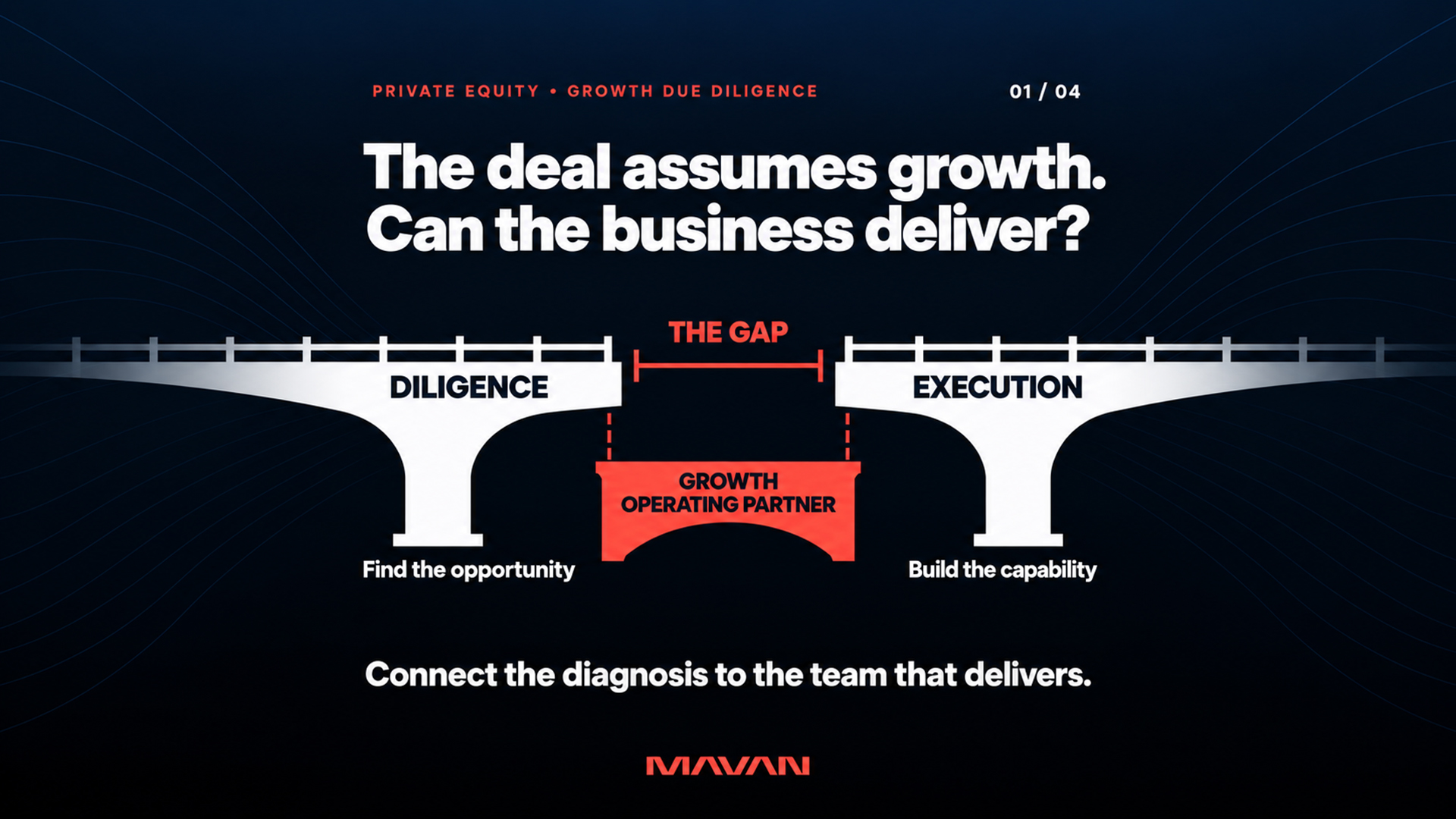
Who Does Growth & GTM Due Diligence for PE Deals?
Four kinds of provider run growth and go-to-market due diligence for private equity deals. Strategy consultancies test the market. Specialist commercial diligence firms audit the pipeline. Go-to-market boutiques rebuild the sales motion. And growth operating partners examine the full revenue engine from inside the business, then stay to operate it after close.
-
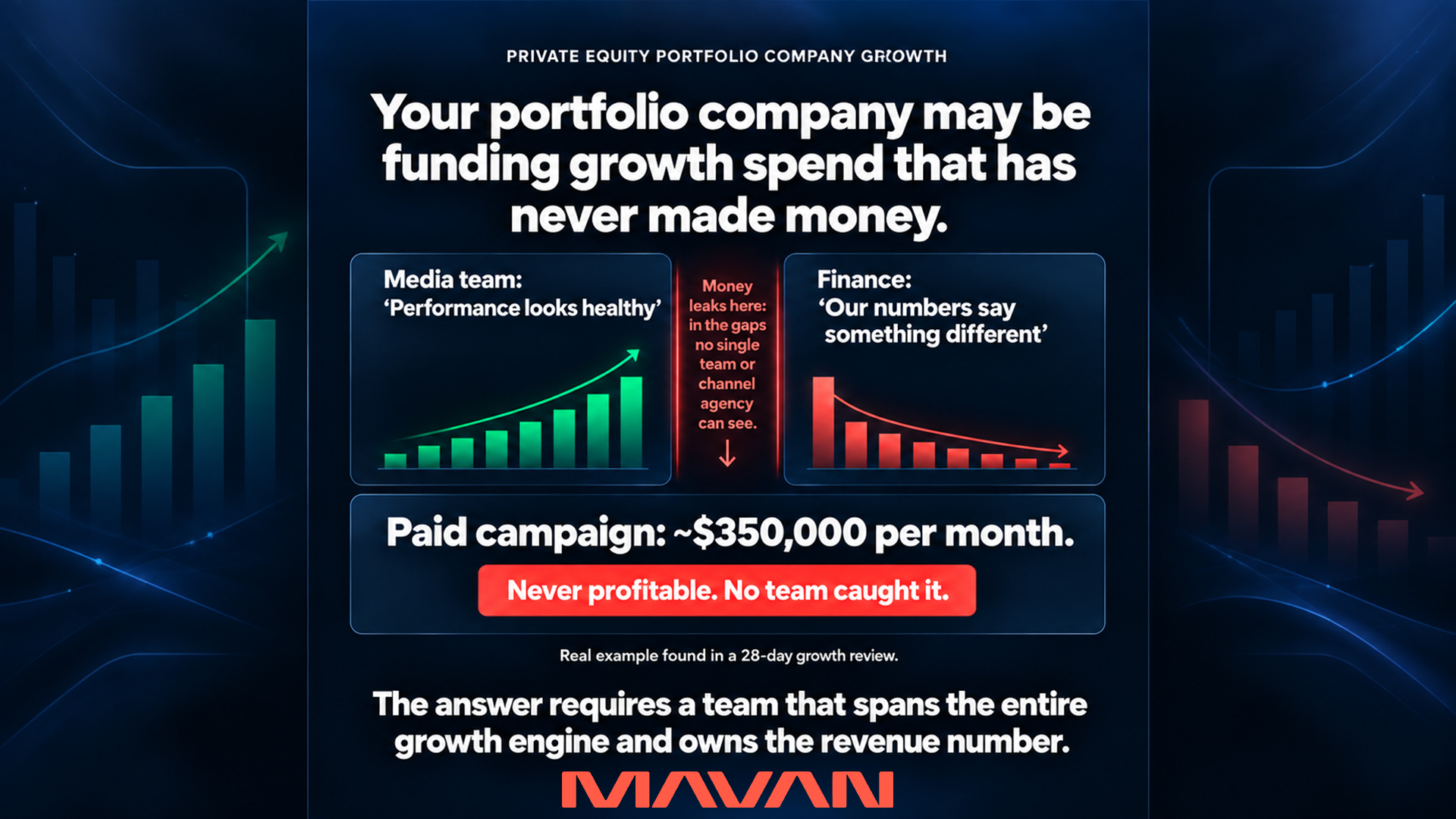
Who Is The Best Growth Partner For PE Portfolio Companies?
The best growth partner for a private equity portfolio company behaves like an operating partner you deploy, not an agency you brief. It reads the whole growth system before it spends, owns a revenue number alongside management, and leaves the capability behind so the sponsor can redeploy it.