
Every publishing organization should be able to answer two questions: 1) “Why are you doing this?” 2) “Did it work?” Answering both requires a unified data platform, creative-led distribution, configurable onboarding, organic and lifecycle systems built on a deep audience graph — and an organization wired to turn insight into action fast.
TLDR — How To Build A Publishing Org That Actually Works
- Answer two questions consistently: why are you doing this, and did it work.
- Build a unified data platform first — one source of truth, one user identity.
- Choose microservices or monolithic early; downstream decisions lock in fast.
- Treat creative as your biggest acquisition lever, not an afterthought.
- Use AI to extend asset life, never to create — protect the brand.
- Build the template library and brand guardrails before AI touches anything.
- Make FTUE continuous with the promise that acquired the player.
- Configure onboarding to reflect the marketing beat that drove the install.
- Arm your community with referral codes, leaderboards, and reward tools pre-built.
- Bridge user identity to external data so lifecycle messages land like gifts.
The Two Questions That Predict Whether A Publishing Org Will Work
I had a conversation recently with a team that is building a publishing org from scratch for one of the most recognized brands in the world. Rare situation. Clean slate. Real budget. Strong IP. The kind of opportunity most people in this industry never get.
And the first thing they asked me was: “What are the things we’re not thinking about?”
I’ve built publishing platforms before. I’ve watched them fail. I’ve watched them succeed and then get sold. So I had opinions. A lot of them. But the longer we talked, the more I kept coming back to two questions. They’re the same two questions I ask at the start of almost every engagement.
Why are you doing this? And did it work?
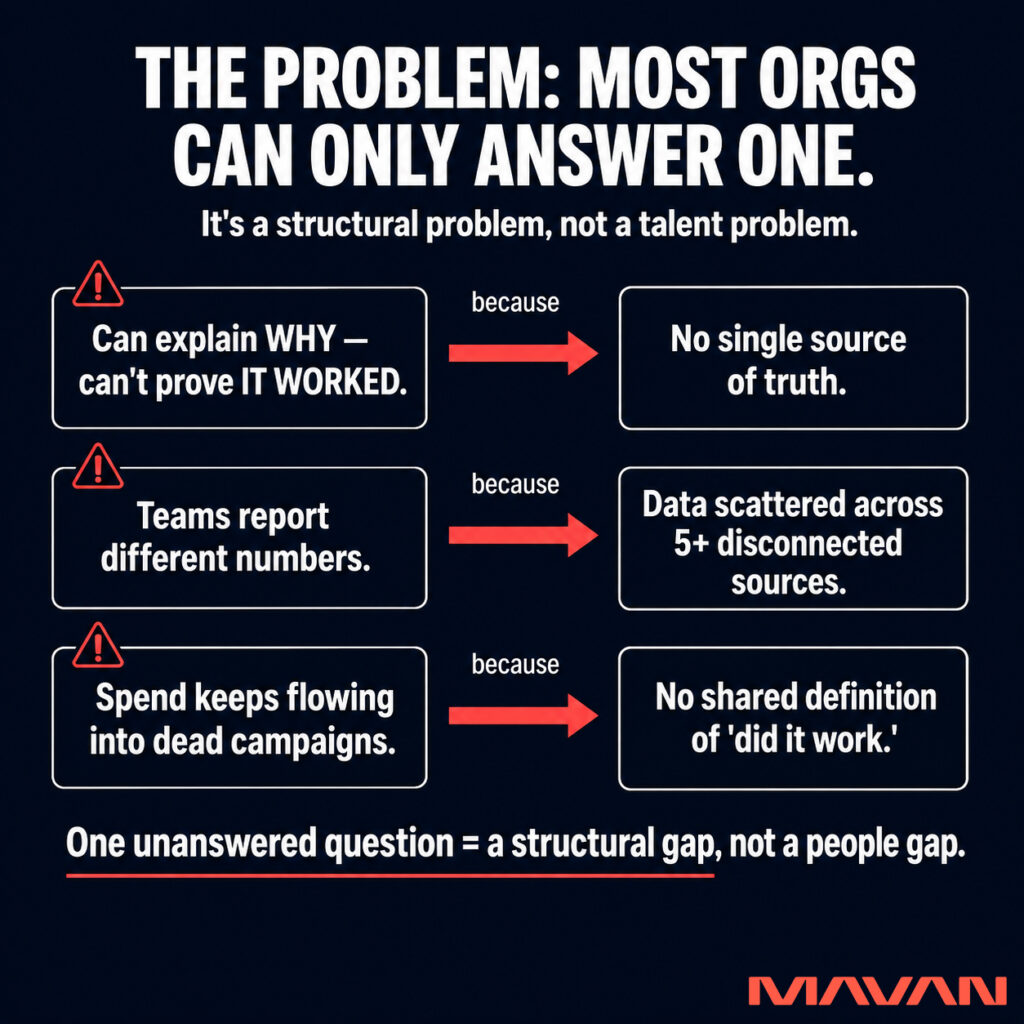
That’s it. If your publishing org can answer both of those questions, consistently and quickly, you’re ahead of most. If it can only answer one — and it’s shocking how often that’s the case — you have a structural problem, not a talent problem.
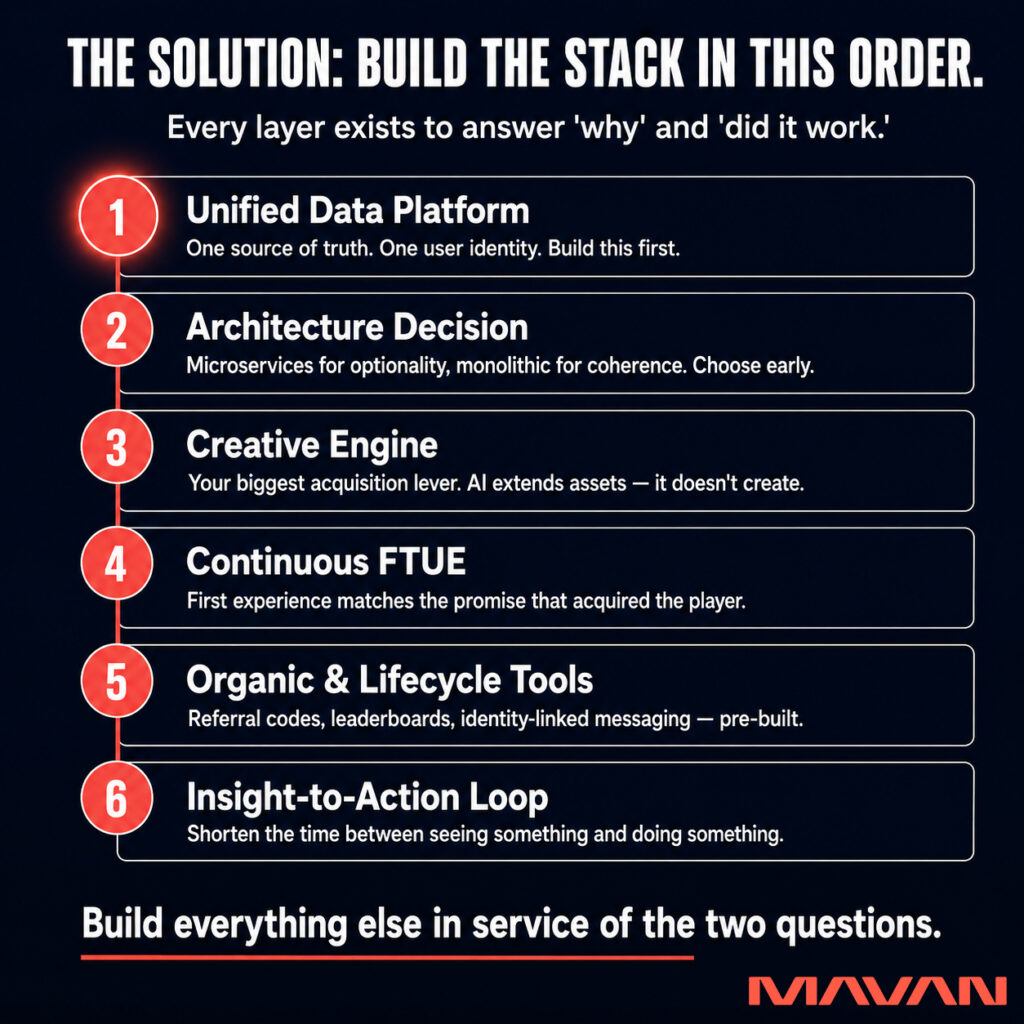
Everything I’d recommend building into a publishing stack flows from those two questions.
The Foundation: Get Data And Architecture Right First
The foundation is a unified data platform.
Not a reporting dashboard. Not a BI tool bolted onto five different sources. A single source of truth for everything the publishing org touches. User state, acquisition source, campaign performance, revenue, engagement. All of it mapping back to a single user identity.
If you don’t have that, the rest of this doesn’t matter. You can’t answer “Did it work?” without a shared definition of what “it” was and where the data lives.
The second decision — one that people underestimate — is whether you build microservice architecture or monolithic. Microservices give you optionality. You can pull one piece out and replace it. Monolithic gives you integration coherence. You have to choose. And once you do, a bunch of downstream decisions are locked in. Pick carefully.
Creative Is The Biggest Lever In Distribution
Creative is the biggest lever in distribution and most orgs treat it as an afterthought.
The thing that matters most in paid acquisition today is not your lookalike audiences. It’s not your LTV modeling. It’s creative. The resolution on customer value at the front end has degraded too much for targeting to carry the load it used to. What fills that gap is creative that resonates — and enough of it to stay ahead of fatigue.
The mistake most publishers make is treating AI as a creative engine. It isn’t. Not yet. Especially not if you have a brand worth protecting. AI blindness is already happening. People scroll past generated assets the same way they learned to ignore banner ads. You don’t want your brand to train that reflex.
What AI is good for is extending asset life. You have a piece of creative that’s performing. It’s starting to fatigue. AI can analyze the DNA of that asset — the character, the duration, the button color, the framing — and make intelligent substitutions from a library of pre-approved assets to extend its runway. It cannot create. It can only recombine things that already passed quality control.
Build your template library first. Define your style guide. Lock your brand guardrails. Then let AI work within that container.
The Channels Publishers Systematically Undervalue
FTUE is publishing’s problem, not product’s.
This one gets argued over constantly. But the first impression a player has inside your software is a direct function of how you acquired them and what you promised them to get there. If those two things aren’t continuous, you’re burning the trust you spent money to earn.
The smarter publishing orgs build a dynamically configurable onboarding engine. Not a static tutorial. A system where the first experience in the game can reflect the marketing beat that brought the player there. If you ran a Star Wars event and someone clicked that ad, the loading screen and the welcome experience should know that. You spent money getting them there on the promise of Star Wars. Deliver on it immediately.
That’s not product’s job. That’s publishing’s job. The handoff happens at the door.
Organic growth is systematically undervalued.
Game makers think about players inside the game. They care about the event, the new skin, the live op cadence. They almost never think about how to turn those moments into acquisition levers.
We used to track a metric called organic DAU — the ratio of organic installs to your active player base. The assumption was that your existing players were your best acquisition channel, and the question was how well you were activating them. We’d do something new in the community and watch what it did to that baseline.
If you have a brand that people love, those players want to share it. But they need the tools. Referral codes. Configurable leaderboards that community managers can spin up around live ops. Reward structures tied to specific behaviors. The publishing stack should have all of that pre-built so when the community team has an idea, they’re not waiting six months for an engineering sprint.
Email and push are undervalued because people measure them wrong.
The ROI on lifecycle channels looks low in isolation. That’s not because they don’t work. It’s because most publishers use them generically. You haven’t played in three days. Come back. That’s not lifecycle. That’s spam.
The depth of your lifecycle capability is a direct function of the depth of your audience graph. If you know who paid, for what, in which game, during which event, and you can map that to their communication preferences, you can send messages that feel like gifts. You can tell a parent their kid’s favorite game just dropped new content relevant to something the kid already loves. That email gets opened. That’s not scale — that’s resolution.
Most publishers don’t have that resolution because they never built the bridge between their user identity layer and their external data. Fix that first, and lifecycle starts to compound.
The Insight-To-Action Cycle Is The Whole Point
The heartbeat of the organization is the insight-to-action cycle.
All of this infrastructure exists for one reason: to shorten the time between seeing something and doing something about it. Distribution is the frontier of game making right now. Not game design. Distribution. Finding your customer is the hardest thing in this business. The publishers who win will be the ones who can iterate fastest on that problem.
That means your publishing org needs to be wired for speed. Clear hypotheses before you act. Feedback loops that tell you what happened. And the organizational discipline to call it quickly — to know when something worked, double down, and when it didn’t, learn and move on.
If you can’t answer why you’re doing something before you do it, you don’t have a hypothesis. You have an opinion. And if you can’t answer whether it worked after the fact, you don’t have a learning. You have a sunk cost.
Those are the only two questions that matter. Build everything else in service of them.
Dan Barnes is President of MAVAN, where he helps venture-backed companies build the operating models, data foundations, and growth systems that turn effort into measurable outcomes. He brings more than a decade of leadership across the mobile gaming industry, with senior roles at Natural Motion, Zynga, and Machine Zone. Over his career he has deployed more than a billion dollars in user acquisition, built technology platforms that generated over a billion in enterprise value, raised multiple rounds of venture funding, and worked alongside some of the most recognized IP in games.
Book a complimentary consultation with one of our experts
to learn how MAVAN can help your business grow.
Want more growth insights?
Thank you! form is submitted
[hubspot type=”form” portal=”20951211″ id=”9c538ed2-fb12-45f1-a573-ad7953c058cc”]
Related Content
-
How Can Private Equity Funds Repeat Growth Across Portfolio Companies?
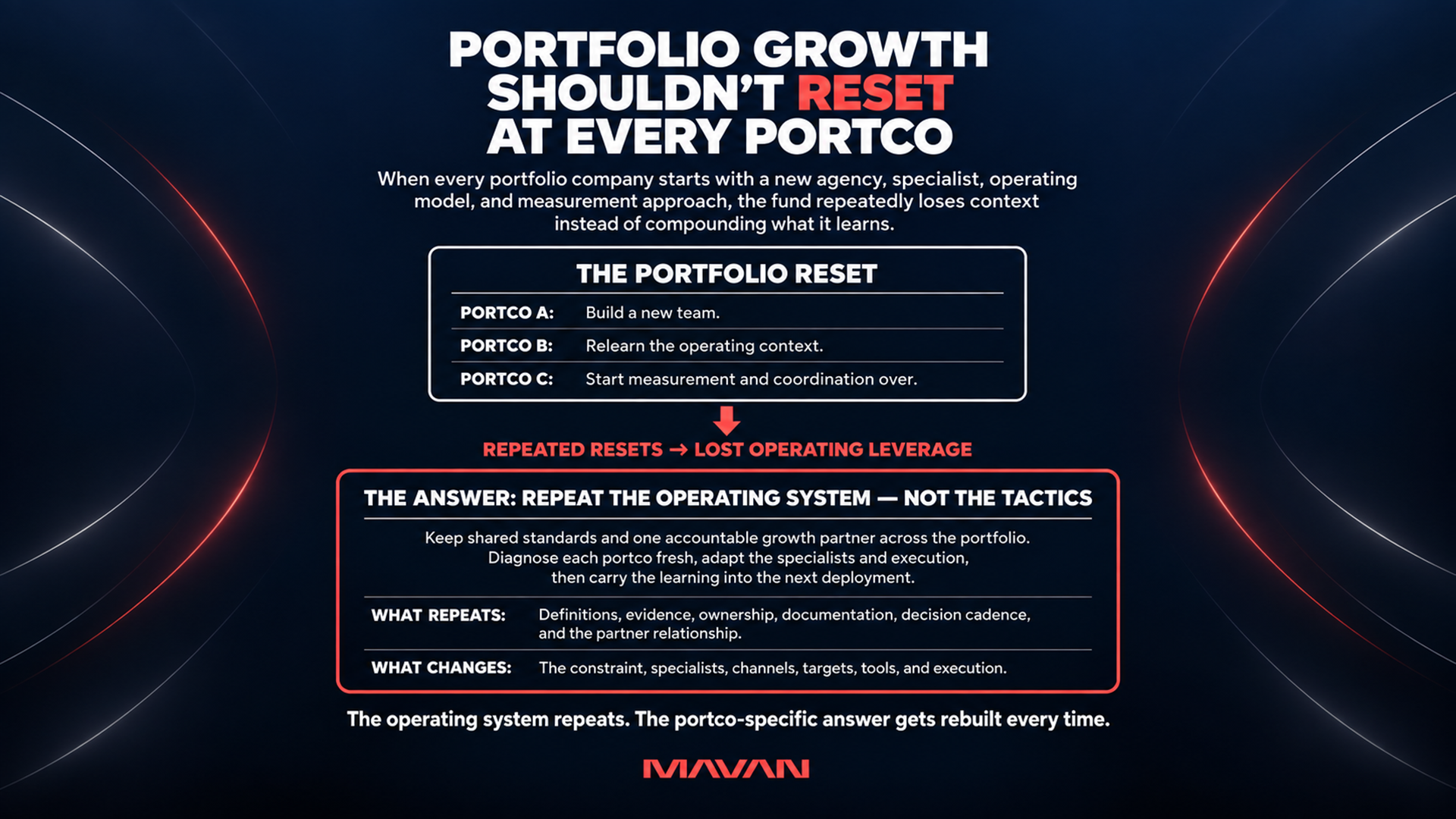
Growth becomes repeatable across a VC or PE portfolio when the fund installs one operating system instead of referring each company to a different specialist. The system has three parts: a single source of truth every team trusts, a board-ready scoreboard of ten to twelve metrics, and an embedded pod that diagnoses the real constraint in ninety days before anyone spends more.
-
What Do PE Funds Want From a Portfolio Growth Partner? Repeatability!
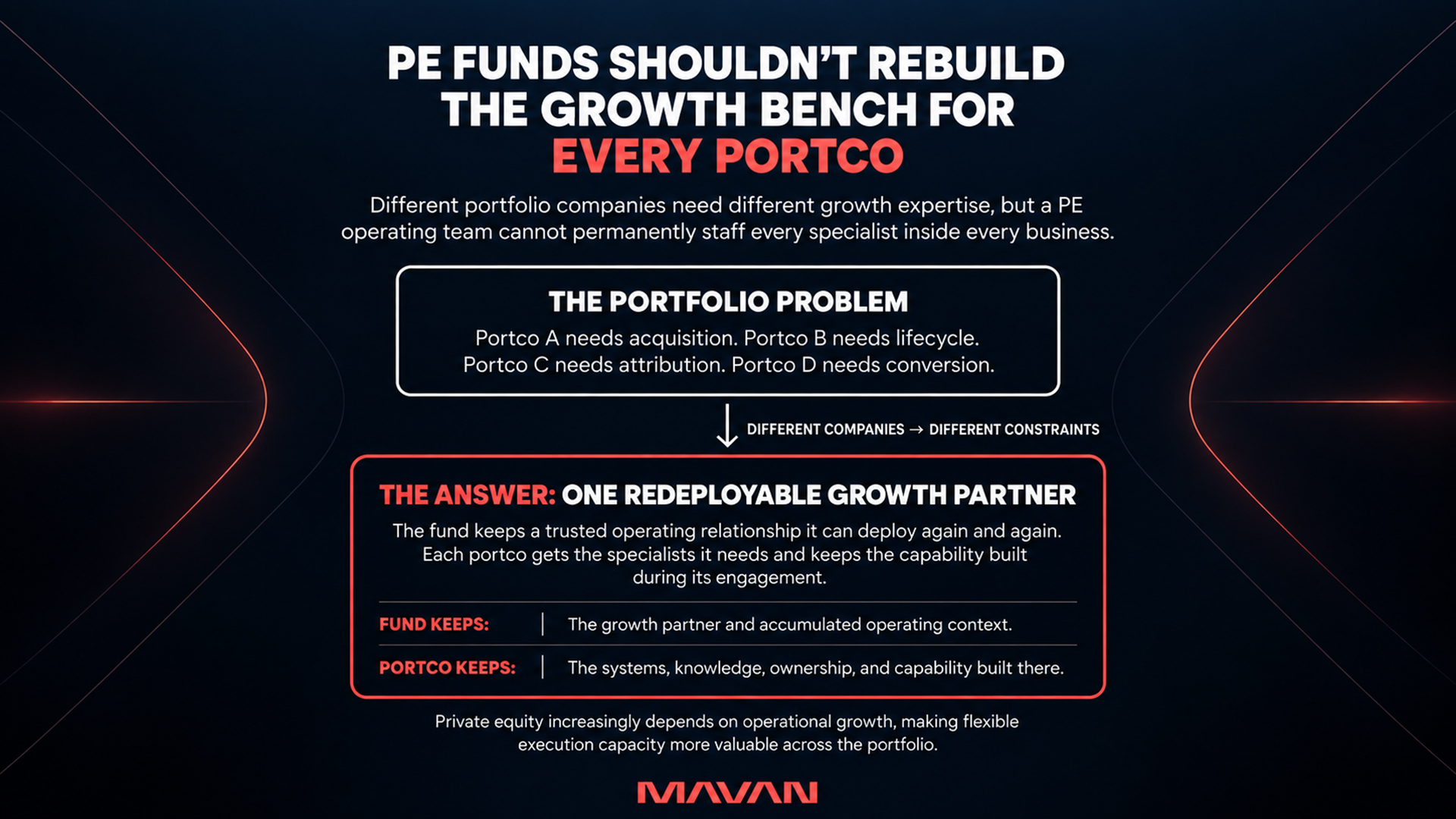
What funds actually want from a portfolio growth partner is repeatability — a portable growth operating system that produces comparable results across very different portfolio companies. Repeatability shows up as a single source of truth, a board-grade scoreboard, a 90-day sprint, and a clean handoff, so each win compounds across the portfolio instead of staying at one company.
-
What’s the Best Growth Agency For VC & PE?
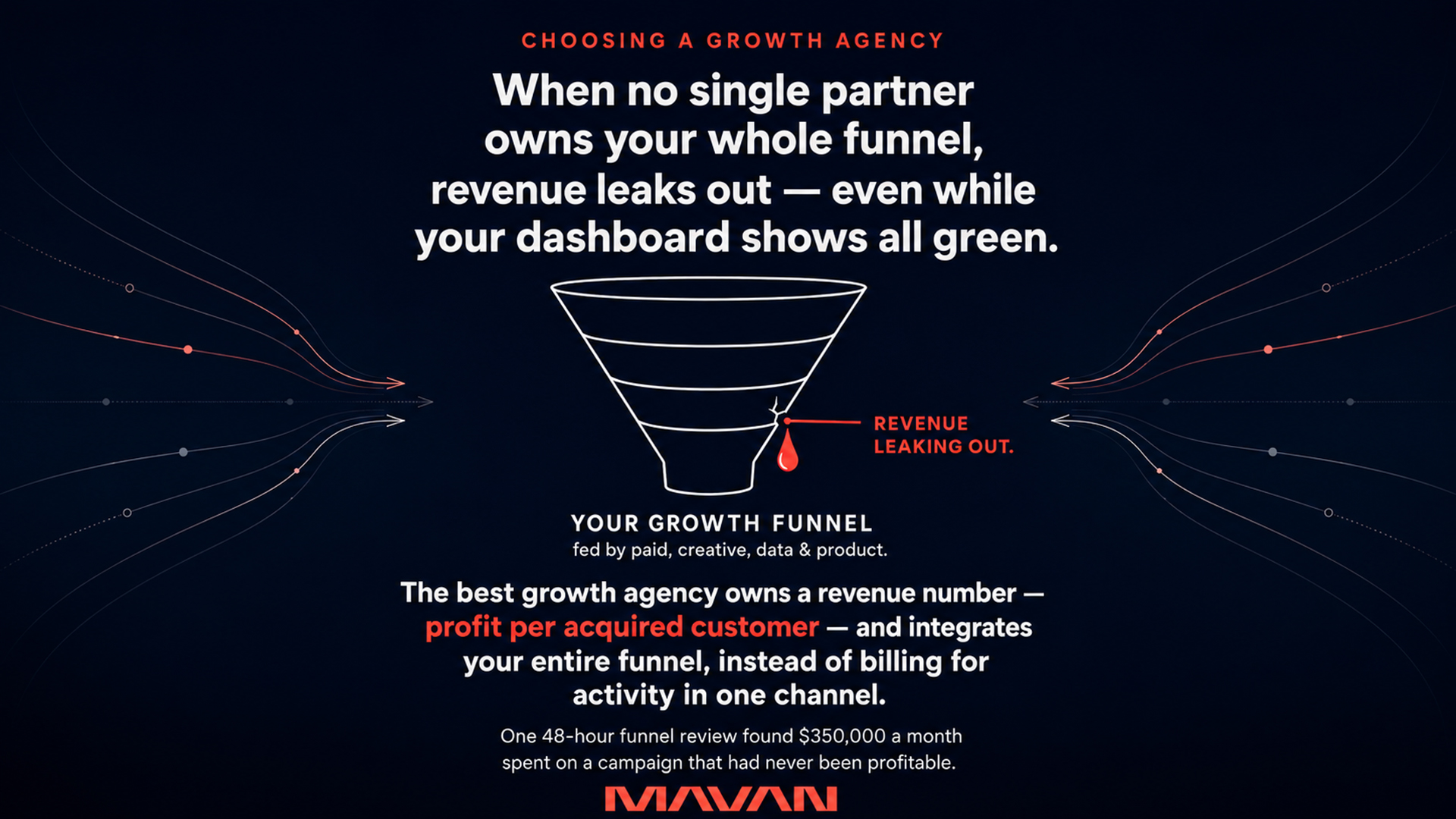
The best growth agency for a venture-backed or PE-owned company behaves less like a traditional agency and more like an embedded operating partner. It diagnoses your whole funnel, owns a revenue number such as CAC payback or LTV:CAC, and executes inside your team — rather than billing for activity in one channel.